

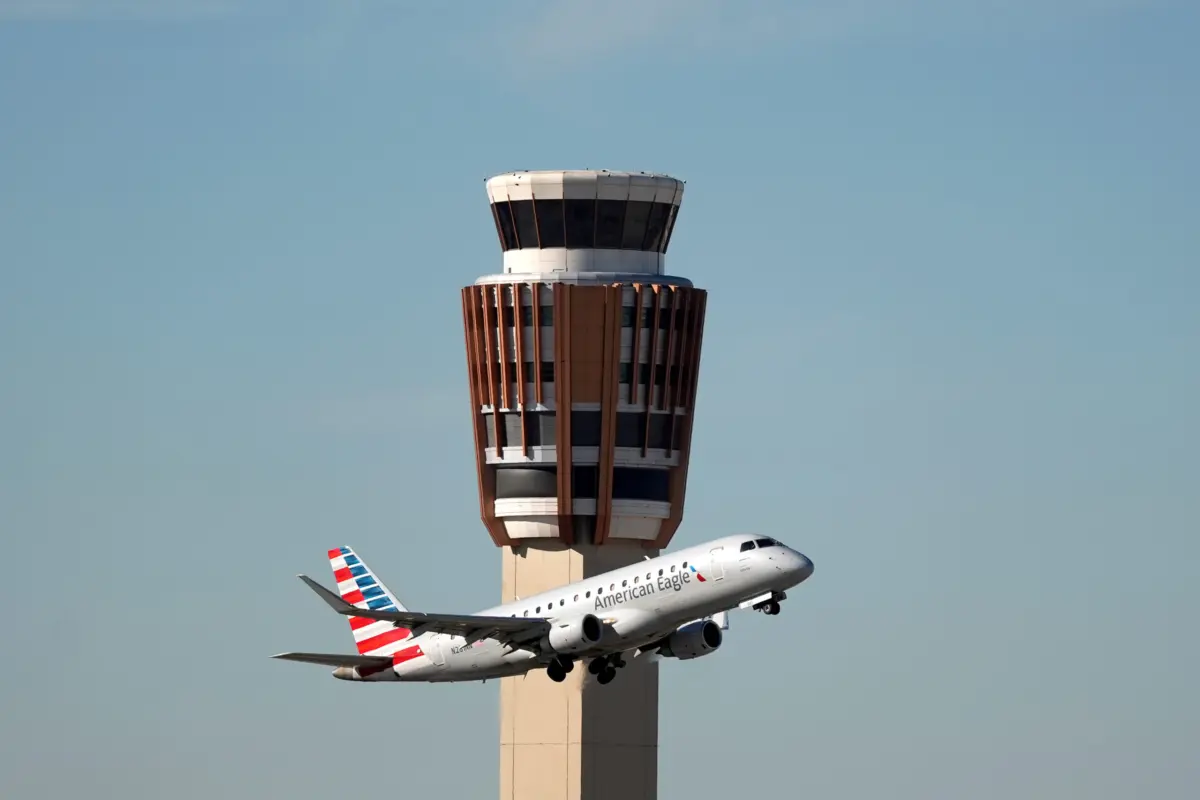
The Federal Aviation Administration (FAA) has implemented a rare and sweeping nationwide ground stop for all domestic departures following a catastrophic failure in the agency’s primary communications infrastructure. The order, issued at approximately 8:15 a.m. Eastern Time on November 13, 2026, has effectively frozen the United States’ National Airspace System (NAS), leaving thousands of aircraft on the tarmac and millions of passengers stranded at gates across the country. According to preliminary reports from the Department of Transportation, the outage stems from a synchronized failure in the digital data exchange systems that allow Air Route Traffic Control Centers (ARTCCs) to communicate vital flight path and safety information to cockpit crews.
While aircraft already in flight are being permitted to land under visual flight rules or via backup localized radio frequencies, no new takeoffs are being authorized until the FAA can guarantee the integrity of the nationwide communication loop. This unprecedented disruption marks the most significant halt to American civil aviation since the NOTAM system failure of 2023 and the subsequent technical vulnerabilities exposed during the infrastructure transitions of 2025.
Chronology of the Communications Collapse
The crisis began in the early morning hours of November 13, initially appearing as localized delays in the Northeast Corridor.
- 5:30 a.m. ET: Air traffic controllers at New York’s John F. Kennedy International Airport (JFK) and Boston Logan (BOS) reported "intermittent latency" in the System Wide Information Management (SWIM) cloud interface. Flight crews reported delays in receiving digital clearances.
- 6:45 a.m. ET: The latency issues spread to the Midwest hub in Chicago. United Airlines and American Airlines began holding flights at O’Hare International Airport (ORD) as a precautionary measure, citing an inability to verify updated weather and routing data.
- 7:20 a.m. ET: The FAA’s Command Center in Warrenton, Virginia, alerted the Department of Transportation to a "significant degradation" in the primary and redundant fiber-optic backbones that support the NAS Voice System (NVS).
- 8:00 a.m. ET: Regional ground stops were issued for the Eastern Seaboard. However, within fifteen minutes, the failure propagated across the Rocky Mountain region and the West Coast.
- 8:15 a.m. ET: The FAA officially issued a nationwide "Ground Stop" (GS) for all civilian and commercial traffic. The notice, transmitted via emergency channels, cited a "critical communications outage affecting the ability to provide safe separation services."
As of 10:00 a.m. ET, the FAA has not provided an estimated time for the restoration of services, stating only that technicians are working "around the clock" to reboot the core network servers and identify the root cause of the synchronization error.
Technical Context: The Vulnerability of Modern Airspace
The outage highlights the complexities of the FAA’s "NextGen" modernization initiative, which aimed to transition the U.S. airspace from legacy ground-based radar and radio systems to a satellite-based, digital-first infrastructure. Central to this system is the Data Communications (Data Comm) protocol, which replaces traditional voice instructions with digital text-based messages between controllers and pilots.
Industry experts suggest that the current failure likely resides in the "backbone" of this digital network. In 2025, the FAA completed a major migration of its communication data to a hybrid cloud environment designed to increase resiliency. However, today’s event suggests a "single point of failure" may have persisted within the authentication layer of the network, preventing different regional centers from handshaking with one another.
Without the ability to pass "flight strips"—the digital records containing a plane’s identity, speed, and altitude—from one controller’s jurisdiction to the next, the risk of mid-air collisions or "loss of separation" increases exponentially. Consequently, a nationwide ground stop is the only protocol available to ensure public safety.
Economic and Operational Data
The scale of the disruption is staggering. According to data from flight tracking services, over 6,500 flights were scheduled to depart within the first four hours of the ground stop.
- Flight Cancellations: As of mid-morning, over 3,200 flights have been officially canceled, with another 4,800 experiencing delays exceeding three hours.
- Passenger Impact: An estimated 1.8 million passengers are currently affected, either stuck in terminals or diverted to secondary airports.
- Financial Loss: Economic analysts at major financial institutions estimate that a nationwide ground stop costs the U.S. economy approximately $450 million per hour in lost productivity, airline operating costs, and supply chain disruptions.
- Cargo and Logistics: Major freight carriers, including FedEx and UPS, have warned of significant delays in time-sensitive deliveries, including medical supplies and perishable goods, as their primary sorting hubs in Memphis and Louisville are currently at a standstill.
International travel has also been severely impacted. Flights originating from Europe, Asia, and South America that were destined for the U.S. are being diverted to Canadian or Mexican airports, as they are unable to enter U.S. airspace without active communication with domestic air traffic control.
Official Responses and Government Action
The White House issued a brief statement shortly after 9:00 a.m. ET, confirming that President Julianna Vance has been briefed on the situation by Secretary of Transportation Pete Buttigieg. The administration emphasized that there is "no evidence of a cyberattack at this time," though the Cybersecurity and Infrastructure Security Agency (CISA) has been deployed to assist the FAA in its forensic analysis of the network failure.
Secretary Buttigieg addressed the media via a virtual press conference, stating: "The safety of the flying public is our absolute priority. We understand the immense frustration this causes for travelers and the strain it puts on our economy, but we will not authorize the resumption of flights until we have 100% confidence in the integrity of our communication systems. We are looking into every possible cause, from hardware failure to software synchronization errors."
The Airline Pilots Association (ALPA), the largest airline pilot union in the world, released a statement supporting the FAA’s decision. "While a nationwide ground stop is a drastic measure, it is the correct one when the tools our pilots rely on to maintain safety are compromised. We are advising all crews to remain patient and follow the instructions of local ground control where available."
Broader Implications for Aviation Infrastructure
This event is expected to trigger intense scrutiny from the House Transportation and Infrastructure Committee. For years, lawmakers and aviation experts have debated the funding and pace of the FAA’s technological upgrades. Critics argue that the agency has been forced to "patch" aging legacy systems while simultaneously rolling out new digital platforms, creating a "Frankenstein’s monster" of infrastructure that is prone to catastrophic glitches.
In 2024, a similar but smaller-scale outage was traced back to a corrupted database file during a routine maintenance window. If today’s outage is found to be a result of a similar oversight, it could lead to calls for a leadership overhaul at the FAA and a demand for a "redundancy-first" mandate in future federal aviation budgets.
Furthermore, the outage raises questions about the viability of increasingly automated air traffic management. As the industry moves toward integrating Unmanned Aircraft Systems (UAS) and Advanced Air Mobility (AAM) into the NAS, the reliance on a stable, unhackable communication network becomes even more critical. A failure of this magnitude in a future where thousands of autonomous drones also occupy the sky could have even more dire consequences.
The Path to Recovery
Restoring the National Airspace System is not as simple as "flipping a switch." Even after the communications outage is resolved, the "ripple effect" will be felt for days. Airlines will face the monumental task of repositioning aircraft and crews that are currently out of place due to diversions.
"The recovery phase will be a logistical nightmare," said Sarah Jenkins, a senior aviation consultant. "You have ‘timed-out’ crews who have exceeded their legal flying hours, planes sitting at the wrong gates, and a massive backlog of passengers. We are likely looking at a week of sub-optimal operations before the schedule returns to a semblance of normalcy."
For now, the FAA continues to advise passengers to check with their respective airlines before heading to the airport. Major carriers, including Delta, United, and Southwest, have already issued blanket travel waivers, allowing passengers to rebook their flights without penalties.
As the afternoon approaches, the eyes of the nation remain on the FAA’s Command Center. The resolution of this outage is not just a matter of convenience; it is a test of the resilience of the United States’ most critical transportation network in an increasingly digital and interconnected age. Further updates are expected as the FAA attempts to bring its systems back online through a phased regional restart protocol.
