

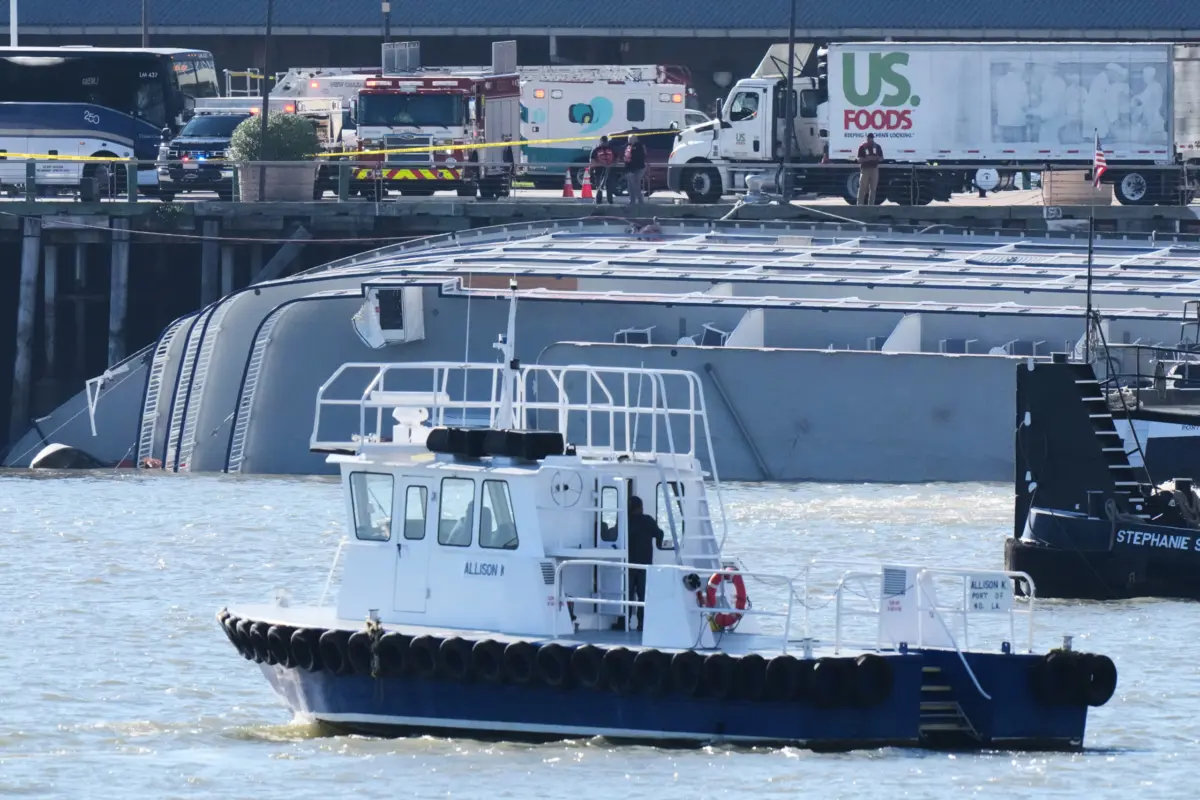
A critical maritime incident unfolded on the Mississippi River in New Orleans on Friday, November 13, 2026, when the American Heritage river cruise boat, carrying 129 passengers, was struck by the Atlantic Asphalt tanker. The collision, which occurred around 12:30 PM local time (18:30 GMT), led to the partial submergence of the passenger vessel and initiated a large-scale, multi-agency rescue operation. Authorities have not yet released any official information regarding potential injuries or fatalities among those aboard the American Heritage, intensifying concerns as search-and-rescue efforts continue in the aftermath of the harrowing event.
The Collision and Immediate Aftermath
The incident transpired as the American Heritage, a five-deck paddlewheel cruise boat operated by American Cruise Lines, was in the process of disembarking passengers. The vessel had reportedly docked approximately two hours prior to the collision, concluding an eight-day cruise that had explored various destinations across Louisiana and Mississippi. The Atlantic Asphalt, a significantly larger tanker specializing in the transport of asphalt and bitumen, impacted the cruise boat with considerable force. Video footage captured from the scene, as reported by The Associated Press news agency, depicted a chaotic scene with the much larger tanker making contact, accompanied by the sounds of "metal and glass crashed and crunched."
Eyewitness accounts painted a vivid picture of the unfolding disaster. Jamie Holford, a witness, described the scene to local television as "surreal," noting the rapid deterioration of the situation: "Fifteen minutes from impact to where it rolled over." The American Heritage quickly began to list, its hull sinking further into the river’s waters. In the immediate moments following the impact, more than a dozen individuals, visibly clad in life jackets, were seen being pulled from the 19-degree Celsius (66-degree Fahrenheit) water onto nearby ships, while other passengers remained near the railings of the rapidly listing vessel, awaiting rescue. The prompt deployment of life jackets by passengers and crew likely played a crucial role in mitigating potential casualties during the initial phase of the emergency.
A Coordinated Rescue Effort
The severity of the collision prompted an immediate and robust response from an array of emergency services and maritime authorities. The Port of New Orleans confirmed the incident, and a city spokesperson stated, "Multiple individuals have been rescued, and search-and-rescue operations remain ongoing." Agencies swiftly converging on the scene included port police, the New Orleans Fire Department, the United States Coast Guard (USCG), and emergency medical staff.
A dedicated triage area was rapidly established within the Port’s administration building to assess and treat any injured passengers or crew as they were brought ashore. The coordination among federal, state, and local entities underscored the gravity of the situation and the immediate priority placed on saving lives. The USCG, responsible for maritime safety and security on navigable waterways, took a leading role in coordinating the extensive search and rescue operations, deploying multiple assets including rescue boats and potentially helicopters to scour the collision area. The river itself was promptly closed to all vessel traffic, a standard but impactful measure designed to secure the scene for rescue efforts and prevent further incidents, thereby affecting one of the nation’s busiest commercial arteries.
American Cruise Lines, the operator of the American Heritage, issued a statement expressing its deep concern for everyone involved. The company confirmed that guests and crew had been evacuated from the vessel, though specific numbers beyond the 129 passengers initially reported were not immediately available. The company affirmed its commitment to cooperating fully with authorities during the ongoing investigation.
The Vessels Involved: American Heritage and Atlantic Asphalt
The American Heritage, a contemporary paddlewheel riverboat, represents a modern interpretation of classic American river cruising. Built in 2015, the vessel features five decks and is designed to accommodate up to 150 passengers, offering an intimate and luxurious travel experience along America’s historic waterways. Its cruises often highlight cultural and historical sites along the Mississippi River and its tributaries, drawing tourists keen to experience the unique heritage of the region. The vessel’s partial submergence marks a significant setback for American Cruise Lines and raises questions about the future of the vessel itself, pending comprehensive damage assessment and potential salvage operations.

The Atlantic Asphalt, the tanker involved in the collision, is a substantial commercial vessel. Measuring approximately 160 meters (520 feet) in length, it is designed for the specialized transport of asphalt and bitumen, viscous petroleum products. At the time of the incident, the tanker was flying the flag of the Marshall Islands, a common "flag of convenience" for international shipping. According to the MarineTraffic tracker, the vessel was bound for New Orleans, a major port of call for various types of cargo ships. The maritime periodical Marine Insights notes its specialization, highlighting the potential environmental implications if the tanker was carrying cargo at the time of the collision and if its hull integrity was compromised. However, initial reports did not specify whether the ship was actively carrying cargo or if there was any leakage. This remains a critical area of investigation, given the potential for significant ecological damage from an asphalt or bitumen spill.
The Mississippi River: A Vital Artery and Complex Environment
The Mississippi River is not merely a scenic backdrop for cruise ships; it is one of the world’s most vital commercial waterways, serving as the backbone of the American heartland’s economy. Stretching over 2,300 miles, it facilitates the transport of hundreds of millions of tons of cargo annually, including agricultural products, petroleum, chemicals, and manufactured goods. The Port of New Orleans, situated strategically near the river’s mouth, is one of the largest and busiest ports in the United States, handling immense volumes of both domestic and international trade.
The river’s complex environment, characterized by strong currents, varying depths, and constant commercial and recreational traffic, demands stringent navigation protocols and continuous vigilance from all mariners. Pilots navigating these waters require specialized knowledge and experience. The confluence of large commercial vessels like tankers and passenger cruise boats, while a common sight, underscores the need for meticulous adherence to maritime rules of the road, effective communication, and robust safety systems to prevent collisions. Incidents on such a critical waterway have far-reaching consequences, affecting not only human safety but also economic supply chains and environmental integrity.
Official Response and the Path to Investigation
With the immediate rescue operations underway, the focus will inevitably shift towards a comprehensive investigation into the cause of the collision. The United States Coast Guard will lead this inquiry, likely in conjunction with the National Transportation Safety Board (NTSB), which investigates major maritime accidents. Such investigations typically involve:
- Crew Interviews: Detailed questioning of the crew members from both the American Heritage and the Atlantic Asphalt, including pilots, captains, and relevant officers, to ascertain their actions, observations, and communication prior to and during the incident.
- Vessel Data Retrieval: Analysis of voyage data recorders (VDRs), often referred to as "black boxes" for ships, which record crucial information such as vessel speed, heading, radar data, bridge audio, and communications.
- Technical Assessments: Examination of both vessels for mechanical failures, structural damage, and the functioning of navigation and communication equipment.
- Environmental Factors: Consideration of weather conditions, river currents, visibility, and any other external elements that might have contributed to the accident.
- Regulatory Compliance: Review of both vessels’ maintenance records, crew certifications, and adherence to international and national maritime safety regulations.
The Port of New Orleans, as the governing authority for the harbor, will also play a role in providing local context and facilitating the investigation. The closure of the river, while necessary for safety and rescue, highlights the significant disruption such incidents can cause to maritime commerce.
Broader Implications and Future Outlook
The collision between the Atlantic Asphalt and the American Heritage carries several profound implications beyond the immediate emergency:
- Maritime Safety Scrutiny: The incident will undoubtedly prompt a renewed focus on maritime safety protocols, particularly concerning the navigation of large commercial tankers and passenger vessels in congested waterways like the Mississippi River. This could lead to recommendations for enhanced traffic control, communication standards, or revised pilotage requirements.
- Economic Impact: The temporary closure of a vital section of the Mississippi River will have ripple effects on shipping schedules, supply chains, and the regional economy. Delays in cargo transport can translate into significant financial losses for businesses reliant on riverine commerce.
- Environmental Concerns: Even without confirmed cargo leakage from the Atlantic Asphalt, the potential for a spill of asphalt or bitumen, or even bunker fuel from either vessel, underscores the ever-present environmental risk in maritime accidents. Such spills can devastate aquatic ecosystems, shorelines, and local industries like fishing and tourism.
- Tourism and Public Confidence: For American Cruise Lines and the broader river cruise industry, an incident involving a passenger vessel can impact public confidence in the safety of river travel. Rebuilding trust will require transparent investigations and demonstrable commitments to enhanced safety measures. The American Heritage itself faces an uncertain future, with potential extensive repairs or even a total loss, impacting the company’s fleet capacity.
- Legal and Financial Ramifications: The incident will lead to complex legal proceedings, including liability claims, insurance payouts, and potential lawsuits from passengers, crew, and affected businesses. The costs associated with salvage, environmental cleanup (if necessary), repairs, and legal settlements could be substantial.
As rescue efforts continue and the initial shock of the collision subsides, the maritime community and the public will await the findings of the official investigation. The goal will be not only to determine the precise cause of this specific accident but also to implement measures that can prevent similar incidents on the critical waterways that sustain both commerce and leisure. The partial submergence of the American Heritage on the mighty Mississippi serves as a stark reminder of the inherent risks and complexities of navigating the world’s oceans and rivers.
