

Poland’s political landscape is currently defined by a profound and escalating confrontation between its two primary political camps, a struggle centered on the control of the Constitutional Tribunal (CT) that threatens the foundational stability of the state. The incumbent government, led by Prime Minister Donald Tusk’s Civic Platform, and the conservative opposition, aligned with the Law and Justice (PiS) party and President Karol Nawrocki, are engaged in a battle where both sides claim to be the sole defenders of the rule of law. However, the methods employed by both factions have led to a systemic crisis of legitimacy, creating a vacuum of authority that experts warn is being exploited by external adversaries, most notably the Russian Federation. As the two sides adopt increasingly radical tactics, the Polish state finds itself in a precarious position where the very institutions designed to resolve constitutional disputes have become the primary site of political warfare.
The Genesis of the Constitutional Conflict: A Decade of Discord
The roots of the current impasse are not a recent development but rather the culmination of a decade of tactical maneuvering. The origins of the dispute can be traced back to 2015, during the final months of the previous Civic Platform-controlled parliament. In anticipation of a likely electoral defeat, the outgoing government attempted to appoint five judges to the Constitutional Tribunal, including for vacancies that were scheduled to open only after the new parliament had been seated. This move was widely criticized as an attempt to "pack" the court before a change in power.
Following their victory in the 2015 general elections, the Law and Justice (PiS) party used this procedural overreach as a justification for a much broader overhaul of the judiciary. Under the leadership of Jarosław Kaczyński, the PiS government refused to recognize the judges appointed by the previous administration. Instead, they moved to appoint their own nominees, often referred to by critics as "doubles" or "understudies," to the same positions. Over the subsequent eight years, the PiS government systematically restructured the judicial system, including the National Council of the Judiciary (KRS) and the Supreme Court, arguing that these institutions needed to be purged of communist-era influences and made more accountable to the electorate. These actions led to a protracted conflict with the European Union, resulting in the freezing of billions of euros in pandemic recovery funds and several rulings from the European Court of Justice (ECJ) condemning Poland’s judicial "reforms" as violations of the rule of law.
The 2023 Power Shift and the Return of the Judicial War
The general elections of October 2023 brought a coalition of the center-right Civic Platform, the liberal-conservative Third Way, and the Left to power, with Donald Tusk returning as Prime Minister. The coalition campaigned heavily on a promise to "restore the rule of law" and unlock EU funds. However, the process of dismantling the previous administration’s judicial architecture has proven to be legally and politically fraught.
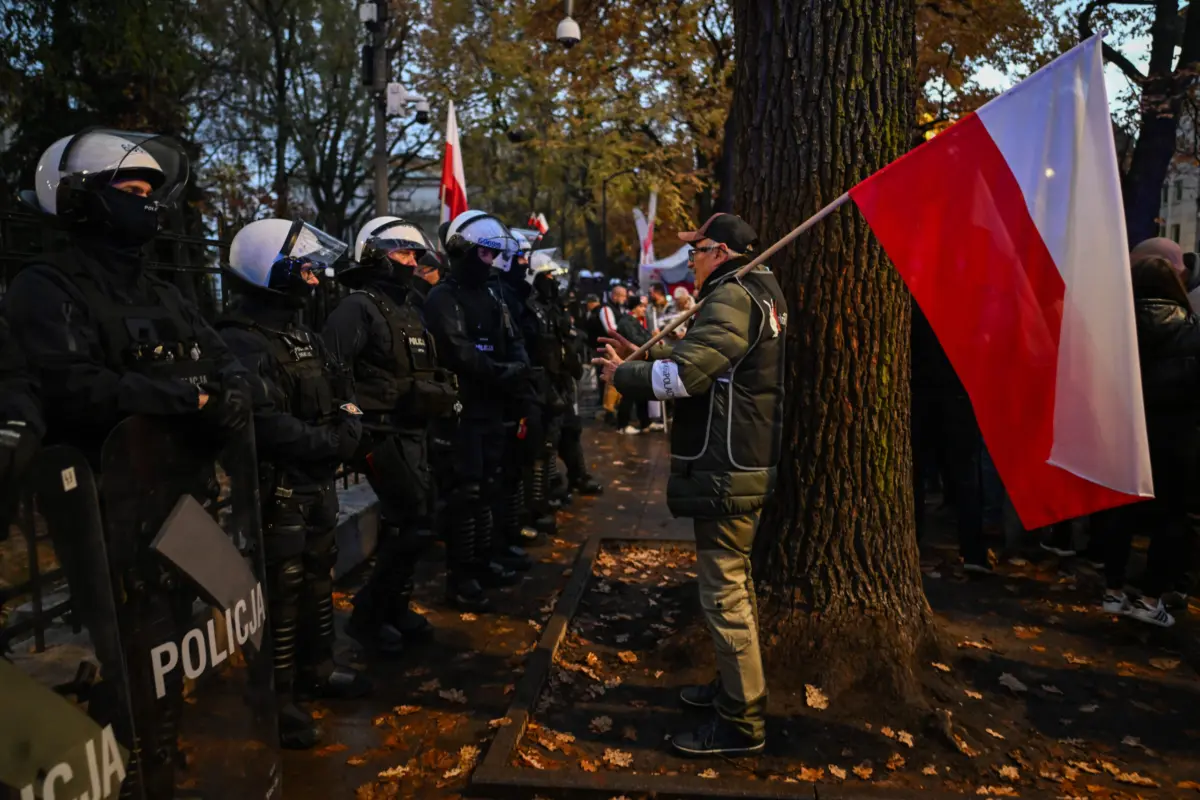
Currently, the government is attempting to seat new judges in the Constitutional Tribunal, arguing that the previous appointments made under PiS were invalid. This effort has met with fierce resistance from President Karol Nawrocki and the current leadership of the Tribunal, both of whom remain closely aligned with the Law and Justice party. The situation reached a boiling point last month when a newly elected judge, supported by the Tusk administration, issued an order for the suspension of the Tribunal’s president and deputy president. This move was followed by the deployment of police forces to the Constitutional Tribunal building to enforce the transition.
The response from the opposition was immediate and severe. President Nawrocki denounced the intervention as a "forcible takeover" and a "coup against the state." Conversely, Prime Minister Tusk defended the actions as a necessary, albeit difficult, measure to restore institutional integrity. This "state of exception" has created a scenario where the executive branch is using police power to influence the composition of the judiciary, a tactic that observers note is a mirror image of the very "strongman" politics Tusk’s coalition previously condemned.
Geopolitical Vulnerability and the Russian Narrative
The internal destabilization of Poland comes at a critical geopolitical moment. With a full-scale war raging in neighboring Ukraine, Poland serves as a vital hub for NATO logistics and a primary target for Russian hybrid warfare. Moscow has wasted no time in capitalizing on the domestic chaos. On November 3, former Russian President and current Deputy Chairman of the Security Council of Russia, Dmitry Medvedev, publicly characterized the events at the Constitutional Tribunal as a "coup," using the internal division to project an image of Poland as a failing state with illegitimate institutions.
Security analysts point out that this internal friction plays directly into the Kremlin’s playbook. By casting doubt on the legitimacy of the Polish state, Russia aims to weaken Poland’s standing within the European Union and NATO, while simultaneously fueling social polarization. The hybrid war being waged against Poland involves not only physical border provocations but also cognitive warfare designed to erode the "social glue" that binds citizens to their government. When the two largest political parties in the country both claim the other is acting illegally, the average citizen is left with the impression that no institution is truly sovereign or objective.
The Theoretical Shift: From Legalism to Decisionism
A significant development in the current crisis is the shift in political philosophy among the liberal establishment. For years, the opposition to Law and Justice defined itself through "legalism"—the strict adherence to existing laws and procedures. However, the current administration appears to be adopting a more "decisionist" approach. This shift was encapsulated in a widely circulated photograph of Prime Minister Donald Tusk reading a journal dedicated to Carl Schmitt, the controversial German legal theorist who famously argued that "Sovereign is he who decides on the exception."
Schmitt’s theory of decisionism suggests that in times of crisis, a leader must act outside the normal legal framework to save the state. Tusk’s supporters argue that the "captured" nature of the courts under the previous government makes it impossible to restore the rule of law using standard legal channels, as those channels are themselves corrupted. This has led to the current "strongman" posture, where the government prioritizes results over legal subtleties. This approach has raised alarms even among liberal-leaning legal experts and civil rights organizations, who fear that bypassing legal norms to "save" democracy may ultimately destroy the very democratic framework it seeks to protect.
Public Fatigue and Economic Pressures
Despite the high-stakes rhetoric in Warsaw, there is a growing disconnect between the political elite and the general public. While a decade ago, the politicization of the Constitutional Tribunal brought hundreds of thousands of protesters into the streets, recent polls suggest a high level of public exhaustion. The Polish electorate is increasingly preoccupied with immediate concerns: the rising cost of living, energy security, and the physical safety of the country in the face of Russian aggression.
Data indicates that while Poles remain deeply divided on party lines, there is a shared cynicism regarding the judiciary. A recent survey showed that trust in the Constitutional Tribunal has plummeted to historic lows, with a significant portion of the population viewing the court as a mere tool of whichever party is in power. This apathy is dangerous for a democracy; if the public ceases to believe in the neutrality of the courts, the peaceful resolution of political disputes becomes nearly impossible.
Comparative Risks: The Romanian Precedent
The danger of institutional collapse is not theoretical. Analysts point to the recent events in Romania as a potential precursor for what could happen in Poland if the situation continues to deteriorate. On December 6, 2024, the Romanian Constitutional Court took the unprecedented step of annulling a presidential election following intelligence reports of foreign interference and campaign financing irregularities. While intended to protect the state from external manipulation, the move effectively overrode the will of the voters, leading to a massive crisis of legitimacy and widespread social unrest.
In Poland, a similar scenario could unfold. If the executive branch continues to ignore judicial rulings it deems "illegitimate," and the judiciary continues to annul executive actions, the entire electoral process could eventually be called into question. If the 2025 presidential election in Poland results in a narrow margin, both sides are already positioned to challenge the validity of the outcome in courts that they do not recognize as authoritative.
Conclusion: The Weakening of the Social Contract
The ongoing struggle for control of the Constitutional Tribunal has moved beyond a simple partisan rivalry. It has become a self-reinforcing dynamic of delegitimization. As the ruling coalition adopts the tactics of its predecessors to "fix" the system, it provides the opposition with the moral high ground to claim they are the victims of authoritarianism. Meanwhile, the middle ground of objective legal discourse is being squeezed out by algorithmic social media manipulation and the "decisionism" of the state.
The ultimate casualty of this conflict is not a specific political party, but the bond between the Polish citizen and the state. When institutions are seen as nothing more than prizes in a zero-sum game, the authority of the government is replaced by the raw exercise of power. For Poland, a country situated on the front lines of a volatile Europe, this internal erosion of the state is a strategic liability that serves the interests of those who wish to see the European democratic order fail. Healing this divide will require a level of political compromise that is currently absent from both the government and the opposition, leaving the future of Poland’s constitutional order in a state of profound uncertainty.
