

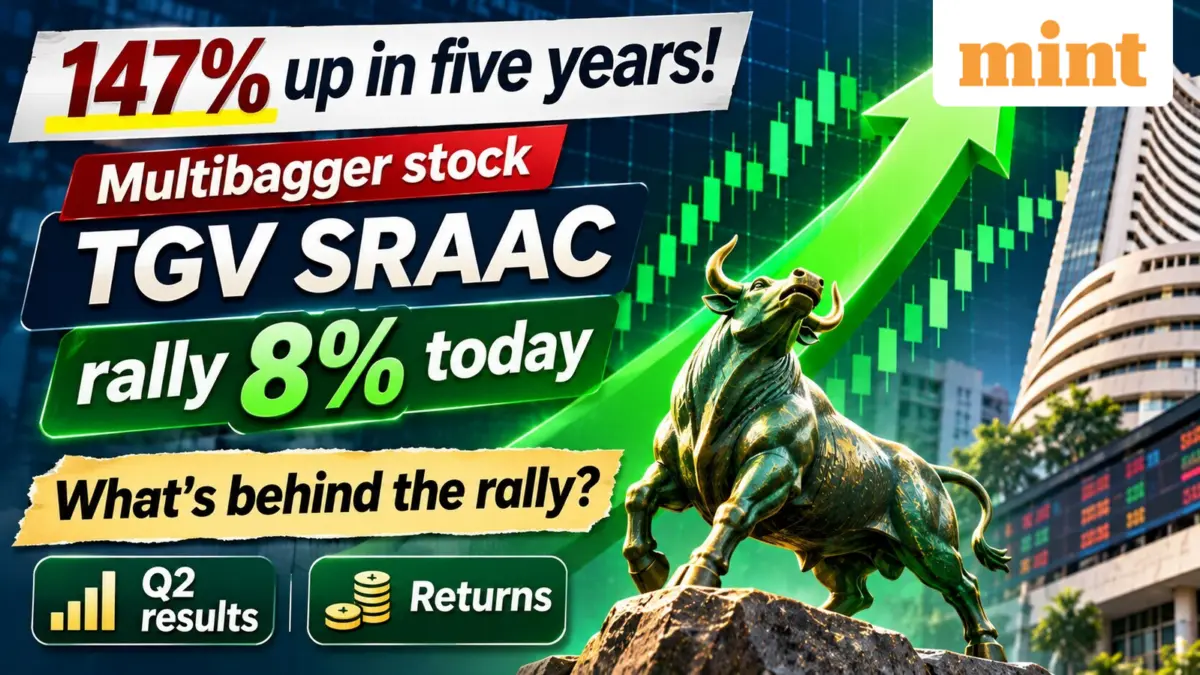
TGV SRAAC, a prominent player in the Indian chemical manufacturing sector, witnessed a significant surge in its share price during Thursday’s trading session, climbing over 7.71% to reach an intraday high of ₹137.80. This bullish momentum follows the company’s announcement of its financial results for the second quarter of the 2026-27 fiscal year, which revealed a substantial increase in both top-line revenue and bottom-line profitability. The stock opened the day at ₹125.50 on the Bombay Stock Exchange (BSE), marking a notable gap-up from Wednesday’s closing price of ₹120.65. Throughout the morning session, investor interest remained high, driven by the company’s ability to navigate market volatility and deliver a net profit growth that significantly outpaced its revenue expansion.
Comprehensive Analysis of Q2 FY27 Financial Results
The financial data released for the quarter ending September 30, 2026, underscores a period of robust operational efficiency for TGV SRAAC. The company reported a consolidated net profit of ₹55.72 crore, representing a staggering 50.4% year-on-year (YoY) increase compared to the ₹37.05 crore recorded in the same period of the previous financial year. This profit figure includes contributions from both continuing and discontinued operations, providing a holistic view of the company’s current financial health.
On the revenue front, TGV SRAAC saw its income from operations rise to ₹590.47 crore, an 18.1% increase from the ₹499.94 crore reported in Q2 FY26. Total income, which includes other income streams, followed a similar trajectory, rising to ₹596.57 crore from ₹503.18 crore a year earlier. The fact that the net profit growth (50.4%) more than doubled the revenue growth (18.1%) suggests a significant improvement in the company’s internal cost structures and operational margins.
Profit Before Tax (PBT) also saw a healthy jump, reaching ₹76.84 crore in the September quarter of 2026, up from ₹49.89 crore in the corresponding quarter of 2025. This 54% increase in PBT highlights the company’s ability to manage its interest and depreciation costs effectively while scaling its core business activities.
Operational Performance and Margin Expansion
A key highlight of the Q2 earnings report was the performance of the company’s Earnings Before Interest, Taxes, Depreciation, and Amortization (EBITDA). TGV SRAAC reported an EBITDA of ₹111 crore for the quarter, marking a 19.4% YoY increase. The EBITDA margin, a critical indicator of operational profitability, stood at 18.78%.
The improvement in margins is particularly noteworthy given the global fluctuations in raw material prices and energy costs that have impacted the chemical industry over the last year. By maintaining a margin of nearly 19%, TGV SRAAC has demonstrated a competitive edge in its production processes, likely aided by its integrated manufacturing facilities. Analysts suggest that the shift toward higher-value chemical derivatives and improved capacity utilization at its primary plants have contributed to this strengthened operational profile.
Historical Performance and Multibagger Trajectory
TGV SRAAC has long been identified by market observers as a "multibagger" stock—a term used for equities that return several times their initial investment. The stock’s performance over the last decade justifies this moniker. Over a five-year horizon, the share price has appreciated by 147%, effectively more than doubling the wealth of long-term shareholders. Even more impressive is the ten-year return, which stands at a massive 514%.
In the shorter term, the stock has shown resilience and steady growth:
- One Week: Gained 10.45%
- Two Weeks: Gained 15%
- One Month: Gained 5.70% (indicating a period of healthy consolidation)
- Three Months: Surged 23%
- Six Months: Surged 23%
- Year-to-Date (2026): Delivered a return of 18%
The consistent upward trajectory across multiple timeframes suggests that the stock is not merely reacting to quarterly "noise" but is being re-rated based on fundamental improvements in its business model and the broader demand for industrial chemicals.
Background Context: The Evolution of TGV SRAAC
Formerly known as Sree Rayalaseema Alkalies and Allied Chemicals Ltd, TGV SRAAC is the flagship company of the TGV Group, a diversified conglomerate with interests in chemicals, power, and healthcare. Based in Kurnool, Andhra Pradesh, the company is one of India’s leading manufacturers of Chlor-Alkali products. Its primary product portfolio includes Caustic Soda (lye and flakes), Liquid Chlorine, Hydrochloric Acid, and Hydrogen gas.

The company also has a significant presence in the Fatty Acid division, producing Stearic Acid, Soap Noodles, and Glycerin. These products are essential raw materials for various industries, including textiles, soaps, detergents, paper, and pharmaceuticals. The strategic location of its manufacturing units and its captive power plant gives the company a logistical and cost advantage over its competitors, particularly in the Southern Indian markets.
Chronology of the Recent Rally
The recent surge in TGV SRAAC’s stock price can be traced through a specific timeline of events:
- Late October 2026: The stock began a steady climb as market rumors regarding strong quarterly volumes started to circulate.
- November 5-11, 2026: Shares gained over 10% in anticipation of the board meeting scheduled to approve the Q2 results.
- Wednesday, November 11, 2026 (Post-Market): The company officially released its financial statement, revealing the 50.4% jump in net profit.
- Thursday, November 12, 2026 (Opening): Shares opened significantly higher at ₹125.50, quickly scaling toward the ₹138 mark as institutional and retail investors reacted to the earnings beat.
Market Sentiment and Sector Outlook
The rally in TGV SRAAC shares occurs against a backdrop of cautious optimism in the broader Indian stock market, including the Sensex and Nifty 50. While many sectors have faced headwinds due to global inflationary pressures, the chemical sector has benefited from the "China Plus One" strategy adopted by global manufacturers. International buyers are increasingly looking toward Indian chemical companies to diversify their supply chains, leading to higher export demand for Indian-made alkalis and specialty chemicals.
Furthermore, the domestic demand for caustic soda and chlorine remains strong, driven by the growth in the Indian manufacturing sector, particularly in alumina refining, textiles, and water treatment. TGV SRAAC’s ability to maintain high EBITDA margins suggests that it has successfully passed on increased input costs to its end consumers, a sign of strong pricing power.
Analysis of Implications for Investors
The Q2 FY27 results provide several key takeaways for the investment community. First, the sharp increase in profitability despite a more modest revenue growth indicates that the company is undergoing a phase of margin expansion. This is often a precursor to further stock re-rating, as investors value the quality of earnings over simple volume growth.
Second, the company’s "multibagger" status is supported by a decade of consistent performance. For investors, the historical 514% return over ten years serves as a testament to the management’s ability to navigate through various economic cycles, including the pandemic-induced disruptions of previous years.
However, market analysts also point toward the necessity of monitoring the company’s debt levels and its capital expenditure plans for the coming years. As the company scales, maintaining the 18-19% EBITDA margin will require continuous technological upgrades and potentially further investments in captive power generation to insulate the production process from rising grid electricity costs.
Conclusion and Future Trajectory
As of mid-day on November 12, 2026, TGV SRAAC continues to be one of the top performers in the chemical space. The stock’s ability to breach previous resistance levels and touch an intraday high of ₹137.80 signals strong conviction from the buying side. While short-term profit booking may occur following such a rapid ascent, the fundamental strength displayed in the Q2 results provides a solid floor for the stock’s valuation.
For the remainder of the 2026-27 fiscal year, the market will likely focus on whether TGV SRAAC can sustain this growth momentum into the third and fourth quarters. If the company continues to leverage its operational efficiencies and capitalizes on the favorable demand for Chlor-Alkali products, it may well remain on its path as a standout performer in the Indian equity market.
Disclaimer: This report is for educational and informational purposes only and does not constitute financial advice. The stock market involves significant risks, and investors are urged to consult with a certified investment advisor before making any financial commitments.
