

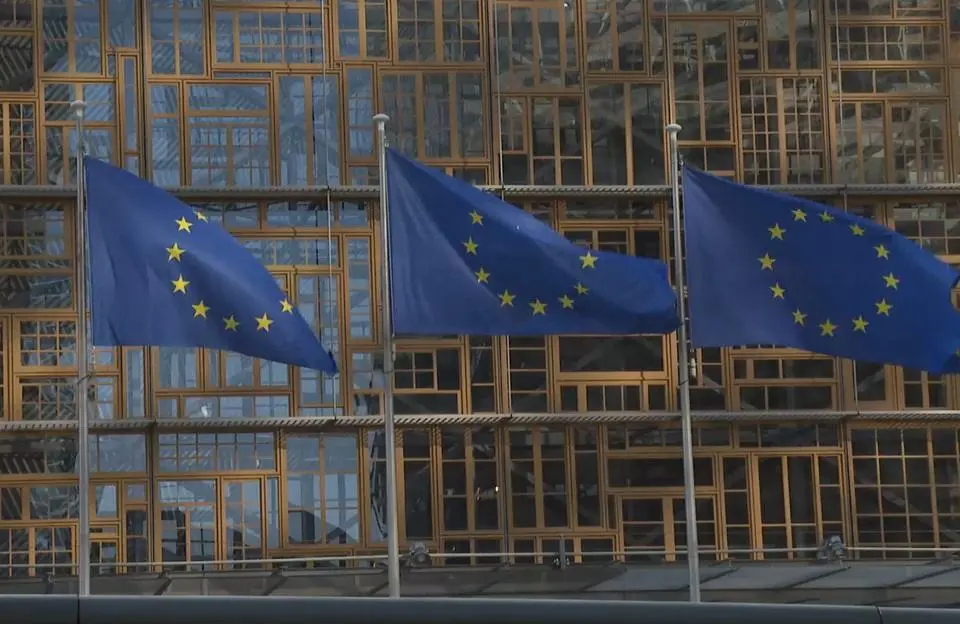
Lawmakers in the European Parliament and representatives of EU Member States have reached a landmark provisional agreement to inject approximately €10 billion worth of additional free carbon allowances into the European Union’s Emissions Trading System (ETS). The deal, concluded during a late-night negotiation session, is designed to provide a financial cushion for energy-intensive industries struggling with volatile energy prices and the looming threat of "carbon leakage." By increasing the volume of free allowances, the EU aims to ensure that its most critical industrial sectors remain globally competitive while navigating the complexities of the green transition.
The agreement represents a significant pivot from earlier, more restrictive proposals, signaling a pragmatic approach to climate policy in an era of heightened geopolitical instability. Under the terms of the deal, the EU will increase the allocation of free carbon permits by 121 million units between 2026 and 2030. This is a substantial increase from the 88 million allowances initially proposed by the European Commission in July. Of this total, 5 million allowances have been specifically earmarked for energy-intensive sectors that are deemed to be at the highest risk of relocating their operations to regions with less stringent environmental regulations.
The Mechanism of the Emissions Trading System
The EU Emissions Trading System, established in 2005, serves as the cornerstone of the European Union’s strategy to combat climate change. Operating on a "cap and trade" principle, the ETS sets a limit on the total amount of greenhouse gases that can be emitted by covered sectors, including power generation, oil refining, steel production, cement manufacturing, and commercial aviation. Within this cap, companies receive or buy emission allowances, which they can trade with one another as needed.
Since its inception, the ETS has been instrumental in the EU’s decarbonization efforts. According to Commission data, the system has successfully driven a 50% reduction in emissions across the sectors it covers. Furthermore, it has generated more than €270 billion in revenue, much of which is reinvested into climate action and energy innovation. However, the financial burden of purchasing these allowances can be significant, particularly for industries where carbon-intensive processes are currently difficult to abate.
To mitigate this burden and prevent "carbon leakage"—where production shifts to countries with weaker climate policies—the EU provides a portion of allowances for free. These are determined by "benchmarks" based on the performance of the 10% most efficient installations in a given sector. Companies that outperform these benchmarks can sell their excess allowances for profit, while those that lag behind must purchase additional permits on the open market, creating a clear financial incentive for technological upgrades.
Chronology of the Policy Shift
The road to this €10 billion agreement began in the wake of the global energy crisis triggered by the Russia-Ukraine conflict and subsequent tensions involving Iran. These geopolitical events led to a dramatic spike in natural gas and electricity prices across Europe, placing unprecedented strain on the continent’s industrial base. In response, several EU Member States began lobbying for a review of the ETS to prevent a deindustrialization of Europe.
In July 2026, the European Commission formally proposed a review of the carbon pricing system. The initial proposal sought to strike a balance between maintaining the integrity of the "Fit for 55" climate goals and providing temporary relief to industry. The Commission suggested slowing the pace of the annual reduction in the emissions cap and extending the allocation of free permits, with a focus on a "heat and fuel" benchmark that accounts for approximately 25% of all free allocations.
However, as negotiations progressed between the European Parliament and the Council, the appetite for more robust industrial support grew. Lawmakers argued that the initial 88 million allowance increase was insufficient to protect the chemicals, ceramics, glass, and pulp and paper sectors from international competitors who do not face similar carbon costs. The final agreement of 121 million allowances reflects a consensus that industrial survival is a prerequisite for a successful long-term climate transition.
Protecting Energy-Intensive Sectors from Carbon Leakage
The primary driver behind this deal is the prevention of carbon leakage. This phenomenon occurs when high carbon prices in one jurisdiction drive companies to move their manufacturing to countries where emissions are "cheaper." This does not result in a net reduction of global emissions; rather, it simply displaces the pollution while damaging the domestic economy.
The new deal specifically targets sectors falling under the "heat and fuel" benchmarks. These benchmarks are used for products and processes that are not covered by a specific product benchmark, such as various chemical processes, food and beverage processing, and specialized glass manufacturing. By increasing the volume of free permits in these categories, the EU is effectively subsidizing the carbon costs of these industries for the next four years.
The inclusion of a 5-million-allowance reserve for the most exposed sectors provides an additional layer of security. This reserve acts as a safety net for industries that might otherwise face an existential threat from high carbon prices before they have the technological means to fully decarbonize.

Economic and Financial Data Analysis
At current market rates, the 121 million additional allowances represent a financial injection of approximately €10 billion. This figure is calculated based on the projected price of European Union Allowances (EUAs), which have fluctuated between €70 and €95 per tonne in recent months. By providing these permits for free rather than requiring companies to buy them at auction, the EU is preserving liquidity within industrial balance sheets.
The broader economic impact is also significant. The sectors protected by these allowances—including chemicals, steel, and cement—employ millions of workers across the European Union and contribute trillions to the regional GDP. Maintaining the viability of these sectors is seen as a matter of "strategic autonomy," a term frequently used by EU officials to describe the need for Europe to produce its own essential materials rather than relying on imports from potentially volatile trading partners.
Official Responses and Political Implications
Following the announcement of the deal, Wopke Hoekstra, the EU Commissioner for Climate, Net Zero, and Clean Growth, hailed the agreement as a victory for both the environment and the economy. "This is great news for climate, competitiveness, and independence," Hoekstra stated. "It ensures the EU carbon market remains robust, our industry can compete, and our clean transition is fair, predictable, and firmly on track."
However, the deal has not been without its critics. Some environmental advocacy groups have expressed concern that increasing free allowances could weaken the "polluter pays" principle. They argue that by shielding companies from the full cost of their emissions, the EU may be inadvertently slowing the pace of innovation in carbon-capture and green-hydrogen technologies.
Industry groups, conversely, have largely welcomed the move. Trade associations representing the chemical and steel sectors had previously warned that without additional support, European plants would be forced to shut down or scale back production. For these stakeholders, the €10 billion deal is a necessary correction to a policy framework that they believe had become overly punitive in the face of global energy market disruptions.
Broader Impact and Future Outlook
The provisional agreement now moves to the European Parliament and the EU Council for formal endorsement. Once adopted, it will set the trajectory for the ETS through the end of the decade. This deal signifies a nuanced evolution in European climate policy, one that acknowledges that the "Green Deal" cannot succeed if it results in the collapse of the industrial sectors required to build a net-zero infrastructure.

The implications for the carbon market itself are also being closely watched by investors. An increase in the supply of free allowances typically exerts downward pressure on the price of carbon permits. However, because these allowances are targeted at specific sectors and are coupled with stringent benchmarks, market analysts suggest that the overall "cap" on emissions remains tight enough to maintain a price signal that encourages long-term decarbonization.
In the coming years, the focus will likely shift toward how these protected industries use the financial breathing room provided by the new allowances. The EU has indicated that it expects a corresponding increase in capital investment toward industrial decarbonization. The success of this €10 billion intervention will ultimately be measured not just by the survival of European industry, but by its ability to emerge from this period as a global leader in low-carbon manufacturing.
As Europe balances the dual pressures of climate change and economic competitiveness, this agreement serves as a template for how the bloc intends to manage the "just transition." By providing targeted support while maintaining the structural integrity of the ETS, the EU is attempting to prove that a high-regulation environment can still be a home for heavy industry. The world will be watching to see if this gamble pays off in the form of a greener, more resilient European economy.
