

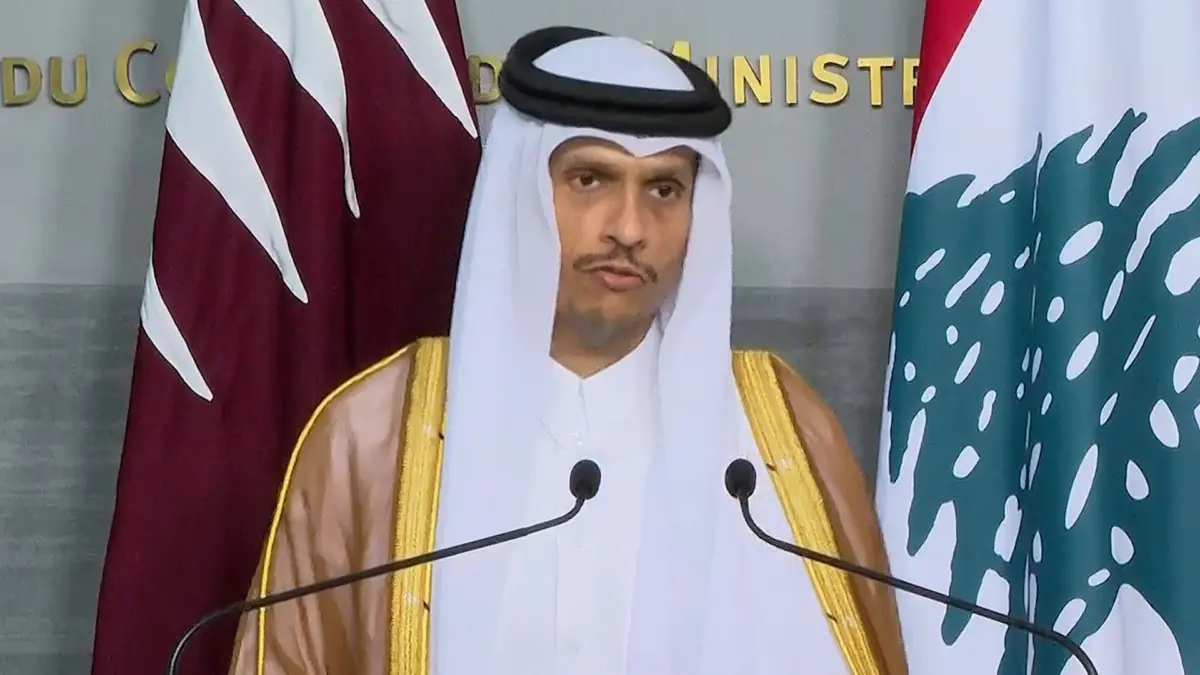
Beirut, Lebanon – On October 16, 2026, Qatar’s Prime Minister and Minister of Foreign Affairs, Sheikh Mohammed bin Abdulrahman Al-Thani, concluded a pivotal visit to Beirut, reaffirming his nation’s unwavering support for Lebanon. The high-level diplomatic engagement focused on bolstering Lebanon’s resilience against a backdrop of severe economic hardship and escalating border tensions in its southern regions. During his discussions with senior Lebanese officials, Sheikh Mohammed reiterated Qatar’s call for Israel’s withdrawal from Lebanese territories, emphasized the critical need for continued energy cooperation, and pledged ongoing support for the Lebanese Armed Forces (LAF). The visit underscores Qatar’s persistent role as a significant regional partner and a proponent of stability in a nation grappling with multifaceted crises.
A Nation in Peril: Lebanon’s Enduring Crises
The Qatari delegation’s visit comes at a time when Lebanon continues to navigate one of the most profound economic collapses in modern history, often described by the World Bank as among the worst global crises since the mid-19th century. Since 2019, the Lebanese economy has been in a downward spiral, characterized by hyperinflation, a dramatic depreciation of the national currency (the Lebanese pound losing over 90% of its value against the US dollar), widespread poverty affecting over 80% of the population, and a crippling banking crisis that has frozen depositors’ savings. Basic services, including electricity, water, and healthcare, have deteriorated severely, pushing the country to the brink. The political landscape remains fragmented, marked by persistent deadlocks in forming fully empowered governments and the prolonged absence of a president, which has hampered crucial reform efforts and access to international bailout funds. This internal fragility is further compounded by the burden of hosting a vast Syrian refugee population, placing immense strain on already stretched resources.
The Diplomatic Offensive: Qatar’s Consistent Engagement
Qatar has consistently demonstrated its commitment to Lebanon’s stability and recovery, distinguishing itself as a steadfast supporter amidst regional and international reticence. This recent visit by Sheikh Mohammed bin Abdulrahman Al-Thani is part of a broader, sustained Qatari diplomatic and humanitarian effort. Earlier initiatives included significant financial aid packages, direct support for the Lebanese Armed Forces, and pledges for reconstruction following the devastating Beirut port explosion in August 2020. Qatar’s approach is rooted in its foreign policy doctrine of promoting regional stability through dialogue, mediation, and humanitarian assistance, aiming to prevent further destabilization of an already volatile Levant.
The Qatari Prime Minister’s itinerary in Beirut included crucial meetings with Lebanon’s caretaker Prime Minister Najib Mikati, Speaker of Parliament Nabih Berri, and Minister of Foreign Affairs Abdallah Bou Habib. These discussions aimed to assess Lebanon’s most pressing needs and coordinate future avenues of support.
Addressing Southern Tensions: A Call for Israeli Withdrawal
A central theme of Sheikh Mohammed’s discussions was the volatile security situation along Lebanon’s southern border with Israel. The Qatari official’s call for Israel’s withdrawal from Lebanese territories comes amidst "continuous attacks" and heightened skirmishes that have periodically flared up, threatening to ignite a broader conflict. These incidents, often involving cross-border shelling, drone incursions, and territorial disputes over contested areas such as the Shebaa Farms and the northern part of Ghajar village, underscore the persistent fragility of the ceasefire maintained largely by the United Nations Interim Force in Lebanon (UNIFIL) since the 2006 conflict.
UN Security Council Resolution 1701, which ended the 2006 war, calls for full respect by both parties for the Blue Line (the line of withdrawal between Israel and Lebanon) and an end to all military activity by non-state actors in the area south of the Litani River. Qatar’s statement aligns with international law and Lebanon’s sovereign claims, emphasizing the need for full implementation of UN resolutions to ensure lasting peace and security in the border region. The Qatari Prime Minister underscored the imperative of de-escalation and adherence to international mechanisms to prevent further loss of life and displacement, which would undoubtedly exacerbate Lebanon’s already dire humanitarian situation.
Bolstering the Lebanese Armed Forces (LAF): A Pillar of Stability
Recognizing the critical role of the Lebanese Armed Forces as the primary legitimate institution safeguarding national security and internal stability, Sheikh Mohammed reiterated Qatar’s commitment to supporting the LAF. The economic crisis has severely impacted the LAF’s operational capacity, with soldiers’ salaries plummeting in real value, leading to concerns about morale, retention, and the ability to maintain essential equipment. International partners, including the United States, France, and various European Union states, have provided significant military aid to the LAF over the years, viewing it as a crucial bulwark against internal unrest and external threats.
Qatar’s support for the LAF has included financial assistance for soldiers’ stipends, fuel provisions, and essential equipment maintenance. During the visit, specific mechanisms for continued aid were reportedly discussed, aiming to ensure the LAF can uphold its duties, including securing Lebanon’s borders, maintaining internal order, and participating in UNIFIL-mandated operations. This aid is vital for preserving the LAF’s neutrality and professionalism in a country often swayed by sectarian and political divisions. Analysts suggest that a well-equipped and adequately compensated LAF is indispensable for maintaining the delicate balance of power and preventing a security vacuum that could be exploited by non-state actors.
Forging Energy Cooperation: A Lifeline for Lebanon’s Grid
One of the most immediate and tangible challenges facing Lebanon is its chronic electricity crisis. The national power grid provides only a few hours of electricity per day, forcing businesses and households to rely on expensive and polluting private generators. This crisis stems from dilapidated infrastructure, lack of fuel for power plants, and systemic corruption within the energy sector. Qatar, as a major global exporter of liquefied natural gas (LNG), stands as a potentially transformative partner in addressing Lebanon’s energy woes.
Discussions on energy cooperation during the visit explored various avenues. These likely included potential Qatari investments in Lebanon’s energy infrastructure, such as the rehabilitation of existing power plants or the construction of new, more efficient facilities. The possibility of Qatar supplying LNG to Lebanon, either directly or through financing arrangements, was also a significant point of discussion. Lebanon has made some progress in exploring its own offshore natural gas reserves, particularly in Block 9 and the Qana prospect, but these efforts require substantial investment and expertise. Qatari involvement, whether through direct investment in exploration and production or by providing technical assistance, could significantly accelerate Lebanon’s path to energy self-sufficiency and alleviate its crippling power deficit. Such cooperation would not only stabilize the energy sector but also reduce Lebanon’s heavy reliance on costly and often unreliable fuel imports.
Statements and Reactions: Gratitude and Hope
Following the meetings, both Qatari and Lebanese officials issued statements emphasizing the constructive nature of the discussions. Sheikh Mohammed bin Abdulrahman Al-Thani reiterated Qatar’s "full solidarity with Lebanon and its brotherly people," affirming Qatar’s commitment to "supporting all efforts that preserve Lebanon’s security, stability, and sovereignty." He underscored the importance of Lebanese national unity and the formation of a fully functional government capable of implementing necessary reforms.
Lebanese caretaker Prime Minister Najib Mikati expressed profound gratitude for Qatar’s "consistent and generous support," highlighting the strategic importance of the relationship between the two nations. He acknowledged the immense challenges facing Lebanon but conveyed a sense of cautious optimism regarding the potential for Qatari assistance to provide tangible relief, particularly in the energy and security sectors. Foreign Minister Abdallah Bou Habib emphasized the need for continued international engagement to help Lebanon navigate its crises, praising Qatar’s proactive diplomatic role.
Internationally, the visit was viewed as a positive development, underscoring the ongoing efforts by regional actors to prevent a complete collapse of the Lebanese state. United Nations officials and representatives from key donor countries have consistently called for both internal reforms in Lebanon and sustained international support to prevent further humanitarian catastrophe and regional instability. Qatar’s initiative serves as a practical example of such support.
Broader Regional Implications and Outlook
The Qatari Prime Minister’s visit to Beirut holds significant regional implications. It reinforces Qatar’s standing as a key diplomatic player in the Middle East, often acting as a bridge-builder and a provider of humanitarian and economic assistance. In a region frequently marked by geopolitical rivalries, Qatar’s approach to Lebanon is seen as a stabilizing force, distinct from other regional powers whose engagements are sometimes perceived through a lens of proxy influence.
For Lebanon, the visit offers a glimmer of hope amidst pervasive despair. While Qatari aid cannot single-handedly resolve Lebanon’s deep-seated structural issues, it provides crucial lifelines that can alleviate immediate suffering and shore up critical state institutions like the LAF. The discussions on energy cooperation, if materialized, could be transformative for daily life and economic recovery. However, the ultimate responsibility for Lebanon’s long-term recovery rests with its own political leadership to overcome internal divisions, implement necessary economic and governance reforms, and restore public trust.
The call for Israel’s withdrawal from disputed territories resonates deeply within Lebanon, where sovereignty and territorial integrity remain highly sensitive issues. It underscores the international community’s ongoing concern regarding the unresolved aspects of the Israeli-Lebanese conflict and the potential for any escalation to destabilize an already fragile region. The Qatari diplomatic push serves as a reminder that comprehensive peace and stability in Lebanon require both internal reform and a resolution of external threats.
As Lebanon continues its arduous journey towards recovery, the sustained engagement and tangible support from partners like Qatar will be instrumental. The visit of Sheikh Mohammed bin Abdulrahman Al-Thani reaffirms a vital partnership, offering a crucial blend of diplomatic advocacy, security assistance, and economic cooperation, all aimed at bolstering Lebanon’s resilience in the face of unprecedented challenges. The coming months will reveal the extent to which these pledges translate into concrete actions and contribute to pulling Lebanon back from the precipice.
