

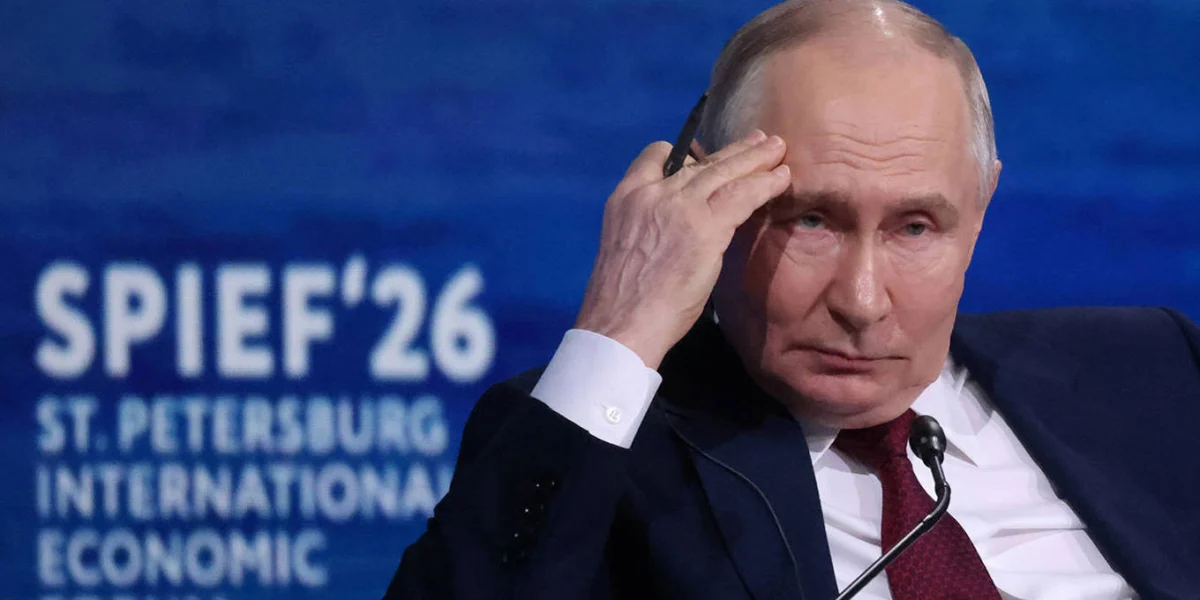
The stark reality facing Russian President Vladimir Putin is a strategic crossroads in the protracted conflict with Ukraine. With Russian forces entrenched in a difficult and costly quagmire in eastern Ukraine, and facing an increasingly bold series of Ukrainian strikes deep within Russian territory, Putin’s options appear starkly limited: negotiate a ceasefire or embark on a path of further escalation. The prevailing indicators strongly suggest a trajectory towards the latter, a choice that portends a significant worsening of the situation for all involved, but with potentially catastrophic consequences for Putin himself.
The Strategic Stalemate and Emerging Threats
For over two years, Russia’s full-scale invasion of Ukraine has devolved into a grinding war of attrition. Despite initial ambitions of a swift victory and regime change in Kyiv, Russian forces have failed to achieve their primary objectives. The eastern Donbas region, particularly areas around Bakhmut and Avdiivka, has witnessed some of the most brutal and protracted fighting, resulting in immense casualties on both sides and minimal territorial gains for Moscow in recent months. The Ukrainian military, bolstered by Western military aid and a fierce determination to defend its sovereignty, has proven to be a resilient and adaptable adversary.
Compounding Putin’s strategic challenges are the increasingly audacious Ukrainian attacks penetrating Russian airspace and territory. These strikes, often employing drones, have targeted military infrastructure, oil refineries, and even the Russian capital itself. While the scale and impact of these attacks vary, their psychological and symbolic significance is undeniable. They demonstrate Ukraine’s growing capability to project power beyond its borders and directly challenge Russia’s perceived security. This escalation of Ukrainian offensive actions adds a significant layer of pressure on Putin, forcing him to confront the war’s consequences on Russian soil.
Putin’s Apparent Choice: Escalation Over De-escalation
The assertion that Putin’s "head is not clear" reflects a widely held assessment that the Russian President is driven by a rigid adherence to his initial war aims and an unwillingness to acknowledge the current realities on the ground. Instead of a pragmatic reassessment that might lead to de-escalation and a search for a diplomatic resolution, the signs point towards a decision to intensify the conflict. This could manifest in several ways, each carrying profound implications.
One potential avenue of escalation involves a renewed and intensified offensive in eastern or southern Ukraine. This would likely involve a significant commitment of additional troops and resources, potentially leading to even greater human cost and further destruction. Another possibility is the expansion of the conflict’s scope, perhaps through strikes on targets in Western Ukraine or even the deployment of more unconventional weaponry, though the latter remains a highly sensitive and potentially catastrophic scenario. The targeting of critical infrastructure within Russia by Ukraine may also provoke a more forceful and widespread retaliatory response from Moscow.
The Quagmire’s Grip: Data and Context
The human and material cost of the war has been staggering. While precise figures are difficult to ascertain due to the fog of war and propaganda from both sides, independent estimates suggest hundreds of thousands of casualties, both military and civilian, since February 2022. Russia’s military expenditure has soared, diverting resources from domestic needs and placing a strain on its economy. The International Monetary Fund (IMF) has projected that Russia’s defense spending could reach 6% of its GDP in 2024, a significant increase from pre-war levels. This sustained commitment of resources to a protracted conflict, with diminishing returns, underscores the "quagmire" described by the author.
The strategic objectives of Russia’s invasion, initially stated as the "denazification" and "demilitarization" of Ukraine, have largely failed to materialize. Ukraine’s government remains firmly in power, its military has been significantly modernized and strengthened through Western assistance, and the country’s national identity and resolve have been solidified by the invasion. The annexation of Ukrainian territories – Crimea in 2014 and parts of Luhansk, Donetsk, Zaporizhzhia, and Kherson in 2022 – has not been internationally recognized and remains a central point of contention.
A Timeline of Escalation and Counter-Escalation
The conflict, which began with Russia’s full-scale invasion on February 24, 2022, has been characterized by phases of intense fighting, periods of relative stalemate, and constant cycles of escalation and counter-escalation.
- February 2022: Russia launches a full-scale invasion, aiming for a rapid capture of Kyiv. Ukrainian forces mount a fierce resistance, repelling the initial assault on the capital.
- Spring-Summer 2022: Russian forces shift focus to eastern and southern Ukraine, capturing significant territory in the Donbas and along the southern coast.
- Autumn 2022: Ukraine launches successful counteroffensives, reclaiming significant territory in the Kharkiv region and liberating Kherson city.
- Winter 2022-2023: The front lines stabilize, with intense fighting concentrated in the Donbas, particularly around Bakhmut.
- Spring-Summer 2023: Ukraine launches a highly anticipated counteroffensive, making incremental gains against heavily fortified Russian defenses.
- Autumn 2023 – Present: Ukrainian forces begin conducting more frequent and sophisticated drone attacks on targets within Russia, including oil refineries and military installations. Russia continues its attritional warfare in eastern Ukraine, while also facing internal pressures and international sanctions.
Reactions and Analyses
The prospect of further escalation has drawn concerned reactions from international actors. Western governments have consistently urged Russia to de-escalate and pursue a diplomatic solution. NATO members have continued to provide substantial military and financial aid to Ukraine, emphasizing their commitment to its sovereignty and territorial integrity.
"Any further escalation by Russia would be met with a resolute response from the international community," stated a senior diplomat from a European Union member state, speaking on condition of anonymity. "The focus remains on supporting Ukraine’s defense and seeking a path towards a just and lasting peace."
Military analysts observe that while escalation might offer Putin a perceived short-term advantage, such as demonstrating resolve or attempting to break Ukrainian morale, it carries immense risks. Increased Ukrainian attacks on Russian territory could further galvanize domestic opposition within Russia and potentially broaden the scope of international condemnation and sanctions. Furthermore, a prolonged and intensified conflict would place an even greater strain on Russia’s economy and military capabilities, potentially leading to long-term strategic vulnerabilities.
The Broader Implications: A World on Edge
The decision to escalate or de-escalate has implications far beyond the immediate battlefields of Ukraine. A further intensification of the conflict could lead to:
- Increased Humanitarian Crisis: A more brutal war would undoubtedly lead to a surge in civilian casualties, displacement, and humanitarian suffering.
- Global Economic Instability: Disruptions to global energy and food markets, already impacted by the conflict, could worsen, leading to inflation and economic hardship worldwide.
- Heightened Geopolitical Tensions: Escalation could further inflame tensions between Russia and the West, increasing the risk of miscalculation and broader conflict.
- Nuclear Risk: While currently a low probability, any significant escalation raises the specter of the use of unconventional weapons, a scenario with unimaginable consequences.
The situation in Ukraine remains fluid and volatile. Vladimir Putin stands at a critical juncture, where his choices will not only determine the fate of Ukraine but also cast a long shadow over global security and stability. The path of escalation, while perhaps seemingly dictated by a desire to avoid perceived weakness, appears to be a gamble fraught with peril, with the greatest risks undoubtedly falling upon the shoulders of the Russian President himself. The world watches, hoping for a turn towards diplomacy and de-escalation, but preparing for the potential ramifications of further conflict.
