

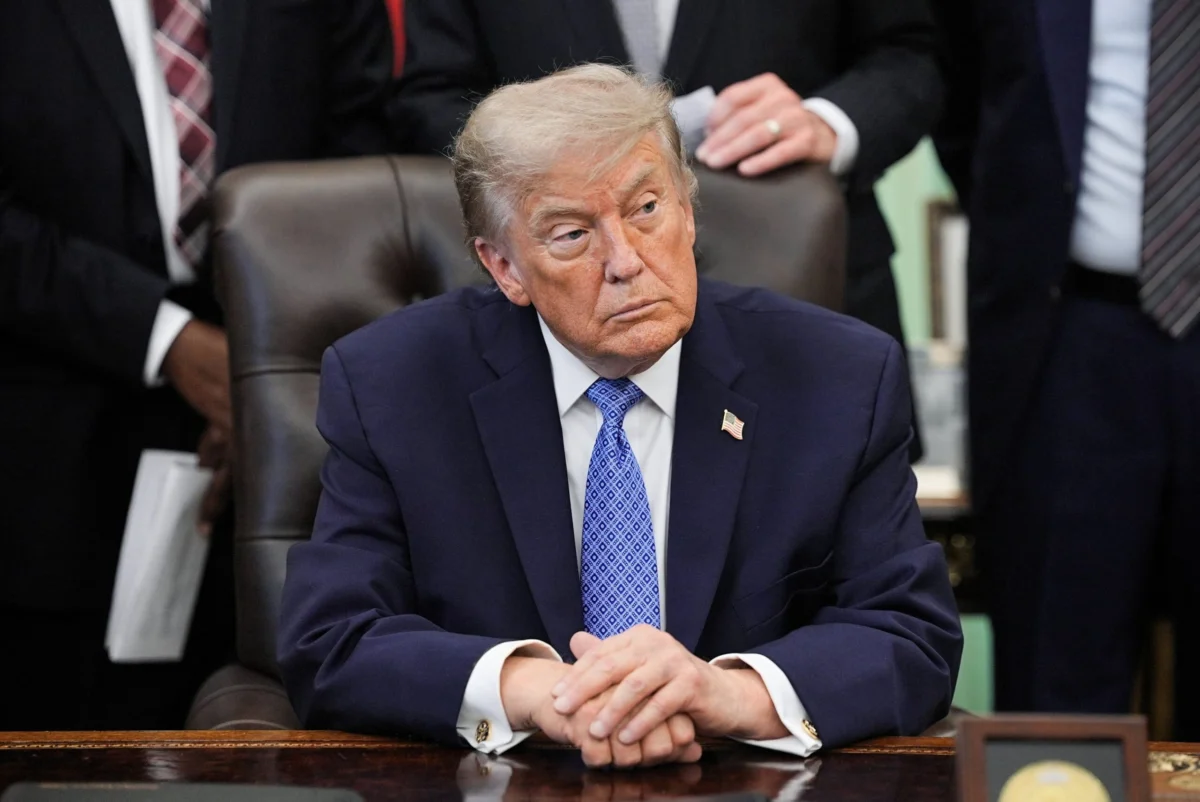
President Donald Trump announced Friday that he would withhold his signature from a landmark bipartisan housing bill, the 21st Century ROAD to Housing Act, passed by Congress with overwhelming support, setting the stage for the legislation to automatically become law at 12:01 a.m. ET Saturday. Trump stated his refusal to sign was a direct protest against the Senate’s failure to advance the controversial election security legislation known as the SAVE America Act, signaling a growing rift between the former president and some Republican leaders in Congress.
The 21st Century ROAD to Housing Act: A Legislative Imperative
The 21st Century ROAD to Housing Act (H.R. 6644) represents one of the most significant bipartisan legislative efforts in decades aimed at addressing the nation’s escalating housing affordability crisis. The bill, formally titled the "Reducing Obstacles to Affordable Development" Act, passed the House of Representatives with a commanding vote of 358-32 and subsequently cleared the Senate with an equally decisive 85-5 margin. These margins far exceed the two-thirds supermajority required to override a presidential veto, underscoring the broad consensus across the political spectrum regarding the urgency of housing reform.
At its core, the legislation seeks to lower costs for homebuyers and curb the influence of institutional investors in the residential real estate market. Key provisions of the act include measures designed to incentivize the construction of new affordable housing units, streamline cumbersome permitting processes at the federal and local levels, and offer targeted assistance to first-time homebuyers. Experts suggest the bill aims to address both the supply-side shortage that has driven up prices and the demand-side pressures exacerbated by large corporate acquisitions of single-family homes, which have priced out many individual buyers. For instance, the bill proposes new grant programs for municipalities that reduce zoning restrictions and expedites environmental reviews for housing projects. It also includes provisions for a federal task force to monitor and report on institutional investor activity in the housing market, with potential for future regulatory recommendations.
A Nation Grappling with Unprecedented Housing Costs
The legislative push for the 21st Century ROAD to Housing Act comes amidst a period of unprecedented strain on American households struggling with housing costs. Just one day prior to Trump’s announcement, the National Association of Realtors (NAR) reported that the median price of an existing home sold in June reached an all-time high of $440,600, marking an increase of 1.8% from the previous year. This figure represents a continuation of a multi-year trend of escalating prices, fueled by a severe housing supply shortage, historically low interest rates that recently began to climb, and robust demand.
According to data from the Department of Housing and Urban Development (HUD), housing inventory has remained historically low across much of the country, particularly for entry-level and mid-range homes. The median home price has surged by over 30% in the last three years alone, far outpacing wage growth for most Americans. Rental costs have also seen significant increases, with the national median rent rising by an average of 5-7% annually in major metropolitan areas over the past two years, according to figures from groups like Zillow and Apartment List. This dual squeeze on both homeownership and rental markets has pushed housing affordability to critical levels, impacting millions of families and becoming a central concern for policymakers and everyday citizens alike. Economists from the Federal Reserve have also pointed to the housing sector as a significant driver of inflation, making the issue a top priority for economic stability.
The SAVE America Act: Trump’s Electoral Priority
President Trump’s decision not to sign the housing bill stems from his insistence on the passage of the SAVE America Act, a piece of legislation focused on election security. This bill is designed to reduce the chance of non-citizens voting in U.S. elections by requiring voters to show photo identification to cast a ballot and proof of citizenship to register for elections. While it is already illegal for non-citizens to vote in federal elections and research by organizations like the Election Innovation Group has consistently shown such instances to be extraordinarily rare, the SAVE America Act has become a cornerstone of Trump’s post-2020 election agenda.
The former president has repeatedly argued that robust election integrity measures are crucial for maintaining public trust in the democratic process. Polling data, however, has indicated mixed public support for the SAVE America Act, with a May Politico poll showing a significant portion of voters uncertain about its necessity or impact, and considerable partisan divides in opinion. Trump, in his Truth Social post on Friday, emphatically claimed the bill has broad support from Americans, despite these polls suggesting otherwise. He views the act as essential for securing future elections and has actively campaigned for its passage, urging his fellow Republicans in Congress to make it their top priority, particularly ahead of the upcoming November midterm elections. This stance aligns with a broader Republican effort in several states to implement stricter voting laws, often citing concerns about election integrity.
Constitutional Mechanics and Presidential Protest
President Trump’s refusal to sign the 21st Century ROAD to Housing Act, rather than issuing a formal veto, leverages a specific constitutional provision. Article I, Section 7 of the U.S. Constitution stipulates that if the President does not veto a bill within 10 days of receiving it (excluding Sundays), the bill "shall be a Law," as if he had signed it. This mechanism, sometimes referred to as a "passive signing" or "default enactment," differs from a pocket veto, which occurs when a president declines to sign a bill and Congress adjourns before the 10-day period expires, effectively killing the legislation. In this instance, Congress remains in session, allowing the bill to automatically become law.
The White House, when pressed by CNBC reporters about the possibility of a veto, simply referred to the president’s Truth Social post, which explicitly stated, "I will not sign the Housing Bill… in PROTEST over the fact that the United States Senate is not capable of passing THE SAVE AMERICA ACT." This strategic move allows President Trump to express his dissatisfaction with the legislative process and exert pressure on the Senate without actually blocking a popular, bipartisan bill that would likely become law anyway given its overwhelming support. By letting it become law through inaction, he avoids being directly responsible for derailing a bill widely seen as beneficial to struggling Americans, while still signaling his commitment to the SAVE America Act.
Chronology of Key Events
The unfolding of this legislative drama can be traced through several key dates:
- Early June 2026: The House of Representatives overwhelmingly passes the 21st Century ROAD to Housing Act (H.R. 6644).
- Mid-June 2026: The Senate follows suit, passing H.R. 6644 with strong bipartisan support.
- June 24, 2026: President Trump abruptly cancels a scheduled signing ceremony for the housing bill, citing his demand for the passage of the SAVE America Act as the reason. This signals his initial intent to use the housing bill as leverage.
- July 9, 2026: The National Association of Realtors releases its report, highlighting record-high median home prices in June, further emphasizing the urgency of housing reform.
- Friday, July 10, 2026 (approximate based on context): President Trump publicly announces via Truth Social his decision not to sign the housing bill, framing it as a protest.
- Saturday, July 11, 2026, 12:01 a.m. ET: The 21st Century ROAD to Housing Act automatically becomes law, fulfilling the constitutional provision.
Political Reactions and Broader Implications
President Trump’s announcement drew swift and sharp criticism from Democrats, who seized on the opportunity to highlight what they termed his indifference to the financial struggles of everyday Americans. Senate Minority Leader Chuck Schumer (D-N.Y.) took to X (formerly Twitter) to condemn the move, writing, "Millions of Americans are being crushed by housing costs. Donald Trump called their crisis ‘a big yawn’ – then refused to sign the most significant bipartisan housing bill in decades. His priorities couldn’t be clearer: higher costs for families and more power for himself." Schumer’s reference to Trump calling the crisis "a big yawn" harks back to earlier remarks by the president that had already sparked controversy.
Representative Jason Crow (D-Colo.) echoed Schumer’s sentiments in his own X post, stating, "The rising cost of mortgages and rent are hitting Americans hard. Yet Trump refuses to act." These reactions underscore the Democratic Party’s broader political messaging ahead of the November midterm elections, where affordability and cost-of-living issues have become central to their campaign to retake control of both chambers of Congress. Democrats aim to paint Trump and, by extension, the Republican Party, as out of touch with the economic realities faced by most voters.
For Republicans, Trump’s move presents a complex political landscape. While many in the GOP caucus supported the housing bill due to its bipartisan appeal and the genuine need to address constituent concerns, the former president’s unwavering focus on the SAVE America Act puts pressure on them. Trump has repeatedly demanded that Senate Republicans eliminate filibuster rules to pass the election bill and other GOP priorities. The filibuster, a Senate procedural tool, requires most legislation to clear a 60-vote threshold, rather than a simple 51-vote majority, for advancement.
Senate Majority Leader John Thune (R-S.D.) has previously defended the filibuster and last month stated that there is not enough support within the GOP caucus to eliminate it and advance the SAVE America Act. Republicans currently hold a 53-47 majority in the Senate, but a handful of GOP lawmakers have publicly signaled their opposition to the election bill itself, making the 60-vote threshold insurmountable for the SAVE America Act without bipartisan support, which has not materialized. This internal division within the Republican Party over both procedural rules and specific legislative priorities highlights the ongoing tension between traditional legislative practices and Trump’s more confrontational approach.
The Filibuster Debate and Future Legislative Challenges
The debate over the Senate filibuster has been a recurring flashpoint in American politics, intensifying in recent years amidst increased partisan gridlock. Proponents argue that the 60-vote rule protects the rights of the minority party, encourages compromise, and prevents the majority from unilaterally enacting radical legislation. Critics, however, contend that it leads to legislative paralysis, stifles progress, and makes it nearly impossible to address pressing national issues.
President Trump’s demand to eliminate the filibuster for the SAVE America Act and other Republican priorities reflects a desire for more decisive legislative action, aligning with his "America First" agenda. However, Senate Republican leaders, including Senator Thune, have historically been wary of abolishing or significantly weakening the filibuster, fearing that it could lead to a legislative "race to the bottom" where future majorities could easily undo their predecessors’ work. The current situation underscores the significant hurdle that the filibuster presents for any legislation lacking broad bipartisan appeal, even when a party controls the presidency and a narrow majority in the Senate.
Outlook: Impact on Policy and Politics
The 21st Century ROAD to Housing Act becoming law without the president’s signature represents a unique moment in modern legislative history. From a policy perspective, the bill’s intended effects on the housing market are now set to proceed, offering potential relief to homebuyers and renters in the coming months and years. Its success will depend on effective implementation and ongoing evaluation of its provisions.
From a political standpoint, Trump’s move serves multiple purposes. It allows him to maintain his image as a political outsider willing to challenge established norms, while simultaneously keeping the issue of election integrity at the forefront for his base. It also demonstrates his continued influence over the Republican Party, even when his demands clash with the legislative strategies of congressional leaders. For Democrats, the incident provides potent ammunition to frame the midterms as a choice between their focus on economic relief for families and what they characterize as Trump’s self-serving political maneuvers. The saga of the housing bill and the SAVE America Act underscores the deep ideological divides and strategic maneuvering that define contemporary American politics, with significant implications for legislative efficacy and the upcoming electoral landscape.
