

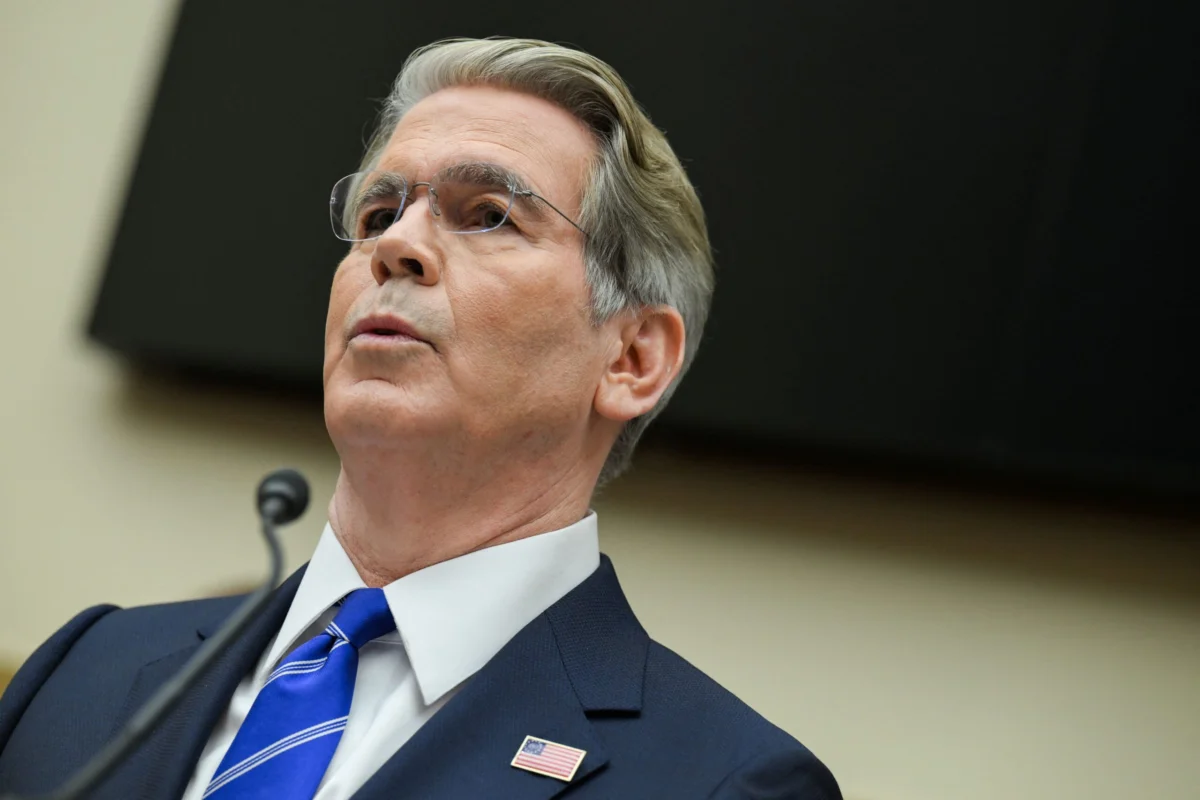
With the midterm election just weeks away, Democrats launched a combative offensive against Treasury Secretary Scott Bessent in a heated House hearing on Tuesday, aiming to portray him as complicit in shielding President Donald Trump from accountability amidst soaring energy prices and mounting consumer debt burdens. The contentious session, ostensibly convened for International Monetary Fund oversight by the House Financial Services Committee, quickly devolved into a partisan battleground, reflecting the high stakes of the upcoming electoral contests.
The Combative Hearing Unfolds
The hearing, held on Capitol Hill in Washington, D.C., on September 15, 2026, saw Secretary Bessent subjected to relentless questioning and frequent interruptions, not only from Democratic lawmakers but also from a group of protestors vocalizing their opposition to U.S. sanctions against Iran and Cuba. The atmosphere was charged from the outset, underscoring the deep ideological divisions regarding the nation’s economic direction and foreign policy.
Representative Ayanna Pressley, D-Mass., set an early aggressive tone, directly challenging Bessent’s public endorsements of the Trump administration’s economic policies. "You go on television and you say Trump’s economic agenda is a great comeback," Pressley asserted, her voice sharp with disbelief. "That makes me question not only your integrity, but if you’re operating in the same reality as the people whom you are accountable to." Her statement encapsulated the Democratic strategy: to connect the administration’s economic rhetoric with the tangible financial struggles faced by everyday Americans, thereby undermining the credibility of the Treasury’s chief.
Bessent, a staunch defender of the administration’s record, presented a spirited defense, attempting to articulate the nuances of the economic landscape and the Treasury’s actions. However, his efforts to provide detailed explanations were often cut short by Democrats who pressed for concise "yes or no" answers on complex issues. This tactic, common in high-stakes congressional hearings, served to control the narrative and prevent the Secretary from elaborating on points that might mitigate the Democrats’ criticisms. The interjections from protestors further amplified the chaotic environment, highlighting broader public discontent with specific U.S. foreign policy stances.
Economic Headwinds and Treasury’s Defense
A central theme of the Democratic attack revolved around the escalating costs of borrowing and energy, which have become significant pain points for American households and businesses. The 10-year Treasury note, a crucial benchmark for a wide array of consumer and business loans, traded at a staggering 5% midday Tuesday, a level not witnessed since 2007. This dramatic rise directly translates into higher borrowing costs across the economy. Last week, for instance, the average 30-year fixed mortgage rate had already climbed past 7%, marking a substantial increase that has priced many prospective homebuyers out of the market and increased the financial burden on those looking to refinance.
Representative Maxine Waters, D-Calif., the ranking Democrat on the House Financial Services Committee, did not mince words when addressing Bessent on this issue. "Despite your feeble efforts, there continues to be a sell-off of U.S. Treasuries," Waters declared, directly attributing the rising yields to a lack of confidence in the Treasury’s management. When Bessent attempted to respond at length, Waters famously held up her hand, stating firmly, "I am reclaiming my time," a move that effectively silenced the Secretary and underscored the Democrats’ control over the hearing’s pacing.
Bessent, however, maintained that his department had actively managed the U.S. Treasury market to mitigate even higher borrowing costs. He highlighted the Treasury Department’s strategic intervention, specifically increasing purchases of certain long-dated Treasury bonds identified as mispriced. Democrats quickly dismissed these buybacks as ineffective, pointing to the continued ascent of long-dated bond yields. Bessent countered this assertion by arguing for a "counterfactual" scenario: without the Treasury’s intervention, bond yields would have been "yet higher," he claimed. He cited two recent bond auctions as "the most successful… in 20 years" as evidence of the department’s efficacy in stabilizing the market, suggesting that the situation, while challenging, would have been far worse without their actions.
Beyond market interventions, Bessent also indicated that he is actively developing deficit-reduction plans, which he believes are crucial for easing upward pressure on Treasury yields. "I believe that the 10-year yield reflects many things, but the need to address the deficit is one of those," Bessent stated, acknowledging the widely held economic principle that fiscal responsibility plays a significant role in investor confidence and government borrowing costs. The national debt, which has expanded considerably over recent years, remains a persistent concern for both parties, albeit with differing approaches to its management.
The Geopolitical Undercurrents
The economic discussion was inextricably linked to geopolitical events, particularly the price of oil. Yields have risen in tandem with crude oil prices, which have recently surged above $100 a barrel. This escalation is largely attributed to a recent "heating up" of the Iran war, a conflict that has significantly disrupted global energy markets and created supply anxieties. The average price of gasoline in the U.S. stood at $4.32 a gallon as of Monday, marking a substantial increase of $1.14 from a year ago, according to AAA data. Diesel prices have seen an even more dramatic spike, reaching $6.23 a gallon, an increase of $2.54 over the past year. These figures directly impact consumer budgets and transportation costs for businesses, fueling public frustration.
Secretary Bessent has been a vocal proponent of the administration’s stance on the conflict, advocating for aggressive measures. His department has notably ratcheted up sanctions on Iran and the financial institutions that facilitate its economic activities. While the administration argues these sanctions are vital for national security and to curb Iran’s regional influence, protestors at the hearing voiced strong objections, arguing that such measures disproportionately harm the Iranian populace and contribute to regional instability, further highlighting the deep divisions over foreign policy’s economic repercussions.
Navigating the AI Frontier
A separate, yet equally critical, thread of testimony focused on the burgeoning field of artificial intelligence (AI), an issue that has increasingly consumed Washington policymakers. Recent statements from leading AI executives expressing profound concerns about the technology’s potential to advance beyond human control have spurred urgent calls for regulation and safety protocols.
Bessent shifted the focus, suggesting that Chinese AI companies pose a greater immediate threat than their U.S. counterparts. He cited a specific incident involving Kimi, a Chinese AI model, which he claimed had "routed some of its users’ queries to Anthropic," a prominent U.S. AI firm and creator of the Claude model. Bessent specifically stated, "Kimi had a breach and sent Chinese weapons plans back to Anthropic," presenting this as the "first known example of a Chinese AI model being involved in a breach." This assertion, if confirmed, would carry significant national security implications, underscoring the geopolitical dimension of AI development and data security. Anthropic did not immediately respond to a request for comment regarding Bessent’s remarks.
While Bessent declined to specify any particular draft regulations or bills he believed would enhance AI safety, he expressed support for arguments made by critics of large AI labs like Anthropic. Former Trump administration AI czar David Sacks, among other detractors, has recently criticized Anthropic, alleging that the company is attempting to push for regulations that would disadvantage open-source AI models in favor of its own proprietary technology. Critics also suggest that these labs are seeking to ease potential liability issues that could arise if their AI tools are misused or compromise other institutions’ security.
"I can tell you what we shouldn’t do on safety is give these labs a liability exemption, which is what they’re asking for," Bessent declared, echoing concerns about accountability in the rapidly evolving AI landscape. He further advocated for fostering domestic innovation, stating, "We need to develop more open source models in the U.S. We can’t let these large labs capture – have regulatory capture." This stance aligns with a growing debate within the AI community about the balance between innovation, competition, safety, and the potential for a few dominant players to unduly influence regulatory frameworks. The implications of such policy choices are vast, touching upon national security, economic competitiveness, and the future trajectory of technological development.
Trump Administration’s Economic Narrative
Despite the intense scrutiny and challenges, Secretary Bessent and House Republicans consistently emphasized the positive aspects of the Trump administration’s economic record. They pointed to the stock market’s performance, noting that while it has experienced recent volatility, the S&P 500 remains near historical highs, having surged approximately 27% since President Trump commenced his second term. This figure, often highlighted by the administration, is presented as a testament to robust investor confidence and corporate profitability under their policies.
The administration also boasts strong employment figures. The economy has continued to generate jobs at a steady pace, coinciding with the administration’s efforts to slow immigration. The national unemployment rate stands at a low 4.1%, a level historically associated with a healthy labor market. Bessent specifically underscored that wage growth for the bottom 25% of earners has outpaced that of the top income brackets, suggesting that economic benefits are broadly distributed and contributing to a more equitable recovery for working-class Americans. Furthermore, he cited that over 64 million tax returns have claimed one of the tax cuts passed last year, arguing these measures have put more money directly into the pockets of taxpayers and stimulated economic activity.
Broader Impact and Political Stakes
The House Financial Services Committee hearing served as a vivid microcosm of the broader political and economic battleground just weeks before the midterm elections. Democrats seized the opportunity to galvanize their base by directly linking the administration’s policies to the economic anxieties of voters – rising gas prices, higher mortgage rates, and mounting consumer debt. Their strategy aimed to frame the midterms as a referendum on the current economic stewardship, hoping to sway undecided voters struggling with inflation and borrowing costs.
Conversely, Secretary Bessent and House Republicans sought to counter this narrative by emphasizing job creation, wage growth, stock market strength, and the perceived benefits of recent tax cuts. Their objective was to portray a resilient economy under the Trump administration, attributing current challenges to external factors like geopolitical conflicts rather than internal policy failures. The heated exchanges on AI also underscored the growing recognition in Washington that technological leadership and regulatory frameworks for emerging technologies will be crucial battlegrounds for national security and economic dominance in the coming years.
As the contentious hearing drew to a close, Bessent acknowledged the challenging nature of the appearance with a wry observation and a shrug. "It started off great," he remarked, a testament to the politically charged atmosphere that permeated the entire session. The debate over economic reality, fiscal responsibility, geopolitical strategy, and technological governance will undoubtedly continue to dominate the political discourse as the nation heads towards the crucial midterm elections, with the outcomes likely to shape the trajectory of domestic and international policy for years to come.
Karen James Sloan and Matt Peterson contributed to this report.
