

May 28, 2026
By Daron Acemoglu
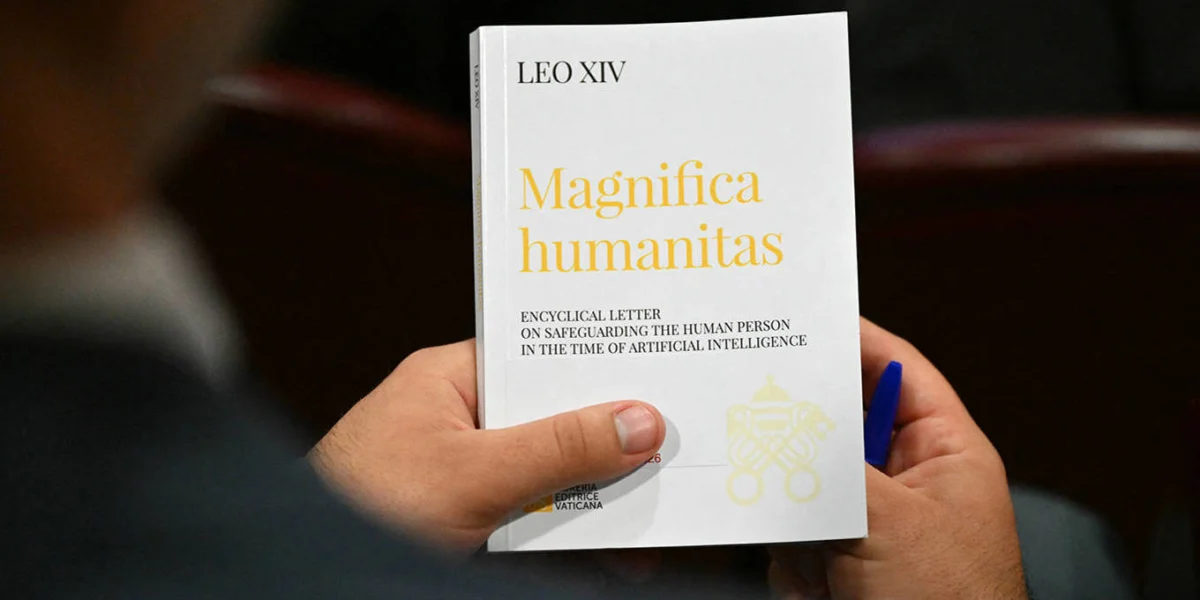
Pope Leo XIV has ignited a fervent global discourse with his inaugural encyclical, a landmark document that boldly posits the rapid development and deployment of artificial intelligence (AI) as a profound threat to fundamental human dignity. While the Pontiff’s pronouncement carries immense moral weight, many observers argue that his call to action may not delve deeply enough into the crucial question of what AI is fundamentally being designed to achieve, and for whom. This seminal papal intervention arrives at a critical juncture, as AI’s pervasive influence continues to reshape every facet of human existence, from communication and information access to labor markets and even the very nature of warfare. Yet, the public conversation surrounding this transformative technology remains remarkably constrained, often confined to the internecine rivalries between leading AI laboratories or to abstract, theoretical discussions about AI’s future capabilities. The pressing question of AI’s intended purpose, and crucially, whether humanity’s current institutional frameworks and control mechanisms are adequately equipped to guide its trajectory toward broadly shared human welfare, is conspicuously absent from mainstream dialogue.
The Papal Intervention: A Moral Reckoning with AI
Pope Leo XIV’s encyclical, titled "On the Digital Dignity of Humanity," was released on May 27, 2026, marking his first major theological and social statement since his election to the papacy in late 2025. The document, a carefully crafted blend of theological reasoning and socio-economic analysis, articulates a deeply held concern that the unbridled pursuit of AI advancement, often driven by commercial interests and geopolitical competition, risks eroding the intrinsic value and autonomy of individuals. The encyclical specifically highlights the potential for AI-driven automation to exacerbate existing inequalities, displace human workers on an unprecedented scale, and create new forms of social stratification based on access to and control over AI technologies. Furthermore, it raises alarms about AI’s capacity for sophisticated surveillance, manipulation, and the potential to undermine democratic processes through the dissemination of hyper-personalized disinformation.
The Vatican’s decision to address AI directly, framing it as a matter of profound moral consequence, underscores the growing recognition among religious and ethical leaders of the technology’s far-reaching societal implications. This intervention is not an isolated event but rather a culmination of increasing apprehension within religious communities worldwide regarding the ethical dimensions of emerging technologies. The encyclical represents a significant shift from traditional papal pronouncements, directly engaging with a secular and rapidly evolving technological landscape.
Context: The Accelerating AI Landscape
The release of the encyclical occurs against a backdrop of unprecedented acceleration in AI development and deployment. Over the past decade, AI has transitioned from a niche academic pursuit to a ubiquitous force influencing global economies and societies. Key milestones in this trajectory include:
- 2015-2018: Significant advancements in deep learning and neural networks lead to breakthroughs in image recognition, natural language processing, and early forms of generative AI. Major tech companies begin substantial investments in AI research and development.
- 2019-2022: The widespread availability of powerful AI models, such as large language models (LLMs), begins to democratize access to advanced AI capabilities. AI starts to integrate into everyday applications, from virtual assistants and recommendation algorithms to early forms of autonomous systems.
- 2023-2025: The pace of innovation intensifies, with AI demonstrating remarkable capabilities in creative tasks, scientific discovery, and complex problem-solving. Concerns about AI’s impact on the labor market, misinformation, and ethical governance begin to gain broader public and political traction. The formation of international working groups to establish AI ethics guidelines and regulatory frameworks becomes a priority for many nations.
- 2026 (leading up to the encyclical): The emergence of highly sophisticated AI systems capable of near-human level performance in specific domains, coupled with increasing deployment in critical sectors like healthcare, finance, and national security, amplifies existing anxieties. Geopolitical tensions surrounding AI supremacy become more pronounced.
The encyclical’s timing is therefore strategic, seeking to inject a moral imperative into a technological race that many fear is proceeding without sufficient ethical guardrails.
Data and Analysis: Quantifying the AI Challenge
The concerns articulated by Pope Leo XIV are supported by a growing body of data and analysis highlighting the potential negative consequences of unchecked AI development.
- Labor Displacement: Projections from various economic institutions, such as the International Labour Organization (ILO) and the World Economic Forum, suggest that AI-driven automation could displace tens of millions of jobs globally in the coming decade. A 2025 report by the McKinsey Global Institute estimated that up to 800 million workers could be displaced by automation by 2030, necessitating significant reskilling and social safety net reforms. The nature of this displacement is particularly concerning, as it may disproportionately affect lower-skilled workers, further widening income inequality.
- Economic Inequality: The concentration of AI development and ownership within a few dominant tech corporations has led to concerns about a widening gap between those who control AI and those who are subject to its effects. A 2026 analysis by the United Nations Conference on Trade and Development (UNCTAD) indicated that in several developed economies, the share of national income going to capital (often amplified by AI-driven productivity gains) has been steadily increasing, while the share going to labor has stagnated or declined. This trend suggests that the benefits of AI might not be broadly distributed.
- Misinformation and Societal Cohesion: The ability of AI to generate hyper-realistic fake content, including text, images, and videos (deepfakes), poses a significant threat to democratic discourse and societal trust. Studies conducted by organizations like the Stanford Internet Observatory have documented the increasing sophistication and scale of AI-powered disinformation campaigns, which can be weaponized to influence elections, incite social unrest, and erode public confidence in institutions.
- Autonomous Systems and Warfare: The development of Lethal Autonomous Weapons Systems (LAWS) raises profound ethical questions about accountability, the dehumanization of conflict, and the potential for unintended escalation. Discussions at the United Nations have highlighted the urgency of establishing international norms and regulations around the development and deployment of such technologies, though consensus remains elusive.
Broader Implications: A Call for Responsible Innovation
Pope Leo XIV’s encyclical is more than just a moral statement; it is a profound call to re-evaluate the very ethos of technological progress. The core of his argument lies in questioning the prevailing narrative that technological advancement is inherently beneficial and that its societal impact will naturally resolve itself through market forces or incremental adjustments. Instead, the encyclical posits that the design and deployment of AI must be guided by a clear understanding of human values and a commitment to the common good.
This perspective challenges the dominant paradigm in AI development, which often prioritizes speed, efficiency, and profit maximization. The Pope urges a shift towards a more human-centric approach, where AI is designed to augment human capabilities, enhance creativity, and foster social well-being, rather than to replace or dominate human agents. This necessitates a fundamental rethinking of the incentives within the AI industry, potentially involving regulatory interventions, ethical frameworks that are more than mere guidelines, and a greater emphasis on public participation in shaping AI’s future.
Reactions and Future Directions
The papal intervention has predictably elicited a range of responses from various stakeholders.
- Technological Sector: Representatives from leading AI companies have largely acknowledged the Pope’s concerns, often reiterating their commitment to ethical AI development. However, some have also emphasized the immense potential of AI to solve global challenges, such as climate change and disease, suggesting that an overly cautious approach could stifle progress. A spokesperson for a major AI research firm stated, "We are committed to developing AI responsibly and are actively engaged in discussions about its ethical implications. The Pope’s message is a valuable reminder of the moral responsibilities that accompany such powerful technology."
- Governments and Policymakers: Governments worldwide are likely to face increased pressure to address the ethical and societal implications of AI more concretely. The encyclical could serve as a catalyst for more robust legislative action, potentially leading to stricter regulations on AI development, increased investment in AI ethics research, and expanded social programs to mitigate the impact of job displacement. Discussions at upcoming G7 and G20 summits are expected to feature AI governance prominently.
- Civil Society and Academia: Ethicists, social scientists, and advocacy groups have largely welcomed the encyclical as a crucial intervention that elevates the ethical debate beyond technical discussions. Many have called for a more inclusive dialogue involving diverse voices, including those from marginalized communities who are often most vulnerable to the negative impacts of technological change. Professor Anya Sharma, a leading AI ethicist at the University of Oxford, commented, "The Pope’s encyclical provides a vital moral compass for our AI journey. It compels us to move beyond discussions of ‘can we’ to the more fundamental question of ‘should we,’ and for whose benefit."
The path forward envisioned by Pope Leo XIV involves a concerted effort to ensure that AI development is not merely a race for technological supremacy but a deliberate and ethical endeavor aimed at enhancing human dignity and fostering a more just and equitable world. This requires a fundamental reorientation of priorities, a commitment to transparency, and a global partnership to guide this transformative technology toward its highest potential for human flourishing. The coming years will undoubtedly be defined by how humanity responds to this profound challenge, a challenge that now bears the moral weight of one of the world’s most influential religious leaders.
