

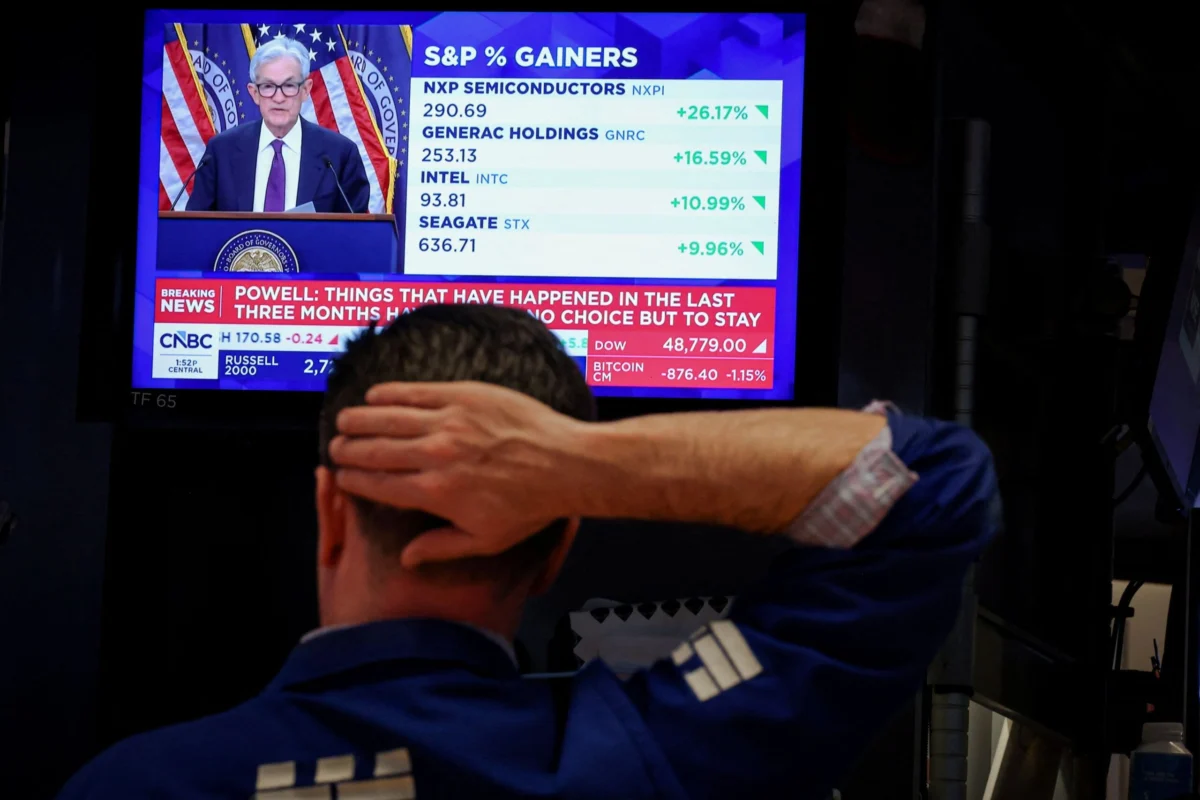
Bond market investors are signaling that the Federal Reserve, under its new leadership, must adopt a more aggressive stance to combat persistent inflation, a sentiment underscored by recent market movements and economic data. Ed Yardeni, president of Yardeni Research, highlighted this shift in investor expectations, suggesting that the central bank is perceived as being behind the curve in its inflation fight. Wall Street anticipates that the Federal Open Market Committee (FOMC) will abandon its previous inclination towards easing monetary policy at its upcoming meeting, replacing it with a clear bias towards tightening conditions.
The current market dynamic, where the yield on the 2-year U.S. Treasury note has surpassed the federal funds rate (FFR), serves as a key indicator of this sentiment. This inversion of short-term yields suggests that bond traders believe the prevailing FFR is insufficient to effectively curb inflationary pressures. "The market is signaling that the current FFR is too low to curb inflation and may have to be hiked," Yardeni noted in a recent client advisory, emphasizing the market’s conviction that further rate increases are likely necessary.
This expectation comes as the U.S. has grappled with inflation exceeding its annual target of 2% for five consecutive years. The Federal Reserve may need to demonstrate a more resolute commitment to raising interest rates to regain credibility and anchor inflation expectations. Yardeni cautioned that a mere removal of the easing bias might not be sufficient to address the deeply entrenched inflationary forces.
The urgency for the Fed to act is amplified by a series of recent inflation readings that have indicated a reacceleration of price pressures, a development exacerbated by recent geopolitical events, specifically the Iran War. This inflationary surge complicates the outlook for Kevin Warsh, President Donald Trump’s nominee to succeed Federal Reserve Chair Jerome Powell. Warsh, who has promised a "regime change" at the central bank, faces the immediate challenge of navigating an economy where inflation is proving more resilient than anticipated.
Inflationary Pressures Re-emerge Amidst Geopolitical Uncertainty
Recent economic data paints a stark picture of resurgent inflation. April’s Consumer Price Index (CPI) revealed an annual increase of 3.8%, marking the highest rate observed since 2023. This figure indicates a significant uptick in the cost of goods and services experienced by consumers. Simultaneously, wholesale inflation, as measured by the Producer Price Index (PPI), surged by 6% over a 12-month period in April, representing the fastest pace of increase since 2022. This substantial rise in wholesale prices often foreshadows future increases in consumer prices, as businesses pass on higher input costs.
The confluence of these inflation reports has sent ripples through financial markets. The reacceleration of price gains, occurring in the wake of the Iran War, which has disrupted global supply chains and energy markets, has intensified concerns about the persistence of inflation. This complex economic backdrop presents a critical test for the Federal Reserve as it transitions leadership.
The Incoming Fed Chair and Market Expectations
Kevin Warsh’s confirmation by the Senate this week marks a significant shift in the Federal Reserve’s leadership. Warsh, a former Fed governor and a vocal critic of the central bank’s accommodative policies, has pledged to implement a more hawkish monetary policy framework. His appointment, championed by President Donald Trump, signals a potential departure from the Fed’s recent trajectory. President Trump has consistently advocated for lower interest rates, arguing that reduced borrowing costs are crucial for stimulating economic growth.
However, the prevailing sentiment among market participants appears to diverge from the President’s calls for rate cuts. Fed funds futures traders, as tracked by CME Group’s FedWatch tool, are currently pricing in no rate cuts for the remainder of the year. Instead, there has been a discernible increase in the market’s pricing of a potential rate hike in the coming months. This shift in expectations reflects a growing conviction among investors that the Federal Reserve may need to raise interest rates to combat inflation, rather than lower them.
Historical Context and the Fed’s Mandate
The Federal Reserve operates under a dual mandate from Congress: to promote maximum employment and stable prices. For years, the Fed maintained a policy of accommodative monetary policy, characterized by low interest rates and quantitative easing, to stimulate economic activity following the 2008 financial crisis and subsequent economic downturns. This approach was largely successful in keeping inflation near its 2% target for an extended period.
However, the economic landscape has fundamentally shifted in recent years. The COVID-19 pandemic led to unprecedented supply chain disruptions and a surge in fiscal stimulus, creating a potent cocktail for inflationary pressures. While initial inflation spikes were often attributed to temporary factors, the persistence of elevated price levels has led many economists and investors to believe that the Fed’s response has been too slow.
The current situation draws parallels to periods in economic history where central banks have struggled to bring inflation under control, often requiring significant monetary tightening that can lead to slower economic growth or even recessions. The challenge for the Fed, and particularly for its new leadership, is to engineer a "soft landing" – to reduce inflation without triggering a severe economic downturn.
The Role of the 2-Year Treasury Yield as an Inflation Barometer
The inversion of the 2-year U.S. Treasury yield relative to the federal funds rate is a closely watched signal by market participants. Typically, the federal funds rate, which is the target rate set by the FOMC for overnight lending between banks, influences short-term borrowing costs throughout the economy. The yield on the 2-year Treasury note reflects market expectations for interest rates over the next two years.
When the 2-year yield rises above the federal funds rate, it suggests that investors anticipate the Fed will raise interest rates significantly in the near future. This expectation is driven by a belief that the current FFR is too low to contain inflation. Investors are essentially demanding a higher return on their short-term government debt to compensate for the expected erosion of purchasing power due to inflation, and to reflect the likelihood of higher policy rates. This market signal indicates a loss of confidence in the Fed’s current policy stance and a desire for more decisive action.
Implications for the Broader Economy
The Federal Reserve’s monetary policy decisions have far-reaching implications for the U.S. economy. Higher interest rates can lead to several effects:
- Reduced Borrowing and Spending: As interest rates rise, the cost of borrowing for consumers and businesses increases. This can lead to a slowdown in spending on big-ticket items like homes and cars, as well as reduced business investment.
- Cooling Inflation: The primary goal of raising interest rates is to curb inflation by reducing aggregate demand. By making borrowing more expensive, the Fed aims to temper spending and investment, which in turn can alleviate upward pressure on prices.
- Stronger Dollar: Higher interest rates can attract foreign investment, leading to an appreciation of the U.S. dollar. A stronger dollar can make imports cheaper but exports more expensive.
- Potential for Slower Economic Growth: Aggressive interest rate hikes, while necessary to combat inflation, can also slow down economic growth. The challenge for policymakers is to strike a balance between price stability and economic expansion.
- Impact on Asset Prices: Higher interest rates can put downward pressure on asset prices, including stocks and bonds, as future earnings and cash flows are discounted at a higher rate.
The market’s current pricing of potential rate hikes, coupled with the persistent inflationary data, suggests that the Federal Reserve under Warsh may be compelled to take a more aggressive approach than previously anticipated. This could involve a series of rate increases, potentially at a faster pace than markets had initially priced in.
Broader Market and Geopolitical Considerations
The reacceleration of inflation is not occurring in a vacuum. The Iran War has introduced significant uncertainty into global energy markets, contributing to higher oil prices, a key driver of inflation. Supply chain disruptions, though perhaps easing in some sectors, remain a concern, particularly in light of geopolitical tensions.
These external factors underscore the complexity of the current economic environment. The Federal Reserve’s ability to control inflation is limited by factors beyond its direct influence. However, its credibility and effectiveness in managing inflation expectations are paramount. Investors will be closely watching how the new Fed leadership communicates its strategy and whether its actions align with the market’s growing calls for a firmer stance against inflation.
The transition of leadership at the Federal Reserve, combined with resurgent inflation and ongoing geopolitical instability, creates a critical juncture for the U.S. economy. The bond market’s clear signal suggests that investors are bracing for a period of tighter monetary policy and are looking to the new Fed chair to deliver on the promise of price stability. The coming months will be crucial in determining whether the Fed can successfully navigate these challenges and steer the economy towards a more sustainable path.
