

As the global community grapples with the escalating climate crisis, policymakers have increasingly embraced the concept of a "just transition" to frame the imperative of decarbonization. This framework, emphasizing moral and emotional resonance, seeks to ensure that the shift away from fossil fuels is equitable and inclusive. However, recent developments in Ethiopia, Pakistan, and South Africa reveal a more pragmatic reality: the rapid adoption of renewable energy in emerging and developing nations is predominantly driven by pressing economic necessities and energy security concerns, rather than solely by climate commitments or a top-down "just transition" agenda.
While emissions targets at both global and national levels are often cited as the primary catalysts for energy transitions, the experiences of these three countries underscore a critical point: decarbonization is not always the outcome of meticulously planned emissions-reduction pathways. Instead, the continually falling costs of renewable energy technologies, coupled with acute economic vulnerabilities, are compelling these nations to phase out fossil fuels as a matter of survival and national interest.
Ethiopia’s Bold Move: EVs as an Economic Lifeline
In a striking policy shift announced in January 2024, Ethiopia implemented an immediate ban on the import of new petrol and diesel vehicles. This decision was not framed as a climate pledge, but rather as a critical measure to alleviate the nation’s substantial annual fossil fuel import bill, which exceeded $5 billion. This expenditure represented a significant drain on Ethiopia’s scarce foreign-currency reserves, impacting its ability to fund essential development projects and manage its economy.
The timing of this policy was particularly strategic, coinciding with the nation’s significant investments in its energy infrastructure. Ethiopia was in the final stages of constructing the Grand Ethiopian Renaissance Dam (GERD), Africa’s largest hydroelectric project. The dam, officially inaugurated in September 2025, promised to generate surplus hydropower capacity. From an economic standpoint, continuing to rely on expensive imported fossil fuels for transportation while possessing abundant, domestically generated clean energy became increasingly illogical.
The market responded swiftly to the import ban. Chinese electric vehicle (EV) manufacturers, notably BYD, quickly filled the void left by internal combustion engine (ICE) vehicles. The streets of Addis Ababa are now visibly populated by a growing fleet of BYD cars. This rapid adoption was further facilitated by government incentives, including tax exemptions and import duty waivers specifically for EVs. Simultaneously, the rising costs of second-hand ICE vehicles made the economic case for EVs even more compelling for consumers. The availability of cheap, abundant hydropower from the GERD directly supports the operational cost savings of these EVs, creating a virtuous cycle of decarbonization driven by economic advantage.
This Ethiopian example highlights how economic and energy security concerns, rather than formal emissions-reduction frameworks, can be powerful accelerators of decarbonization. The swift transformation in its transport sector underscores the potential for pragmatic policy interventions to yield significant environmental benefits.
Pakistan’s Resilience: Solar Power as a Response to Catastrophe
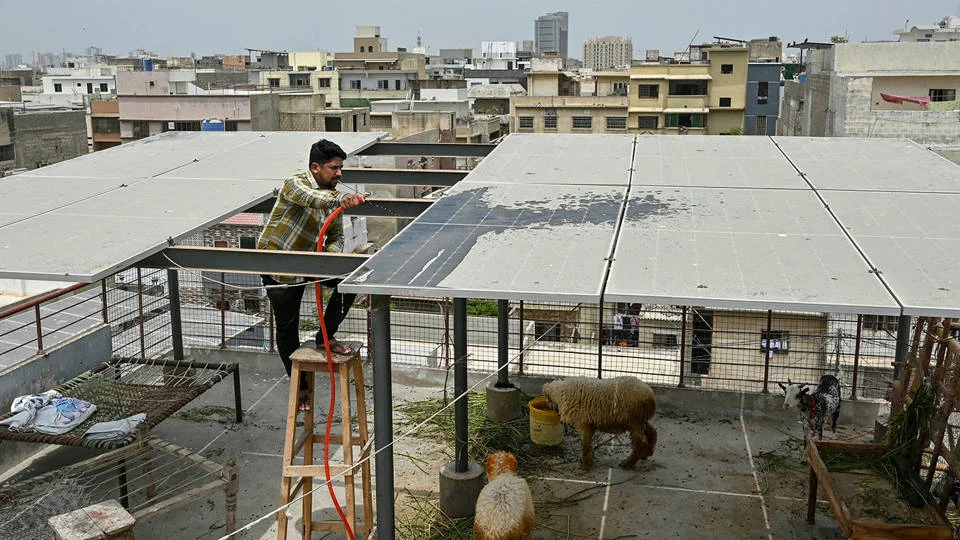
Pakistan’s experience offers another compelling case study where the rapid uptake of solar power was not primarily a product of green advocacy or a meticulously crafted national climate plan, but rather a pragmatic response to overwhelming economic pressures and unique energy security challenges.
The year 2022 proved catastrophic for Pakistan, marked by a devastating flood that submerged approximately one-third of the country. This natural disaster inflicted over $30 billion in economic damage, severely straining government budgets, diminishing household incomes, and critically undermining the state’s capacity to maintain essential public utilities. Amidst this backdrop of widespread devastation and escalating energy costs, the need for an affordable and reliable alternative to expensive diesel-powered electricity generation became acute.
Coincidentally, global market dynamics presented an opportune moment for Pakistan. China, a major producer of solar panels, found itself with surplus manufacturing capacity. Simultaneously, the United States had implemented import restrictions on Chinese solar products. Pakistan was able to leverage China’s discounted solar panel offerings to rapidly expand its renewable energy generation capacity. Between December 2021 and December 2025, the proportion of Pakistan’s electricity generated by solar power increased by a remarkable fivefold, according to data from Ember, an energy analytics organization. This rapid expansion demonstrates how a nation facing unique energy security challenges can capitalize on favorable global trade dynamics and cost advantages to accelerate its transition to cleaner energy sources.
The case of Pakistan illustrates how disruptive events, combined with opportune market conditions, can catalyze significant shifts towards renewable energy, even in the absence of a pre-existing, robust climate policy framework. The urgency created by the flood and the economic imperative to reduce reliance on costly imported fuels propelled a swift adoption of solar technology.
South Africa’s Affordability Crisis: Rooftop Solar as a Consumer-Led Solution
In South Africa, the liberalization of the electricity market, coupled with the persistent issue of load shedding (planned blackouts) and escalating tariffs from the state-owned utility Eskom, has spurred a significant surge in private investment in renewable energy, particularly rooftop solar. In a single year, South Africa witnessed a staggering 349% increase in installed rooftop solar capacity.
While South Africa has had emissions-reduction targets on its agenda for decades, it was the escalating unaffordability crisis in its traditional electricity supply that ultimately served as the primary driver for widespread decarbonization at the household and business level. Eskom’s challenges, including aging infrastructure and financial difficulties, have led to a consistent increase in electricity prices, making alternative energy sources economically attractive.
This consumer-driven adoption of rooftop solar, while a powerful testament to the potential of market forces, also raises questions about equity. Data indicates that lower-income households account for a smaller proportion of the approximately 8 gigawatts of rooftop solar installed in South Africa. This disparity is largely attributable to the high upfront costs associated with solar installations, which can be prohibitive for those with limited financial resources.
The South African experience underscores that even crisis-driven decarbonization necessitates ongoing efforts to improve affordability and ensure inclusive participation in the energy transition. Without targeted interventions, the benefits of clean energy could disproportionately accrue to higher-income segments of the population, potentially exacerbating existing inequalities.
Re-evaluating the "Just Transition" Framework
The experiences of Ethiopia, Pakistan, and South Africa collectively challenge the notion that a "just transition" is primarily a morally driven, top-down policy initiative focused on emissions reduction targets. While these objectives are crucial for global climate stability, the immediate and tangible drivers of rapid decarbonization in these developing economies are rooted in economic imperatives, energy security needs, and the pursuit of affordability.
Policymakers and international development organizations have effectively utilized the "just transition" narrative to build a morally and emotionally compelling case for decarbonization. However, a deeper understanding of the pragmatic forces at play suggests a need to shift focus. Instead of solely concentrating on abstract emissions targets, efforts should be directed towards fostering systemic change that addresses the fundamental economic and structural pressures that are already catalyzing the transition.
Implications for Policy and Resource Allocation
Recognizing that affordability and economic viability are the primary engines of decarbonization in emerging and developing economies has profound implications for how resources are allocated and policies are designed. This insight can inform more effective strategies for both governments and philanthropic organizations.
Channeling funding and support towards enhancing grid capacity, investing in critical energy storage infrastructure, and developing accessible and affordable financing mechanisms for renewable energy projects is likely to yield more durable and impactful results than solely focusing on climate education and communication campaigns. While awareness is important, tangible improvements in people’s lives – such as lower energy bills and reliable electricity access – are more potent drivers of sustained change and broader public acceptance of decarbonization efforts.
The broader impact of this perspective is significant. By acknowledging and adequately responding to the external economic and energy pressures that can support decarbonization pathways, policymakers can create more fertile ground for scaling green solutions and catalyzing systemic change. The experiences of Ethiopia, Pakistan, and South Africa suggest that these economic factors can provide more potent entry points for accelerating the energy transition and fostering widespread adoption of sustainable technologies than solely relying on top-down, morally framed transition plans.
The Path Forward: Integrating Economic Realities with Climate Goals
Ultimately, the global imperative to reduce emissions to prevent catastrophic climate change remains paramount. However, achieving this goal in emerging and developing economies necessitates a pragmatic approach that prioritizes expanding energy access and ensuring affordability. This means recognizing and effectively responding to the powerful external pressures that can naturally drive decarbonization pathways.
Ethiopia’s strategic move to ban fossil fuel vehicle imports, Pakistan’s leveraging of discounted solar panels in the wake of a natural disaster, and South Africa’s surge in rooftop solar driven by escalating electricity costs all point to a common theme: economic self-interest and the pursuit of energy security are powerful catalysts for environmental action. By understanding and harnessing these drivers, policymakers can develop more effective tools and systems, paving the way for a more rapid and sustainable global energy transition that benefits both people and the planet. This commentary was supported in part by the African Climate Foundation.
