

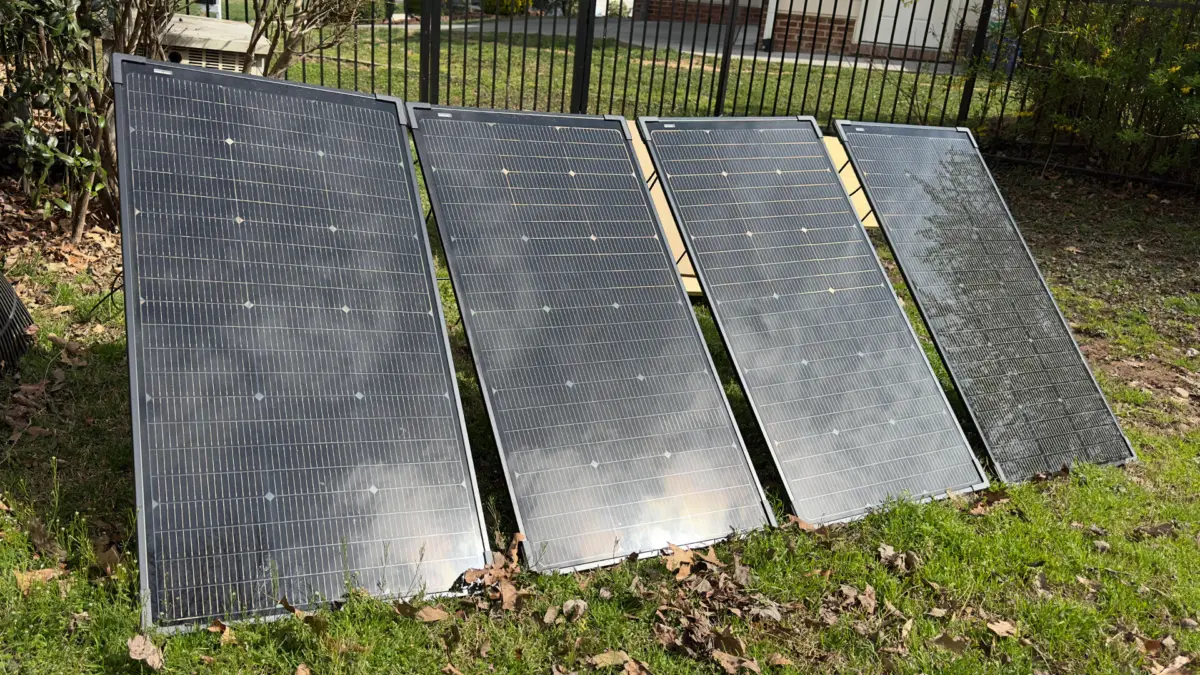
The landscape of residential renewable energy in the United States is undergoing a significant regulatory transformation as several states move to legalize and standardize plug-in solar systems. Often referred to as "backyard" or "balcony" solar, these decentralized energy solutions offer consumers a low-barrier entry into solar power, bypassing the high costs and logistical hurdles of traditional rooftop installations. While Utah pioneered the legalization of these systems, a wave of new legislation across the country is setting the stage for a broader adoption of plug-and-play energy technology between 2025 and 2027.
Understanding Plug-In Solar Technology and Its Appeal
Plug-in solar systems represent a paradigm shift in how homeowners and renters interact with the electrical grid. Unlike traditional solar arrays, which require professional mounting on rooftops and complex hardwiring into a home’s main electrical panel, plug-in systems are designed for simplicity. A typical setup consists of one or more photovoltaic panels, a microinverter to convert Direct Current (DC) into Alternating Current (AC), and often a portable battery storage unit.
The defining characteristic of these systems is their "plug-and-play" nature. The system connects directly to a standard 120-volt household outlet. Once plugged in, the solar-generated electricity is routed to the nearest running appliance, effectively reducing the amount of power the home must draw from the local utility provider. This democratization of solar energy is particularly appealing to apartment dwellers, renters, and homeowners who cannot afford the $15,000 to $30,000 investment typically required for a full-scale rooftop installation.
The Legislative Timeline: A State-by-State Breakdown
The path to legalization has been fragmented, with individual states establishing their own timelines and regulatory frameworks. Utah’s House Bill 340 served as the inaugural piece of legislation in this sector, with an effective date of May 2025. This move signaled to the industry that there was a growing appetite for consumer-grade, decentralized energy solutions.
Following Utah’s lead, several other states have passed legislation with varying implementation dates:
- Maryland: House Bill 1532 (Effective July 1, 2026)
- Vermont: House Bill 598 and Senate Bill 202 (Effective July 1, 2026)
- Maine: Legislative Document 1730 (Effective July 29, 2026)
- Colorado: House Bill 26-1007 (Effective August 12, 2026)
- Connecticut: House Bill 5340 (Effective October 1, 2026)
- Virginia: House Bill 395 and Senate Bill 250 (Effective January 1, 2027)
- California: Senate Bill 868 (Effective January 1, 2027)
- New Hampshire: Senate Bill 540 (Effective January 1, 2027)
- New Jersey: Senate Bill 2368 (Effective March 1, 2027)
In addition to these confirmed states, legislative efforts are advancing in Massachusetts (H.5175 and S3143) and New York, where the SUNNY Act is currently awaiting gubernatorial approval. However, the movement has faced setbacks in states like Georgia, New Mexico, Oregon, Washington, and Wyoming, where plug-in solar bills failed to pass, leaving these systems in a legal gray area or explicitly prohibited.
Technical Hurdles and the Safety Debate
The primary reason plug-in solar has faced historical illegality in the United States stems from the design of the American electrical grid and the National Electrical Code (NEC). Traditional home wiring is designed for a one-way flow of electricity: from the utility grid, through a circuit breaker, to the outlet, and finally to the appliance.
Plug-in solar introduces a "back-feeding" mechanism where electricity flows from the outlet into the home’s internal wiring. Critics and safety inspectors have raised concerns regarding "islanding"—a condition where a solar system continues to feed power into the grid during a power outage, potentially endangering utility workers. Furthermore, if a solar system feeds power into a circuit that is already drawing near its maximum capacity from the grid, the combined current could theoretically exceed the safety limits of the household wiring without tripping the circuit breaker, posing a fire risk.
To address these concerns, modern plug-in systems utilize advanced microinverters that meet UL 1741 and IEEE 1547 standards. These devices are equipped with automatic shut-off mechanisms that detect grid failure, preventing islanding. Legislative efforts are now focusing on mandating these safety standards to ensure that plug-and-play systems are as safe as their professionally installed counterparts.

The Economic Friction with Utility Providers
Beyond technical safety, the legalization of plug-in solar faces significant opposition from investor-owned utilities (IOUs). The widespread adoption of backyard solar represents a direct threat to the traditional utility business model. When consumers generate their own power, they purchase less from the grid, which reduces the revenue utilities use to maintain infrastructure and provide returns to shareholders.
Utility companies often argue that "solar hobbyists" who use plug-in systems are not paying their fair share for the upkeep of the electrical grid, a concept often referred to as "cost-shifting." This has led to intense lobbying efforts to keep plug-in systems illegal or to impose "readiness-to-serve" charges on users. The current wave of legislation seeks to limit the power of these utilities to unilaterally block small-scale solar projects, though the battle over net metering and grid-access fees remains a central point of contention.
Comparative Global Context: The European Model
The United States is currently trailing behind Europe in the adoption of plug-in solar. Germany, in particular, has become a global leader in "balcony solar." The German government recently simplified the registration process and increased the allowable power limit for plug-in systems to 800 watts. This policy shift was driven by a desire to accelerate the energy transition (Energiewende) and reduce reliance on imported natural gas.
The success of the German model has provided a blueprint for U.S. advocates. Data from the European market suggests that when the "right to plug in" is codified into law, adoption rates skyrocket among urban populations. This has led to a more resilient and decentralized grid, providing a buffer during periods of high demand.
The Role of Homeowners Associations and Landlords
Even in states where plug-in solar is legal at the state level, consumers may face secondary obstacles from Homeowners Associations (HOAs) and landlords. Most current state bills focus on preventing utility companies from obstructing solar installations but do not necessarily preempt the private contracts of HOAs or rental agreements.
Some progressive states are beginning to introduce "Solar Rights" legislation that prevents HOAs from banning solar panels based on aesthetic concerns. However, for renters, the path is more complex. Because plug-in systems do not require permanent alterations to the structure, they are theoretically more "renter-friendly," but many lease agreements contain clauses prohibiting the attachment of equipment to balconies or the use of external wiring.
Analysis of Implications and the Future of the Market
The legalization of plug-in solar is expected to trigger a surge in the consumer electronics market. Companies like EcoFlow, Anker, and Jackery, which have traditionally focused on portable power stations for camping, are pivoting toward integrated home energy ecosystems.
As the effective dates for these bills approach in 2026 and 2027, several key trends are likely to emerge:
- Lowering the Carbon Footprint: Small-scale solar contributes to the cumulative reduction of carbon emissions. While one 400-watt panel may seem insignificant, the aggregate effect of millions of such panels across multiple states could significantly offset peak demand on fossil-fuel-burning power plants.
- Grid Resilience: Distributed energy resources (DERs) like plug-in solar reduce the strain on the central grid. In the event of a localized failure, homes equipped with solar-plus-battery setups can maintain essential functions.
- Consumer Empowerment: For the first time, the average consumer has the tools to mitigate rising electricity costs without needing to own a home or take out a five-figure loan.
In conclusion, while the United States is currently a patchwork of conflicting regulations regarding plug-in solar, the momentum is clearly shifting toward legalization. The period between 2025 and 2027 will be a critical era for the American energy sector as it balances the safety requirements of the electrical code, the economic interests of utilities, and the growing consumer demand for accessible renewable energy. As more states clear the legislative path, the "backyard solar" movement is poised to move from a niche hobby to a mainstream component of the national energy strategy.
