

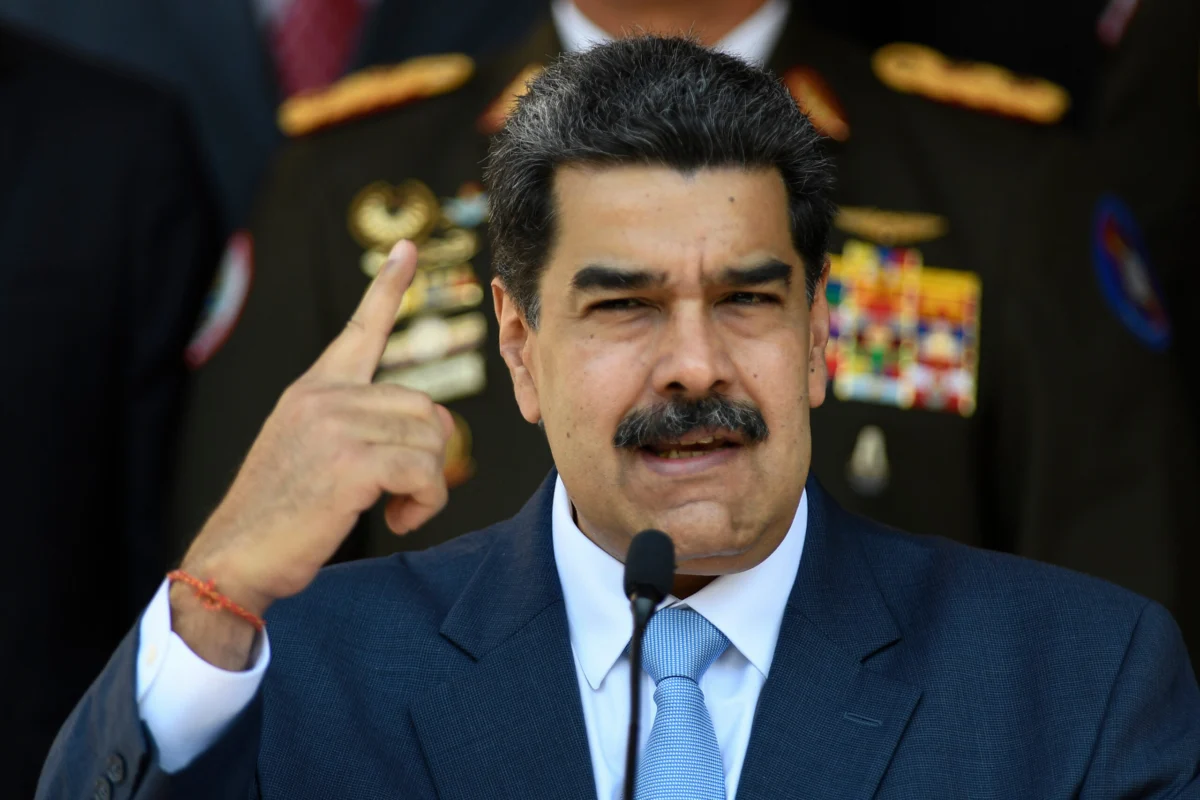
A United States federal judge has set a trial date for June 1, 2027, for former Venezuelan President Nicolas Maduro and his wife, Cilia Flores, who both pleaded not guilty to drug trafficking charges following their controversial abduction from Venezuela in January 2026. The high-stakes legal battle in a New York courtroom promises to scrutinize not only the specific allegations against Maduro but also the legality of the US military operation that brought him to American soil, raising profound questions about international law, sovereign immunity, and the use of extraterritorial force.
The Charges and the Defense’s Strategy
Maduro faces four counts, including "narco-terrorism" conspiracy and cocaine importation conspiracy, charges that could lead to a life sentence if he is convicted. Cilia Flores also faces related drug trafficking allegations. The indictment, initially unveiled by the US Department of Justice in March 2020, accused Maduro and several high-ranking Venezuelan officials of operating a "narco-terrorism partnership" with the Revolutionary Armed Forces of Colombia (FARC) for two decades, allegedly using Venezuela as a transit point for cocaine destined for the United States. US authorities offered a $15 million reward for information leading to Maduro’s arrest, signaling the gravity with which Washington viewed these accusations.
During his arraignment in January 2026, Maduro vociferously declared his innocence, stating, "I am not guilty. I am a decent man, the constitutional president of my country." This assertion underscores the core of his defense strategy, which extends beyond factual innocence to a fundamental challenge of the court’s jurisdiction. His lawyer, Barry Pollack, has unequivocally stated his intention to challenge the legality of the military raid that captured Maduro and brought him to the US for trial. Pollack’s primary line of attack will be based on the principle of sovereign immunity, arguing that as a sitting head of state at the time of the alleged offenses and his abduction, Maduro is immune from prosecution in foreign courts. If successful, this challenge could result in the dismissal of the case without a full trial on the merits of the drug charges. The defense’s initial filings are expected to vigorously argue that the US lacked the legal authority under international law to abduct a sitting foreign head of state and compel his appearance in an American court. Neither Maduro nor Flores has requested to be released on bail, and Judge Alvin Hellerstein, presiding over the case, set the 2027 trial date at the request of attorneys from both sides, indicating the complex and extensive preparatory work anticipated by both prosecution and defense.
A Contentious Abduction: The January 2026 Operation
The circumstances surrounding Maduro’s presence in a US courtroom are themselves at the heart of the legal and political controversy. In January 2026, a US military operation was launched against Caracas, Venezuela, ostensibly to apprehend Maduro and Flores. The Trump administration justified this military raid as a "surgical law enforcement operation" aimed at bringing an alleged narco-terrorist to justice. However, this characterization was immediately and widely disputed. Venezuelan authorities reported a devastating toll from the operation, claiming 83 lives, predominantly Venezuelan soldiers and civilians caught in the crossfire. International legal scholars and human rights organizations swiftly condemned the abduction, terming it "illegal" and a flagrant violation of international law.
The unilateral deployment of military force by one sovereign nation within the territory of another, without the explicit consent of the host nation or a UN Security Council resolution, is a clear breach of the fundamental principles of national sovereignty and non-intervention enshrined in the United Nations Charter. Critics argued that even if the US held legitimate concerns about drug trafficking, such an operation constituted an act of aggression and undermined the very framework of international legal order. The 2026 incident represented an unprecedented escalation in US efforts to effect regime change or judicial action against foreign leaders, drawing parallels, albeit with significant distinctions, to past controversial US interventions.
Historical Context: US-Venezuela Relations and the Genesis of the Charges
The dramatic events of 2026 did not unfold in a vacuum but were the culmination of decades of increasingly strained relations between the United States and Venezuela. Tensions intensified significantly after the rise to power of Hugo Chávez in 1999, who pursued a socialist agenda and frequently clashed with Washington. Under Chávez and later Maduro, Venezuela deepened ties with US adversaries like Cuba, Russia, and China, further exacerbating bilateral relations.
By the mid-2010s, Venezuela was plunged into a severe economic and humanitarian crisis marked by hyperinflation, widespread shortages, and mass migration. The US, under both the Obama and Trump administrations, responded with a series of escalating sanctions targeting Venezuela’s oil industry, financial sector, and numerous individuals within Maduro’s government, including Maduro himself. Washington, alongside dozens of other nations, recognized opposition leader Juan Guaidó as Venezuela’s legitimate interim president in 2019, dismissing Maduro’s 2018 re-election as fraudulent. This "maximum pressure" campaign sought to isolate Maduro’s government, force a democratic transition, and address what the US perceived as a growing threat of drug trafficking and state-sponsored corruption.
The formal indictment against Maduro and 14 other current and former Venezuelan officials in March 2020 was a significant escalation, explicitly linking the drug trafficking charges to the broader US policy goal of isolating and eventually removing Maduro from power. The US Justice Department alleged that Maduro and his associates were part of the "Cartel of the Suns," a purported network of high-ranking Venezuelan officials involved in international drug trafficking. Venezuela, strategically located as a transit hub for cocaine produced in neighboring Colombia, has long been a focal point for US counter-narcotics efforts. The 2020 indictment laid the groundwork for the extraordinary actions taken in 2026, framing the abduction not as an act of war or regime change, but as a legitimate law enforcement action against a criminal enterprise headed by a sitting president.
The Legal Battleground: Sovereign Immunity and Extraterritorial Jurisdiction
The upcoming trial will thrust the complex interplay between sovereign immunity, international law, and US domestic jurisdiction into the global spotlight. Sovereign immunity is a cornerstone of international law, generally protecting heads of state, diplomats, and foreign governments from legal proceedings in other countries’ courts. The rationale is to ensure the smooth functioning of international relations and prevent political weaponization of legal systems. Maduro’s defense will argue that as a recognized head of state (even if his legitimacy was disputed by the US), he was immune from arrest and prosecution.
However, US legal precedent on this matter is not entirely straightforward. The "Ker-Frisbie doctrine," derived from US Supreme Court cases, generally holds that the manner in which a defendant is brought before a US court does not necessarily invalidate the court’s jurisdiction over the defendant, even if the apprehension was illegal under international law. A notable and highly controversial precedent is the 1989 US invasion of Panama and the subsequent trial of its de facto leader, Manuel Noriega, on drug trafficking charges. Noriega was abducted, brought to the US, and ultimately convicted. While the Noriega case established a controversial precedent within the US legal system, it remains a contentious point in international law, with many scholars arguing it was an exception rather than a rule, and that it significantly eroded principles of national sovereignty.
The Maduro case differs in several critical aspects. Unlike Noriega, who was arguably no longer a recognized head of state at the time of his capture, Maduro consistently maintained control over state institutions and was recognized by a significant portion of the international community, including the United Nations, as Venezuela’s legitimate president until his abduction. Furthermore, the explicit military operation into a sovereign capital to seize a head of state is an extreme measure that tests the boundaries of self-defense and UN Charter Article 2(4) prohibiting the threat or use of force against the territorial integrity or political independence of any state. The defense will likely contend that the abduction was a grave violation of Venezuela’s sovereignty and an abuse of international legal norms, rendering any subsequent US prosecution illegitimate.
Timeline of Events Leading to the Trial
- March 2020: The US Department of Justice unseals indictments against Nicolas Maduro and 14 other high-ranking Venezuelan officials on charges of narco-terrorism, drug trafficking, and money laundering. A $15 million reward is offered for Maduro’s capture.
- 2020-2025: US maintains "maximum pressure" campaign against Maduro’s government, including sanctions and diplomatic isolation, while Maduro consolidates power internally despite economic collapse.
- January 2026: A US military operation is launched against Caracas, Venezuela, leading to the abduction of Nicolas Maduro and Cilia Flores. Venezuelan authorities report 83 casualties.
- January 2026 (Days after abduction): Maduro is arraigned in a US federal court, pleads not guilty, and declares himself the constitutional president of Venezuela.
- March 2026: A US judge weighs the Trump administration’s decision to bar Venezuelan funds from being used for Maduro’s defense, raising concerns about access to legal counsel.
- April 2026: The US government, after legal challenges, allows the Venezuelan government (now under interim President Delcy Rodriguez) to cover Maduro’s lawyer fees, ensuring his right to legal representation.
- May 2026 (Wednesday): Judge Alvin Hellerstein sets the trial date for Nicolas Maduro and Cilia Flores for June 1, 2027, in a New York federal court. Maduro’s lawyer reiterates plans to challenge the legality of the abduction and the trial on grounds of sovereign immunity.
- June 1, 2027: Scheduled commencement of the landmark trial.
International Reactions and Legal Scrutiny
The abduction and impending trial have elicited a strong chorus of reactions from various international actors. While the Trump administration hailed the operation as a victory for justice and a blow against narco-terrorism, international legal experts widely condemned it as a dangerous precedent. The United Nations Secretary-General, while not directly commenting on the charges, issued a statement reiterating the importance of adherence to international law, including respect for national sovereignty and the peaceful resolution of disputes.
Human rights organizations expressed alarm over the method of apprehension, highlighting the reported casualties and the potential for extrajudicial actions to undermine global rule of law. The Organization of American States (OAS), deeply divided on Venezuelan issues, saw renewed debates over interventionism versus non-intervention. While some member states aligned with the US position, others voiced grave concerns about the implications for regional stability and international legal norms. Legal scholars from various continents submitted amicus briefs and published articles arguing that the US had overstepped its jurisdiction, violated fundamental tenets of international law, and set a perilous precedent for the treatment of sovereign leaders. They emphasized that even in cases of serious alleged crimes, due process must adhere to established international legal frameworks, not unilateral military actions.
The Political Aftermath in Venezuela
The immediate political fallout in Venezuela was profound. Following Maduro’s abduction, a power vacuum emerged, which was swiftly filled by interim President Delcy Rodriguez. Previously serving as Maduro’s Vice President, Rodriguez’s ascent to the presidency marked a significant shift in Venezuela’s geopolitical alignment. Unlike Maduro, who staunchly opposed US influence, Rodriguez’s interim government has demonstrated a willingness to cooperate more closely with US interests. This alignment has been viewed by some as a calculated move to stabilize the country and potentially alleviate the crippling sanctions that had devastated Venezuela’s economy.
Under Rodriguez, there has been an observable pivot towards rapprochement with Washington, including discussions on oil exports, humanitarian aid, and security cooperation. This new political reality raises questions about the long-term democratic trajectory of Venezuela and the extent of US influence in shaping its future. While the US justified its actions as bringing a criminal to justice, the outcome has also effectively installed a more amenable government, fulfilling a key foreign policy objective that years of sanctions and diplomatic pressure had failed to achieve. This shift is likely to have significant implications for Venezuela’s internal politics, its relations with neighboring countries, and its position within global alliances.
Broader Implications for International Law and US Foreign Policy
The trial of Nicolas Maduro is poised to be a landmark case with far-reaching implications for international law and US foreign policy. If the defense’s sovereign immunity challenge fails, it could significantly weaken the principle of head-of-state immunity, potentially exposing other world leaders to similar extraterritorial prosecutions, regardless of the legality of their apprehension. This could create a chilling effect on international diplomacy and relations, as leaders might become more wary of international travel or interaction.
For US foreign policy, the case reinforces a perception of unilateralism and a willingness to use military force to achieve legal and political objectives, even at the cost of international condemnation and human lives. While the US asserts its commitment to combating drug trafficking and promoting democracy, critics argue that such actions can undermine the very international norms that the US often champions. The precedent set by this case could embolden other powerful nations to undertake similar operations, leading to increased global instability and a breakdown of the post-World War II international order.
The trial will also test the US legal system’s capacity to navigate complex international law issues in domestic courts. The world will be watching to see how US judges balance national security interests and law enforcement imperatives with fundamental principles of state sovereignty and human rights. Regardless of the verdict, the Maduro trial will undoubtedly remain a subject of intense debate and analysis, shaping future discussions on international jurisdiction, the limits of national power, and the evolving landscape of global governance. The legal arguments, the geopolitical context, and the dramatic circumstances of Maduro’s capture ensure that this trial will be a pivotal moment, scrutinized by legal scholars, political analysts, and human rights advocates worldwide.
