

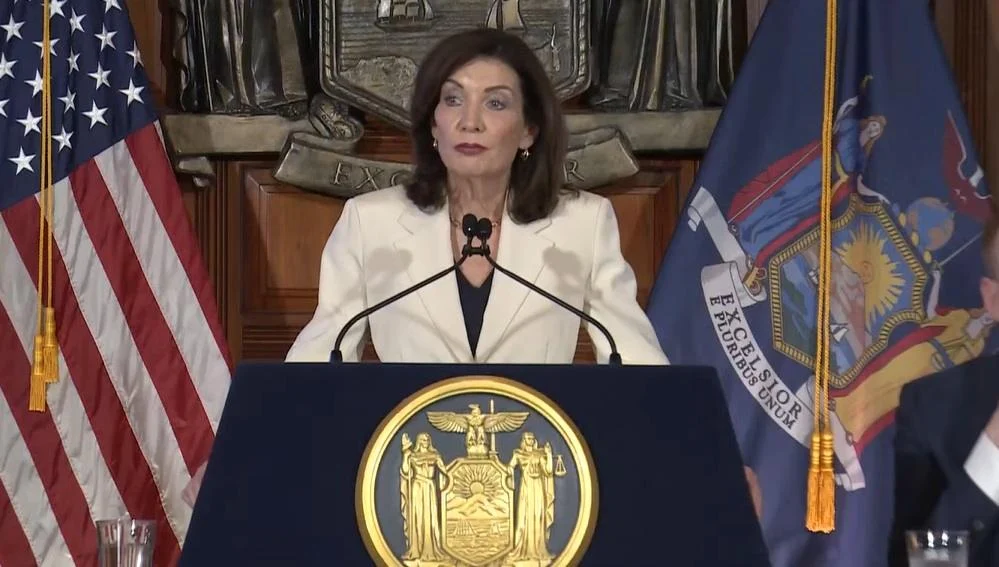
Governor Kathy Hochul has reached a definitive agreement with state legislators on the 2027 State Budget, a move that marks a significant retreat from the ambitious climate mandates New York established nearly a decade ago. The deal, announced early Monday, includes provisions to delay the implementation of emissions reduction regulations and effectively replaces a looming 2030 greenhouse gas (GHG) reduction target with a more distant 2040 goal. This legislative pivot follows months of warnings from the Governor’s office that the state’s original environmental trajectory had become economically untenable amidst a shifting federal political landscape and rising infrastructure costs.
Under the terms of the new agreement, New York will push back the deadline for the Department of Environmental Conservation (DEC) to adopt and enforce economy-wide emissions regulations. While a 2025 court order had initially mandated these regulations be in place by early 2026, the new budget deal extends that window to 2028. Furthermore, the cornerstone of the state’s 2019 Climate Leadership and Community Protection Act (CLCPA)—the requirement to reduce GHG emissions by 40% below 1990 levels by 2030—has been superseded by a new interim target of a 60% reduction by 2040. The ultimate goal of an 85% reduction by 2050 remains on the books, though experts suggest the path to achieving it has been significantly altered.
A Strategic Pivot in the Face of Economic Headwinds
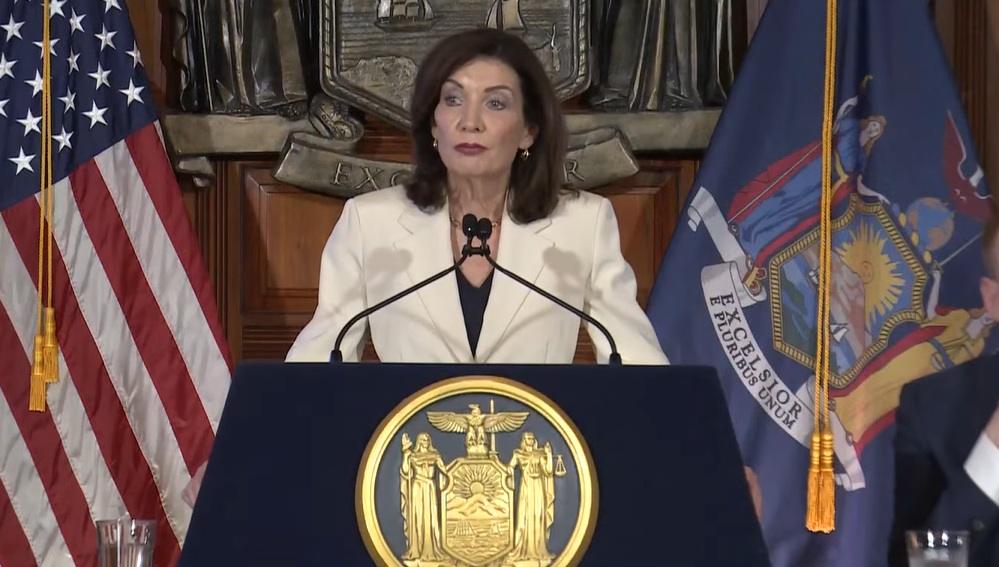
The Governor’s decision to renegotiate these targets reflects a burgeoning "climate realism" that has begun to permeate state-level politics. Speaking at a press conference following the budget announcement, Governor Hochul emphasized that while the state remains committed to a green transition, the pace of that transition must respect the financial realities facing New York households and businesses.
"New York has led and will continue to lead on clean energy and climate, but reality has been harsh," Hochul stated. "We cannot meet the current timelines without driving energy costs higher. The facts bear that out, and I cannot let that happen. We have to strike the right balance between our clean energy ambitions and the affordability pressures that real New Yorkers are facing right now."
The Governor specifically pointed to a "full-on assault on renewables" at the federal level, citing policy shifts under the Trump administration and Republican-led initiatives that have rolled back tax incentives and increased the regulatory burden for interstate energy projects. These external factors, combined with high interest rates and supply chain bottlenecks in the offshore wind and solar sectors, have driven the projected costs of New York’s transition upward by tens of billions of dollars.
The Accounting Shift: Moving from 20-Year to 100-Year Standards
One of the most technical and controversial aspects of the new budget deal is the modification of how New York measures its greenhouse gas emissions. Since the passage of the CLCPA in 2019, New York has been an outlier in its use of a 20-year time horizon for measuring the Global Warming Potential (GWP) of gases like methane. This "GWP20" standard is much more sensitive to the short-term impact of methane leaks from natural gas infrastructure, making the state’s reduction targets significantly harder to meet.
The new deal aligns New York with the more common 100-year standard (GWP100) used by the federal government and the Intergovernmental Panel on Climate Change (IPCC) for international reporting. While the Governor’s office argues this change ensures consistency with global standards and provides a more stable framework for industry, environmental advocates have criticized the move as "accounting gymnastics." By switching to a 100-year metric, the perceived impact of methane—a potent greenhouse gas—is diluted over a longer period, effectively lowering the state’s current calculated emission levels on paper without actually reducing the amount of gas entering the atmosphere.
Chronology of the Climate Mandate Rollback
The path to this budget deal has been marked by legal battles and missed deadlines. To understand the gravity of the 2027 budget changes, it is necessary to look at the timeline of New York’s climate policy:
- July 2019: The CLCPA is signed into law, mandating a 40% reduction in GHG emissions by 2030 and 85% by 2050. It also requires 70% of electricity to come from renewable sources by 2030.
- January 2024: The DEC misses the statutory deadline to finalize the regulations needed to enforce the CLCPA targets.
- Early 2025: Governor Hochul begins public messaging regarding the "crushing costs" of the climate mandates, signaling a desire to amend the law.
- Late 2025: The Supreme Court of New York rules in a lawsuit brought by environmental groups, ordering the DEC to issue regulations by early 2026 or face legal sanctions, unless the legislature intervenes to change the law.
- May 2026: The 2027 Budget agreement is reached, formally pushing the regulation deadline to 2028 and shifting the interim target to 2040.
Economic Data and Infrastructure Realities
The pushback on climate goals is rooted in a series of economic reports that emerged throughout 2025. Analysis from the New York Independent System Operator (NYISO) warned that the state’s grid reliability was at risk if fossil fuel plants were retired as quickly as the 2019 law required. NYISO data suggested a "reliability gap" in New York City as early as 2028 if new renewable generation and storage did not come online at a rate three times faster than current trends.
Furthermore, the cost of offshore wind projects—once seen as the backbone of New York’s renewable future—has skyrocketed. Contract prices for major projects off the coast of Long Island have seen requests for 30% to 50% increases to account for inflation and higher borrowing costs. State officials estimated that sticking to the original 2030 timeline would have resulted in an average increase of 15% to 20% in residential utility bills over the next five years.
Reactions from Stakeholders
The reaction to the Governor’s deal has been sharply divided along ideological and industrial lines.
Environmental Advocates: Groups such as the New York Renews coalition and the Sierra Club expressed deep disappointment, labeling the deal a "betrayal of future generations." In a joint statement, several advocacy groups argued that delaying regulations by two years and pushing the interim target to 2040 would allow fossil fuel infrastructure to remain active longer than the planet can afford. "We are trading long-term climate stability for short-term political convenience," said a spokesperson for the coalition.
Business and Industry Groups: Conversely, the Business Council of New York State and various chambers of commerce welcomed the news. They argued that the original 2030 targets were based on "aspirational math" rather than engineering reality. "This deal provides the breathing room necessary for businesses to adapt without facing an energy price shock that would have driven employers out of the state," said a representative for the Business Council.
Labor Unions: The reaction from labor has been mixed. While trades involved in traditional energy infrastructure welcomed the job security provided by the delay, unions involved in the burgeoning "green economy" expressed concern that the delay might stall investment in new manufacturing facilities for wind and solar components.
Analysis of Implications for New York’s Energy Future
The decision to push back the climate goals has several long-term implications for the Empire State. First, it signals a shift in leadership. New York was previously positioned as the vanguard of climate policy in the United States, often competing with California to set the most aggressive standards. By easing its targets, New York may provide political cover for other states facing similar economic pressures to scale back their own environmental commitments.
Second, the delay in regulations until 2028 creates a period of "regulatory limbo." While the 2040 target of a 60% reduction is still significant, the lack of immediate enforcement mechanisms may lead to a slowdown in private sector investment in carbon-capture technology and building electrification. Investors typically seek certainty; the shifting of goalposts may make capital more expensive for New York-based green projects.
Third, the grid reliability issue remains a looming shadow. While the delay provides more time to keep older plants running, it does not solve the fundamental challenge of building a modern, decentralized grid. The state must still find a way to accelerate the permitting of transmission lines to bring hydropower from Canada and wind power from upstate to the high-demand centers in the south.
Conclusion
The 2027 New York State Budget deal represents a significant recalibration of one of the most ambitious climate policies in the world. By moving the interim target to 2040 and adopting a 100-year accounting standard for emissions, Governor Hochul has prioritized economic stability and utility affordability over the strict adherence to the 2019 CLCPA timelines.
As the state moves toward the new 2028 deadline for regulations, the focus will likely shift from setting targets to the practicalities of implementation. The Governor’s office maintains that the 2050 net-zero goal is still the "North Star" of New York policy, but the path to that destination has undoubtedly become longer and less certain. For New Yorkers, the immediate result is a reprieve from anticipated energy price hikes, but for the global climate movement, the deal is a sobering reminder of the friction between environmental idealism and the hard realities of 21st-century economics.
