

The Malaysian Ministry of Investment, Trade and Industry (MITI) has officially announced a sweeping recalibration of its automotive import policies, introducing a high price floor and performance benchmarks for fully imported electric vehicles (EVs). Effective July 1, 2026, the new regulations mandate a minimum Cost, Insurance, and Freight (CIF) value of RM200,000 (approximately $47,000) for all Completely Built-Up (CBU) electric vehicles entering the country. When factoring in the mandatory excise duties, import taxes, and sales taxes, the effective retail price for any imported EV in the Malaysian market will now start at approximately RM300,000 (roughly $70,000).
This strategic policy shift is designed to create a protected "green zone" for Malaysia’s national automakers, Proton and Perodua, allowing them to dominate the mass-market EV segment without facing direct price competition from lower-cost foreign imports. By mandating a premium price entry point for foreign brands, the government aims to force a clear market segmentation: domestic brands will cater to the affordable and middle-income brackets, while foreign manufacturers will be relegated to the luxury and high-performance categories.
The Strategic Protection of National Champions
For decades, Malaysia’s automotive landscape has been defined by its commitment to its national car projects. Proton, established in the 1980s, and Perodua, which followed in the 1990s, have long benefited from various forms of tariff protection. As the global automotive industry pivots toward electrification, the Malaysian government is taking proactive steps to ensure that its domestic pillars are not hollowed out by the rapid influx of high-tech, low-cost EVs, particularly those originating from China.
The primary beneficiary of this policy is Proton, which is currently preparing for the launch of its dedicated EV sub-brand, e.MAS. The upcoming Proton e.MAS 5, built on the Global Modular Architecture developed in collaboration with Geely, is positioned to be a high-volume seller. Previously, Proton faced significant pressure from the "price wars" initiated by Chinese manufacturers like BYD and Great Wall Motor (GWM). With the new RM300,000 floor for imports, the e.MAS 5 and subsequent Perodua EV models will have a massive price advantage, effectively operating in a market vacuum where foreign competitors are legally barred from undercutting them.
Technical Thresholds and Market Segmentation
The new MITI directive does not rely solely on price to regulate the market; it also introduces a performance-based barrier. Imported CBU electric vehicles must now produce a minimum power output of 180 kW (approximately 245 PS or 241 horsepower). This requirement serves a dual purpose. First, it ensures that any vehicle sold at the RM300,000 price point offers performance metrics commensurate with a luxury vehicle, preventing "badge engineering" where manufacturers might attempt to sell low-spec city cars at inflated prices just to meet the legal minimum.
Secondly, the 180 kW threshold excludes a vast majority of the world’s most popular "affordable" EVs. For example, many versions of the BYD Dolphin, the GWM Ora Good Cat, and even certain configurations of the Tesla Model 3 and Model Y fall below this power output. By combining a high price floor with a high performance floor, Malaysia is effectively ensuring that the "entry-level" EV segment remains the exclusive domain of locally manufactured or assembled vehicles.
Impact on Foreign Manufacturers and the CKD Pivot
The immediate impact on foreign automakers is profound. Brands that have spent the last two years establishing a foothold in Malaysia’s burgeoning EV market now find their business models under threat. Vietnamese automaker VinFast, which had planned to introduce its value-oriented VF5 model to the Malaysian market, now faces a scenario where a vehicle designed to be affordable must be sold at a luxury price point. Industry analysts suggest that selling a compact crossover like the VF5 for RM300,000 would be commercially unviable.
Consequently, foreign manufacturers are being nudged—if not forced—toward Completely Knocked Down (CKD) operations. By assembling vehicles locally in Malaysia, manufacturers can bypass the CBU price floor and import restrictions. VinFast has already indicated that it is studying the feasibility of a local assembly plant to maintain its price competitiveness. Similarly, Chinese giants like BYD and Chery are reportedly accelerating their discussions with local partners to establish assembly lines within Malaysian borders.
This "forced localization" is a core component of the Malaysian government’s broader economic strategy. By incentivizing CKD operations, Malaysia hopes to attract high-value foreign direct investment (FDI), create high-skilled jobs in the EV supply chain, and foster a local ecosystem for battery management systems, electric motors, and power electronics.
Rapid Expansion of Charging Infrastructure
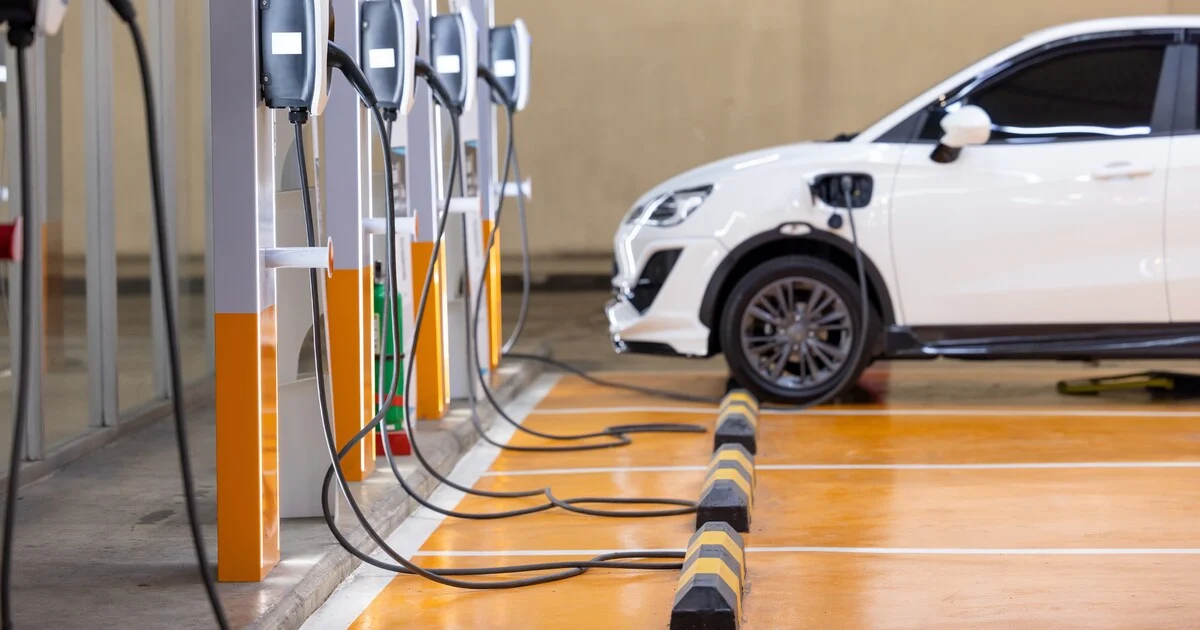
While the government is raising barriers for imported vehicles, it is simultaneously accelerating the development of the infrastructure necessary to support them. As of May 2026, Malaysia has surpassed 11,000 public charging points, a significant milestone in its "Low Carbon Mobility Blueprint."
The infrastructure landscape is currently dominated by three major players:
- Gentari: The clean energy subsidiary of the national oil company Petronas. Gentari has focused on high-speed DC charging hubs along the North-South Expressway, the country’s primary transit artery. By integrating solar power and battery energy storage at highway rest stops, Gentari is positioning itself as a leader in sustainable charging.
- chargEV: Operated by Yinson GreenTech, this provider has secured a dominant position in urban environments. With an estimated 60 percent of charging contracts in major shopping malls, luxury hotels, and high-end residential developments, chargEV is the primary provider for daily "destination charging."
- Tesla: Despite the new import restrictions, Tesla continues to expand its proprietary Supercharger network. Concentrated heavily in the Klang Valley and along major intercity routes, Tesla’s network remains a benchmark for reliability and integration, serving as a significant draw for premium buyers who are unaffected by the RM300,000 price floor.
Economic Context and the National Automotive Policy
The 2026 policy shift is an evolution of the National Automotive Policy (NAP 2020), which sought to transform Malaysia into a regional hub for Energy Efficient Vehicles (EEVs). The Malaysian government has long balanced the need for trade liberalization with the necessity of protecting its industrial base.
In the early 2020s, Malaysia offered total duty exemptions for EVs to kickstart the market. This led to a surge in EV registrations, which grew by over 200% year-on-year between 2023 and 2025. However, the government observed that the majority of these gains were captured by fully imported Chinese vehicles, providing little benefit to the local manufacturing sector. The new RM300,000 floor represents a "correction" intended to ensure that the next phase of EV growth is driven by local production rather than consumption of imports.
Industry and Consumer Reactions
The reaction to the policy has been polarized. Local industry groups and vendors associated with Proton and Perodua have hailed the move as a visionary step to secure the future of the Malaysian automotive workforce. "This policy provides the breathing room our national brands need to transition their R&D and supply chains to electric platforms without being crushed by the economies of scale enjoyed by global giants," said a representative from the Malaysian Automotive Association (MAA).
On the other hand, consumer advocacy groups have expressed concerns regarding the "green divide." By effectively banning affordable imported EVs, the government is making sustainable transport a luxury available only to the wealthy or those willing to wait for the national brands to scale up. Middle-income buyers who were looking forward to the RM120,000 to RM160,000 price bracket for imported EVs now find those options eliminated, potentially slowing the overall rate of national carbon reduction.
Analysis of Long-Term Implications
Malaysia’s gamble is a high-stakes play for industrial sovereignty. If Proton and Perodua can successfully launch competitive, high-quality EVs within the next 24 months, the policy will be viewed as a masterstroke of industrial planning. It would result in a robust domestic industry, reduced reliance on foreign technology, and a stable market for local component manufacturers.
However, there are risks. If the national automakers fail to deliver vehicles that meet consumer expectations in terms of technology and range, EV adoption in Malaysia could stagnate. Furthermore, the high price floor for imports could lead to a "gray market" of used EVs or an increase in the cost of ICE vehicles as manufacturers adjust their portfolios.
Regionally, Malaysia is positioning itself differently than its neighbors. While Thailand has opted for an "EV 3.5" subsidy scheme to attract all manufacturers regardless of origin, Malaysia is doubling down on its "National Brand" identity. This could make Malaysia a less attractive destination for brands that only want to export (CBU), but a more attractive hub for those willing to commit to deep-rooted local manufacturing (CKD) to capture the protected domestic market.
As July 2026 approaches, the global automotive industry will be watching Malaysia closely. The success of this policy will determine whether a mid-sized nation can successfully shield its domestic industry from the global EV tidal wave while still achieving its environmental and technological goals. For now, the message from Kuala Lumpur is clear: the road to electrification in Malaysia must be paved by Malaysian workers and Malaysian brands.
