

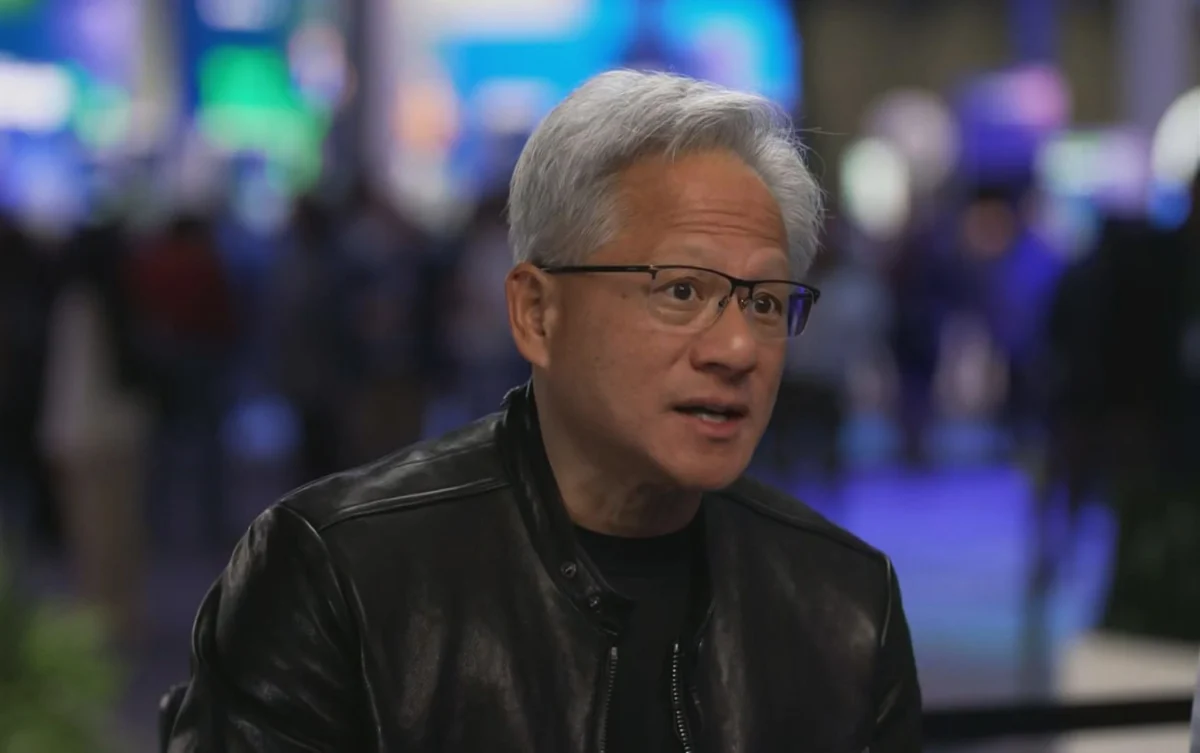
Beijing, China – In a dramatic turn of events underscoring the complex interplay between geopolitics, trade, and advanced technology, Jensen Huang, the influential CEO of artificial intelligence (AI) chip giant Nvidia, unexpectedly joined U.S. President Donald Trump’s high-profile delegation to China. His eleventh-hour inclusion, following initial reports of his absence, has cast a sharp spotlight on the crucial role of semiconductor technology in the simmering rivalry between the world’s two largest economies and the delicate balance U.S. tech firms must navigate. The sudden addition of Huang, whose company stands at the vanguard of the global AI revolution, injects a new layer of intrigue and significance into a summit already laden with expectations for discussions on trade, Taiwan, and regional stability between President Trump and Chinese President Xi Jinping.
The Unforeseen Invitation and Rapid Mobilization
The narrative of Huang’s inclusion began to unfold just days before President Trump’s scheduled arrival in Beijing for the two-day summit slated for Thursday and Friday. Media outlets, including CNBC, had initially reported that Huang was notably absent from the preliminary list of more than a dozen prominent U.S. business executives slated to accompany the President. This perceived omission had sparked considerable speculation across financial markets and diplomatic circles, given Nvidia’s immense global footprint and its particular exposure to the U.S.-China technology dispute. Analysts pondered whether his absence was a deliberate political signal or a logistical oversight.
However, the situation rapidly shifted. According to a source familiar with the matter who spoke to CNBC, President Trump personally intervened after observing the media coverage concerning Huang’s initial exclusion. Recognizing the symbolic and substantive importance of having a leader from the world’s most critical AI chip manufacturer present, Trump reportedly placed a direct call to Huang, extending an explicit invitation to join the delegation. The immediacy of the request necessitated a swift and complex logistical maneuver: Huang, demonstrating the agility often associated with Silicon Valley leadership, flew to Alaska to rendezvous with Air Force One, boarding the presidential aircraft mid-journey to Beijing. This sequence of events transformed what was initially perceived as a snub into a powerful demonstration of the administration’s intent to engage China on critical economic and technological fronts with its most impactful corporate leaders at the table.
The Geopolitical Chessboard: AI Chips at the Core
Jensen Huang’s presence carries particular weight due to Nvidia’s unparalleled dominance in the market for graphics processing units (GPUs), which are the foundational hardware for training and deploying advanced AI models. These chips are not merely commercial products; they are considered strategic assets, underpinning capabilities ranging from cutting-edge scientific research and industrial automation to advanced military applications. This dual-use nature has positioned Nvidia squarely at the epicenter of the U.S.-China technology competition, a contest often dubbed the "chip war."
For the past four years, Nvidia’s most advanced chips have faced increasingly stringent U.S. export restrictions targeting sales to China. These controls, initially implemented under the Trump administration and significantly expanded under subsequent administrations, aim to curb China’s access to advanced semiconductor technology that could bolster its military modernization efforts and enhance its surveillance capabilities. The Commerce Department’s regulations, particularly those introduced in October 2022 and updated in October 2023, have placed severe limitations on what technology U.S. companies can sell to Chinese entities without explicit government approval. Nvidia, in an effort to maintain some market access, had developed modified versions of its high-end chips, such as the A800 and H800, specifically designed to comply with these export control thresholds. However, even these tailored products have faced further scrutiny and potential restrictions, with the company stating in February that U.S.-government-approved versions of these chips had yet to be cleared for entry into China.
These restrictions have created a significant dilemma for Nvidia. China represents a substantial market for the company, historically contributing a considerable portion of its revenue. Navigating the geopolitical tightrope means balancing compliance with U.S. national security directives against the imperative of sustaining a major revenue stream and fostering global innovation. Huang’s participation in the delegation suggests a recognition that direct engagement at the highest levels of government may be essential for charting a path forward.
The Summit’s Broader Context and Objectives
President Trump’s visit to Beijing, accompanied by a robust delegation of American business leaders, signals a multifaceted approach to U.S.-China relations, prioritizing economic leverage alongside strategic competition. Beyond the specific issue of chip export controls, the summit’s agenda is expected to encompass a wide array of contentious topics, including the persistent U.S. trade deficit with China, intellectual property theft concerns, cybersecurity, and geopolitical flashpoints like Taiwan and Iran.
The presence of a diverse group of U.S. executives, representing sectors from finance and manufacturing to technology, underscores the administration’s declared aim to "open up" China for American businesses. As President Trump articulated in a social media post on Truth Social, where he confirmed Huang’s presence and denied initial reports of his exclusion, his "first request" to President Xi would be to ensure greater market access and a level playing field for U.S. companies. "I will be asking President Xi, a Leader of extraordinary distinction, to ‘open up’ China so that these brilliant people can work their magic, and help bring the People’s Republic to an even higher level!" Trump stated, referring to the wider delegation of U.S. business representatives. This rhetoric suggests a desire to reduce trade barriers and address perceived unfair trade practices that have long been a point of contention.
Nvidia’s Official Stance and White House Silence
Nvidia swiftly issued a statement following Huang’s confirmed presence, articulating its CEO’s motivation: "Jensen is attending the summit at the invitation of President Trump to support America and the administration’s goals." When pressed for further details, particularly regarding the mid-journey boarding in Alaska, Nvidia referred back to this same comment, offering no additional specifics on the reason for the initial omission or the subsequent rapid change of plans. This concise and politically neutral statement aims to align Nvidia with the administration’s objectives while avoiding any direct commentary on the underlying geopolitical tensions.
In contrast, the White House maintained a diplomatic silence regarding Huang’s late inclusion. Requests for comment from CNBC went unanswered, a common practice in high-stakes diplomatic maneuvers where official narratives are carefully managed. This silence could be interpreted in several ways: perhaps allowing President Trump’s social media post to serve as the primary communication, or simply to avoid drawing undue attention to what might have been perceived as an initial misstep in delegation planning. The lack of immediate official clarification from the White House regarding the change in plans, however, only amplified the sense of last-minute drama surrounding Huang’s participation.
China’s Strategic Imperative: Self-Reliance in AI
China’s response to U.S. chip restrictions has been a concerted national effort to accelerate its indigenous semiconductor industry and achieve self-sufficiency in critical technologies. The ruling Chinese Communist Party’s official journal earlier this month published an article acknowledging that local companies had been compelled to "slow their development" due to U.S. chip restrictions. Simultaneously, the article underscored Nvidia’s formidable dominance in the global GPU market, implicitly highlighting the urgent need for China to reduce its reliance on foreign technology.
Initiatives like "Made in China 2025" have long prioritized breakthroughs in advanced manufacturing, including semiconductors. Companies like Huawei, with its Ascend series of AI chips, and emerging AI model developers such as DeepSeek, are at the forefront of this push, aiming to create viable alternatives to Nvidia’s offerings. While these domestic efforts have made significant strides, particularly in less advanced segments, bridging the technological gap with market leaders like Nvidia in cutting-edge AI chips remains a formidable challenge. The presence of Huang in Beijing, therefore, is not merely about U.S. market access; it also represents a direct engagement with the leadership of a nation fiercely committed to its own technological sovereignty.
Expert Perspectives and Broader Implications
Carlos Gutierrez, a former U.S. Secretary of Commerce, provided insightful commentary on the significance of Huang’s presence during an interview on CNBC’s "Squawk Box Asia." While acknowledging the positive optics of direct engagement, Gutierrez expressed skepticism about immediate breakthroughs on the core issue of export controls. "I still believe that we are far away from a deal on export controls… it’s positive that he’s there and he’s part of the President’s delegation, and that that’s important for him and it’s important for the President," he remarked. His perspective encapsulates the prevailing sentiment among many observers: while dialogue is crucial, resolving deep-seated national security concerns tied to advanced technology transfer is a long-term endeavor unlikely to be settled in a single summit.
Huang’s unexpected journey carries several broader implications for the global technology landscape and U.S.-China relations:
- Direct Communication Channels: His presence opens a direct line of communication between a key U.S. tech leader and both U.S. and Chinese political leadership. This direct engagement could potentially provide nuances that might be lost in official diplomatic channels, offering a more granular understanding of industry capabilities and geopolitical constraints.
- Optics of Engagement: For U.S. businesses, Huang’s inclusion sends a strong signal that the administration is willing to champion their interests at the highest level, even amidst strategic competition. For China, it could be interpreted as a positive sign of the U.S. desire to maintain economic ties, despite the ongoing tech rivalry.
- Future of Export Controls: While immediate resolution is unlikely, Huang’s direct participation could lay groundwork for future discussions or at least allow for a clearer articulation of industry perspectives on the impact of existing and potential new restrictions. It might also allow for an exploration of mechanisms for "de-risking" global supply chains without completely decoupling.
- Strategic Importance of AI: The focus on Nvidia underscores the critical strategic importance of AI and semiconductors in the current geopolitical landscape. It reinforces the idea that whoever leads in AI will likely lead the 21st century, making control over the underlying hardware a paramount national security concern.
- Dilemma for U.S. Tech: The situation highlights the precarious position of U.S. tech companies that are deeply integrated into the global economy but are increasingly called upon to align with national security objectives. It forces them to constantly reassess their strategies for market access, research and development, and supply chain resilience.
Looking Ahead: A Glimmer of Dialogue Amidst Headwinds
As the summit proceeds, all eyes will be on any tangible outcomes, particularly those related to the technology sector. While a grand bargain on export controls appears improbable, the direct engagement facilitated by Jensen Huang’s presence could lead to more nuanced understandings, or at least a clearer articulation of positions from both sides. It might also influence the broader tone of U.S.-China economic relations, potentially fostering an environment where targeted, less escalatory discussions on specific trade or tech issues become possible.
Ultimately, Huang’s dramatic entry onto the diplomatic stage symbolizes the intricate and often contradictory forces at play in U.S.-China relations. It is a testament to the enduring power of economic interdependence, even as geopolitical competition intensifies, and a powerful reminder that the future of global technology will continue to be shaped by the complex interplay between Silicon Valley innovation and the halls of political power in Washington and Beijing. The path forward for Nvidia and other U.S. tech giants in China remains fraught with challenges, but the presence of key industry leaders at such a high-stakes summit suggests a renewed commitment to direct engagement as a means of navigating these turbulent waters.
