

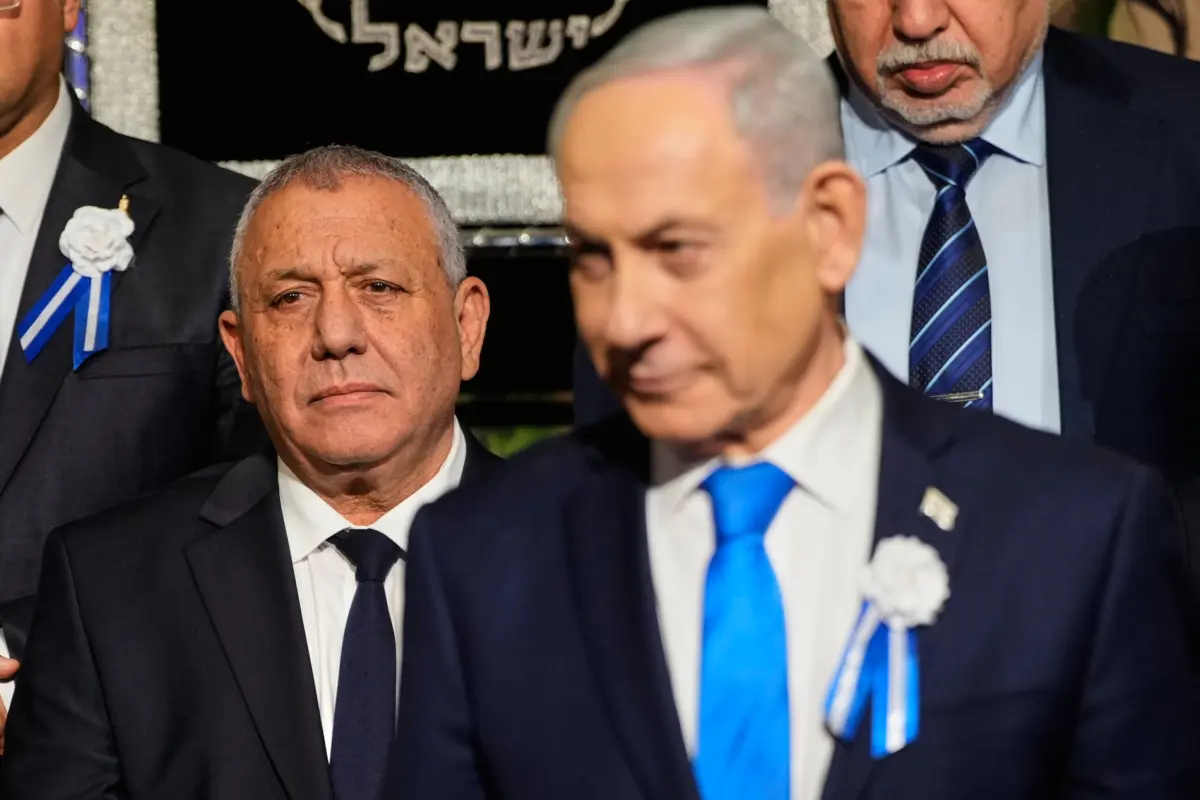
Israeli caretaker Prime Minister Benjamin Netanyahu has reignited calls for a national unity government with his political adversary, Gadi Eisenkot, asserting that such an alliance is the sole guarantor of Israel’s security amidst escalating regional threats. This appeal, made in a video statement on Saturday, follows a recent meeting between the two leaders, which Netanyahu claimed only reinforced his conviction regarding the necessity of a broad-based coalition. However, Eisenkot, currently tasked with the challenging mandate of forming the next government, swiftly rejected the overture, branding it as mere political "tricks" by a prime minister he asserts has already lost the election.
The political landscape in Israel remains deeply fractured following the October 27 general election, the fifth in less than four years, which once again failed to yield a decisive majority for either the right-wing religious bloc led by Netanyahu or the diverse coalition backing Eisenkot. This recurring stalemate has plunged Israel into an unprecedented period of political instability, impacting governance, policy-making, and public morale. Netanyahu’s latest gambit, therefore, is viewed by many as a strategic move to break the deadlock and potentially circumvent the formation of a government without his direct leadership.
Netanyahu’s Renewed Call for Unity Amid Security Concerns
In his Saturday video address, Benjamin Netanyahu articulated a stark vision of national peril, framing the formation of a unity government not merely as a political preference but as an existential imperative. He emphasized that his meeting with Eisenkot on Thursday had solidified his belief that a unified front was "essential to form a national unity government." The cornerstone of Netanyahu’s argument centered on external threats, particularly the perceived menace from Iran. He explicitly stated that such a government could "eliminate the Iranian threat once and for all," reiterating long-held concerns that Tehran "would not hesitate to use nuclear weapons against us." This rhetoric, a hallmark of Netanyahu’s political career, seeks to leverage deeply ingrained Israeli security anxieties to foster political consensus. His invitation to Eisenkot was direct: "Let’s meet in one room, without preconditions," signaling an apparent willingness to negotiate outside conventional frameworks.
Historically, national unity governments in Israel have often been forged during periods of significant national crisis or security challenges. Examples include the governments formed during the 1967 Six-Day War, the 1984 national unity government to address a severe economic crisis and political deadlock, and more recently, the emergency government formed at the outset of the COVID-19 pandemic. Netanyahu’s invocation of the Iranian threat aligns with this historical precedent, attempting to elevate the current political impasse to a level of national emergency that transcends partisan divides. However, critics argue that this appeal is also a calculated maneuver to prevent Eisenkot from successfully forming a government that would exclude Netanyahu and his allies.
Eisenkot’s Swift Rejection and Accusations of Political Ploy
Within minutes of Netanyahu’s public statement, Gadi Eisenkot, the former Israel Defense Forces (IDF) chief of staff and a leading figure in the opposition bloc, issued a sharp rebuttal. Eisenkot dismissed Netanyahu’s appeal as a "ploy," asserting that the caretaker Prime Minister "knows he lost the election." This immediate and unequivocal rejection underscores the deep personal and political animosity that characterizes the relationship between the two leaders and their respective factions. Eisenkot further elaborated, stating, "Netanyahu is calling for negotiations while they are already underway. These tricks don’t work on me."
Eisenkot’s response highlights a fundamental difference in perception regarding the legitimacy of the election results and the sincerity of Netanyahu’s intentions. From Eisenkot’s perspective, the ongoing efforts to form a coalition are the legitimate outcome of the democratic process, and Netanyahu’s public call for unity is an attempt to disrupt or derail those efforts. The term "tricks" suggests a lack of trust and an interpretation of Netanyahu’s actions as cynical political maneuvering rather than a genuine desire for national unity. This sentiment is rooted in years of political sparring and the perception among opposition leaders that Netanyahu has consistently prioritized his political survival over broader national interests.
The Fractured Electoral Landscape: Numbers and Mandates
The October 27 election results painted a familiar picture of political fragmentation. Neither of the main blocs managed to secure the requisite 61 seats in the 120-member Knesset to form a stable majority government. Netanyahu’s right-wing and religious bloc garnered 53 seats, falling short of a majority. Eisenkot’s diverse four-party bloc secured 48 seats. Crucially, Arab-led parties achieved a record 19 seats, holding a significant balance of power. The remaining seats were distributed among other smaller parties, contributing to the overall complexity.
Following the election, President Isaac Herzog, in his constitutional role, conducted consultations with representatives of all elected parties. Based on these consultations, Herzog last week formally tasked Gadi Eisenkot with the responsibility of forming the next government. This decision was precipitated by the endorsement of 67 lawmakers for Eisenkot, a number that included the 48 members of his own bloc, along with members from Arab-led parties. In contrast, only 46 lawmakers backed Netanyahu. Eisenkot was granted a 28-day period to assemble a coalition, with a possible 14-day extension, a standard procedure under Israeli law.
The inclusion of Arab-led parties in the endorsement process for Eisenkot was a notable development, signifying a potential shift in Israeli coalition politics. Historically, Arab parties have rarely been direct partners in government coalitions, often relegated to an opposition role. However, their significant electoral showing and the current political deadlock have positioned them as kingmakers. Despite their endorsement for Eisenkot’s mandate, Eisenkot himself has publicly ruled out including Arab-led parties as full members of his government, reflecting a persistent political sensitivity and ideological gap that complicates broader coalition building efforts.
Paths Forward: Coalition Scenarios and Contentions
The current political environment presents several complex and challenging paths for government formation, each fraught with difficulties and strong opposition.
Eisenkot’s Minority Government Plan:
Eisenkot’s stated plan is to form a minority "national emergency government." Under this scenario, his bloc’s 48 lawmakers would vote in favor of his government, while the 46 Netanyahu supporters would vote against it. The critical element lies with the 26 lawmakers from Arab and ultra-Orthodox parties, who would be expected to abstain. This abstention would allow Eisenkot’s government to be approved by a simple plurality rather than an absolute majority in the Knesset, as 61 "yes" votes would not be required if fewer than 61 "no" votes are cast. While technically permissible under Israeli parliamentary rules, governing with a minority presents inherent challenges, requiring constant negotiation and compromise to pass legislation and maintain stability. Netanyahu has vehemently warned against such a government, asserting that it would lead to Israel’s "collapse," a strong rhetorical flourish designed to rally opposition against it. A minority government would be inherently fragile, susceptible to no-confidence motions and reliant on external support for every legislative initiative, potentially leading to further instability.
Netanyahu’s Unity Government Proposal (Specifics):
Netanyahu’s vision for a unity government would explicitly include Jewish parties from the center and the right, while notably excluding Arab parties. This position aligns with his bloc’s consistent narrative and campaign rhetoric, which has frequently cast Arab-led parties as illegitimate or disloyal. Netanyahu and his allies have repeatedly made unsubstantiated claims that Arab-led parties "stole" the election, a tactic widely criticized as divisive and racist. Eisenkot himself, on Friday, condemned Netanyahu’s campaign against Palestinian Israelis as "racist," highlighting the deep ideological chasm that separates the two camps on issues of national identity and minority representation. The insistence on excluding Arab parties makes any broad unity government difficult, as it alienates a significant portion of the electorate and their representatives.
Points of Contention and Ideological Divides:
Beyond the numbers, profound ideological differences and personal animosities serve as significant roadblocks to any unity government. Eisenkot has expressed a conditional willingness to work with members of Netanyahu’s Likud party and even with Bezalel Smotrich’s Religious Zionism, provided their commitment to unity is "sincere." However, he has adamantly insisted on a "break with the extremists," specifically naming supporters of the far-right minister Itamar Ben-Gvir. This condition highlights the growing influence of hardline nationalist and religious factions within Netanyahu’s bloc, whose policies and rhetoric are deemed unacceptable by more centrist and liberal elements. Ben-Gvir, known for his inflammatory statements and controversial political history, represents a red line for many potential partners of Eisenkot, making any cross-bloc collaboration exceptionally difficult without significant internal shifts within the right-wing.
Timeline of Immediate Events and Broader Chronology
The political drama is set to continue with immediate parliamentary action. The Knesset is scheduled to elect its speaker on Tuesday. This position is currently held by Amir Ohana, a close ally of Netanyahu. The opposition has put forward Matan Kahana, a former military officer, as their candidate. The outcome of this vote is not merely procedural; it will serve as an early indicator of the relative strength and cohesion of the competing blocs and could influence the momentum of coalition negotiations. A victory for the opposition’s candidate would be a significant symbolic and practical blow to Netanyahu’s camp, potentially paving the way for further legislative challenges to his caretaker government.
The current deadlock is not an isolated incident but the culmination of a protracted period of political instability that began in April 2019. Since then, Israel has endured five general elections: April 2019, September 2019, March 2020, March 2021, and October 2022. Each election cycle has seen similar patterns: no single party or bloc achieves a clear majority, leading to protracted coalition negotiations, fragile governments, or repeat elections. This cycle has been largely driven by the polarising figure of Benjamin Netanyahu, with a significant portion of the electorate committed to his leadership and an equally determined segment intent on his removal. The "anti-Bibi" bloc has evolved over these years, bringing together an unlikely alliance of centrist, left-wing, and Arab parties, demonstrating a profound shift in traditional political alignments. The erosion of long-standing party loyalties and the rise of personality-driven politics have contributed to this sustained period of gridlock, testing the resilience of Israel’s parliamentary democracy.
The Iranian Threat: A Strategic Wedge and Unifying Factor
Netanyahu’s consistent focus on the Iranian nuclear program and its regional influence serves as a powerful strategic tool in Israeli politics. For decades, he has positioned himself as the primary guardian of Israel’s security against this existential threat. His renewed call for a unity government explicitly cites Iran as the critical reason for transcending political differences. While the threat posed by Iran is a genuine and bipartisan concern for Israel, Netanyahu’s rhetoric often amplifies it to galvanize support and pressure opponents into alignment.
Israel’s security establishment, including figures like Eisenkot, shares concerns about Iran’s nuclear ambitions and its destabilizing activities in the Middle East through proxies. However, there can be differing approaches to confronting this threat. While Netanyahu has often favored a more confrontational and unilateral stance, other leaders might advocate for a more integrated strategy involving international cooperation and diplomatic pressure alongside military deterrence. By framing the Iranian threat as an immediate and overriding concern, Netanyahu seeks to create a narrative where only a government under his leadership, or at least one including his faction, can effectively address it, thus undermining Eisenkot’s capacity to lead. This makes the Iranian issue not just a foreign policy challenge but a potent domestic political wedge.
Broader Implications of Prolonged Deadlock
The ongoing political deadlock carries significant implications across various facets of Israeli society and its international standing.
Domestic Stability: A prolonged inability to form a stable government severely hampers effective governance. Essential legislation can be delayed or stalled, state budgets may not be passed on time, and long-term policy planning becomes almost impossible. This uncertainty breeds public cynicism and erodes trust in political institutions. Key ministries operate under interim leadership, lacking the mandate for decisive action on pressing domestic issues ranging from cost of living to education and healthcare.
Economic Impact: Political instability is generally detrimental to economic confidence. Uncertainty regarding future government policies, fiscal responsibility, and regulatory frameworks can deter foreign investment and impact local markets. While Israel’s economy has demonstrated remarkable resilience, a continuous cycle of elections and caretaker governments can eventually take its toll, affecting investor sentiment and potentially leading to a downgrade in economic forecasts. The inability to pass a multi-year budget can also restrict growth and public sector planning.
International Relations: A stable and coherent government is crucial for Israel’s foreign policy. On critical fronts such as relations with the United States, negotiations with Arab neighbors (especially regarding the Abraham Accords), and engagement with the Palestinian Authority, a strong and legitimate government is necessary to project influence and pursue strategic objectives. A caretaker government, lacking a fresh mandate, may be perceived as weakened on the international stage, potentially limiting its ability to negotiate effectively or make significant diplomatic strides. This can also affect Israel’s capacity to coordinate on security matters with allies.
Democratic Institutions: The repeated failure to form stable governments places immense strain on Israel’s parliamentary democratic system. It tests the limits of coalition building, the role of the President, and the judiciary’s involvement in political disputes. The public’s weariness with repeated elections is palpable, raising concerns about voter fatigue and disillusionment, which could have long-term effects on democratic participation and trust in the system. The constant legal battles surrounding Netanyahu’s own corruption trial further complicate the political landscape, blurring the lines between legal accountability and political maneuvering.
Conclusion
As Gadi Eisenkot continues his mandated efforts to forge a government, Israel stands at a critical juncture. Netanyahu’s renewed call for unity, framed around national security, highlights the deep divisions and the high stakes involved. Eisenkot’s immediate rejection underscores the entrenched distrust and the belief that the current political impasse demands a departure from the status quo. With the Knesset speaker vote looming and the clock ticking on Eisenkot’s mandate, the nation faces a choice between a potentially fragile minority government, a highly improbable unity government requiring significant ideological compromises, or the prospect of yet another round of elections, further prolonging the unprecedented era of political instability. The outcome will profoundly shape Israel’s domestic trajectory, its economic health, and its standing in a volatile regional and global environment.
