


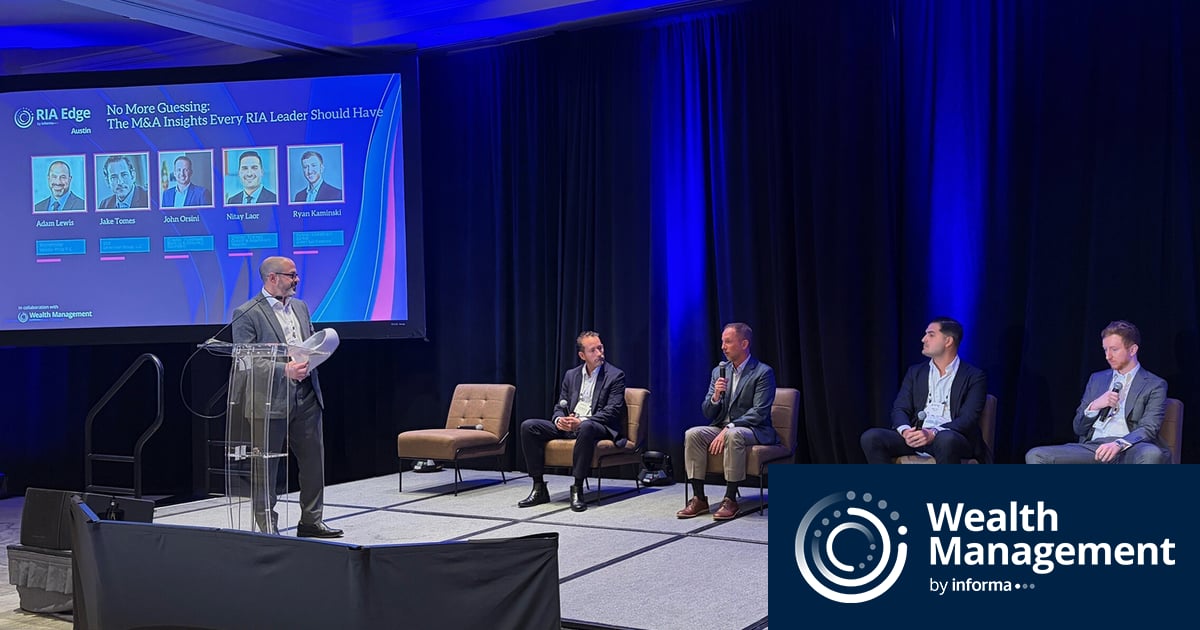
The mergers and acquisitions landscape for registered investment advisors (RIAs) is undergoing a significant evolution, presenting a more sophisticated array of strategies and options for both those looking to sell and those aiming to grow through acquisition. This maturation of the market was a central theme at RIA Edge Austin this week, where a panel of M&A experts convened to dissect one of the industry’s most critical strategic decisions: whether to acquire an entire RIA firm or focus on recruiting individual advisor teams from established competitors. The discussion highlighted the nuanced considerations that RIAs must weigh to drive inorganic growth effectively in an increasingly dynamic environment.
The session, moderated by Adam Lewis, a partner at the law firm Vedder, aimed to clarify the distinct advantages and challenges inherent in each growth strategy. Lewis posed a fundamental question to the assembled advisors: how do the approaches of outright acquisition and targeted team recruitment differ as primary drivers of inorganic expansion?
Nitay Laor, director of strategic growth and acquisitions at Mesirow, a Chicago-based firm with a substantial wealth division managing approximately $15.2 billion in assets under management, emphasized the paramount importance of clearly defined strategic priorities. "Are you looking to duplicate existing capabilities—just growing with more advisors—or are you looking to solve for gaps in capabilities that you don’t currently have?" Laor queried the audience, setting the stage for a deeper exploration of the two distinct paths.
The Case for Acquiring an Entire RIA
Acquiring an entire RIA firm, according to Laor, typically involves a more substantial upfront financial commitment. This approach demands meticulous planning and dedicated management oversight in the years following the transaction to ensure successful integration. However, the primary allure of a full RIA acquisition lies in its potential for a more seamless client transition. When an entire firm is acquired, the entire book of business moves with it as part of the deal. This consolidated transfer can streamline the process of bringing clients onto the acquiring firm’s platform.
Despite this advantage, Laor cautioned that integration can present significant hurdles. "There would be a cleaner transition of the clients because all the clients are coming with the RIA, or buying the assets of the firm, but the integration may not be perfect," he stated. "The RIA may have certain technologies or custodians or processes that they would like to keep rather than adopt what the acquiring entity has." This inherent resistance to adopting new systems and workflows can lead to operational complexities and delays. The acquired firm’s established culture, operational procedures, and technological infrastructure may not align perfectly with the acquirer’s, necessitating a delicate balancing act during the integration phase.
Historically, the RIA M&A market has seen a steady increase in deal volume. Data from industry observers indicates that the number of announced RIA transactions has been on an upward trajectory for several years. For instance, reports from industry analytics firms often cite year-over-year increases in deal volume, particularly among firms with over $100 million in assets under management. This trend underscores the growing appetite for consolidation and growth through acquisition. The "cleaner path" for client transition in an acquisition is particularly attractive when considering the significant assets under management that can be transferred in a single transaction. This often translates to a more immediate and substantial impact on the acquirer’s AUM figures.
The Nuances of Recruiting Advisor Teams
In contrast to the comprehensive acquisition of an entire RIA, recruiting individual advisor teams generally presents a lower upfront cost. The operational adjustments tend to be more manageable, primarily revolving around training the newly recruited team on the acquiring firm’s established systems, processes, and compliance frameworks. However, this strategy carries a greater inherent risk concerning client retention. The success of a team recruitment hinges on the advisors’ ability to successfully migrate their client base to the new firm.
"The client retention there is a little bit more risky—it’s not as clean," Laor explained. "But on the other hand, the customization, or the idea of transitioning everyone over, is much easier because they cannot stay under the old custodian and technology and processes, so they’re moving to what you have." This forced migration to the acquirer’s platform can be an advantage, as it eliminates the potential for continued adherence to legacy systems. However, the risk of client attrition remains a significant factor, as clients may choose to stay with their established advisor even if they have reservations about the new firm.
The process of onboarding recruited teams often involves intensive relationship management and robust support to ensure a smooth transition for both the advisors and their clients. This can include marketing support, access to new investment platforms, and dedicated client service resources. While the financial outlay may be less substantial initially, the long-term success of this strategy is heavily reliant on the advisors’ ability to retain their client relationships and generate new business within the acquiring firm’s ecosystem. The "cleaner" integration of systems, as Laor noted, is a significant benefit, as it reduces the complexity of aligning disparate technological infrastructures.
Strategic Approaches and Integration Challenges
Laor indicated that Mesirow, like many larger firms navigating the current market, strategically employs both acquisition and recruitment tactics, tailoring their approach to specific opportunities. However, he issued a strong caution to firms that pursue a mixed strategy: the critical need to avoid a one-size-fits-all integration playbook. "If you’re considering doing something like this, you should think about how [to] customize your integration approach, because having to customize every integration can cause delays in operation," he advised.
This point resonates deeply within the industry. A diverse range of integration strategies is often necessary to accommodate the unique characteristics of each acquired firm or recruited team. Failure to do so can lead to operational inefficiencies, advisor dissatisfaction, and ultimately, client churn. The "delays in operation" can manifest as extended onboarding periods, slower realization of synergies, and a prolonged period of uncertainty for both employees and clients. The ability to adapt integration processes based on the specific nuances of each deal is a hallmark of sophisticated M&A execution.
The Critical Role of Client Consent and Communication
When it comes to client retention in any M&A scenario, the panelists unanimously underscored the importance of client consent mechanisms. Negative consent, where clients are notified of the impending transaction and are presumed to consent unless they actively object, was identified as the preferred approach. Lewis confirmed that negative consent has become an industry standard, typically involving a 30- to 45-day notification window for clients.
"The preference is always to have a negative consent process," Lewis stated. "But if there’s a firm with [a mix of] consents, negative in some and affirmative in others, you might have to deal with it. If you can clean that up pre-marketing your company, that’d be great." The presence of mixed consent structures can complicate the transition, potentially requiring more direct client engagement and negotiation. Proactively addressing these consent variations before a deal is marketed can significantly smooth the path to closing and subsequent integration.
John Orsini, director of investment banking and consulting at Marshberry, further emphasized the indispensable role of proactive client communication. He stressed that clear and consistent outreach is crucial for mitigating surprises and minimizing risk, even within a negative consent framework. "We encourage [sellers] to do outreach," Orsini urged. "Let clients know this is going to happen, talk to them about the added benefits they’re going to receive. … It reduces and mitigates some of that risk of [a client] waking up and saying, ‘What happened?’" This transparent communication strategy not only helps retain clients but also reinforces the value proposition of the acquiring firm, highlighting potential enhancements to service, investment options, or overall client experience. The emphasis on "added benefits" is key to shifting the narrative from a mere change of ownership to an upgrade in client service.
A Booming Dealmaking Pipeline with Evolving Due Diligence
Despite the complexities and strategic choices involved, Orsini assured the audience that the dealmaking pipeline remains exceptionally robust. While due diligence processes have matured, leading to potentially longer transaction timelines, the overall volume of activity is expected to remain strong for both full RIA acquisitions and advisor team recruitments.
"I believe firmly that the market is as strong as ever—we aren’t seeing any decrease at all in activity," Orsini declared. "There certainly is increased time within transactions as acquiring firms, private equity-backed primarily, are becoming more and more focused on the things that matter to them, looking for alignment in advance of a transaction." This increased focus on alignment, particularly from private equity sponsors, signifies a more rigorous and analytical approach to deal evaluation. Acquirers are no longer solely focused on topline growth but are increasingly scrutinizing operational efficiencies, cultural compatibility, and long-term strategic fit.
MarshBerry data supports this assertion, indicating a notable increase in announced transactions. Through the third quarter of the current year, firms with more than $100 million in assets under management experienced a roughly 4.6% year-over-year increase in announced transactions. This positive momentum is reportedly continuing into October and is anticipated to persist through the remainder of the year, underscoring the sustained appetite for consolidation within the RIA sector.
Elevated Valuations and the Evolving Market Landscape
Ryan Kaminski, co-founder and partner of investment bank Green Sail Capital Partners, highlighted a particularly attractive market segment for sellers. He noted that the broadening buyer pool has created a "sweet spot" for firms in the $500 million to $1 billion AUM range. In contrast, firms exceeding $1 billion in AUM are currently commanding premium pricing, making them more expensive targets for acquisition as add-ons.
"Firms in the billion-plus range are trading at 18 to 19 times EBITDA—very expensive to acquire," Kaminski stated. "Multiples are also elevated in this half-billion-to-a-billion range… right now, from a pure multiple standpoint, it’s never going to be better than the current market." This suggests that while valuations are high across the board, the relative value proposition for acquirers may be shifting. The high multiples for larger firms could incentivize them to pursue more targeted team recruitments to achieve growth, rather than undertaking the acquisition of another large entity.
Kaminski, drawing from experience in other industries such as software and consumer sectors, pointed out the stark contrast in valuation multiples. He observed that even highly successful lower-middle-market firms in those sectors typically trade at "high single-digit multiples," a figure significantly lower than those seen in the RIA space. This comparison underscores the premium currently placed on wealth management businesses, driven by factors such as recurring revenue models, high client retention rates, and the perceived stability of the industry.
The "Bubble" Concern and Future Market Dynamics
On the sidelines of the RIA Edge event, Kaminski shared his perspective on current wealth management valuations, describing them as "something of a bubble." While he clarified that this is not comparable to the housing crisis, he anticipates a "decay over time" in multiples. This moderation, he suggests, will likely occur as larger consolidators continue to dominate the market, potentially leading to a recalibration of pricing.
"I think over time, because you get these mega-RIAs, I don’t see why they would keep paying these massive multiples for a relatively small growth deal," Kaminski posited. "In a lot of other businesses, the delta between a mediocre to a good business might be six times EBITDA to nine times EBITDA. In this industry, it’s in the mid-teens, and you have to think that eventually it will probably shift." This outlook suggests that as the market matures and consolidation intensifies, the premium for smaller growth deals might diminish, leading to a more normalized valuation environment. The increasing scale of mega-RIAs could lead to greater bargaining power and a more disciplined approach to acquisition multiples, impacting the current elevated valuations. The strategic implications for RIAs considering M&A in the coming years will undoubtedly involve navigating this evolving valuation landscape and adapting their growth strategies accordingly.
About the Author
Alex Ortolani is a New York-based senior reporter with Wealth Management, focusing on deals, moves, and trends within the registered investment advisor space. His reporting also encompasses financial and business news, drawing on prior experience in media relations and corporate communications for technology firms and Fortune 500 companies.
