

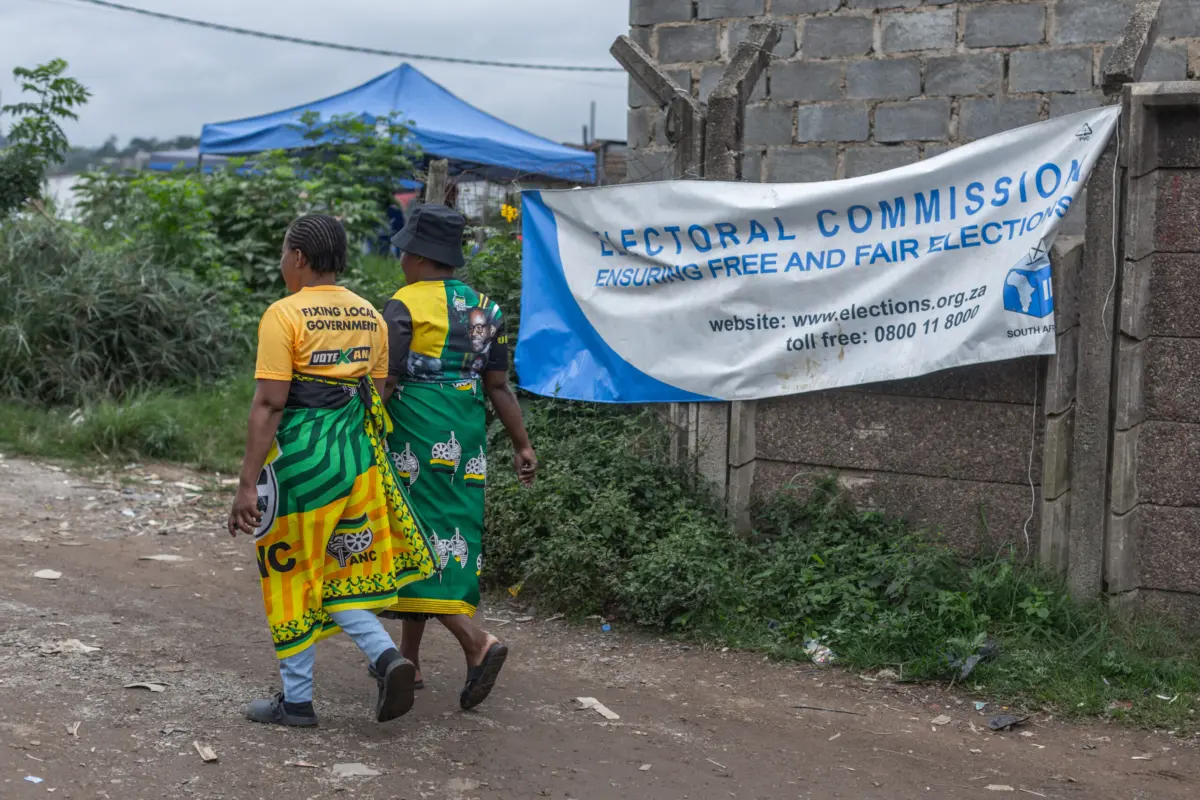
The anticipated implosion of the African National Congress (ANC) in South Africa’s 2026 local government elections, while widely predicted, proved to be startlingly dramatic in its scale. The party, once an unassailable liberation movement, retained its position as the largest political party but saw its share of the national popular vote plummet to an unprecedented 32.5 percent. This outcome effectively relegated the ANC to a predominantly rural party, where its governance power is not entirely reliant on the whims of coalition partners. Critically, the election results underscored a profound demographic shift: the ANC, historically a broad-based movement, has become a Black African party, having shed significant numbers of its minority voters and experiencing widespread disaffection from crucial segments of the Black middle class, as well as sections of the Black African rural and working classes who expressed their discontent through defection and abstention.
This seismic shift leaves the ANC in an increasingly precarious position, necessitating complex coalition arrangements to govern urban metros and cities, traditionally its strongholds. Concurrently, the outcome has emboldened the white community, which has expressed surprise at the perceived ease with which what was once considered unassailable Black political power could be diluted so relatively soon after the end of apartheid. The roots of this dramatic decline, however, were not sudden but were meticulously sown over three distinct, approximately nine-year leadership phases, each contributing to the party’s gradual erosion of public trust and electoral dominance.
A Legacy Forged in Struggle: The ANC’s Ascent and Early Promise
To fully comprehend the magnitude of the ANC’s 2026 electoral setback, it is essential to contextualize its historical trajectory. Founded in 1912, the ANC spearheaded the fight against apartheid, eventually triumphing with the country’s first democratic elections in 1994. Under the iconic leadership of Nelson Mandela, the party secured a resounding victory with 62.65% of the vote, embarking on a mission of nation-building, reconciliation, and socio-economic transformation. The "rainbow nation" ideal, though often challenged, symbolized the hope for a united, democratic South Africa. Mandela’s presidency (1994-1999) laid the groundwork for a new constitutional order, but also faced immense challenges: overcoming deep racial divides, addressing vast inequalities in wealth and opportunity, and establishing democratic institutions while managing high public expectations for immediate change. This initial period of euphoria and significant moral authority provided a strong foundation, but also masked underlying tensions and the immense difficulty of fundamentally restructuring a society scarred by decades of institutionalized racism.
Phase One: Nine Developing Years (1999–2008) – Growth and Emerging Tensions
The first significant transition in this evolutionary decline occurred during the nine developing years under President Thabo Mbeki, who succeeded Mandela in 1999. Mbeki’s tenure was characterized by a distinct intellectual approach, a strong focus on macroeconomic stability, and the pursuit of an "African Renaissance" vision aimed at fostering African unity and self-reliance. Economically, this period was largely successful. South Africa experienced robust Gross Domestic Product (GDP) growth, averaging 3.5% annually, peaking at 5.4% in 2005-2007. This growth facilitated significant fiscal consolidation, leading to substantial savings that were earmarked for crucial infrastructure expansion. Unemployment, while still high, saw a marginal reduction to around 25% by the end of his term, indicating some job creation despite the rapid influx of new entrants into the labour market.
Electorally, the ANC remained dominant. In the 2006 local government elections, the party secured an impressive 65.7 percent of the vote, boasting its highest ever proportion of minority votes. This indicated a continued broad appeal across South Africa’s diverse population groups, reflecting a degree of confidence in the party’s governance and Mbeki’s economic stewardship.
However, Mbeki’s presidency was not without its profound weaknesses. Most notably, his controversial stance on the HIV/AIDS epidemic, characterized by a denial of the link between HIV and AIDS and a reluctance to roll out antiretroviral drugs, led to an estimated 330,000 preventable deaths and drew widespread international condemnation. This tragic misstep significantly tarnished his legacy and exposed a critical vulnerability in the government’s responsiveness to public health crises. Furthermore, despite economic growth, a growing impatience emerged within the ANC’s traditional alliance partners – the Congress of South African Trade Unions (COSATU) and the South African Communist Party (SACP) – regarding the slow pace of wealth redistribution and land reform. These "left-wing" elements argued that the benefits of economic growth were not sufficiently trickling down to the poor and working classes, laying the groundwork for future ideological battles and internal party strife. The seeds of internal disunity, disguised by electoral success, were thus firmly planted.
Phase Two: Nine Devastating Years (2009–2018) – State Capture and Systemic Erosion
The advantages accrued during the Mbeki era were systematically squandered during President Jacob Zuma’s nine devastating years, impacting both the economy and the ANC’s electoral fortunes. Zuma’s rise to power, propelled by a populist wave and support from the ANC’s left-wing and youth league, promised "radical economic transformation." However, this slogan became a thinly veiled smokescreen for what was later exposed as "state capture" – a systemic, orchestrated corruption scheme where private interests, notably the Gupta family, exerted undue influence over state-owned enterprises (SOEs), government departments, and even the appointment of ministers and heads of crucial institutions.
The extent of this devastation was meticulously laid bare by multiple judicial commissions of inquiry. The Zondo Commission of Inquiry into State Capture, perhaps the most comprehensive, dramatized how public enterprises like Eskom (the national power utility), Transnet (the freight rail and port company), Denel (the arms manufacturer), and South African Airways (SAA) were systematically repurposed as cash cows for the corrupt. Billions of rand were siphoned off through inflated contracts, irregular tenders, and fictitious services, leading to their operational collapse and inability to deliver essential services like reliable electricity, efficient transport logistics, and clean water. The commission documented how only the most loyally incompetent individuals were embedded in key bureaucratic positions, further crippling state capacity. The Madlanga Commission exposed the perversion of South Africa’s criminal justice system, revealing how institutions like the National Prosecuting Authority (NPA) and the Hawks (the Directorate for Priority Crime Investigation) were compromised to protect perpetrators of corruption. The Nugent Commission, meanwhile, uncovered widespread larceny and malfeasance within the South African Revenue Service (SARS), severely undermining the state’s ability to collect taxes and fund public services.
The economic cost of state capture has been conservatively estimated at up to 500 billion rand (approximately $30 billion at contemporary exchange rates), but the long-term damage was far greater. Investor confidence plummeted, leading to significant capital flight and multiple credit rating downgrades, pushing the country further into debt. Economic growth stagnated, unemployment soared, and social inequality deepened. The "nine wasted years" became a common refrain, encapsulating the profound disillusionment that gripped the nation.
This period of devastation eventually brought Cyril Ramaphosa centre stage. He ascended to the ANC presidency in late 2017 and the national presidency in early 2018 on a wave of "Ramaphoria," a widespread public expectation that he would be the midwife of renewal, tasked with eradicating corruption and rebuilding state institutions. His mandate was unprecedented, and his initial popularity, bolstered by the promise of a "new dawn," even endured the initial setbacks of the COVID-19 lockdown. However, the deep structural damage inflicted during the devastating years inexorably gave way to what would become known as the nine dithering years under Ramaphosa, with the moniker of midwife yielding to the uncomfortable idea that his generation might well be the undertakers of the ANC.
Phase Three: Nine Dithering Years (2018–Present) – Indecision and Accelerated Decline
The term "dithering" became shorthand for the pervasive hesitation, indecision, and uncertainty that characterized Ramaphosa’s presidency. Even when faced with moral clarity regarding pervasive corruption and institutional decay, critics argued there was a palpable lack of moral courage to decide or act decisively. This period saw confusing priorities, where the imperative of tenuously maintaining ANC unity and its traditional base often overshadowed the urgent need to address national crises and regain the approval and support of the broader nation. While Zuma’s era was defined by crimes of commission, Ramaphosa’s has been widely perceived as one of omission – what he could not, or would not, do.
One of the most emblematic instances of dithering involved the fate of his predecessor, Jacob Zuma. Despite being sentenced to 15 months in prison for contempt of court, Zuma spent minimal time incarcerated. Ramaphosa’s administration was criticized for its role in this. The controversial transfer of Zuma’s former intelligence boss, Arthur Fraser, to the position of National Commissioner of Correctional Services was immediately followed by Fraser’s decision to release Zuma on medical parole in September 2021, a move later deemed unlawful by the courts. Even when Zuma was recommitted to prison by the courts in August 2023, Ramaphosa’s subsequent general remission order meant Zuma spent only a further two hours incarcerated, effectively negating his sentence. Such perceived dithering and leniency towards corruption not only undermined the rule of law but also allowed Zuma to successfully launch the uMkhonto weSizwe Party (MKP), which garnered nearly 15 percent of the national vote in the 2024 general elections and a significant almost 10 percent in the 2026 local elections, cannibalizing a substantial portion of the ANC’s traditional support base, particularly in KwaZulu-Natal.
Secondly, the ANC carried into the 2026 elections the heavy burden of unaddressed malfeasance. Despite promises of a "new dawn," many officials implicated in corruption, from state capture to COVID-19 related fraud, the misappropriation of state tenders, and the mismanagement of shadowy intelligence funds, were either tolerated within the party or, in some cases, even elevated to positions of power. The ANC’s internal "step aside" rule, designed to force implicated members to temporarily relinquish their duties, was inconsistently applied, leading to a perception that "innocent until proven guilty" always outweighed the imperative of accountability in the institutionalization of impunity. This eroded public trust and reinforced the notion that the party was unwilling or unable to purge itself of corrupt elements.
Thirdly, long before the 2026 elections, the ANC was acutely aware of the parlous state of its local governance and the deep popular sentiment regarding failing basic services. Yet, it failed to act with the necessary urgency. Instead of implementing radical reforms to rescue ANC-led municipalities and salvage people’s trust, the party seemed to pass a death sentence on its own election campaign through public statements. In a significant gaffe, President Ramaphosa publicly applauded the Democratic Alliance (DA) for its governance in Western Cape, while the ANC chairperson, Gwede Mantashe, controversially proclaimed that ANC councillors could sing but not govern. These statements, interpreted as an admission of incompetence, severely damaged the party’s credibility and exacerbated voter disillusionment.
On Ramaphosa’s watch, these acts of omission were accompanied by devastating economic data. Youth unemployment soared to an alarming 63 percent, with overall unemployment remaining stubbornly high. Economic growth remained sluggish, and the cost of living continued to rise, further exacerbating the plight of ordinary South Africans. As a direct consequence of these failures, the ANC’s electoral support experienced a precipitous decline: from 57.5 percent in the 2019 national elections, it fell to 47.5 percent in the 2021 local elections, further dropping to 40.2 percent in the 2024 national elections, ultimately reaching 32.5 percent in the 2026 local elections. This decline was fueled by a growing political fragmentation, with the ANC being cannibalized by insurgent parties such as Zuma’s MKP, Julius Malema’s Economic Freedom Fighters (EFF), and even, to a lesser extent, its long-time ally, the South African Communist Party (SACP), alongside a resurgent Democratic Alliance.
The 2026 Local Government Elections: A Watershed Moment
The 2026 local government elections cemented the ANC’s dramatic shift from a dominant national force to a regionalized, predominantly rural party. With only 32.5% of the popular vote, the party lost its majority in numerous urban centers and metros, forcing it into complex and often unstable coalition arrangements. This outcome signifies more than just an electoral defeat; it marks a profound demographic and ideological realignment in South African politics.
The loss of significant elements of the Black middle class and sections of the Black African rural and working classes is particularly telling. These segments, once the bedrock of ANC support, have become disillusioned by persistent unemployment, failing service delivery, and rampant corruption. The promise of a better life, articulated during the liberation struggle, has not materialized for many, leading to a profound sense of betrayal. The erosion of minority votes, which had peaked during the Mbeki era, further underscores the ANC’s retreat into an identity-based political posture, rather than a broad-based national movement.
The implications of this shift are multi-faceted. In urban areas, where economic power and demographic diversity are concentrated, the ANC’s reliance on other parties for coalitions will lead to more fragmented and potentially less stable governance. This could further exacerbate service delivery challenges, as coalition partners vie for power and influence. Conversely, the "emboldened" white community, witnessing the ANC’s weakening grip, may increasingly seek to leverage their political and economic influence through opposition parties, potentially leading to renewed racial polarization and debates around power dynamics in a post-apartheid context.
From Renewal to Survival: The ANC’s Existential Crossroads
In the immediate aftermath of the 2026 elections, the besieged ANC leadership faced predictable internal dynamics: recriminations, publicly initiated by figures like Thabo Mbeki, dismissive denialism ("we’re still the biggest party"), and frantic attempts to salvage lost ground through political horse-trading and coalition negotiations. However, analysts and internal critics argue that these immediate preoccupations must urgently give way to a strategic discussion about the party’s fundamental survival, genuine renewal, and eventual re-emergence as a credible political force. This sequence—survival, renewal, re-emergence—is deemed the only viable path to ward off the existential poly-crisis confronting the ANC, encompassing electoral, organizational, ideological, and moral dilemmas.
The choices facing the ANC in its immediate quest for survival are indeed "hellish." In 2024, its preferred coalition partner was the Democratic Alliance (DA), an alliance that, while providing some stability, also allowed the DA to gain national legitimacy, showcase its perceived governance competence, and harness its well-resourced white business networks, paradoxically contributing to the ANC’s further decimation in the long run. The critical question now is whether the ANC should pursue more of the same, risking further ideological erosion and loss of its traditional base, or whether it should pivot to the left, hazarding reunification with elements that could include the very forces of state capture (such as a potential coalition with the MKP or EFF) that further cannibalized its support and exacerbated its moral crisis. Opposition, except in contexts where there is no viable alternative, is not a strategic option for the ANC, as it desperately needs a foothold in governance from which to make amends, rebuild institutions, and regain public trust. The challenge lies in demonstrating the dexterity and finesse required to walk this political tightrope without succumbing to further fragmentation or compromise.
Organisationally, the ANC appears bereft of strategic talent, often relying on blunt instruments rather than nuanced policy or effective campaigning to maintain faith with its base. While the call for the current leadership to resign is temptingly correct given the scale of the electoral collapse, a sudden implosion could escalate into an explosion, potentially betraying 114 years of mostly capable leadership and condemning the ANC to an ignominious death without any realistic option for revival.
A more pragmatic, albeit complex, path might involve the current Ramaphosa leadership team demonstrating the honest courage to admit collective failure. They could then remain in place to ensure stable continuity until the next national conference in 2027, but critically, immediately graft a transitional team above them. This transitional team, comprising respected figures with a clear mandate for reform, would be tasked with guiding the ANC through the imperative of deep structural change, genuine renewal, and the arduous process of regaining popular trust in time for the pivotal 2029 national elections. The future of South African democracy, for better or worse, remains inextricably linked to the ANC’s ability to confront its internal demons and navigate this unprecedented crisis.
