

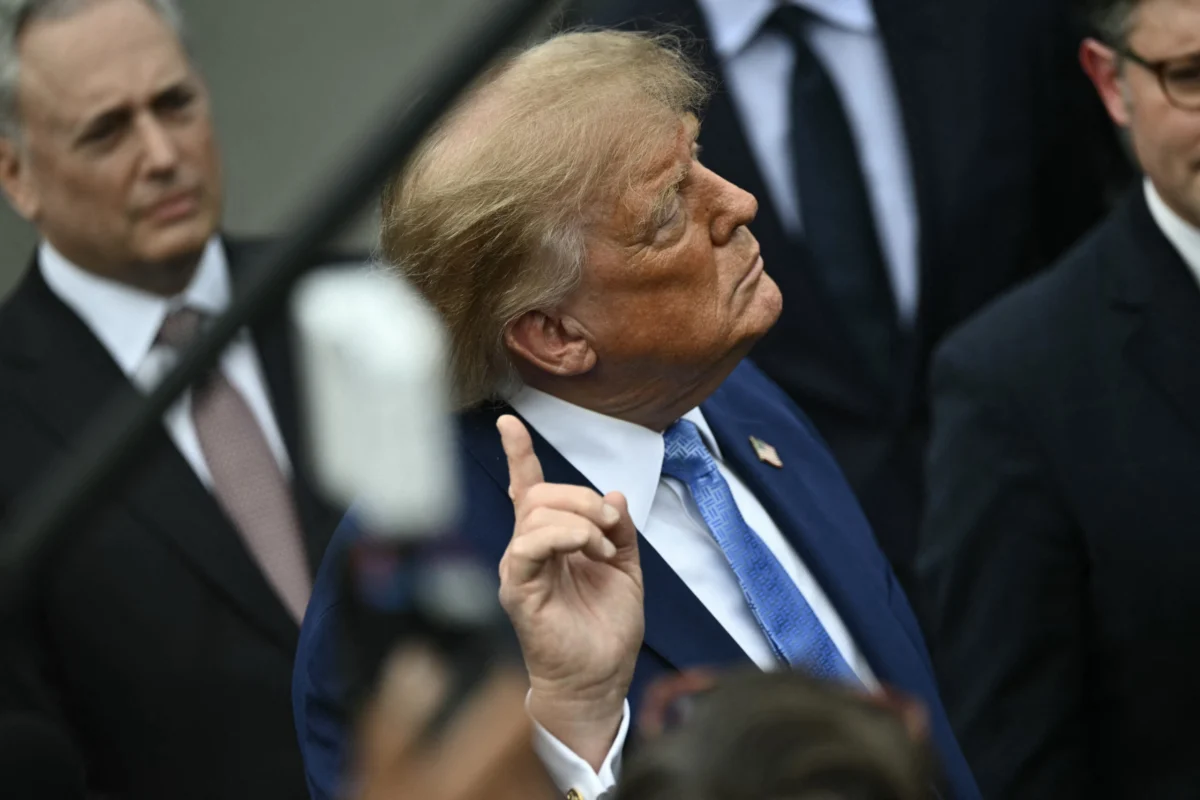
In an unexpected declaration from the White House on September 29, 2026, United States President Donald Trump announced that the ongoing conflict with Iran would conclude "very soon," offering no specific details to substantiate his claim. The statement, made following a meeting with technology executives discussing artificial intelligence, also saw the President reiterate his administration’s unwavering stance that Tehran would never be permitted to possess a nuclear weapon. This pronouncement has sent ripples through diplomatic and military circles globally, prompting immediate calls for clarification and sparking intense speculation regarding the future trajectory of the highly volatile situation in the Middle East.
Background to the Escalation of Tensions
The roots of the current hostilities trace back years, building on a complex history of mistrust and geopolitical rivalry between Washington and Tehran. Following the 2018 withdrawal of the United States from the Joint Comprehensive Plan of Action (JCPOA), commonly known as the Iran nuclear deal, tensions steadily escalated. The Trump administration reimposed and expanded a robust sanctions regime, severely crippling Iran’s economy and its oil exports. Tehran, in turn, incrementally breached the terms of the JCPOA, increasing its uranium enrichment levels and deploying advanced centrifuges, drawing condemnation from international observers and signatory nations.
Throughout the early 2020s, a series of flashpoints characterized the deteriorating relationship. These included attacks on oil tankers in the Persian Gulf, drone incidents targeting critical infrastructure, and an intensification of proxy conflicts across the wider Middle East, notably in Yemen, Iraq, and Syria. Each incident, though often denied or attributed to other actors, contributed to a climate of suspicion and near-constant brinkmanship. Diplomatic efforts, often spearheaded by European nations, consistently failed to bridge the widening chasm between Washington’s maximum pressure campaign and Tehran’s demands for sanctions relief and recognition of its regional influence.
The direct military conflict, which began in earnest in early 2026, was reportedly triggered by a significant escalation in the Strait of Hormuz. While specific details remain officially undisclosed, intelligence reports and leaked analyses suggested a coordinated series of attacks on international shipping lanes, attributed by Washington and its allies to Iranian-backed entities. This was followed by a retaliatory cyber-attack against Iranian critical infrastructure, and then, within days, limited but targeted military strikes by both sides on strategic assets. The conflict, while never officially declared a "war" by the United States Congress, has involved continuous low-intensity military engagements, strategic cyber warfare, and a sustained campaign of economic pressure.
Chronology of the 2026 Iran Conflict
The current phase of heightened military activity began in January 2026.
- January 2026: Multiple commercial vessels in the Strait of Hormuz report GPS jamming and minor sabotage incidents, with one major oil tanker sustaining significant damage. The U.S. Fifth Fleet increases its presence in the region.
- February 2026: Following intelligence assessments attributing the shipping incidents to Iran-backed forces, the U.S. launches targeted cyber operations against Iranian Revolutionary Guard Corps (IRGC) digital assets. Iran responds with limited missile strikes on U.S. military bases in Iraq, causing minor damage but signaling intent.
- March 2026: The U.S. deploys additional air and naval assets to the Gulf region. Iran conducts large-scale naval drills, showcasing its anti-ship missile capabilities. Diplomatic efforts by the United Nations and European Union intensify, calling for de-escalation.
- April 2026: A major incident occurs involving a U.S. reconnaissance drone being shot down over international waters, which Washington claims was an unprovoked act of aggression. The U.S. responds with precision airstrikes against IRGC naval facilities. Iran retaliates by activating a series of proxy attacks against U.S. interests in the region.
- May – August 2026: The conflict settles into a pattern of tit-for-tat exchanges. U.S. and allied forces conduct regular patrols and interdiction operations, while Iran continues its nuclear program advancements and supports regional proxies. Economic sanctions continue to weigh heavily on Iran, leading to widespread protests and economic hardship within the country. Humanitarian organizations report a growing displacement crisis in border regions due to sporadic skirmishes.
- September 2026: Weeks prior to President Trump’s statement, there were reports of increased back-channel communications involving Oman and Qatar, hinting at potential diplomatic breakthroughs, though these were largely dismissed by official sources as speculative. The humanitarian situation in areas bordering conflict zones deteriorates further, with calls from international bodies for an immediate ceasefire.
President Trump’s Statement: A Closer Examination
President Trump’s remarks on September 29, 2026, came as he addressed reporters outside the White House, following a high-profile meeting focused on the rapid advancements and ethical implications of artificial intelligence. While the primary topic of the gathering was cutting-edge technology, the President abruptly shifted focus to the Middle East conflict. "The war with Iran," he stated, pausing briefly, "will be ending very soon. I believe it will be ending very, very soon." He then reaffirmed, "Tehran will not have a nuclear weapon. That is non-negotiable."
Crucially, the President offered no context, no explanation, and no indication of what "ending very soon" might entail. He did not specify whether this implied a ceasefire, a peace agreement, a military victory, or a withdrawal. This ambiguity immediately fueled intense speculation among journalists and analysts. White House press secretary, Sarah Jenkins, declined to elaborate further, stating only that "the President is confident in the administration’s strategy for peace and security in the region." The lack of detail stood in stark contrast to the gravity of the claim, leaving many to wonder if a significant diplomatic breakthrough was imminent, or if the statement was intended as a psychological maneuver.
Reactions from Domestic and International Fronts
The President’s declaration triggered a rapid succession of reactions from capitals around the globe.
- United States Congress: Democratic leaders in Congress swiftly called for immediate briefings and greater transparency. Senator Maria Rodriguez (D-CA), Chair of the Senate Foreign Relations Committee, issued a statement saying, "While any movement towards peace is welcome, the American people and their representatives deserve to know the details of any plan to end this conflict. Vague pronouncements only create uncertainty and risk." Republican leaders, while generally supportive of the President’s foreign policy, also expressed a desire for more information, emphasizing the need for a "definitive strategy."
- The Pentagon: Officials at the Department of Defense maintained a tight-lipped stance, referring all inquiries back to the White House. Sources within the Pentagon, speaking on condition of anonymity, indicated that military operations were continuing as planned and that no new directives regarding a cessation of hostilities had been issued to field commanders. This suggested either a significant diplomatic initiative was still in its nascent stages or the President’s statement was aspirational rather than based on an immediate, concrete agreement.
- Iran: Tehran’s official response came within hours. Foreign Ministry spokesperson, Saeed Khatibzadeh, speaking on state television, dismissed the American President’s remarks as "propaganda" and "empty rhetoric." He reiterated Iran’s position that any cessation of hostilities must involve the complete lifting of all U.S. sanctions, an end to foreign military presence in the region, and guarantees of non-interference in Iran’s internal affairs. However, sources close to the Supreme National Security Council in Tehran reportedly conveyed a sense of cautious intrigue, suggesting that while publicly defiant, Iran’s leadership might be open to exploring any credible path to de-escalation, given the severe economic pressure.
- European Union: EU High Representative for Foreign Affairs and Security Policy, Josep Borrell, welcomed any sign of de-escalation but stressed the need for a comprehensive and verifiable agreement. "The European Union has consistently advocated for a diplomatic solution to the Iranian nuclear issue and regional tensions," Borrell stated. "We stand ready to support any genuine effort that leads to a sustainable peace, but details are paramount." Member states like France, Germany, and the UK, signatories to the original JCPOA, reiterated their commitment to non-proliferation and urged all parties to return to the negotiating table with constructive proposals.
- Gulf Cooperation Council (GCC) Nations: Saudi Arabia and the United Arab Emirates, key regional allies of the U.S., reacted with cautious optimism, tinged with skepticism. While expressing hopes for an end to the conflict that has destabilized the region, officials privately voiced concerns about the lack of detail, particularly regarding the long-term containment of Iran’s regional ambitions and its nuclear program. Kuwait and Oman, often playing mediating roles, hinted at continued efforts to facilitate back-channel communications.
- Israel: Prime Minister Benjamin Netanyahu’s office issued a terse statement reaffirming Israel’s "unwavering commitment to prevent Iran from acquiring nuclear weapons" and its right to self-defense. While not directly commenting on Trump’s statement, the underlying message was clear: any deal must ensure Israel’s security.
- Russia and China: Both nations, often critical of U.S. unilateralism, called for immediate de-escalation and a return to multilateral diplomacy. Russian Foreign Minister Sergey Lavrov urged all parties to "exercise restraint and engage in serious negotiations without preconditions." China’s Foreign Ministry spokesperson likewise stressed the importance of respecting international law and sovereignty.
Analysis of Implications
President Trump’s ambiguous announcement carries significant implications across various domains, both domestically and internationally.
- Diplomatic Implications: The most immediate implication is the potential for renewed diplomatic activity. While the lack of detail could be a deliberate strategy to create leverage or test reactions, it also risks undermining credibility if not followed by concrete steps. A genuine peace initiative would likely require complex negotiations, potentially involving a revised nuclear deal, regional security guarantees, and a framework for lifting sanctions. The success of such an initiative would depend heavily on the willingness of both the U.S. and Iran to make significant concessions, a prospect that has proven elusive for years.
- Military Implications: For military forces on the ground and at sea, the statement creates uncertainty. Without clear directives, operations are expected to continue, but commanders will be on heightened alert for any shifts in strategy or potential ceasefire orders. A genuine end to the war would involve a structured disengagement, potentially a UN-monitored ceasefire, and a significant recalibration of military postures in the Persian Gulf and surrounding areas. The logistics of such an operation, particularly regarding troop withdrawals or re-deployments, would be immense.
- Economic Implications: Global oil markets reacted with volatility. Initially, prices dipped on the prospect of de-escalation and a potential return of Iranian oil to the market, but quickly recovered as the lack of detail introduced uncertainty. A definitive end to the conflict, especially with the lifting of sanctions, could significantly impact global energy prices and trade routes. For Iran, an end to hostilities and sanctions relief would be a lifeline for its struggling economy, potentially alleviating widespread domestic unrest. However, the path to economic recovery would be long and arduous, requiring substantial foreign investment and internal reforms.
- Political Implications (Domestic US): Domestically, the statement could be seen as a pre-election maneuver (assuming a 2026 election cycle is relevant to President Trump’s political future) or an attempt to consolidate public support for his foreign policy. A successful resolution of the conflict would be a significant foreign policy achievement, potentially boosting his approval ratings. Conversely, if the statement proves to be unfounded or if the conflict escalates further, it could damage his credibility and draw heavy criticism from political opponents.
- Regional Stability: The long-term impact on Middle East stability remains a critical concern. Even if direct hostilities between the U.S. and Iran cease, the underlying proxy conflicts and regional rivalries are deeply entrenched. A peace agreement would need to address these broader issues to ensure lasting stability. Without a comprehensive regional security framework, any cessation of direct conflict risks simply shifting the arena of competition. The security of vital shipping lanes, the future of Iraq and Syria, and the balance of power between regional actors would all be subject to significant shifts.
Supporting Data and Context
The conflict has already exacted a heavy toll. According to figures from the International Monetary Fund, Iran’s GDP had contracted by an estimated 15% since the imposition of maximum pressure sanctions, with inflation rates soaring past 40% in late 2025. The cost of the U.S. military presence and operations in the region since the escalation in early 2026 is conservatively estimated to be in the tens of billions of dollars, according to various think tank analyses. The United Nations High Commissioner for Refugees (UNHCR) reported an additional 1.2 million internally displaced persons and refugees from conflict-affected zones in the first nine months of 2026, exacerbating an already dire humanitarian situation. Analysts from institutions like the Carnegie Endowment for International Peace have consistently highlighted the critical need for a diplomatic off-ramp, warning that prolonged conflict risked drawing in other regional and global powers, with unpredictable consequences. Previous attempts at mediation, including those led by Oman and Iraq, had consistently foundered on the intractable issues of sanctions relief and Iran’s ballistic missile program.
The Road Ahead
President Trump’s declaration has injected a potent mix of hope and uncertainty into the complex and dangerous standoff with Iran. The coming days and weeks will be crucial in determining whether this statement signifies a genuine breakthrough in what has been a protracted and costly conflict, or if it is merely a rhetorical gambit. The world now awaits concrete actions, clear policy announcements, and verifiable steps from both Washington and Tehran to transform a hopeful but vague claim into a tangible reality of peace. The international community, weary of the conflict’s destabilizing effects, stands ready to support any credible diplomatic initiative, but the burden of providing details and demonstrating commitment now rests firmly with the involved parties.
