

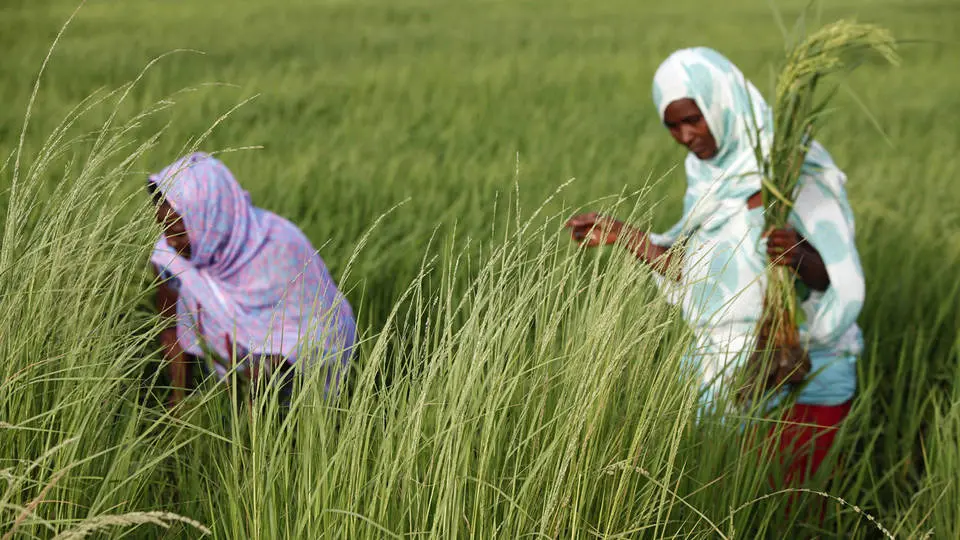
Across Sub-Saharan Africa, women are the backbone of the agricultural sector, forming the vast majority of the workforce. However, this demographic dominance rarely translates into commensurate economic gains. This disparity represents a significant missed opportunity, with the continent’s food and agribusiness market projected to reach a staggering $1 trillion by 2030. A systematic and concerted effort by policymakers, non-governmental organizations (NGOs), and philanthropic organizations could unlock this immense market potential, fundamentally reshaping the region’s food systems for the better and fostering widespread economic empowerment.
The Untapped Potential of African Women in Agriculture
The prevailing image of a woman in African agriculture often conjures a picture of arduous labor under challenging conditions: a mother toiling in the sun, grappling with limited access to essential inputs like fertilizer, and facing difficulties in securing fair prices for her produce. While this image reflects the reality for many, it overlooks a growing cohort of dynamic women agripreneurs who are building successful food businesses, creating employment, and contributing significantly to their local economies. The critical issue is that far more women could ascend to leadership roles and drive economic growth if the systemic barriers they encounter were systematically addressed.
In Sub-Saharan Africa, an overwhelming majority of working women, exceeding three-quarters, are engaged in the agrifood sector. A significant portion of their labor, approximately two-thirds, occurs beyond the farm gate, in crucial value-adding stages such as processing, aggregation, storage, and informal trade. Despite their vital contributions in these areas where economic value is generated, women in these roles often remain confined to precarious, low-paid, and informal employment. This situation perpetuates a cycle of economic vulnerability, preventing them from fully capitalizing on their labor and expertise.
Spotlight on Success: The Rise of African Agripreneurs
The Africa Food Systems Forum, held recently in Rwanda, served as a powerful testament to the capabilities of African women food entrepreneurs, or "agripreneurs." These honorees showcased the transformative impact that can be achieved when women are supported to lead and innovate. A compelling example is Ifeoma Mary Okonkwo, co-founder of a solar-powered cassava processing business in Nigeria. Her enterprise processes an impressive 15 tons of cassava daily, transforming it into gluten-free flour, starch, fortified foods, and animal feed destined for both domestic and international markets. In just a decade, Okonkwo’s company has expanded to employ hundreds of individuals. Furthermore, it has become a significant purchaser of cassava, procuring over $4.45 million worth from a network of 2,000 farmers, the majority of whom are women. This engagement has also facilitated access to vital resources for these farmers, including fertilizer, technical advice, and consistent market access.
Okonkwo’s success story highlights the tangible results that can stem from deliberate efforts by governments and development partners to empower women-led businesses. She, for instance, benefited from access to finance through women-focused lending schemes, which provided her with favorable terms. This underscores the critical role of targeted financial instruments in enabling women entrepreneurs to scale their operations and achieve greater economic independence.
Systemic Barriers to Economic Equality
Despite inspiring examples like Okonkwo’s, a substantial amount of work remains to dismantle the pervasive barriers that hinder women’s full economic participation. A comprehensive report by the World Bank, "Women, Business, and the Law 2026," underscores a critical paradox: legal equality on paper does not automatically translate into economic opportunity. While women may possess the legal rights to register businesses or access credit lines, their capacity to formalize operations, attract investment, and achieve substantial growth is frequently curtailed by a confluence of factors. These include weak enforcement of existing laws, an underdeveloped financial infrastructure, deeply entrenched restrictive social norms, and the disproportionate burden of unpaid care work that falls upon women.
Legal Reforms and Their Implementation: A Crucial Nexus
Addressing outdated legal frameworks, particularly concerning land ownership, is a critical starting point. Inheritance customs and prevailing social norms often supersede women’s legal land rights in practice, limiting their ability to leverage this fundamental asset for economic advancement. However, enacting legislation is only the first step. The true impact of legal reform hinges on effective enforcement. This principle extends to gender-equal business laws; the implementation of these legal changes is as vital as their initial passage. Without robust mechanisms for enforcement, even progressive legislation can fall short of its intended objectives, leaving women in a state of continued disadvantage.
Proven Models for Empowerment: The "Farmer Field and Business School" Approach
Fortunately, a growing body of evidence points to effective strategies for enabling rural women to transition from subsistence farming to viable small businesses. In Ethiopia, where agriculture constitutes approximately 80% of the national workforce, a significant gender productivity gap was identified: female farm managers were producing at least one-third less per hectare than their male counterparts. This disparity represented an annual economic loss of over $1 billion for the country. In response, the Ethiopian Ministry of Agriculture, with support from the Bill & Melinda Gates Foundation, partnered with CARE, an international NGO, to implement an innovative program. This initiative focused on cutting out inefficient middlemen by directly connecting women’s producer groups with markets. Crucially, it also provided training in climate-conscious farming practices and nutrition education.
This "Farmer Field and Business School" model, developed over the past decade, has been successfully replicated across multiple African nations, yielding consistently strong results. In Burundi, for instance, women participating in the program experienced substantial increases in their crop yields. By collectively pooling savings, sharing vital market intelligence, and establishing internal lending circles, these women have been able to diversify their small farming businesses, build credit histories, and, perhaps most importantly, cultivate greater confidence in their entrepreneurial capabilities.
Global Parallels and the Power of Peer-to-Peer Learning
The success of such empowerment models is not confined to Africa. India offers a compelling parallel through the work of PANI, a local organization guided by Gandhian principles. PANI has been instrumental in disseminating climate-conscious farming knowledge and facilitating market access from woman to woman, reaching tens of thousands of households through a network of trained community advisors. This grassroots approach, emphasizing knowledge sharing and mutual support among women, has proven highly effective in fostering sustainable agricultural practices and economic independence.
Addressing Deep-Seated Norms and Scaling Success
Underpinning these successful programs is a dual focus: educating and upskilling women while simultaneously confronting the deeply ingrained gender norms that impede their progress. The Ethiopian project, for example, actively engages men in community dialogues. These conversations aim to challenge traditional perceptions that relegate farming to a male domain and domestic chores to women. Participants in these dialogues report a significant increase in women’s confidence and decision-making power within their households. Moreover, both women and men acknowledge that these interventions have strengthened their partnerships.
Philanthropic organizations have a pivotal role to play in scaling these proven approaches. This includes backing emerging innovations that are specifically designed to meet women’s needs—from climate-resilient crops and livestock to sophisticated AI-powered digital tools for precision agriculture. Furthermore, philanthropy can advocate for the linkage of international financing to clear gender-equality objectives, ensuring that development aid actively promotes women’s empowerment.
Innovative Financial Models for Gender Equality
A particularly promising development is the emergence of innovative climate-finance models. The International Fund for Agricultural Development (IFAD) is pioneering a model that directly ties funding to measurable improvements in women’s economic opportunities. This approach embeds gender equality as a core component of the investment itself, rather than treating it as an ancillary goal. This climate-finance mechanism has already facilitated the redirection of $118.5 million in investments across several countries. These investments are instrumental in enabling rural women to gain greater control over land and productive assets, enhance their livelihoods, and bolster their resilience against the escalating impacts of climate change.
The Compounding Threat of Climate Change for Women Farmers
The disproportionate impact of climate change on women farmers cannot be overstated. This crisis exacerbates existing inequalities, placing an immense burden on those who are already at the forefront of food production. Research conducted in low- and middle-income countries reveals a stark reality: a mere 1°C rise in average temperatures is associated with a 34% greater reduction in income for female-headed households compared to their male-headed counterparts. This disparity highlights the urgent need for targeted adaptation and resilience-building strategies that prioritize the needs of women in agriculture.
A Call to Action: Investing in Women for a Sustainable Future
As the effects of climate change intensify and global food systems face unprecedented challenges, it is imperative that governments, development partners, and philanthropic organizations intensify their efforts. Creating an enabling environment for rural women to adapt, build resilience, and thrive is not merely a matter of social justice; it is a strategic imperative for global food security and sustainable development. The success stories of women like Ifeoma Mary Okonkwo are not isolated incidents; they are powerful indicators of what is achievable. These women are already the bedrock of our food systems. By strategically positioning them to lead, we can unlock transformative structural changes that are essential for building more equitable, resilient, and prosperous societies for all. The $1 trillion market opportunity is within reach, contingent upon our collective commitment to empowering the women who feed the world.
