

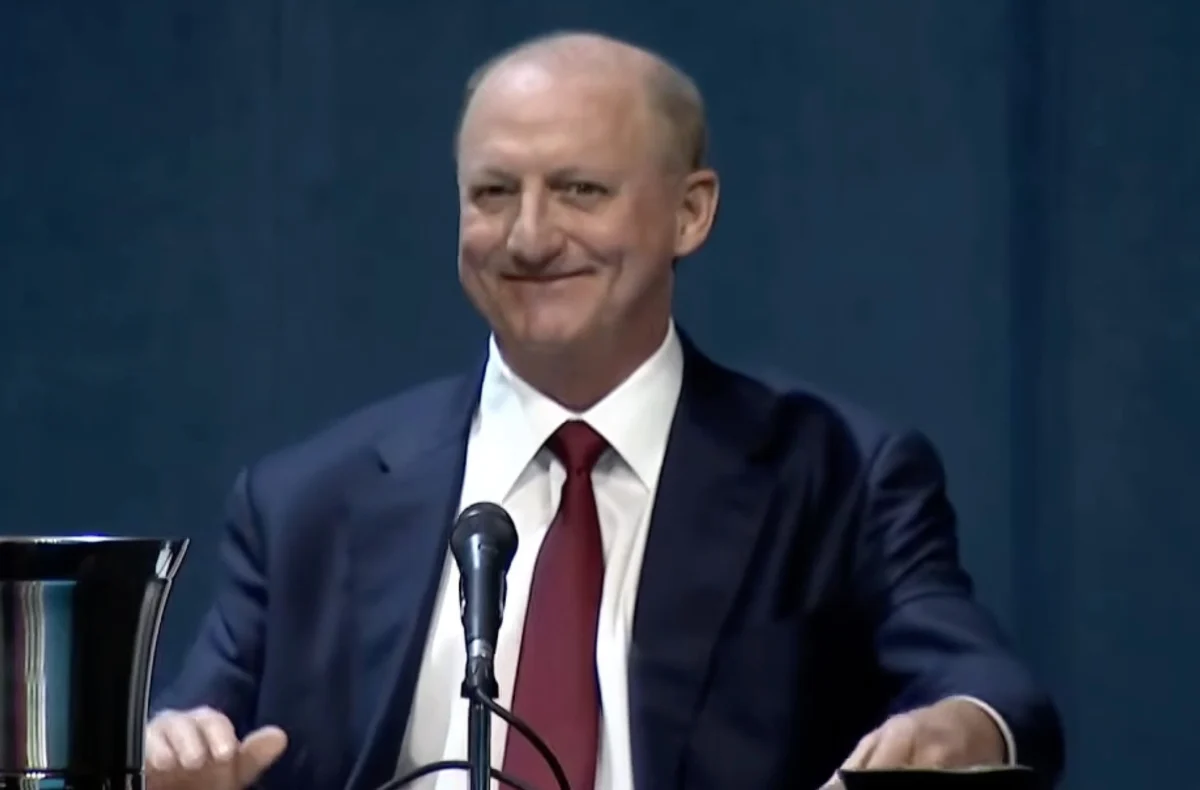
Berkshire Hathaway, the sprawling conglomerate helmed by CEO Greg Abel, reported a robust 16% surge in operating earnings for the second quarter, reaching $12.98 billion, up from $11.16 billion in the same period a year prior. This significant growth was primarily driven by strong performances across its diversified energy, railroad, and manufacturing segments, effectively offsetting a downturn in its prominent insurance operations. However, beyond the impressive financial figures, the quarter’s results underscore a pivotal shift in capital allocation strategy under Abel, who assumed the chief executive role from legendary investor Warren Buffett at the dawn of 2026. At 64 years old, Abel is demonstrably putting Berkshire’s historically vast cash reserves to work through accelerated share buybacks and a notable return to net equity purchases, signaling a new era of proactive capital management for the Omaha-based titan.
The second quarter of 2026 marks a critical juncture for Berkshire Hathaway, showcasing Abel’s early but decisive influence on the company’s financial direction. The conglomerate’s diverse portfolio provided a mixed, yet ultimately positive, earnings picture. Manufacturing, service, and retailing earnings emerged as a standout performer, experiencing a substantial 24% increase to $4.47 billion. This segment, encompassing a wide array of businesses from industrial products to consumer goods and services, often serves as a barometer for broader economic health, suggesting resilience and growth across several key sectors where Berkshire maintains a presence. Similarly, Berkshire Hathaway Energy (BHE) delivered an impressive 27% profit surge, reaching $891 million. This energy utility giant, with extensive investments in electricity generation, transmission, and distribution, benefits from consistent demand and ongoing infrastructure development. The BNSF railway, another cornerstone of Berkshire’s industrial holdings, also contributed positively, posting a 6% increase in profit to $1.56 billion, reflecting steady freight volumes and operational efficiencies within the North American rail network.
Navigating Challenges in the Insurance Sector
Despite the strong performance in its industrial and energy divisions, Berkshire’s insurance arm, a traditionally robust contributor, faced headwinds during the quarter. Underwriting earnings declined by 13% to $1.73 billion from $1.99 billion a year earlier. This reduction can be attributed to several factors inherent in the cyclical and often volatile insurance industry, including potentially higher catastrophe losses, increased claims frequency, or intensified competitive pricing pressures in various lines of business. Concurrently, insurance investment income, which is generated from the vast float of policyholder premiums, also saw a 9% decline to $3.06 billion. This dip could be influenced by shifts in the interest rate environment affecting bond yields, or perhaps a more conservative investment approach within the fixed-income portfolio, though Berkshire’s long-term strategy typically emphasizes stability. While these insurance results presented a weaker spot, their impact was effectively mitigated by the robust growth observed across the company’s other major segments, underscoring the inherent diversification strength of the Berkshire Hathaway model.
Abel’s Proactive Capital Deployment Strategy Takes Shape
The most significant strategic development observed in the second quarter was the substantial acceleration in capital deployment under Greg Abel’s leadership. For years, under Warren Buffett, Berkshire had amassed an unprecedented cash hoard, frequently exceeding $100 billion and peaking near $400 billion. Buffett’s philosophy of maintaining a vast "dry powder" reserve was predicated on the patient waiting for "elephant-sized" acquisitions that met his stringent valuation criteria, a task he increasingly found challenging in recent years. This led to a prolonged period where the cash pile grew, much to the chagrin of some shareholders who advocated for more aggressive capital returns or new investments.
Abel’s second fiscal quarter at the helm demonstrated a clear pivot from this holding pattern. Berkshire repurchased approximately $4.5 billion of its own Class A and Class B shares during the period. This figure represents a sharp acceleration from the mere $235 million spent on buybacks in the first three months of 2026, and while it might have fallen slightly below the most aggressive analyst expectations, it signals a renewed commitment to returning capital to shareholders when the company’s stock is perceived as undervalued. Share buybacks, when executed judiciously, can enhance shareholder value by reducing the number of outstanding shares, thereby increasing earnings per share and intrinsic value for remaining shareholders.
The impact of this increased capital deployment was immediately visible in Berkshire’s balance sheet. The conglomerate’s formidable cash pile, which had reached a record $397.4 billion at the end of the first quarter, decreased to $365.5 billion by the end of June. This reduction was not solely due to share repurchases but also encompassed other strategic investments, notably the closing of Berkshire’s acquisition of Taylor Morrison, a prominent homebuilder. This acquisition, completed during the quarter, further diversified Berkshire’s exposure to the housing market, a sector that historically exhibits strong cyclicality but can offer significant returns during periods of growth. The move into Taylor Morrison aligns with Berkshire’s long-standing strategy of acquiring well-managed, understandable businesses with durable competitive advantages.
A Strategic Reversal: From Seller to Buyer in Equities
Perhaps one of the most significant strategic reversals under Abel’s early tenure was Berkshire’s return to being a net buyer of equities. For 14 consecutive quarters leading up to the second quarter of 2026, Berkshire Hathaway had been a net seller of stocks, reflecting Warren Buffett’s consistent public statements about finding few attractive investment opportunities in a broadly expensive equity market. This long-standing pattern came to an end in Q2, with the company making nearly $20 billion in net equity purchases. This dramatic shift signals a renewed confidence in the valuation of specific public companies or a broader change in market outlook from Berkshire’s investment team.
A highlight of these new equity investments was the significant stake taken in Alphabet, the parent company of Google. The filing indicated that Alphabet (GOOGL) is now among Berkshire’s five largest equity holdings by market value at the end of June, joining its long-standing stalwarts: American Express (AXP), Apple (AAPL), Bank of America (BAC), and Coca-Cola (KO). Berkshire had disclosed a $10 billion investment in Alphabet earlier in the year, specifically earmarked to help fund the tech giant’s burgeoning artificial intelligence (AI) development initiatives. This investment is particularly noteworthy as it represents a substantial foray into the cutting-edge of technology, a sector that Buffett has historically approached with caution. Interestingly, Buffett himself confirmed to CNBC that he initiated the Alphabet investment after consulting with Greg Abel, underscoring a collaborative yet decisive transition of investment leadership and strategic thought within the company. This interaction highlights that while Abel is now at the helm, Buffett continues to play an influential role as Chairman, providing guidance and insights, especially on major capital allocation decisions.
The Succession: From Buffett’s Prudence to Abel’s Proactivity
The transition of leadership from Warren Buffett, now 95 and serving as Chairman, to Greg Abel at the start of 2026 has been one of the most anticipated successions in corporate history. Buffett had meticulously groomed Abel for years, entrusting him with the vast and diverse non-insurance operations of Berkshire Hathaway. Abel’s mandate, as perceived by many investors and analysts, was not merely to maintain the status quo but to navigate Berkshire into its next chapter, particularly concerning the deployment of its massive capital reserves. Buffett, renowned for his patient and often risk-averse approach, had openly acknowledged his difficulty in finding values in the equity market that met Berkshire’s rigorous standards, leading to the "unprecedented" cash fortress. This prudence, while safeguarding capital, also generated a rising chorus of voices from shareholders clamoring for more active capital deployment outside of low-yielding U.S. Treasuries.
Abel’s initial moves in the second quarter strongly suggest a response to this shareholder sentiment. The acceleration of share buybacks and the aggressive return to net equity purchases, particularly in a high-growth, high-tech company like Alphabet, indicate a more proactive stance on capital allocation. This doesn’t necessarily represent a radical departure from Buffett’s core tenets of value investing but rather an adaptation to current market conditions and a willingness to deploy capital more swiftly when opportunities arise. The collaborative decision-making process for the Alphabet investment, with Buffett initiating and consulting Abel, further illustrates a carefully managed, synergistic handover of strategic oversight.
Market Reaction and Broader Implications
Despite the positive operating results and strategic capital deployment, shares of Berkshire Hathaway have shown modest year-to-date performance, up just 3% by the end of June, significantly underperforming the S&P 500’s 13% gain over the same period. This underperformance can be attributed to several factors, including the conglomerate’s defensive nature, which often lags during strong bull markets driven by growth stocks, and the lingering questions surrounding the sheer scale of its cash pile and its efficient deployment. However, there has been a recent uptick, with the stock rising 9% over the last three months, suggesting that investors are beginning to react positively to Abel’s more active approach to capital management and the deployment of cash.
The implications of Abel’s early strategic moves are far-reaching for Berkshire Hathaway and its vast shareholder base. The shift to a more dynamic capital allocation strategy could potentially unlock greater shareholder value by efficiently deploying capital into either undervalued shares of Berkshire itself or compelling external investment opportunities. The investment in Alphabet, particularly its AI development, signals a willingness to embrace technological advancements and growth sectors that might have been less emphasized in the past, potentially modernizing Berkshire’s investment profile while still adhering to its core principles of investing in strong businesses.
For the broader market, Berkshire’s actions, particularly its return as a net buyer of equities, can be seen as a significant indicator. As one of the largest and most respected institutional investors, Berkshire’s investment decisions often carry weight and can influence market sentiment. Its substantial net purchases could be interpreted as a vote of confidence in the underlying value of the equity market, or at least specific segments within it, after a prolonged period of caution. Furthermore, the robust performance of Berkshire’s manufacturing, energy, and railroad segments provides a granular view of different facets of the U.S. and global economies, suggesting areas of resilience and growth amidst ongoing macroeconomic uncertainties. The future trajectory of Berkshire Hathaway under Greg Abel will undoubtedly be closely watched by investors, analysts, and corporate leaders worldwide, as it navigates the legacy of its iconic founder while charting its own course for continued success.
