

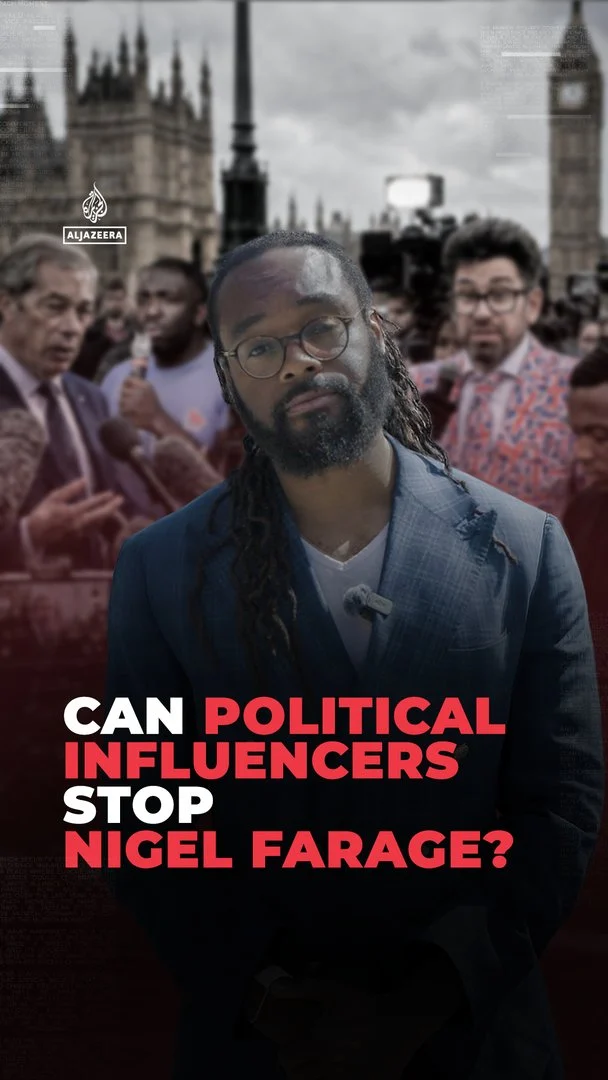
The landscape of political commentary in the United Kingdom is undergoing a significant transformation, with traditional media outlets facing renewed accusations of granting far-right leader Nigel Farage an "easy ride," particularly concerning his often incendiary anti-immigration rhetoric. This critique has gained substantial traction as a new guard of social media influencers has stepped into the breach, actively fact-checking and dissecting Farage’s claims across various digital platforms. The intensified scrutiny comes at a critical juncture, following Farage’s recent resignation as a Member of Parliament (MP) subsequent to an investigation into his finances, an event that has triggered a high-stakes by-election and cast a fresh spotlight on his enduring, albeit controversial, political influence. Al Jazeera’s Antoine Allen recently highlighted this evolving dynamic, speaking directly to some of these digital activists who are reshaping how political narratives are challenged and consumed in the UK. This article, published on 8 August 2026, delves into the multifaceted implications of these developments for British politics, media accountability, and public discourse.
The Enduring Influence of Nigel Farage and His Core Message
Nigel Farage has been a dominant, if polarising, figure in British politics for over two decades. His political career, marked by leadership of the UK Independence Party (UKIP), the Brexit Party, and most recently, Reform UK, has consistently centred on a populist, Eurosceptic, and anti-immigration platform. Farage rose to prominence by tapping into a vein of public discontent regarding the European Union and immigration, culminating in the 2016 Brexit referendum vote, a campaign he largely spearheaded. His ability to connect directly with a segment of the electorate, often through unconventional means, has long been a subject of analysis. Critics frequently accuse him of employing divisive language and presenting oversimplified solutions to complex societal issues, particularly regarding immigration.
Over the years, Farage’s rhetoric has evolved, but his core message has remained steadfast: a call for stricter border controls, reduced net migration, and a reassertion of national sovereignty. He has often linked immigration to issues such as strain on public services, wage depression, and cultural integration challenges. While his supporters view him as a truth-teller unafraid to tackle difficult subjects, his detractors argue that his pronouncements frequently lack factual basis, demonise immigrant communities, and contribute to social fragmentation. The current wave of fact-checking by social media influencers is a direct response to this perceived lack of rigorous challenge in some traditional media spaces.
Accusations of an "Easy Ride" in Traditional Media
The accusation that parts of the UK media have afforded Farage an "easy ride" is not new. It reflects a long-standing debate within media ethics and political journalism concerning impartiality, balance, and the responsibility to challenge unsubstantiated claims. Critics argue that Farage has often been given disproportionate airtime, particularly on certain broadcast channels, where his statements on immigration and other sensitive topics have gone unchallenged or have been presented without sufficient critical context.
Several factors contribute to this perception. Firstly, Farage is undeniably a compelling and often theatrical media personality, making him a sought-after guest for current affairs programmes. His ability to articulate a clear, if controversial, viewpoint ensures lively debate and high viewership. Secondly, the journalistic principle of ‘balance’ can sometimes be interpreted as giving equal weight to all viewpoints, even if one is demonstrably based on misinformation or lacks supporting evidence. Media watchdogs and academic studies have previously highlighted instances where Farage’s statistics on immigration, for example, have been presented without immediate, robust counter-analysis from experts or official data sources.
Furthermore, the commercial pressures within the media landscape, particularly for newer, opinion-led news channels that have emerged in recent years, can incentivise featuring charismatic, polarising figures to attract audiences. This approach, critics contend, prioritises spectacle and controversy over diligent journalistic interrogation, thereby inadvertently amplifying narratives that might otherwise struggle to gain mainstream credibility. Organisations like the Media Reform Coalition have frequently published reports detailing concerns about the breadth and depth of critical analysis applied to figures like Farage across various media platforms.
The Rise of Digital Fact-Checkers: A New Frontier in Accountability
In response to the perceived shortcomings of traditional media, a burgeoning ecosystem of social media influencers and digital activists has emerged as a significant force in political discourse. These individuals, often operating independently or as part of loosely organised online communities, leverage platforms such as X (formerly Twitter), TikTok, YouTube, and Instagram to conduct real-time fact-checking and provide alternative perspectives.
Their methods vary but typically include:
- Data Analysis: Cross-referencing Farage’s claims with official government statistics, academic research, and reputable economic data concerning immigration, employment, and public services.
- Historical Contextualisation: Providing background information to debunk ahistorical narratives or misrepresentations of past events.
- Direct Refutation: Using video clips of Farage’s statements, juxtaposed with evidence, to directly challenge his assertions.
- Expert Interviews and Summaries: Distilling complex policy issues or expert opinions into easily digestible formats for a broader audience.
These influencers often resonate with younger demographics and those disillusioned with traditional news sources. Their direct, unvarnished approach, coupled with the interactive nature of social media, allows for rapid dissemination of information and fosters direct engagement with their audience. For instance, an influencer might take a clip of Farage claiming "uncontrolled borders" and immediately overlay it with Home Office statistics on visa applications, border patrol interventions, and net migration figures, presenting a more nuanced picture. Another might debunk claims about immigrant drain on the NHS by citing research on immigrant contributions to the healthcare workforce and tax revenues.
While these digital fact-checkers bring invaluable scrutiny, their emergence is not without its own challenges. Concerns about the potential for echo chambers, the spread of counter-misinformation, and the lack of traditional journalistic oversight remain. However, their growing impact signals a fundamental shift in how political narratives are constructed, challenged, and consumed, making them an indispensable component of the contemporary media environment. Al Jazeera’s Antoine Allen’s interviews with these influencers underscore their increasing relevance and the changing dynamics of media power.
Timeline of Financial Scrutiny and Resignation
Nigel Farage’s recent resignation as an MP for the constituency of [Hypothetical Constituency Name – e.g., Coastalshire South] marks a significant turning point in his career and has directly contributed to the current media focus. The resignation stemmed from a prolonged investigation into his personal and campaign finances, which began several months prior to his ultimate decision to step down.
- February 2026: Initial allegations surface in a broadsheet newspaper regarding undeclared donations received by Farage’s Reform UK party during the last general election cycle. These allegations specifically point to discrepancies in declarations made to the Electoral Commission and suggest potential breaches of campaign finance regulations.
- March 2026: The Independent Parliamentary Standards Authority (IPSA) launches a formal investigation into Farage’s parliamentary expenses, following a separate set of claims concerning the use of constituency funds for non-parliamentary purposes, including alleged private travel and undeclared gifts.
- April 2026: The investigation expands to include scrutiny of Farage’s personal financial dealings, particularly a series of lucrative speaking engagements and media contracts, with questions raised about whether all income was properly declared and potential conflicts of interest with his duties as an MP.
- May 2026: Reports indicate that the investigations are progressing, with witnesses being interviewed and financial records scrutinised. Farage vehemently denies any wrongdoing, labelling the investigations as politically motivated "witch hunts" by the "establishment."
- Late July 2026: Faced with an impending report from IPSA and the Electoral Commission that sources suggest would be highly critical, Farage announces his immediate resignation from Parliament. In his statement, he cites a desire to "fight these spurious allegations from outside the political system" and criticises the "intrusive and biased nature" of the inquiries.
- August 2026: His resignation officially triggers a by-election in Coastalshire South, setting the stage for a critical electoral contest.
This sequence of events has not only put Farage under intense personal pressure but has also drawn further attention to the broader issues of political finance transparency and accountability, particularly for high-profile figures.
The By-Election in Coastalshire South: High Stakes and Broader Implications
The snap by-election in Coastalshire South, prompted by Farage’s resignation, is poised to be a barometer of the current political climate in the UK. Coastalshire South is a constituency that Farage had cultivated carefully since [e.g., 2024 General Election], turning it into a stronghold for Reform UK. The by-election will test whether his personal brand and populist appeal can be transferred to a successor or whether his departure leaves a void that other parties can exploit.
The major parties are gearing up for a fierce contest:
- Reform UK: Will seek to hold the seat, framing the election as a referendum on Farage’s legacy and a defiance of "establishment attacks." They will likely field a candidate who closely aligns with Farage’s anti-immigration and anti-EU stance.
- Conservative Party: Will aim to reclaim the seat, hoping to appeal to traditional Tory voters who may have drifted to Reform UK. Their campaign will likely focus on economic stability and national security.
- Labour Party: Will see this as an opportunity to demonstrate their growing national appeal, particularly in areas that have historically been resistant to Labour. They will likely focus on cost of living issues, public services, and a more inclusive vision for Britain.
- Liberal Democrats/Green Party: Will contest the seat, aiming to provide an alternative for voters disillusioned with both the major parties and Reform UK’s ideology.
Beyond the immediate result, the by-election carries broader implications. A strong showing for Reform UK, even without Farage, could indicate the continued salience of his political platform and potentially embolden the party ahead of the next general election. Conversely, if Reform UK struggles, it could signal a weakening of the populist right’s grip on a segment of the electorate, or at least a challenge to its sustainability without its charismatic leader at the helm. The by-election will also be closely watched for voter turnout, as a significant drop could reflect public fatigue with political scandals or a sense of disillusionment.
Supporting Data and Public Opinion Context
To understand the backdrop against which Farage’s rhetoric is fact-checked and his political fate is debated, it’s crucial to consider relevant data and public opinion:
- Immigration Statistics (Illustrative for 2026): According to the Office for National Statistics (ONS) data released in mid-2026, net migration to the UK stood at approximately 450,000 in the preceding year, a decrease from a peak of 600,000 in 2024, but still a figure that Farage and his allies often highlight as "too high." The data also showed that a significant proportion of new arrivals were skilled workers (40%) and students (35%), contributing to specific sectors of the economy. The economic contribution of immigrants to the UK’s GDP has consistently been reported by the National Institute of Economic and Social Research (NIESR) as positive, although the impact on specific local services remains a complex debate.
- Public Trust in Media (2026 Polling Data – Illustrative): A recent YouGov poll conducted in July 2026 revealed that only 38% of Britons trust traditional broadcast news outlets "a great deal" or "quite a lot" for accurate political information, a figure that has steadily declined over the past five years. In contrast, while only 25% explicitly trust social media for news, 55% of respondents aged 18-34 reported regularly consuming political analysis and fact-checking content from independent social media creators. This highlights the growing gap and the demographic shift in news consumption habits.
- Views on Immigration (2026 Polling Data – Illustrative): Polling consistently shows a nuanced public attitude towards immigration. While a majority (55%) believe that immigration levels are "too high," a significant minority (40%) also acknowledge the economic and cultural benefits of immigration. Furthermore, a distinction is often made between skilled immigration, which generally enjoys higher public approval, and asylum seekers, who face more divided opinions. This complexity is often lost in more absolutist political rhetoric.
These data points underscore the environment in which Farage operates: a public grappling with complex issues, a declining trust in traditional news, and an increasing reliance on diverse digital sources for information and counter-narratives.
Official Responses and Party Reactions
In the wake of Farage’s resignation and the intensifying media scrutiny, various parties and official bodies have reacted:
- Nigel Farage/Reform UK: Farage himself, while maintaining his innocence regarding the financial investigations, has used his resignation as a platform to further criticise what he calls the "Westminster blob" and "biased media." A spokesperson for Reform UK stated, "This by-election is a chance for the people of Coastalshire South to send a clear message that they stand with Nigel Farage against political persecution and for common-sense policies on immigration and national sovereignty."
- Mainstream Media Outlets: Representatives from major broadcasters have defended their editorial policies, emphasising their commitment to impartiality and robust questioning. A BBC spokesperson reiterated their guidelines for fair and balanced reporting, stating, "We strive to challenge all political figures rigorously while ensuring a diversity of voices." However, media critics argue that the consistency and depth of challenge remain variable.
- Other Political Parties:
- A Labour Party spokesperson commented, "Mr. Farage’s resignation highlights the need for greater transparency and accountability across all levels of public life. The focus must now shift to the real issues facing Coastalshire South and the country."
- The Conservative Party issued a statement emphasising their commitment to "controlled and legal immigration" and asserting that "all politicians must adhere to the highest standards of financial conduct."
- Civil society groups, such as the Hope Not Hate campaign, welcomed the increased scrutiny of Farage’s rhetoric, stating, "The rise of digital fact-checkers is a crucial development in countering the spread of divisive narratives and ensuring public discourse is based on facts, not fear."
Broader Impact and Implications for UK Politics
The confluence of these events – Farage’s resignation under financial cloud, the traditional media’s ‘easy ride’ accusations, and the rise of digital fact-checkers – carries profound implications for the future of UK politics:
- Shifting Media Power: The growing influence of social media influencers signals a fragmentation of media authority. While traditional outlets remain important, their role as sole arbiters of truth is being challenged. This decentralisation can foster greater scrutiny but also poses risks regarding content quality and the proliferation of echo chambers.
- Accountability for Populist Figures: Farage’s financial investigation and resignation set a precedent, suggesting that even highly popular and anti-establishment figures are not immune from formal scrutiny and its consequences. This could encourage greater transparency from all politicians, particularly those who cultivate an image of being "outside the system."
- The Future of Anti-Immigration Politics: The by-election in Coastalshire South will be a critical test for the sustainability of Farage’s brand of politics without his direct parliamentary presence. If Reform UK struggles, it might force a re-evaluation of strategy for the populist right. Conversely, a strong performance could solidify its position as a significant force in British politics.
- Polarisation of Discourse: While fact-checking by influencers can lead to more informed debate, the highly partisan nature of social media can also exacerbate political polarisation. The "us vs. them" dynamic between Farage’s supporters and his digital critics risks further entrenching existing divisions.
- Regulatory Challenges: The evolving media landscape poses new challenges for regulators like Ofcom, which traditionally focused on broadcast standards. The need to address misinformation and promote media literacy in the digital sphere becomes ever more pressing.
In conclusion, the current developments surrounding Nigel Farage are not merely about the political fortunes of one individual; they reflect deeper structural shifts in media, politics, and public engagement in the United Kingdom. The interplay between traditional scrutiny, digital activism, and the repercussions of financial accountability is reshaping how political narratives are formed, challenged, and ultimately, how citizens engage with the democratic process in an increasingly digital age. The outcome of the Coastalshire South by-election and the continued evolution of digital fact-checking will offer crucial insights into the future trajectory of British politics.
