

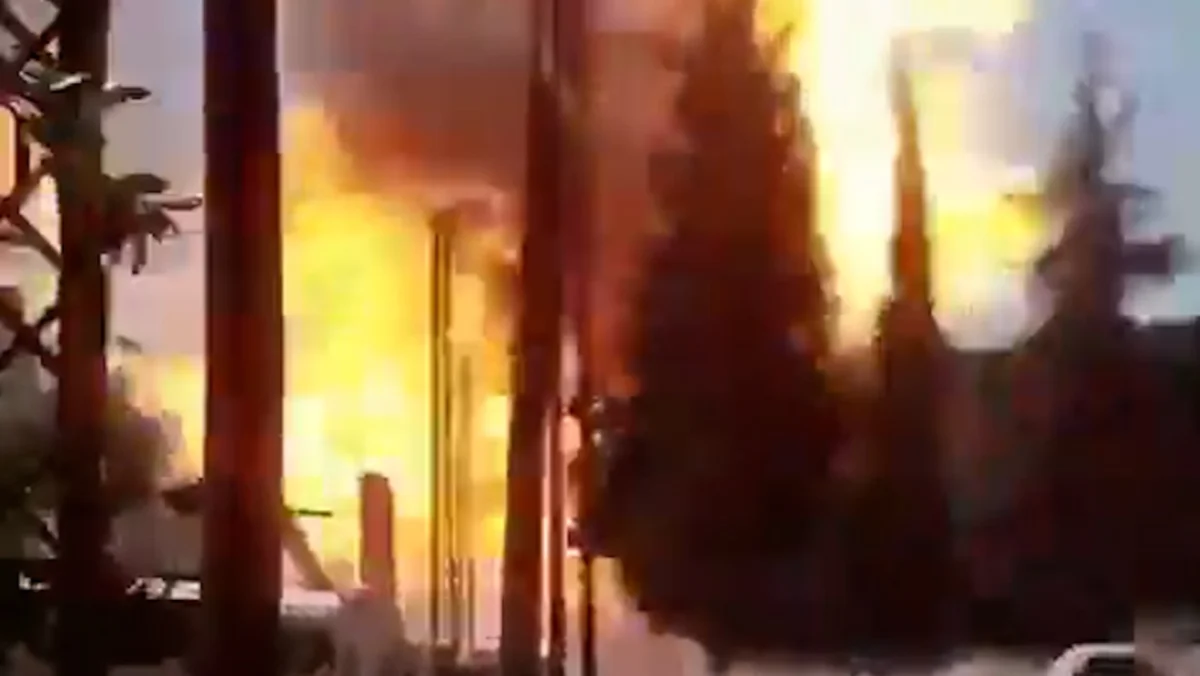
A catastrophic incident unfolded on Wednesday, July 15, 2026, in Hermel, Lebanon, as a gas tanker erupted in a powerful explosion and subsequent inferno near the strategic Lebanese Army barracks. The devastating blast, believed to have been triggered by a fire sparked amidst soaring regional temperatures, sent shockwaves through the quiet town, causing extensive structural damage to nearby residential properties and obliterating numerous vehicles. Emergency services, primarily the Lebanese Civil Defense, swiftly mobilized to the scene, battling the raging flames and managing the immediate aftermath of the harrowing event.
The incident has cast a stark light on Lebanon’s persistent challenges with infrastructure, public safety, and the precarious conditions under which vital resources like fuel are transported, particularly in a region already grappling with severe economic hardship and a fragile security environment. While immediate reports focused on property damage and the heroic efforts of first responders, the wider implications for Hermel and the nation are expected to be profound, prompting urgent calls for thorough investigations and enhanced safety protocols.
The Catastrophic Sequence of Events
The initial reports from Hermel, a town situated in the Beqaa Valley, close to the Syrian border, indicated that the tragedy began sometime in the late afternoon. Local residents reported an unusual fire, possibly originating from or near a stationary gas tanker, which rapidly escalated. The scorching summer temperatures, characteristic of July in the Beqaa, are widely suspected to have played a significant role in exacerbating the initial ignition or creating conditions conducive to rapid combustion. Temperatures in Hermel on that Wednesday were reportedly hovering around 38-40 degrees Celsius (100-104 degrees Fahrenheit), conditions known to increase the volatility of flammable liquids and put immense strain on mechanical systems.
Eyewitness accounts describe a small fire quickly engulfing a section of the tanker, followed by a terrifying, deafening explosion. The blast wave, described by many as feeling like an earthquake, reverberated for miles, shattering windows, dislodging roofs, and causing walls to buckle in buildings within a significant radius. The sheer force of the explosion propelled debris across a wide area, turning the immediate vicinity into a scene of utter devastation. Following the primary explosion, a colossal fireball erupted, sending a towering plume of black smoke hundreds of meters into the sky, visible from distant villages and serving as a grim beacon of the disaster. Secondary explosions and smaller fires were reported as the initial blaze spread to other vehicles and structures, fueled by remnants of the tanker’s highly volatile cargo, believed to be Liquefied Petroleum Gas (LPG) or highly refined gasoline, given its explosive potential.
The proximity of the incident to the Lebanese Army barracks raised immediate security concerns, though initial assessments confirmed no direct impact or casualties within the military installation itself. However, the psychological toll on soldiers and their families stationed nearby, who witnessed the terrifying spectacle, is undeniable.
Immediate Response and Damage Assessment
Upon receiving emergency calls, units from the Lebanese Civil Defense, supported by local fire departments and military personnel, rushed to the scene. Their immediate priorities were to contain the raging fire, prevent further explosions, search for and rescue any potential casualties, and secure the perimeter. Firefighting efforts were arduous, complicated by the intense heat, the continued risk of secondary blasts, and the sheer volume of fuel involved. Specialized foam suppression agents, alongside large volumes of water, were deployed to cool the remaining parts of the tanker and douse the surrounding fires.
Medical teams, including paramedics from the Lebanese Red Cross and other volunteer organizations, established triage points on the periphery of the danger zone. While initial reports did not specify fatalities, several individuals were treated for injuries ranging from severe burns and shrapnel wounds to smoke inhalation and shock. The full extent of casualties, particularly those with less visible psychological trauma, was still being assessed in the hours and days following the event. Hospitals in Hermel and nearby Baalbek were placed on high alert to receive potential victims.
The material damage in the immediate vicinity of the explosion was catastrophic. Dozens of homes suffered significant structural compromise, with many rendered uninhabitable. Windows were blown out, roofs collapsed, and internal fixtures were extensively damaged. Vehicles parked nearby were either incinerated or reduced to twisted metal wreckage by the force of the blast and subsequent fire. Power outages were reported across parts of Hermel as the explosion likely damaged electrical infrastructure. Damage assessment teams, including engineers and urban planners, began preliminary surveys, estimating millions of dollars in losses, a figure that represents a significant burden for a country already teetering on the brink of economic collapse.
Background and Context: Hermel and Lebanon’s Fuel Crisis
The incident in Hermel cannot be viewed in isolation; it is deeply embedded within the broader socio-economic and political context of Lebanon. Hermel, a predominantly Shiite town in the northern Beqaa Valley, is strategically significant due to its proximity to the Syrian border. The region has historically been a nexus for smuggling activities, particularly fuel, exacerbated by Lebanon’s ongoing economic crisis.
Since 2019, Lebanon has been engulfed in one of the worst economic crises in modern history, leading to widespread poverty, hyperinflation, and severe shortages of basic necessities, including fuel, electricity, and medicine. The scarcity of fuel has created a thriving black market, with gasoline and diesel often sold at exorbitant prices, sometimes stored and transported in unsafe conditions. Tankers, often old and poorly maintained, traverse the country’s dilapidated road networks, frequently exceeding safety standards in an attempt to meet demand. The regulatory environment, weakened by years of political instability and corruption, often struggles to enforce strict safety protocols for the transport and storage of hazardous materials.
Furthermore, Lebanon’s infrastructure, from its roads to its power grids, has suffered from decades of underinvestment and neglect. High temperatures, a common feature of Lebanese summers, put additional strain on vehicles and storage facilities, increasing the risk of mechanical failures or spontaneous combustion, especially when safety checks are lax or bypassed. The presence of an army barracks in the vicinity, while a standard feature in many Lebanese towns, underscores the critical nature of maintaining security and safety standards in such areas, given the potential for wider implications.
This particular incident highlights the dangerous confluence of a desperate population, a collapsed economy, an unregulated black market, and aging infrastructure, all operating under extreme environmental conditions.
Official Reactions and Calls for Investigation
In the wake of the explosion, initial reactions from Lebanese officials focused on expressing condolences, commending the bravery of first responders, and pledging a comprehensive investigation.
A spokesperson for the Lebanese Civil Defense lauded the swift and coordinated efforts of their teams, emphasizing the inherent dangers of battling such a large-scale fuel fire. "Our teams performed heroically under extremely perilous conditions," the spokesperson stated in a preliminary press briefing. "Their immediate actions were crucial in preventing the fire from spreading further into residential areas and mitigating potential additional casualties. However, this incident serves as a grim reminder of the critical need for robust safety measures across the entire fuel supply chain."
The Mayor of Hermel issued an urgent appeal for national and international assistance, describing the devastation as "unprecedented" for the town. "Our community has been shattered by this disaster," the Mayor said, visibly distraught. "Many families have lost their homes and livelihoods. We call upon the government and humanitarian organizations to provide immediate aid for reconstruction and support for those displaced and injured. We also demand a swift and transparent investigation into how this could have happened."
While the Lebanese Army confirmed no casualties within its barracks, a statement from the military command indicated that they were cooperating fully with civil authorities in securing the site and assisting in preliminary investigations. The Ministry of Interior and the Ministry of Energy and Water are expected to launch a joint inquiry, focusing on the ownership of the tanker, its cargo, its route, and critically, why it was in such close proximity to a densely populated area and a military installation, particularly under conditions of extreme heat. Questions are also being raised about the enforcement of existing regulations concerning the transport of hazardous materials and the potential for negligence or illegal activities.
Humanitarian organizations, both local and international, began mobilizing resources to provide temporary shelter, food, and medical assistance to affected families. Psychosocial support teams were also being dispatched to help residents cope with the trauma of the explosion.
Broader Implications and The Road Ahead
The Hermel gas tanker explosion carries significant broader implications for Lebanon. Firstly, it underscores the severe risks associated with the country’s informal and often illicit fuel trade, a direct consequence of the economic crisis. The incident is likely to intensify public scrutiny on the government’s ability to regulate critical sectors and ensure public safety. Calls for stricter enforcement of transportation safety standards for hazardous materials, alongside an overhaul of the licensing and inspection processes for tankers and their operators, are expected to grow louder.
Economically, the incident represents another blow to Lebanon’s already fragile state. The cost of damage, coupled with potential compensation for victims and the necessary reconstruction efforts, will strain national resources. For Hermel itself, a town already struggling with economic marginalization, the disaster could exacerbate poverty and potentially lead to internal displacement if homes are not quickly rebuilt or if residents feel unsafe.
Furthermore, the explosion highlights the vulnerability of critical infrastructure across Lebanon. The incident could serve as a catalyst for a broader assessment of safety protocols for all forms of hazardous material transport and storage, particularly in urban or militarily sensitive areas. It may also reignite discussions about alternative, safer methods of energy distribution and the urgent need for long-term solutions to Lebanon’s chronic fuel and electricity shortages, which continue to drive dangerous practices.
The psychological impact on the community, particularly children, who witnessed the horrific event, will be long-lasting. Addressing this trauma through sustained mental health support will be crucial for the town’s recovery.
As investigations proceed, the focus will undoubtedly shift from the immediate response to accountability and prevention. The Hermel explosion stands as a stark reminder of the cascading consequences of systemic failures and the urgent need for comprehensive reforms to protect the lives and livelihoods of the Lebanese people. The international community, already a significant donor to Lebanon, will likely watch closely, evaluating the government’s response and its commitment to addressing the root causes that allowed such a devastating incident to occur. The path to recovery for Hermel will be long and arduous, but the lessons learned from this tragedy could, if heeded, pave the way for a safer future for all of Lebanon.
