

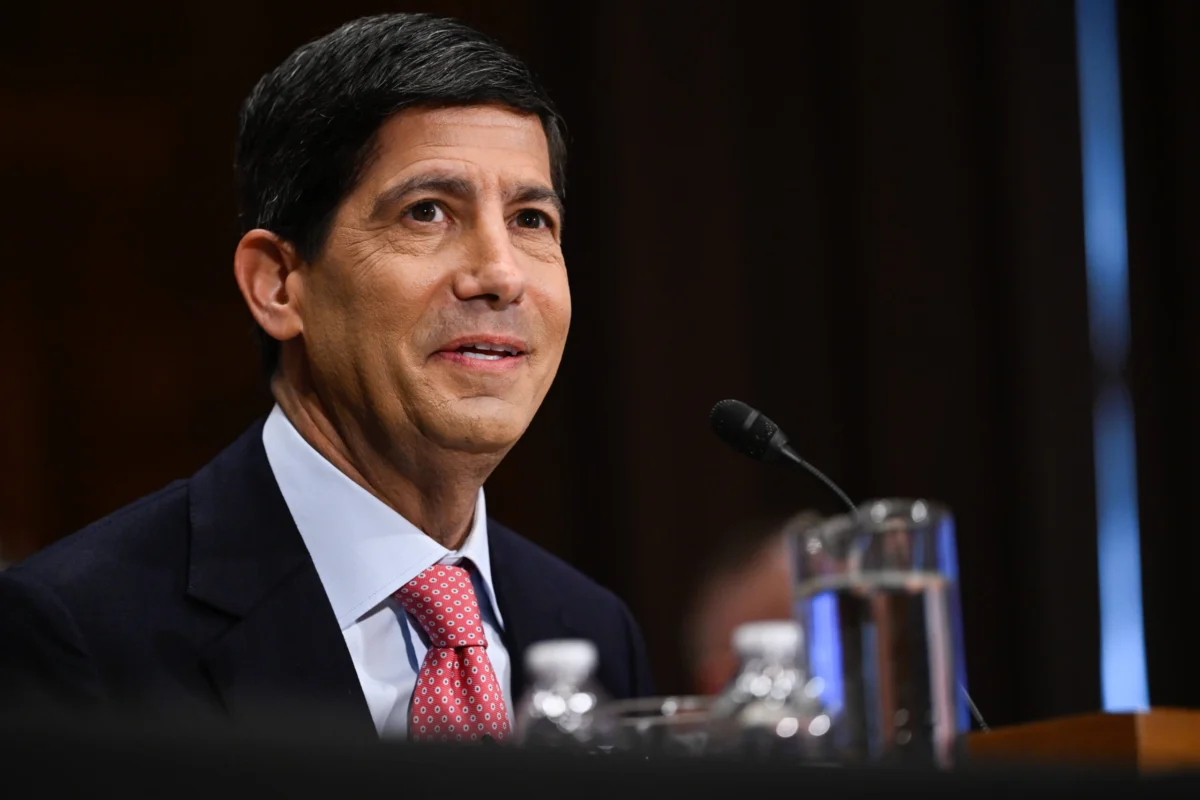
Federal Reserve Chairman Kevin Warsh concluded a demanding two-day series of appearances on Capitol Hill this week, facing rigorous questioning from legislators on the nation’s economic health, the persistent challenge of inflation, and the future trajectory of monetary policy. Testifying first before the House Financial Services Committee on Tuesday and then the Senate Banking Committee on Wednesday, Warsh maintained a consistent message: the Federal Reserve remains steadfast in its commitment to achieving price stability, yet offered little in the way of specific forward guidance regarding interest rate adjustments or other imminent policy shifts. The Chairman skillfully sidestepped attempts by lawmakers to draw him into politically charged fiscal debates, underscoring the central bank’s crucial imperative to focus exclusively on its statutory mandate.
A Week of Intense Scrutiny: The Chairman on Capitol Hill
Chairman Warsh’s testimony before the Senate Banking Committee on Wednesday marked the culmination of a critical period of congressional oversight. Senators pressed the Chairman on a broad spectrum of economic concerns, ranging from the current inflation environment and its impact on American households to the potential implications of various economic factors on the Federal Reserve’s interest rate decisions. The questioning reflected a growing public and political anxiety over the cost of living and the delicate balance required to cool inflation without stifling economic growth.
The Senate hearing followed Tuesday’s engagement with the House Financial Services Committee, where Warsh delivered prepared remarks and then engaged in a lengthy question-and-answer session. During his appearance before the House, Warsh reiterated the Fed’s unwavering commitment to combating inflation, a theme that has dominated the central bank’s communications for the past several years. However, despite intense interrogation from representatives seeking clearer signals, the Chairman offered minimal clues about the immediate direction of monetary policy, maintaining a posture of strategic ambiguity that is characteristic of central bank communication during periods of economic uncertainty. This approach aims to preserve the Fed’s flexibility and avoid pre-committing to actions that might need to be adjusted based on evolving economic data.
Navigating the Political Minefield: Defending Fed Independence
A recurring theme across both days of testimony was legislators’ attempts to coax Chairman Warsh into commenting on fiscal policy decisions and broader political matters. Lawmakers, often reflecting the concerns of their constituents or seeking to score political points, posed questions regarding government spending, taxation, national debt levels, and the distribution of economic benefits. However, Warsh consistently and politely rebuffed these attempts, firmly stressing the paramount importance of the Federal Reserve maintaining its operational independence and remaining singularly focused on its congressionally assigned responsibilities: maximum employment and price stability.
This principled stance is not merely a matter of protocol but a cornerstone of effective monetary policy. Allowing the central bank to be influenced by short-term political cycles or partisan agendas could undermine its credibility, introduce volatility into financial markets, and ultimately compromise its ability to manage the economy effectively. Warsh’s steadfast refusal to be drawn into fiscal debates reinforces a critical boundary between monetary and fiscal authorities, a distinction considered vital for the long-term health and stability of the U.S. economy.
The Economic Landscape of Mid-2026: A Context of Persistent Challenges
Chairman Warsh’s testimony unfolded against a complex and evolving economic backdrop in mid-2026. After years of post-pandemic recovery, marked by significant fiscal stimulus and accommodative monetary policy, the U.S. economy continues to grapple with the aftershocks of supply chain disruptions, shifts in consumer demand patterns, and the emergent impacts of rapid technological advancement, particularly in artificial intelligence.
Inflationary Pressures: A Lingering Concern
While inflation has shown signs of moderation from its peaks experienced in the early 2020s, it remains stubbornly above the Federal Reserve’s long-term target of 2%. As of June 2026, the Consumer Price Index (CPI) registered an annual increase of 3.5%, with core CPI, which strips out volatile food and energy prices, standing at 3.0%. The Personal Consumption Expenditures (PCE) price index, the Fed’s preferred inflation gauge, indicated a 2.8% year-over-year increase. These figures, while improved, underscore the continued challenge in fully taming inflationary forces. Factors contributing to this persistence include lingering tightness in certain labor markets, elevated housing costs, and robust consumer demand buoyed by a strong jobs market. Furthermore, the "AI investment boom," as referenced in recent CNBC reports, while promising for future productivity, also presents a new dimension of demand-side pressure on resources and potentially higher input costs in the short term.
Growth and Employment: Signs of Resilience
Despite persistent inflation, the U.S. economy has demonstrated remarkable resilience. Real Gross Domestic Product (GDP) growth for the first quarter of 2026 was estimated at a healthy 2.2% on an annualized basis, suggesting sustained economic activity. The labor market remains robust, with the unemployment rate hovering at 3.8% in June, slightly above the multi-decade lows seen earlier in the decade but still indicative of a tight market. Wage growth, while moderating, continues to outpace historical averages, contributing to consumer purchasing power but also feeding into service-sector inflation. The strong employment picture complicates the Fed’s task, as a robust labor market can sustain demand and make it harder for inflation to recede quickly.
The Interest Rate Environment: A Balancing Act
The Federal Reserve has, over the preceding years, embarked on an aggressive campaign of interest rate hikes to combat inflation. As of mid-2026, the federal funds rate target range stands between 5.00% and 5.25%. Market participants and economists are keenly divided on whether the Fed’s hiking cycle has concluded or if further adjustments will be necessary. Warsh’s reluctance to signal future policy moves reflects this uncertainty and the data-dependent approach the Fed has adopted. Any further rate hikes could risk tipping the economy into recession, while pausing too soon could allow inflation to re-entrench itself.
Chairman Warsh’s Stance: A Commitment to "Regime Change" in Policy
In his remarks and previous statements, Chairman Warsh has articulated a vision for a "regime change" in Fed policy, aiming to permanently rid the economy of the "inflation tax" on American people. This concept, highlighted in recent reports, suggests a more proactive and perhaps structurally different approach to managing price stability compared to previous eras. While the specifics of this "regime change" remain somewhat open to interpretation, it implies a heightened vigilance against inflationary pressures and a willingness to maintain a restrictive stance for as long as necessary to anchor inflation expectations firmly at the 2% target.
This commitment to a new policy "regime" is particularly pertinent given the "family fight" over interest rates that has been brewing within the Federal Open Market Committee (FOMC), as revealed in recent meeting minutes. Different factions within the Fed likely hold varying views on the appropriate pace and magnitude of monetary tightening, the long-term neutral rate of interest, and the risks associated with both over-tightening and under-tightening. Warsh’s public statements aim to project a unified front while acknowledging the complexity of the internal deliberations.
Broader Implications for the Economy and Financial Markets
Chairman Warsh’s cautious and non-committal stance on future monetary policy has several significant implications for various stakeholders.
Market Reactions: Financial markets often react strongly to any perceived shift in Fed rhetoric. Warsh’s deliberate avoidance of specific forward guidance means that markets will likely continue to exhibit volatility, with investors closely scrutinizing incoming economic data—especially inflation reports and labor market statistics—for clues about the Fed’s next moves. Bond yields, particularly for shorter-term Treasuries, may remain sensitive to inflation expectations, while equity markets will weigh the potential for higher-for-longer interest rates against corporate earnings growth, particularly from sectors benefiting from the AI investment boom.
Business Investment and Consumer Spending: The current interest rate environment directly impacts borrowing costs for businesses and consumers. Higher rates can dampen corporate investment, particularly for capital-intensive projects, and cool consumer demand for big-ticket items like homes and automobiles. Warsh’s commitment to fighting inflation, even if it means maintaining restrictive policies, signals that businesses should not expect a rapid return to ultra-low borrowing costs, encouraging more prudent capital allocation and potentially slower expansion in certain sectors. Consumers, meanwhile, continue to face elevated financing costs for mortgages, car loans, and credit card debt, adding pressure to household budgets already strained by inflation.
The Role of Technology and Productivity: The emphasis on an "AI investment boom" in recent economic discourse and Warsh’s own statements suggests a recognition within the Fed that technological advancements could play a dual role. In the short term, increased investment in AI infrastructure and development could contribute to demand-side inflationary pressures. However, in the medium to long term, AI-driven productivity gains could be a powerful disinflationary force, lowering production costs and increasing overall economic efficiency. The Fed’s challenge is to manage the short-term inflationary impacts while positioning the economy to benefit from the long-term productivity enhancements. The recently announced Federal Reserve task forces, including prominent figures like Marc Andreessen (known for venture capital and technology) and Doug McMillon (CEO of Walmart, representing retail and supply chains), underscore the Fed’s attempt to integrate real-world expertise on technology, supply chains, and consumer behavior into its policy formulation process. These task forces are expected to provide insights that could shape the "regime change" Warsh envisions, potentially leading to new frameworks for understanding and responding to economic shocks.
Congressional Oversight and Accountability
The congressional hearings serve as a critical mechanism for accountability and transparency. They provide an opportunity for elected officials to question the unelected head of the nation’s central bank on matters that directly impact their constituents’ economic well-being. While Warsh skillfully avoided political traps, the hearings allowed legislators to voice concerns about the trajectory of the economy, the effectiveness of the Fed’s policies, and the potential trade-offs between inflation control and economic growth. This ongoing dialogue, even with its inherent tensions, is vital for democratic governance and helps ensure that the Federal Reserve remains responsive, within its mandate, to the needs of the American people.
Conclusion: A Delicate Balancing Act
Federal Reserve Chairman Kevin Warsh concluded his congressional testimonies having reiterated the central bank’s unwavering dedication to price stability, a commitment underscored by his vision of a "regime change" to eliminate the "inflation tax." His measured approach to forward guidance reflects the inherent uncertainties in the current economic environment, marked by persistent inflation, resilient growth, and the transformative yet complex implications of the AI investment boom. The Chairman’s firm defense of the Fed’s independence from fiscal and political interference reinforces a fundamental principle of sound monetary policy. As the Federal Reserve navigates the intricate path ahead, the coming months will reveal how effectively Warsh and the FOMC can steer the economy towards sustainable price stability while fostering maximum employment, all amidst a backdrop of internal debates and intense external scrutiny. The "family fight" over rates and the work of the newly formed task forces suggest that the Fed’s approach to these challenges is evolving, promising a dynamic period for U.S. monetary policy.
