

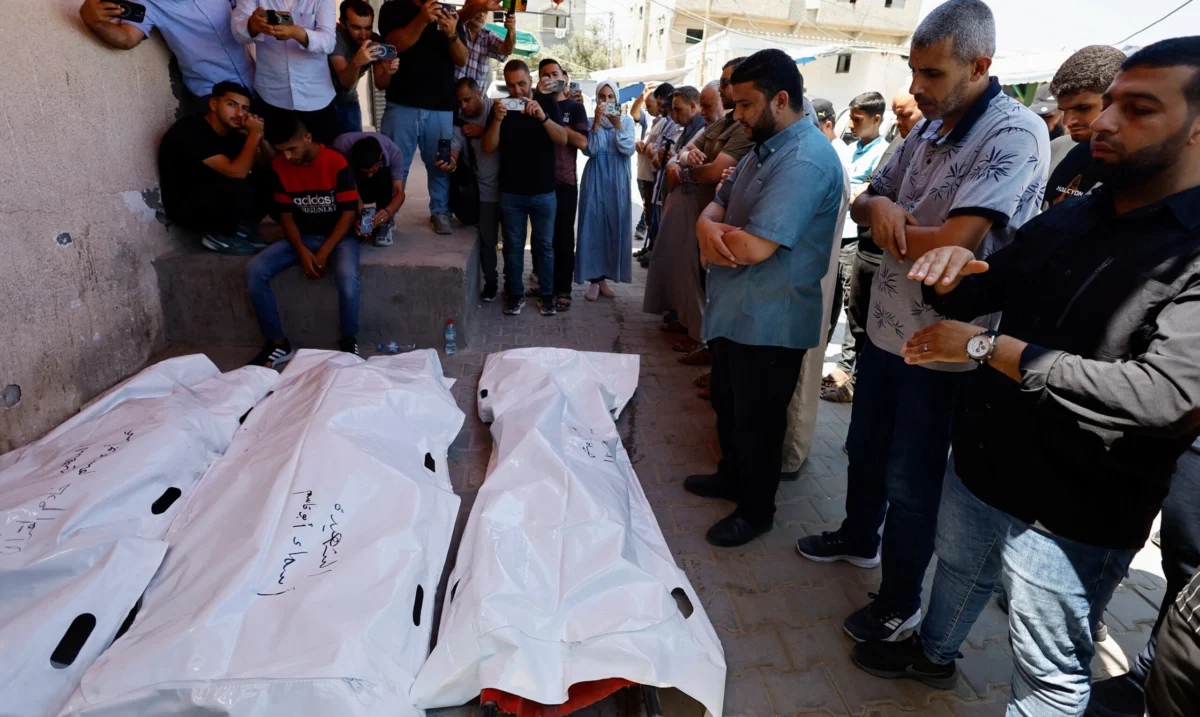
The fragile state of security in the Gaza Strip was underscored once more this week as an Israeli air attack on an apartment in Deir el-Balah, central Gaza, claimed the lives of three family members – a father, a mother, and their six-year-old daughter. The strike, which occurred on Wednesday, left a profound scar on the community, with only one child surviving the devastating impact. Palestinian health officials confirmed the fatalities and the recovery of the lone survivor, who was found amidst the debris and fire by Palestinian Civil Defence teams responding to the scene. This tragic incident unfolds against a backdrop of what Palestinian authorities describe as near-daily Israeli attacks, fundamentally challenging the integrity of a United States-brokered “ceasefire” that was agreed upon in October.
The Deir el-Balah Incident: A Glimpse into Gaza’s Reality
The mid-week strike plunged an ordinary family home in Deir el-Balah into chaos. The targeted apartment, like countless others in the densely populated enclave, offered little protection against the intensity of aerial bombardment. Responding to urgent calls, Palestinian Civil Defence units arrived swiftly, battling the flames ignited by the strike and sifting through the collapsed structure. Their grim task led to the discovery of the deceased parents and their young daughter, alongside the miraculous retrieval of another child, whose survival stands as a solitary beacon of hope amidst profound loss. The immediate aftermath saw the survivor rushed for medical attention, highlighting the severe strain on Gaza’s already crippled healthcare system.
Al Jazeera’s Hind Khoudary, reporting from Gaza City, articulated the dire reality facing the territory’s youngest inhabitants. “Children are being killed on a daily basis in Gaza, and if they survive air strikes, many die of their wounds because of the lack of medical supplies and hospitals operating with severely reduced capacity,” she stated. This observation is not merely anecdotal but reflects a systematic deterioration of medical infrastructure and access to critical care, turning survivable injuries into fatal conditions. The Deir el-Balah incident serves as a stark reminder of the indiscriminate nature of conflict, where civilian homes can become targets and the most vulnerable pay the ultimate price.
The Israeli army later acknowledged conducting an operation in Deir el-Balah, asserting that the strike had targeted a Hamas fighter. Such claims are frequently made by Israeli forces in the aftermath of operations within Gaza, often presenting a justification for actions that result in significant civilian casualties. However, these assertions are routinely met with skepticism by Palestinian authorities and international human rights organizations, who frequently point to the disproportionate impact on non-combatants and the destruction of civilian infrastructure.
Escalation Amidst a Faltering ‘Ceasefire’
The attack in Deir el-Balah is far from an isolated event. It is part of a broader pattern of escalated military activity by Israel across the Gaza Strip, despite the existence of a “ceasefire” agreement. This agreement, brokered with significant diplomatic effort by the United States and other international actors in October, was intended to halt hostilities between Israel and the Palestinian armed group Hamas. While it largely succeeded in reducing ground fighting, the air campaign has persisted, transforming the notion of a ceasefire into a highly conditional and frequently violated accord.
According to the Ministry of Health in Gaza, the latest 24-hour reporting period saw at least 12 bodies brought to hospitals, one person succumbing to previously sustained wounds, and 18 individuals injured in Israeli attacks. These figures paint a grim picture of continuous violence, indicating that the cessation of major ground operations has not translated into genuine peace or safety for Gaza’s population. The cumulative toll since the October ceasefire agreement is staggering: more than 1,100 people have been killed, including at least 275 children. This statistic underscores the devastating human cost of the ongoing violations and the profound failure to protect civilian lives.
Beyond Deir el-Balah, other areas of the Gaza Strip also bore the brunt of Israeli attacks. A rehabilitation centre in Gaza City was reportedly hit, an incident that further cripples the territory’s already strained medical and social support services. In Khan Younis, a park serving as a makeshift shelter for hundreds of displaced families was also targeted. These strikes on civilian infrastructure and areas where displaced populations seek refuge intensify the humanitarian crisis, leaving an already traumatized populace with fewer safe havens and essential services. The repeated targeting of such sites raises serious questions about adherence to international humanitarian law, which mandates the protection of civilians and civilian objects during armed conflict.
A Chronology of Devastation and Diplomatic Stagnation
The current conflict’s origins trace back to October 2023, when Hamas-led militants launched a multi-pronged attack on southern Israel. This assault resulted in an estimated 1,200 fatalities and approximately 240 individuals taken captive, igniting a ferocious response from Israel. In the months that followed, Israel launched an extensive military offensive against Palestinians in the territory, characterized by intense aerial bombardments and ground incursions. This campaign has led to an unprecedented humanitarian catastrophe and widespread destruction, with the Ministry of Health in Gaza reporting more than 73,200 people killed, including at least 21,000 children, since the onset of the war.
The scale of Israel’s military response is further highlighted by the sheer volume of ordnance deployed. Throughout the conflict, Israel has reportedly dropped approximately 223,000 tonnes of explosives on Gaza. To put this figure into perspective, this is 16 times the explosive yield of the atomic bomb dropped by the United States on Hiroshima, Japan, in 1945. The comparison vividly illustrates the immense destructive power unleashed on Gaza, which has left most of the territory in ruins and its 2.3 million residents largely displaced, many multiple times over. Entire neighborhoods have been flattened, critical infrastructure obliterated, and the very fabric of society severely damaged.
The October “ceasefire” was intended to provide a much-needed respite and create an environment for de-escalation. While it did lead to a reduction in the most intense ground fighting, the persistent aerial attacks have ensured that the sense of insecurity and peril remains pervasive. This period has been marked by a constant tension between the nominal agreement for a cessation of hostilities and the daily reality of continued military operations and civilian casualties.
The Deepening Humanitarian Crisis
The situation in Gaza has spiraled into an unprecedented humanitarian catastrophe. Beyond the immediate threat of air strikes, the population faces severe shortages of food, water, medicine, and fuel. The healthcare system, as noted by Khoudary, is teetering on the brink of collapse, with many hospitals rendered inoperable or functioning at drastically reduced capacities. This means that even basic medical care is difficult to access, and specialized treatments for trauma, chronic illnesses, or childbirth are often unavailable. Surgical procedures are performed under dire conditions, frequently without adequate anesthesia or sterile environments.
The psychological toll on Gaza’s population, particularly its children, is immense. The United Nations sexual and reproductive health agency reported that an astonishing 96 percent of children in Gaza feel that death is imminent. This statistic speaks volumes about the pervasive fear, trauma, and despair that have become a daily part of life for the younger generation. Such profound psychological distress is likely to have long-lasting effects, shaping an entire generation haunted by conflict and loss. The destruction of homes, schools, and community spaces further erodes any semblance of normalcy or stability, denying children their fundamental right to a safe and nurturing environment.
Mass displacement has exacerbated the crisis. Hundreds of thousands of Palestinians have been forced to flee their homes, often multiple times, seeking refuge in overcrowded shelters, tents, or open areas. The attack on the park in Khan Younis, where displaced families had sought shelter, exemplifies the lack of safe zones within the besieged territory. These displaced communities face appalling living conditions, with inadequate sanitation, limited access to clean water, and heightened risks of disease outbreaks. International aid organizations have repeatedly warned of an impending famine and widespread epidemics if humanitarian access is not significantly improved and hostilities do not cease.
Official Responses and International Scrutiny
The Israeli military’s consistent justification for its actions, citing the targeting of Hamas operatives, is a recurring theme in its public statements. However, the international community, including various United Nations bodies and human rights organizations, has voiced increasing concern over the high civilian casualty rates and the extensive damage to civilian infrastructure. Calls for adherence to international humanitarian law, which mandates the principle of distinction between combatants and civilians and the principle of proportionality in military operations, have grown louder. The civilian death toll, particularly among women and children, raises serious questions about the precautions taken to minimize harm to non-combatants.
Palestinian authorities, including the Ministry of Health and Civil Defence, consistently condemn the Israeli attacks, emphasizing the devastating impact on innocent civilians. They frequently appeal to the international community for greater intervention to protect Palestinians and to hold Israel accountable for what they describe as violations of international law. These appeals often highlight the desperation felt on the ground and the perceived inaction of global powers.
Broader Implications and Stalled Peace Efforts
The persistent violation of the October "ceasefire" carries significant implications for regional stability and the prospects for a lasting peace. The continued attacks undermine the credibility of international mediation efforts and erode trust between the warring parties. The notion of a ceasefire becomes increasingly meaningless when daily violence persists, making any genuine de-escalation difficult to achieve.
Prospects for a permanent end to hostilities appear increasingly elusive. Talks aimed at securing a second, more sensitive phase of the ceasefire have largely stalled. This phase envisioned more comprehensive terms, including Hamas relinquishing its weapons and a full Israeli withdrawal from Gaza. These demands represent significant hurdles, as they touch upon core security concerns for Israel and fundamental resistance principles for Hamas. Reports suggest that negotiations have been hampered by various sticking points, such as Israel’s demands for tunnel maps and family arms tests, which Hamas is unlikely to concede easily. The impasse in these critical discussions indicates a deep chasm between the two sides, making any long-term resolution seem distant.
The ongoing conflict in Gaza also has broader regional implications, contributing to instability across the Middle East. It fuels regional tensions, potentially drawing in other actors and further complicating an already volatile geopolitical landscape. The humanitarian crisis, the destruction, and the loss of life continue to generate widespread condemnation and calls for a more robust international response. Without a meaningful and sustained cessation of hostilities, coupled with genuine diplomatic progress towards a comprehensive political solution, the cycle of violence and suffering in Gaza is likely to continue, with devastating consequences for its people and the wider region. The Deir el-Balah incident, a single tragic event, thus encapsulates the broader, unresolved anguish of a territory caught in a relentless conflict.
