

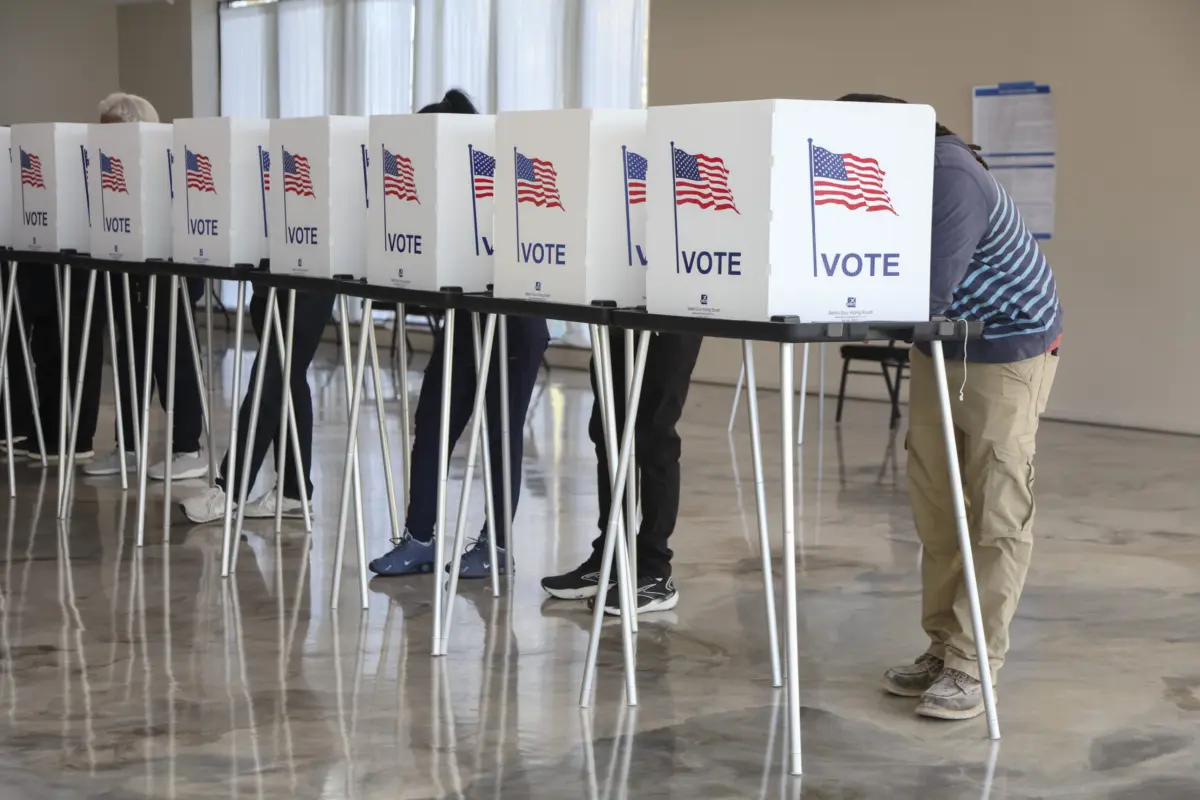
The United States entered a critical phase of its democratic process on Tuesday as the first polling stations began to close, signaling the start of a counting process that will determine the legislative trajectory of the country for the next two years. With the balance of power in Washington hanging by a thread, the 2026 midterm elections are being viewed by analysts as a definitive referendum on the current administration’s domestic and foreign policies. At stake are all 435 seats in the House of Representatives and 35 of the 100 seats in the U.S. Senate. As the clock struck 6:00 p.m. Eastern Time (23:00 GMT), the first results began to trickle in from parts of Kentucky and Indiana, offering the earliest glimpses into a night that could reshape American governance.
The atmosphere across the country has been one of heightened tension and high stakes. For months, candidates from both major parties have traversed the nation, pouring billions of dollars into advertising and grassroots mobilization. The Democratic Party, currently seeking to reclaim a majority in the House and overturn a slim Republican lead in the Senate, has centered its platform on two primary pillars: alleviating the persistent rise in the cost of living and bringing an immediate end to the United States’ military involvement alongside Israel in the conflict with Iran. Conversely, the Republican Party has campaigned on a platform of fiscal conservatism, border security, and a critique of what they describe as executive overreach.
The Kentucky Bellwether: A Test of Alignment
The first significant indicator of the night’s potential direction emerged from Kentucky’s sixth congressional district. This district, which encompasses the metropolitan hub of Lexington and surrounding conservative rural areas, is being closely watched as a national bellwether. In this race, Democrats have placed a significant bet on Zach Dembo, a U.S. Navy veteran whose campaign has focused on a "service-first" approach and a promise to stabilize the economy. Dembo’s candidacy is seen as an attempt by the Democratic National Committee to appeal to moderate and independent voters who may be weary of partisan gridlock.
Standing in his way is Ralph Alvarado, a physician and former state lawmaker who carries the endorsement of former President Donald Trump. Alvarado’s campaign has mirrored the national Republican strategy, emphasizing traditional conservative values and criticizing the current administration’s handling of energy costs and international entanglements. The outcome of this specific race is expected to provide a roadmap for how the "Trump-backed" brand is faring in suburban-rural swing territories. If Republicans hold this seat with a comfortable margin, it may signal a "red wave" that could carry the party to a strengthened majority. However, a narrow race or a Dembo victory would suggest that the Democratic focus on economic relief and foreign policy shifts is resonating with a broader electorate.
The Economic and Foreign Policy Backdrop
The 2026 midterms are occurring against a backdrop of complex economic indicators. While the national unemployment rate has remained relatively stable, the "kitchen table" issues of inflation and interest rates have dominated voter concerns. According to recent Department of Labor data, the consumer price index saw a marginal but persistent increase in the months leading up to the election, particularly in the sectors of housing and food. Democrats have argued that their proposed "Fair Economy Act" would curb corporate price-gouging, while Republicans have countered that government spending is the root cause of the inflationary pressure.
Equally influential in this election cycle has been the geopolitical situation in the Middle East. The U.S.-Israel war on Iran has become a polarizing focal point of American political discourse. Unlike previous election cycles where foreign policy often took a backseat to domestic concerns, the 2026 races have seen candidates forced to take definitive stances on military funding and diplomatic intervention. The Democratic pledge to end the conflict has energized a younger demographic and progressives, whereas many Republicans have argued that a withdrawal would project weakness and destabilize global energy markets. This ideological divide has made the 2026 midterms a rare instance where international conflict is a primary driver of voter turnout.
The Fight for the Senate: A High-Stakes Map
While the House of Representatives is often a reflection of the national mood, the Senate races are a series of localized battles with global implications. Of the 35 seats up for election, roughly a dozen are considered highly competitive. Key battlegrounds include Pennsylvania, Arizona, Georgia, and Nevada—states that have become the "four corners" of American political strategy.
In Pennsylvania, the vacancy left by retiring incumbents has led to a multi-million dollar showdown that could decide which party controls the upper chamber. Senate Republicans, led by their campaign arm, have focused heavily on suburban security and energy independence, capitalizing on the state’s role as a major natural gas producer. Democrats, meanwhile, have focused on protecting reproductive rights and expanding healthcare access, hoping that these issues will drive turnout in Philadelphia and Pittsburgh to offset losses in the "T" section of the state.
The mathematical path to a Senate majority is narrow for both parties. Republicans currently hold a slim majority, meaning Democrats only need a net gain of one or two seats (depending on the Vice President’s tie-breaking vote) to seize control. However, the map this year is challenging for the incumbents of the President’s party, who are defending seats in several "purple" or "red-leaning" states.
Voter Turnout and Demographic Shifts
Early data from Tuesday’s voting suggests a high level of engagement. Secretary of State offices in several key regions reported that early voting and mail-in ballot numbers rivaled those of the 2022 midterms, and in some cases, approached the record-breaking levels of the 2020 presidential election.
Demographic shifts are also playing a crucial role. Political scientists are closely monitoring the "suburban shift," where college-educated voters in the outskirts of major cities have increasingly moved toward the Democratic column. Conversely, Republicans have made significant inroads with Hispanic and Latino voters in states like Florida and Texas, focusing on economic opportunity and religious values. The 2026 results will likely confirm whether these shifts are permanent realignments or temporary fluctuations.
Statements from the Field
As the polls closed in the Eastern time zone, party leaders issued statements reflecting both confidence and caution. A spokesperson for the Democratic National Committee stated, "Today, Americans are voting for a future that prioritizes the middle class over corporate interests and peace over perpetual conflict. We are confident that when every ballot is counted, the message will be clear: it is time for a new direction in Congress."
On the Republican side, the National Republican Congressional Committee released a statement emphasizing the party’s commitment to "restoring fiscal sanity and securing our borders." The statement added, "The American people are tired of the failed policies that have made their groceries more expensive and our country less safe. We expect a strong showing tonight that will allow us to continue our work as a check on the executive branch."
The Long Count and Election Integrity
Despite the closure of the first polls, the final picture of the 2026 midterms may not be clear for several days. In many states, laws regarding the processing of mail-in ballots mean that a full count cannot be completed on Tuesday night. States like Pennsylvania and Wisconsin, which do not allow the pre-processing of mail-in votes before Election Day, are expected to see "blue" or "red" shifts as different types of ballots are tabulated.
Election officials across the country have emphasized the security and integrity of the process. In a joint press conference earlier this week, federal and state election monitors assured the public that multiple layers of verification are in place to ensure every legal vote is counted. "The American electoral system is resilient," said one official. "We ask for the public’s patience as the democratic process unfolds according to the law."
Broader Implications: 2027 and Beyond
The implications of tonight’s results extend far beyond the composition of the 119th Congress. If Democrats successfuly flip the House and Senate, the final two years of the current presidential term will likely see a flurry of legislative activity aimed at climate change, healthcare expansion, and a pivot in foreign policy. A Democratic-controlled Congress would also have the power to confirm or block judicial appointments, including potential Supreme Court vacancies.
Conversely, a Republican victory—or even the maintenance of their current standing—would likely result in a period of intense legislative oversight and a stalemate on many of the administration’s flagship policies. This "divided government" scenario often leads to a focus on budgetary battles and investigations, setting the stage for an even more contentious presidential election in 2028.
As the evening progresses and polls close in the Western United States, including the powerhouse state of California with its 52 congressional seats, the national narrative will continue to evolve. For now, the eyes of the world remain fixed on the United States, waiting to see which vision of the future the American electorate has chosen to endorse. The first results from Kentucky are just the beginning of what promises to be a transformative night in American history.
