

As the United States prepares for the pivotal 2026 midterm elections, President Donald Trump faces a precarious political landscape characterized by record-low approval ratings and a significant deficit in generic ballot preferences. According to the latest Reuters/Ipsos poll released on the eve of the election, only 32 percent of voters approve of the president’s job performance, a figure that remains just one percentage point above his all-time low recorded two weeks prior. This stagnation in public support comes at a critical juncture as the Republican Party fights to maintain its grip on the US House of Representatives and the Senate.
The polling data paints a challenging picture for the incumbent administration. Among the respondents, 46 percent indicated they would support a generic Democratic candidate, while 38 percent favored the Republican alternative. This eight-point gap suggests a brewing "blue wave" that could fundamentally alter the balance of power in Washington, DC. While the president’s name is not physically on the ballot, the election is widely viewed as a referendum on his second term, a sentiment the president himself has encouraged by urging his base to vote as if they were casting a ballot for him personally.
Economic Volatility and the Shadow of Conflict
The decline in President Trump’s approval rating is inextricably linked to the geopolitical and economic turbulence that has defined the year 2026. Analysts point to the launch of the US-Israel military campaign against Iran on February 28 as the primary catalyst for the administration’s downward trend in the polls. The conflict, which has entered its ninth month, has had a profound impact on global energy markets, leading to a sharp spike in petrol and diesel prices within the United States.
For the average American consumer, the war’s effects have extended beyond the gas pump. Rising energy costs have triggered secondary inflationary pressures, increasing the cost of goods and services across the board. The Reuters/Ipsos poll reflects these anxieties, with a majority of respondents citing the economy and inflation as their primary concerns heading into the midterms. Voters who previously supported the president’s "America First" economic platform now express skepticism as the "war-time economy" continues to strain household budgets.
Furthermore, the conflict has polarized the electorate. While a segment of the Republican base remains steadfast in its support for the administration’s foreign policy, independent voters and moderate Republicans have shown signs of fatigue. The prolonged nature of the engagement and the lack of a clear exit strategy have allowed the Democratic opposition to frame the current administration as one characterized by instability and fiscal irresponsibility.
The Campaign Blitz and the Battle for the Capital
In an effort to counteract sagging poll numbers, President Trump embarked on an intensive monthlong campaign blitz, traversing the country to headline rallies for Republican candidates in contested districts. The strategy was designed to energize his core supporters and frame the election as a choice between "order and chaos." However, the final stop of this tour has drawn as much scrutiny for its optics as for its rhetoric.
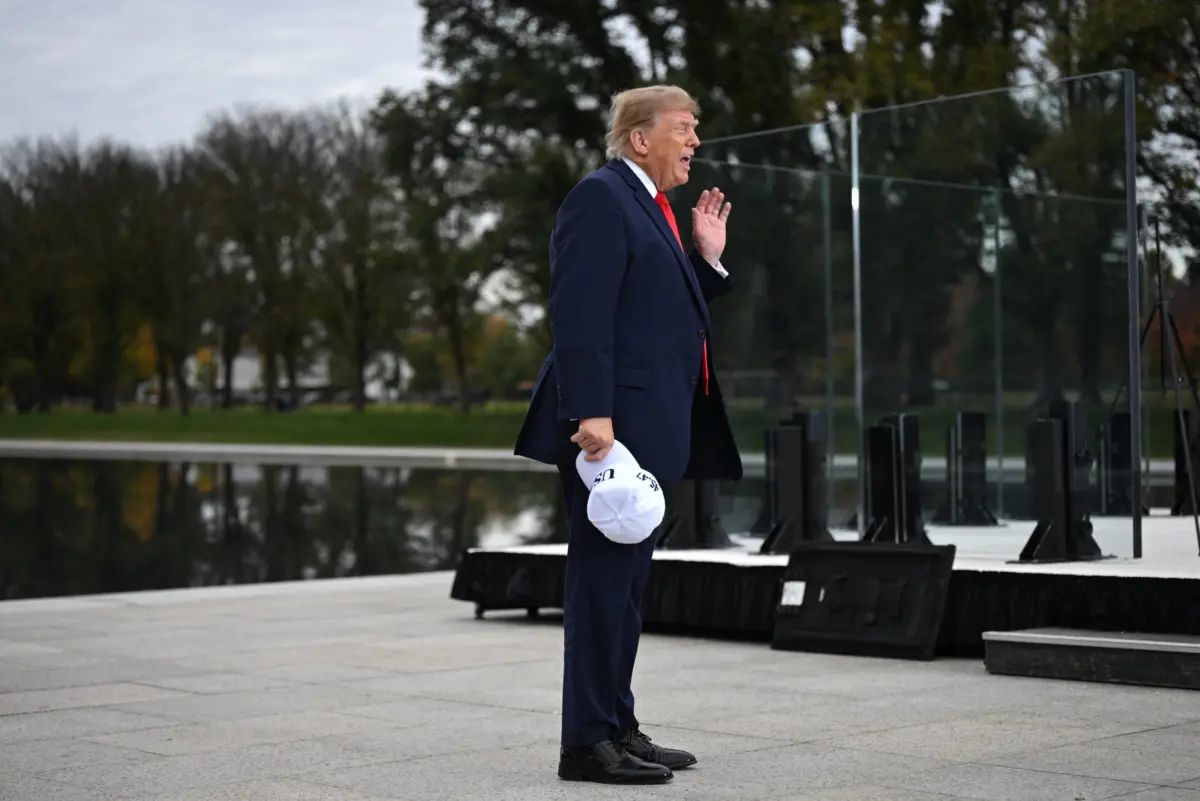
On Monday afternoon, the president concluded his campaigning with a high-profile rally at the Lincoln Memorial Reflecting Pool in Washington, DC. The choice of venue was symbolic, as the site has been a focal point of the president’s ambitious—and controversial—plan to renovate the nation’s capital. The renovation of the Reflecting Pool, a project the president personally championed, has become a lightning rod for criticism. Originally intended to be a swift modernization, the project was completed months behind schedule and saw its budget balloon to more than ten times the original estimate.
Adding to the controversy, the "special liner" for the pool, which the president had touted as a technological marvel during the construction phase, began to peel away shortly after installation. During his Monday rally, Trump addressed the issue with his characteristic defiance. “It was a work of art that never worked, but now it will work,” he told the crowd, promising that the technical failures were being rectified.
The Triumphal Arch and Legal Hurdles
A significant portion of the president’s closing argument focused on his vision for a "Triumphal Arch" in Washington, DC, a project intended to serve as a monument to his administration’s achievements. However, this architectural ambition faces significant legal and political obstacles. Both the District of Columbia and the Commonwealth of Virginia have filed lawsuits to block the construction, arguing that the structure would violate historic preservation laws and permanently alter the aesthetic integrity of the National Mall.
Critics of the project argue that the Triumphal Arch is an unnecessary expenditure at a time when the country is facing economic hardship and a costly military conflict. Conversely, the president has framed the arch as a symbol of national pride and a necessary component of his plan to revitalize the capital. The legal challenges are expected to head to the Supreme Court, but in the immediate term, they serve as a talking point for Democratic candidates who characterize the project as an example of executive overreach and vanity.
Defensive Rhetoric and the Impeachment Threat
Throughout the final days of the campaign, President Trump has utilized increasingly defensive rhetoric, warning his supporters of the consequences of a Democratic victory. He has repeatedly stated that if Republicans lose control of Congress, the opposition will move swiftly to initiate impeachment proceedings.
“If they take the House, they’re going to try to impeach me for a third time,” Trump warned at a recent rally in Pennsylvania. This narrative of a "perpetual witch hunt" has been a staple of the president’s political messaging since his first term. By framing the election as a defensive maneuver against impeachment, the administration hopes to drive high turnout among voters who feel the president is being unfairly targeted by the "deep state" and partisan rivals.
However, Democratic leaders have been cautious in their response to the impeachment talk. While some progressive members of the party have openly discussed the possibility, the party’s central leadership has focused its campaign messaging on health care, reproductive rights, and the cost of living. This strategic divergence is intended to appeal to swing voters who may be weary of the constant political combat in Washington.
Historical Precedents and the Midterm Curse
In a rare moment of political introspection during his final rally, President Trump acknowledged the historical difficulty facing any sitting president during a midterm cycle. “For some reason, the sitting president doesn’t win the midterms,” he remarked. “But we gave this a very strong shot.”
The "midterm curse" is a well-documented phenomenon in American politics. Since the end of World War II, the president’s party has almost always lost seats in the House of Representatives during the first and second midterms of an administration. The 2026 cycle appears to be following this trend, exacerbated by the unique pressures of an ongoing war and high inflation.
Political analysts suggest that the 32 percent approval rating is particularly dangerous for the Republican Party because it provides no "coattail effect" for vulnerable incumbents. In previous cycles, such as 2018 and 2022, low approval ratings for the executive branch served as a powerful mobilization tool for the opposition.
Chronology of the 2026 Midterm Cycle
To understand the current state of the race, one must look at the key events that have shaped the last eight months:
- February 28, 2026: The US and Israel launch joint military operations against Iran, citing national security concerns. Oil prices immediately begin to climb.
- April 15, 2026: Inflation reaches a three-year high, driven by energy costs. The President’s approval rating dips below 40 percent for the first time in his second term.
- June 10, 2026: The renovation of the Lincoln Memorial Reflecting Pool is declared "complete," though reports of structural issues and cost overruns surface immediately.
- August 22, 2026: President Trump announces plans for the "Triumphal Arch." Within 48 hours, the District of Columbia announces its intent to sue.
- October 19, 2026: Polls show the President’s approval rating hitting a record low of 31 percent.
- October 31, 2026: Virginia joins the District of Columbia in a lawsuit to block the Triumphal Arch, citing environmental and historical concerns.
- November 2, 2026: The final Reuters/Ipsos poll shows a 32 percent approval rating and an 8-point lead for Democrats on the generic ballot.
Broader Implications for the Future of US Governance
The outcome of the 2026 midterms will have far-reaching implications for the remainder of the Trump presidency and the trajectory of American foreign policy. If Democrats regain control of the House, they will have the power to launch investigations into the administration’s handling of the Iran conflict, the Reflecting Pool contracts, and the president’s personal finances.
A divided government would likely result in legislative gridlock, making it difficult for the president to pass further tax reforms or infrastructure projects. Perhaps more importantly, a Democratic-controlled House would hold the "power of the purse," potentially allowing them to restrict funding for the war in Iran or the construction of the Triumphal Arch.
Conversely, if Republicans manage to defy the polls and retain control of both chambers, it would be viewed as a historic political upset and a mandate for the president’s controversial agenda. Such a result would likely embolden the administration to take a more aggressive stance both domestically and abroad.
As voters head to the polls on November 3, the nation remains deeply divided. The 32 percent approval rating suggests a country that is largely dissatisfied with the status quo, yet the intensity of the president’s base remains a wildcard that could influence the final outcome in key battleground states. Regardless of the results, the 2026 midterms will be remembered as a high-stakes referendum on a presidency that has consistently defied traditional political norms.
