

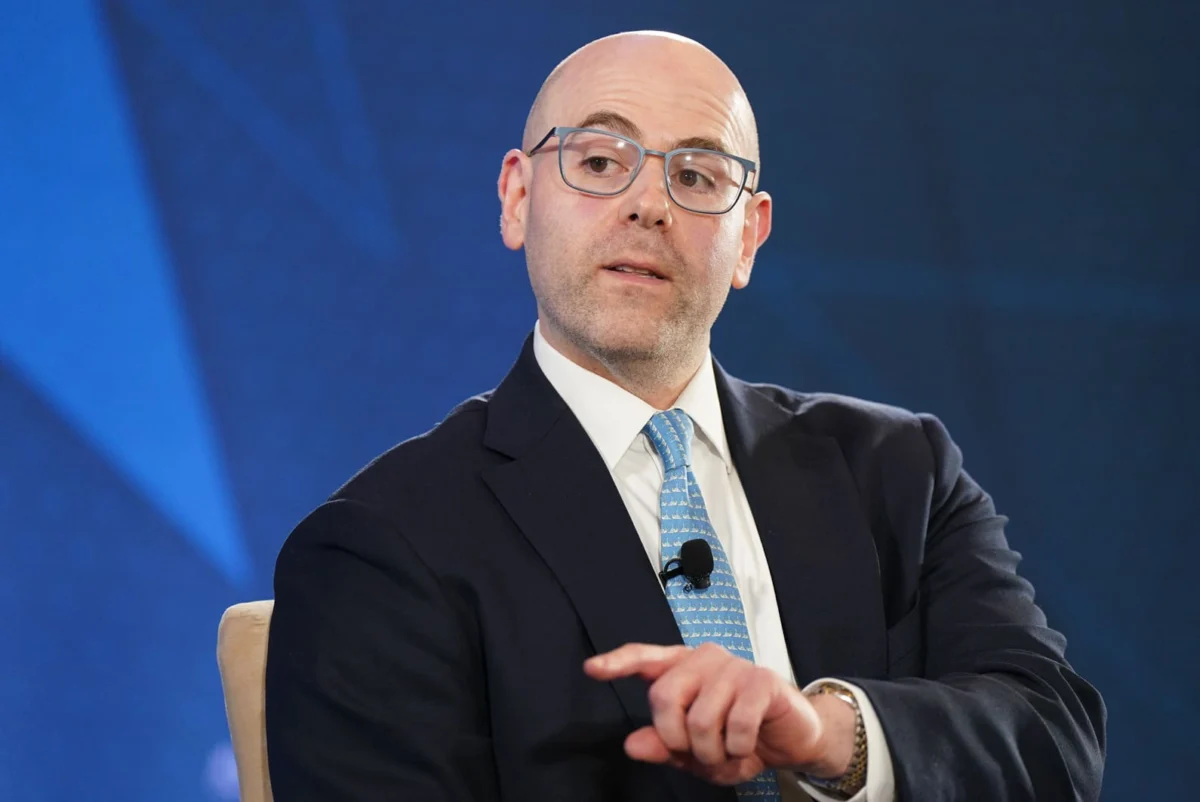
Federal Reserve Governor Stephen Miran, a vocal advocate for radical shifts in the central bank’s approach to monetary policy, is set to conclude what will be the shortest tenure as a governor in 71 years. His departure in the coming days, just eight months after taking office in September 2025, marks the end of a period characterized by consistent dissent and a determined push for lower interest rates, closely aligning with the views of President Donald Trump. As Miran, 42, steps down, his ideas are poised to find a new champion in incoming Chair Kevin Warsh, who shares many of Miran’s core economic philosophies. However, Miran’s experience at the Fed has also underscored the profound institutional inertia that often tempers even the most fervent calls for change, a reality Warsh is now set to confront.
A Brief but Tumultuous Tenure
Stephen Miran officially joined the Federal Reserve Board of Governors in September 2025, filling a seat previously held by Adriana Kugler. His arrival was met with keen interest, particularly given his background as chair of the White House Council of Economic Advisers under President Trump, a position he controversially held concurrently with his Fed governorship for several months. This dual role drew immediate criticism from various quarters, who argued it blurred the lines of the Fed’s cherished independence and fueled concerns about political influence over monetary policy. Miran, however, defended the decision as a pragmatic move to avoid a third Senate confirmation in a short span, though he ultimately resigned from the White House position in February 2026 amid mounting pressure.
Throughout his brief tenure, Miran established an unprecedented record: he dissented at every single one of the six Federal Open Market Committee (FOMC) meetings he attended. His dissents consistently advocated for more aggressive interest rate cuts than the consensus reached by his colleagues. This unwavering stance resonated with President Trump’s public demands for sharply lower interest rates, which had been a consistent theme of his administration’s economic rhetoric. Even when the Fed did vote to cut rates, Miran pushed for deeper reductions, reflecting his conviction that the economy could sustain significantly lower borrowing costs without igniting inflationary pressures. His "dot" on the Fed’s Summary of Economic Projections (SEP) initially called for a full percentage point (100 basis points) of cuts in 2026, significantly more dovish than the median projection of his peers. As he exits, he noted a slight adjustment, now calling for 75 basis points of cuts due to marginal inflation concerns, but still emphasizing the need to "frontload those cuts" to avoid "exerting restraints in the labor market."
Miran’s tenure, while short, revived crucial debates about the Fed’s role, its decision-making process, and its relationship with political power. The last time a governor served such a brief period was over seven decades ago, highlighting the unusual circumstances of his appointment and departure.
The Miran Doctrine: Challenging Orthodoxies
Miran’s economic philosophy, articulated in interviews and forthcoming research, represents a distinct challenge to some long-held views within the central banking community. His core arguments revolve around several key pillars:
The Pace of Change and Committee Dynamics
One of Miran’s most significant observations, tempered by his direct experience, was the inherent slowness of change within the Federal Reserve system. "The Fed is really a committee," he stated in a CNBC interview. "It’s different than an agency where there’s a very clear executive who just runs the show, and what he or she says goes, and if you don’t like it, you’re out." This realization underscores the consensus-driven nature of FOMC decisions, where ideas must be debated, refined, and ultimately gain the support of a majority of governors and regional Fed presidents. For someone arriving with "big ideas" and a desire for "radical" change, this institutional reality proved to be a significant tempering force, slowing the pace of adoption for even his most compelling arguments.
Deregulation as a Disinflationary Force
A central tenet of Miran’s economic outlook is the profound impact of deregulation on the supply side of the economy. He argues that government regulations are "underappreciated in terms of how determinative they are for the supply side," directly influencing the capacity of businesses to produce goods and services. By reducing regulatory burdens, particularly those related to construction and industry, producers can operate more efficiently and increase output. This, he posits, is inherently disinflationary. Miran estimates that deregulation could potentially shave half a percentage point off future inflation rates, although he acknowledges that factors like tariff inflation could mitigate some of these gains. This view aligns strongly with supply-side economics often espoused by conservative administrations, including that of President Trump. While some of his colleagues remained cautious, Miran believes he made progress in convincing others of the merits of incorporating deregulation’s effects into economic forecasting.
Reinterpreting Inflation Data and Supply Shocks
Miran also brought a nuanced perspective to the interpretation of inflation data and the appropriate monetary policy response to supply shocks. In a forthcoming paper co-authored with two Fed economists, he contends that recent software inflation figures have been artificially inflated by technical factors, thereby distorting both headline and core inflation metrics. This argument suggests that the true underlying inflation rate might be lower than commonly perceived, strengthening the case for less restrictive monetary policy.
Perhaps more significantly, Miran advocated for a different approach to how the central bank should react to sudden price surges caused by supply shocks, such as an increase in oil prices due to geopolitical events (e.g., the Strait of Hormuz tensions in May 2026, or the impact of tariffs on clothing prices). Given that changes in Fed policy typically take 12 to 18 months to fully affect the economy, Miran argued that the central bank should not attempt to counteract immediate, one-off price spikes. "If you think that a higher tariff is going to boost clothing prices today, there’s nothing you can do about that with monetary policy," he explained. The Fed, he believes, should focus on combating persistent, ongoing trends in inflation, rather than ephemeral price movements that are beyond its immediate control. This implies a need for policymakers to forecast future supply shocks rather than react retrospectively to past ones. This perspective challenges the conventional wisdom that the Fed must maintain its inflation-fighting credibility by responding to all significant price movements, regardless of their source or transient nature.
Navigating Political Crosscurrents
Miran’s tenure was inextricably linked to the broader political climate surrounding the Federal Reserve, particularly President Trump’s consistent criticism of then-Chair Jerome Powell and the Fed’s interest rate policies. Miran’s initial decision to retain his position as chair of the White House Council of Economic Advisers while serving as a Fed governor sparked widespread concern among financial markets, economic commentators, and even some former Fed officials. Critics argued that this unprecedented arrangement directly compromised the Fed’s institutional independence, creating an appearance of political influence over its non-partisan mandate. The move was seen as particularly problematic given Trump’s ongoing public campaign to pressure Powell for lower rates. While Miran maintained his intention was to avoid a third Senate confirmation, the optics were undeniably challenging for an institution that prides itself on its autonomy. His eventual resignation from the White House position in February 2026, though late in his Fed tenure, somewhat alleviated these concerns, signaling a belated acknowledgment of the importance of maintaining clear boundaries between fiscal and monetary policymaking. Miran, for his part, asserted that his independence remained intact, stating, "I’ve always done what I think is right," and that his conclusions about high interest rates were based on economic evidence, not political directives.
A Shared Vision with Incoming Chair Kevin Warsh
Miran’s ideas, while challenging for some of his colleagues, are poised to find a more receptive audience with the arrival of Kevin Warsh, who was confirmed as the next Fed Chair on April 21, 2026. Warsh, a former Fed Governor himself, will assume the board seat Miran is vacating, though their tenures will not overlap. Crucially, Warsh shares many of Miran’s "big ideas," particularly regarding the impact of deregulation and the distinction between underlying inflation and one-off price changes.
During his confirmation hearing, Warsh echoed Miran’s sentiments, stating, "I’m most interested in what’s the underlying inflation rate, not what’s the one time change in prices because of a change in geopolitics or change in beef, but what’s the underlying generalized change in prices in the economy?" This alignment suggests that the debate Miran initiated regarding the appropriate response to supply shocks and the careful parsing of inflation data will intensify under Warsh’s leadership. Warsh has also previously lauded President Trump’s deregulatory plans as "the most significant since President Ronald Reagan’s," indicating a shared belief in the disinflationary potential of reduced government oversight. This ideological commonality could provide Warsh with a crucial ally in shaping the Fed’s future direction, particularly if he aims to steer the institution toward a more supply-side-focused monetary policy.
The Road Ahead for the Federal Reserve
The transition from Miran to Warsh highlights the ongoing evolution of monetary policy debates within the Federal Reserve. Warsh, like Miran, will be forced to reckon with the inherent challenges of leading a committee of diverse economic viewpoints and the glacial pace of institutional change. Miran’s experience of needing to "convince people" will be Warsh’s reality, underscoring the importance of building consensus among his fellow governors and regional Fed presidents.
The three dissenters at the most recent FOMC meeting, who expressed concerns about inflation, illustrate the continued diversity of opinion within the committee. While Miran’s specific arguments may not have swayed a majority during his brief tenure, the fact that a new Chair shares many of his foundational beliefs suggests these ideas will gain renewed prominence. The Federal Reserve’s dual mandate—to achieve maximum employment and price stability—requires constant recalibration in response to evolving economic conditions and theoretical frameworks. Warsh’s ability to integrate these new perspectives while maintaining the Fed’s credibility as an inflation fighter will be a defining challenge of his chairmanship. The interplay between aggressive pushes for change and the inherent institutional caution will undoubtedly shape the Fed’s policy trajectory in the coming years.
A Potential Return?
Despite his imminent departure, Stephen Miran has made it clear that he would "love to be back" at the Federal Reserve, though he acknowledges the decision is "not up to me." The White House, when queried, declined to comment on whether President Trump is considering Miran for a future appointment.
A potential avenue for Miran’s return could arise sooner than expected. Outgoing Chair Jerome Powell has indicated his intention to retain his governor’s seat on the Board, at least until an internal investigation into renovations at the Fed’s headquarters is completed. While Powell’s term as governor runs until January 2028, an early exit from this seat would create an opening. Were Miran to return, it would be a highly consequential development for Kevin Warsh. Miran, having experienced firsthand the challenges of enacting change within the Fed, understands the critical need for allies around the boardroom table. A returning Miran, with his now seasoned understanding of the institution and his shared economic philosophy with Warsh, could provide the incoming Chair with a powerful voice in advocating for the shifts in monetary policy that both men believe are necessary.
Miran’s brief but impactful tenure at the Federal Reserve underscores the dynamic nature of monetary policy and the constant tension between individual vision and institutional reality. As he steps away, his ideas on deregulation, inflation interpretation, and the appropriate response to supply shocks are set to resonate through the corridors of power, particularly as Kevin Warsh takes the helm, promising an era where these debates will likely intensify and shape the future of American economic policy.
