

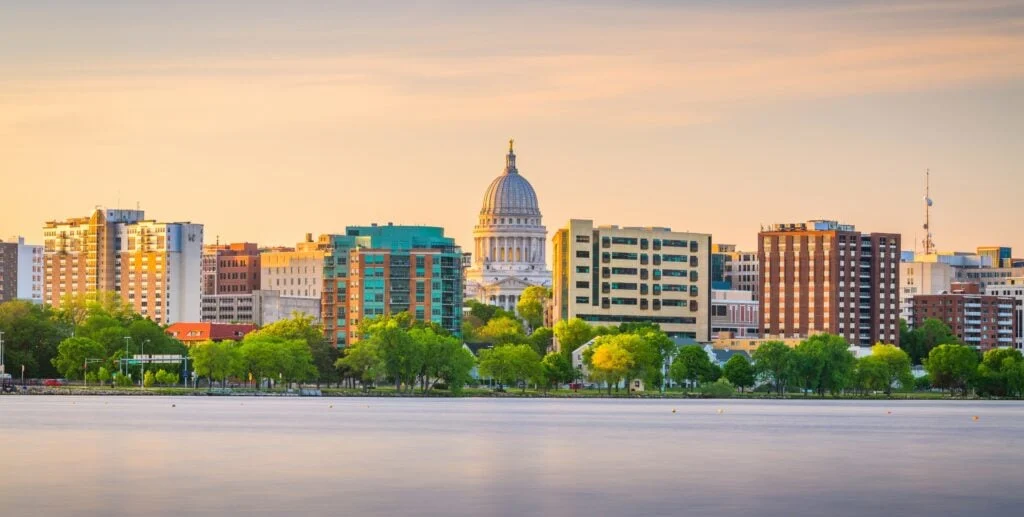
The American real estate landscape is undergoing a significant geographic realignment as affordability becomes the primary driver for both homebuyers and real estate investors. According to the latest "Hottest Neighborhoods" report released by Redfin for 2026, the states of Michigan and Wisconsin have emerged as the nation’s most competitive housing frontiers, collectively securing five of the top 10 positions in the annual ranking. This shift marks a departure from the decade-long dominance of Sunbelt metros, signaling a "Rust Belt Revival" fueled by a combination of low entry prices, stable employment in the manufacturing sector, and a growing influx of remote workers seeking relief from coastal inflation.
The Redfin analysis, which measures year-over-year growth in listing views and buyer competition metrics, highlights a trend that has been building since 2024. For the second consecutive year, Midwestern markets have outperformed traditional high-growth hubs in Florida, Texas, and Arizona. Leading the charge are suburbs surrounding Milwaukee and Detroit, where the cost of living remains significantly lower than the national average while offering amenities and school districts that rival more expensive metropolitan areas.
A Strategic Shift Toward Midwestern Affordability
As housing inventory remains tight across the United States, the Midwest has become the "value play" of the decade. Redfin senior economist Asad Khan noted that the current momentum is driven by a "sweet spot" found in neighborhoods sitting just outside major regional hubs. These areas, including suburbs of Milwaukee, Chicago, and Tampa (the latter being a notable outlier in the Southern cooling trend), offer a lower cost of living without sacrificing access to high-tier shopping, dining, and educational infrastructure.
In Wisconsin, the Milwaukee suburbs of Oak Creek, West Bend, and Menomonee Falls have seen an unprecedented surge in buyer activity. Similarly, in Michigan, Lincoln Park—located on the periphery of Detroit—and Howell, situated in Southeast Michigan, have become magnets for those priced out of the traditional coastal markets. The appeal is rooted in a "bygone-era" pricing model; while the national median home price continues to hover near record highs, markets like Lincoln Park maintain an average sales price of approximately $158,000. This is roughly 30% to 50% lower than comparable homes in coastal or mountain-west cities.
The Chronology of the Midwest Housing Boom
The ascent of the Midwest as a housing powerhouse was not an overnight phenomenon but rather a multi-stage economic evolution:
- The Post-Pandemic Exodus (2021–2023): As remote work became standardized, employees began looking for markets where their salaries could stretch further. Initially, this benefited the Sunbelt, but as prices in cities like Austin and Phoenix skyrocketed, the "second-tier" Midwest cities began to look more attractive.
- The Inflationary Pressure Point (2024–2025): High interest rates and sustained inflation made the barrier to entry in the West and Northeast nearly insurmountable for first-time buyers. This forced a demographic shift toward the Great Lakes region.
- The 2026 Market Dominance: By early 2026, the trend solidified. Data from Zillow’s Market Heat Index for March 2026 confirmed that the power balance had officially shifted from buyers to sellers in the Midwest, while many previously "hot" Sunbelt markets transitioned into buyer’s markets due to oversupply and peaked pricing.
Demographic Drivers: Gen Z and the Workforce Pipeline
A critical factor in the sustained heat of the Michigan and Wisconsin markets is the migration of Generation Z. For young professionals entering the workforce with entry-level salaries, major coastal cities like Los Angeles, New York, and Seattle have become functionally inaccessible for homeownership. Research from Checkr and other labor-market analysts suggests that the Midwest is successfully capturing university graduates who prioritize wealth-building over "big-city" prestige.
In the Fox River Valley of Wisconsin—a stretch encompassing Oshkosh, Neenah, and Green Bay—the economic fundamentals are particularly strong. The Wall Street Journal reports that in the six counties surrounding this region, only one in seven buyers spends more than 30% of their income on housing. Nationally, that figure is one in five. This affordability is bolstered by a robust manufacturing sector that provides wages above the national average relative to the cost of living. Consequently, only 40% of renters in these areas are considered "rent-burdened," compared to 50% on a national scale.
Investment Implications and Market Competition
For real estate investors, the Midwest offers a rare combination of high cash flow and steady appreciation. Evaluations by Norada Real Estate Investments indicate that major Midwestern metros such as Cleveland, Indianapolis, Kansas City, and St. Louis are producing capitalization (cap) rates of 8% or higher. In these "B" and "B+" rated neighborhoods, properties priced around $160,000 are capable of generating monthly rents of $1,500, a ratio that is nearly impossible to find in the current coastal climates.
However, the "secret" of Midwestern value is rapidly disappearing. As out-of-state buyers and institutional investors flood these markets, inventory has plummeted. In Howell, Michigan, Redfin Premier agent Anne Loehr reported that the lack of available homes is the primary constraint on the market, as demand far outstrips supply. In Lincoln Park, Michigan, nearly 40% of homes are now selling for over the asking price, with a 14% year-over-year increase in total home sales volume.
The Spring 2026 Housing Market Ranking, a joint venture between the Wall Street Journal and Realtor.com, placed the South Bend-Mishawaka area (spanning the Indiana-Michigan border) in the top spot for the second consecutive quarter. Appleton, Wisconsin, followed closely in second place. Other Midwestern cities appearing in the top 20 include:
- Fort Wayne, Indiana
- Lafayette-West Lafayette, Indiana
- Grand Rapids-Kentwood, Michigan
- Canton-Massillon, Ohio
- Akron, Ohio
Official Responses and Economic Outlook
Economists and regional planners are increasingly viewing the Midwest as the primary engine for American residential stability. Joe Wadford, an economist at the Bank of America Institute, characterized the region as "the value play of the United States," emphasizing its suitability for long-term "root-planting" rather than speculative flipping.
The regional government and local chambers of commerce in Michigan and Wisconsin have responded by leaning into this growth, focusing on infrastructure improvements and tech-hub initiatives to ensure that the influx of new residents is matched by long-term job security. Demographer Diana Lind, publisher of the New Urban Order, predicts that the Midwest will become the fastest-growing region in the country by the end of the 2020s.
Broader Impact and Future Risks
While the current data paints a rosy picture for the Great Lakes region, the rapid appreciation of these markets carries inherent risks. The primary concern is that the very "affordability" that attracted the current wave of residents may soon vanish if wage growth does not keep pace with the 14% to 20% annual increases in home prices seen in specific neighborhoods.
Furthermore, the Midwest is not a monolith. While suburban Milwaukee and Detroit are thriving, other rural areas within the same states continue to struggle with population loss and stagnant economies. For investors and homebuyers, the challenge in the coming years will be discerning between sustainable growth hubs and areas experiencing a temporary "spillover" effect from neighboring metros.
The shift in the 2026 rankings serves as a definitive marker of the changing American Dream. For decades, the narrative of success involved moving toward the coasts or the sun-drenched suburbs of the South. Today, the data suggests that the new frontier of American prosperity is found in the durable, affordable, and increasingly competitive neighborhoods of Michigan and Wisconsin. As the decade progresses, the "Hottest Neighborhoods" list is likely to remain dominated by these Midwestern workhorses, provided they can balance their newfound popularity with the preservation of the low-cost lifestyle that put them on the map.
