

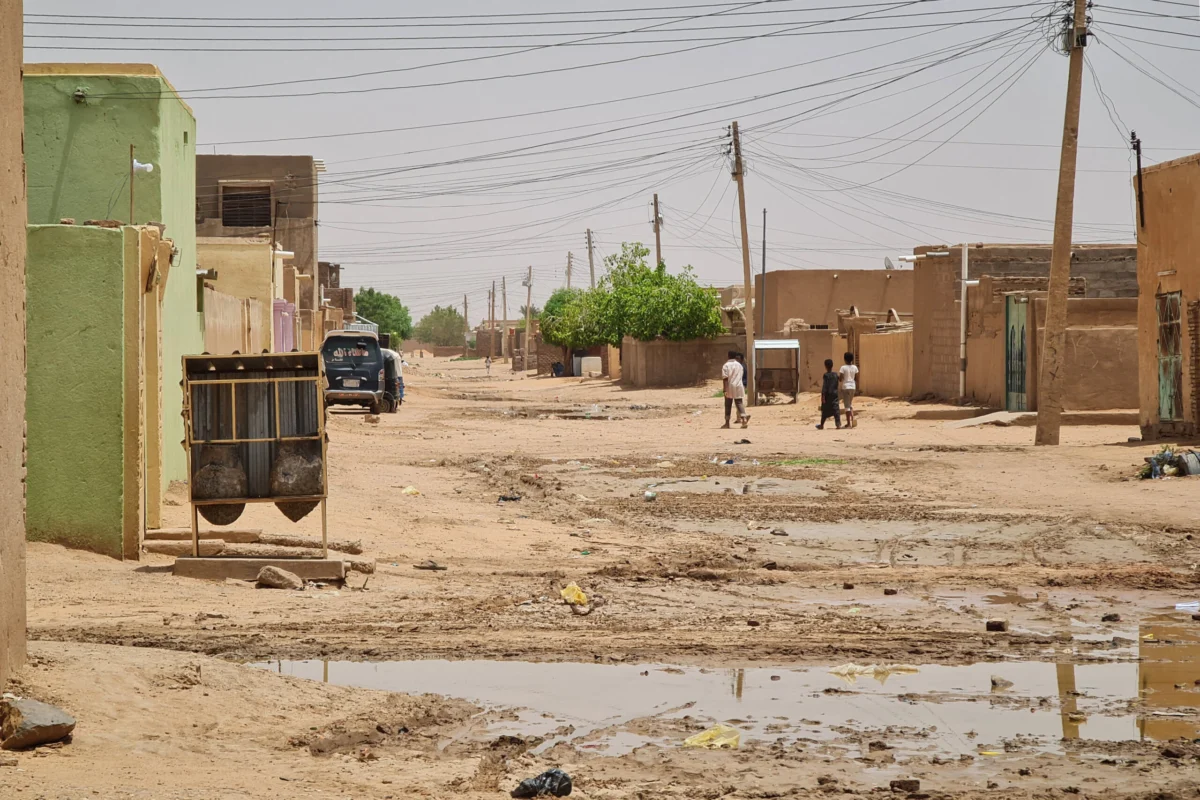
In a devastating escalation of the ongoing conflict in Sudan, an airstrike targeting the Yarmouk neighborhood in southern Khartoum resulted in the deaths of at least 17 civilians, including five children, on Saturday. This incident marks one of the deadliest single events in the capital since hostilities broke out in mid-April between the Sudanese Armed Forces (SAF), led by General Abdel Fattah al-Burhan, and the paramilitary Rapid Support Forces (RSF), commanded by General Mohamed Hamdan "Hemedti" Dagalo. The strike, which health officials say also left an unknown number of women and elderly people among the deceased, underscores the increasingly perilous conditions for civilians trapped in the crossfire of a power struggle that has transformed Sudan’s metropolitan centers into active battle zones.
According to Sudan’s Ministry of Health, the attack leveled at least 25 homes in Yarmouk, an area that has become a flashpoint due to its proximity to a major military facility controlled by the army. While the ministry confirmed the casualties via social media, the technical nature of the strike remains a subject of investigation. It is currently unclear whether the destruction was caused by conventional fighter jets or loitering munitions, such as drones. The Sudanese military has consistently utilized its air superiority to target RSF positions within the city, while the RSF has increasingly deployed anti-aircraft weaponry and sophisticated drones to counter these aerial incursions.
The Tragedy in Yarmouk and the Grassroots Response
The immediate aftermath of the strike was documented by "The Emergency Room," a localized volunteer network that has emerged as a vital provider of humanitarian aid and information following the collapse of many state institutions. The group reported that at least 11 individuals were wounded in the blast, with many transported to nearby medical facilities that are struggling to operate under severe shortages of supplies and personnel. Images released by the group depicted harrowing scenes of residents digging through mounds of rubble with their bare hands in search of survivors.
In a formal statement, the RSF blamed the military’s air force for the carnage, claiming that the bombardment specifically targeted residential quarters. The paramilitary group further asserted that it had successfully downed a military MiG fighter jet during the engagement, though these claims have not been independently verified by international observers or military analysts. Conversely, the Sudanese military has historically maintained that its operations are precision-targeted against "rebel" hideouts and that the RSF frequently uses civilian homes and hospitals as shields, a charge that human rights organizations say has some merit, though it does not absolve the military of its obligation to minimize civilian harm.
A Chronology of Conflict: From Transition to Total War
The current violence did not emerge in a vacuum but is the culmination of years of political instability following the 2019 ousting of longtime autocrat Omar al-Bashir. The transition toward a civilian-led democracy was derailed in October 2021, when General al-Burhan and General Dagalo joined forces to orchestrate a military coup, dissolving the transitional government. However, the alliance between the two generals proved fragile.
The primary point of contention centered on the proposed integration of the RSF—a paramilitary force with its roots in the Janjaweed militias of Darfur—into the regular Sudanese army. Disagreements over the timeline of this integration and the future chain of command reached a breaking point in early 2023. By mid-April, the tension snapped into open warfare, starting in Khartoum and rapidly spreading to the western region of Darfur and parts of Kordofan.
Since April 15, the conflict has followed a grim trajectory:
- April 15-20: Initial battles break out at the Sovereign Council headquarters and the Khartoum International Airport.
- May 2023: Fighting shifts toward a war of attrition in urban centers. The "Jeddah Talks," mediated by the United States and Saudi Arabia, yield several short-lived ceasefires, most of which are violated within hours of signing.
- Early June 2023: The conflict intensifies in Darfur, taking on a distinct ethnic character reminiscent of the genocide in the early 2000s.
- June 14, 2023: The assassination of West Darfur Governor Khamis Abdalla Abkar marks a significant escalation in the targeting of high-ranking political figures.
Supporting Data: The Scale of a Growing Humanitarian Catastrophe
The human cost of the conflict is staggering and continues to rise. According to data compiled by the United Nations and the World Health Organization (WHO), the fighting has claimed thousands of lives, though the true toll is likely much higher than official figures suggest due to the difficulty of accessing combat zones.
The displacement crisis is among the most severe in the world today. More than 2.2 million people have been forced from their homes. Of these, approximately 1.7 million are internally displaced within Sudan, seeking refuge in states like Al-Jazirah or the Red Sea coast. Over 500,000 people have crossed international borders into neighboring Chad, Egypt, South Sudan, and Ethiopia. Chad, in particular, has seen an influx of tens of thousands of refugees from West Darfur, placing an immense strain on the resources of one of the world’s poorest nations.
Furthermore, the healthcare system in Khartoum is on the brink of total collapse. The Sudanese Doctors’ Trade Union reports that approximately 70% of hospitals in conflict zones are out of service. Those that remain open are often occupied by combatants, lack electricity, or have run out of basic surgical supplies.
Regional Contagion: The Crisis in Darfur and the Death of a Governor
While Khartoum remains the primary theater for political control, the situation in Darfur has devolved into what many observers describe as a systematic campaign of ethnic cleansing. In Genena, the provincial capital of West Darfur, Arab militias—reportedly operating in tandem with the RSF—have targeted the Masalit community and other non-Arab groups.
The gravity of the situation was highlighted by the recent abduction and slaying of West Darfur Governor Khamis Abdalla Abkar. Shortly before his death, Abkar had participated in a televised interview where he accused the RSF and allied militias of committing "genocide" against civilians. Hours later, he was taken into custody; video footage subsequently circulated on social media showing his body. While the RSF denied responsibility and blamed "outlaws" for the killing, the United Nations and the African Union have called for an immediate independent investigation, citing the event as a dangerous precedent for the targeting of state officials.
Official Responses and International Mediation Efforts
The international community has struggled to find leverage to stop the fighting. The United States and Saudi Arabia have hosted representatives from both the SAF and RSF in Jeddah, but these negotiations have frequently stalled. The African Union and the Intergovernmental Authority on Development (IGAD) have also proposed mediation roadmaps, yet neither General al-Burhan nor General Dagalo has shown a genuine willingness to engage in a permanent truce that would require significant concessions.
In the wake of the Yarmouk strike, a spokesperson for the Sudanese military did not immediately respond to requests for comment, a silence that has become common as the army focuses on its aerial campaign. The RSF, meanwhile, continues to utilize social media to project an image of a force fighting against "remnants of the old regime," despite widespread reports of its soldiers looting private property and occupying civilian residences.
Analysis of Implications: A State on the Verge of Fragmentation
The persistence of heavy fighting in residential areas like Yarmouk suggests that neither side is close to a decisive military victory. This stalemate poses a profound risk to the integrity of the Sudanese state. Analysts warn that if the conflict continues to drag on, Sudan could fracture into a series of fiefdoms controlled by various armed factions, similar to the protracted civil wars seen in Libya or Somalia.
The implications for regional stability are equally concerning. Sudan shares borders with seven countries, many of which are already dealing with their own internal instabilities. A total collapse of the Sudanese state would likely lead to:
- Increased Refugee Flows: Further destabilizing neighboring countries like Chad and South Sudan.
- Security Vacuums: Providing fertile ground for extremist groups to operate in the Sahel and the Horn of Africa.
- Economic Disruption: Sudan is a vital transit point for trade and oil pipelines, particularly for South Sudan.
The strike in southern Khartoum is more than just a tragic loss of 17 lives; it is a symbol of a nation being torn apart by the ambitions of two men. As the international community weighs further sanctions and diplomatic pressure, the civilians of Khartoum and Darfur remain trapped in a cycle of violence where the distinction between the battlefield and the home has effectively vanished. Without an immediate and enforceable ceasefire, the humanitarian data will continue to trend toward catastrophe, and the window for a unified, democratic Sudan will continue to close.
