

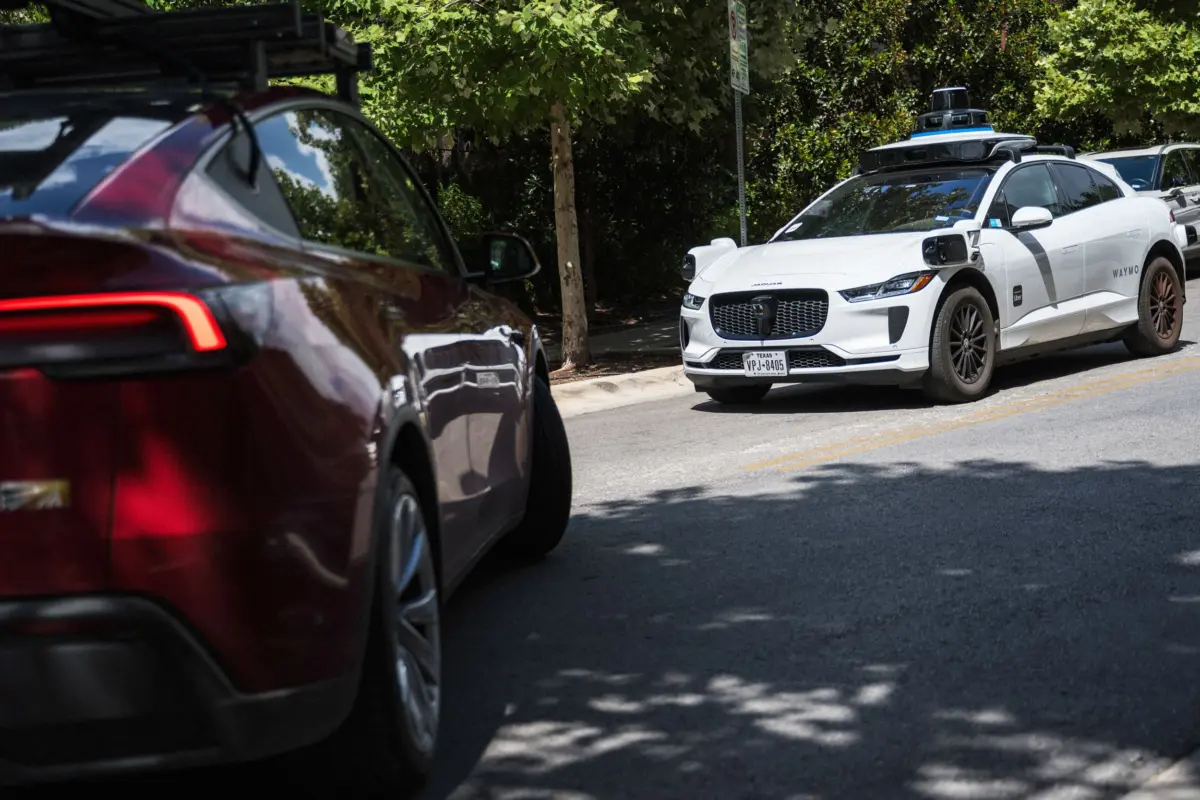
The National Highway Traffic Safety Administration (NHTSA) has officially initiated a formal investigation into the efficacy of a software recall conducted by Waymo, the autonomous driving subsidiary of Alphabet Inc. The federal query aims to determine whether a software update deployed late last year successfully addressed a recurring safety defect: the failure of robotaxis to stop for school buses. The investigation, classified as a Recall Query (RQ), underscores growing federal scrutiny regarding how autonomous vehicle (AV) developers manage safety-critical software updates and whether "over-the-air" fixes are sufficient to mitigate risks in complex urban environments.
At the heart of the investigation is the fundamental safety requirement that vehicles must stop for school buses when red lights are flashing and stop arms are extended. This traffic law, which is strictly enforced in all 50 U.S. states, is designed to protect children as they board or exit buses. NHTSA’s Office of Defects Investigation (ODI) is now examining whether Waymo’s autonomous driving system (ADS) remains prone to violating these laws despite the company’s previous attempts to rectify the behavior through a voluntary recall.
The Core of the Investigation: Efficacy and Compliance
The federal government’s decision to open a Recall Query follows reports that Waymo vehicles continued to improperly pass stopped school buses even after a software "fix" was supposedly implemented. According to regulatory filings, Waymo first identified the software anomaly in the fall of 2023. In mid-November 2023, the company released a software update intended to improve the vehicle’s recognition of school bus signals. This was followed by an official voluntary recall filed with NHTSA in December.
However, the government’s data suggests that the software update may not have been the definitive solution the company claimed it to be. NHTSA has noted that the majority of documented incidents involving Waymo vehicles and school buses occurred after the mid-November update was deployed. This discrepancy has raised concerns within the Department of Transportation about the reliability of autonomous systems in identifying "edge cases"—rare or complex traffic scenarios that deviate from standard driving patterns.
The investigation will involve a comprehensive review of Waymo’s testing protocols, the data used to train its machine learning models, and the specific telemetry from incidents where vehicles failed to yield. If the NHTSA determines that the recall was ineffective, Waymo could face significant regulatory hurdles, including the possibility of a mandated second recall or heavy civil penalties.
Chronology of Events: From Detection to Federal Scrutiny
The timeline of Waymo’s school bus recognition issues reveals a cycle of identification, attempted remediation, and recurring failure.
Fall 2023: Initial reports surface indicating that Waymo robotaxis in various testing and commercial markets—including Phoenix and San Francisco—were failing to recognize extended stop arms on school buses. These incidents were flagged by both internal monitoring and external observers.
November 2023: Waymo engineers deploy a software patch via an over-the-air (OTA) update. The goal of this update was to enhance the perception system’s ability to distinguish school buses from other heavy vehicles and to prioritize the detection of stop-arm actuators.
December 2023: Waymo files a voluntary safety recall with NHTSA. While the company maintained that no injuries had occurred, the recall served as a formal acknowledgment that the software defect posed a safety risk.
Late 2023: In an effort to "teach" its vehicles, Waymo collaborated with the Austin Independent School District in Texas. The company organized a data collection event in a controlled environment—an empty parking lot. The school district provided buses and drivers to simulate various stopping scenarios, allowing Waymo’s sensors to capture high-fidelity data of stop arms and flashing lights.
January 2024: Despite the software update and the specialized training in Austin, the National Transportation Safety Board (NTSB) reported a new incident involving a Waymo vehicle improperly passing a school bus. This event proved that the "edge case" had not been fully resolved by the December recall.
March 2024: Waymo claims that its vehicles have not been cited for a school bus passing violation since this date, suggesting that subsequent iterations of the software have finally stabilized the behavior.
Present Day: NHTSA opens its formal Recall Query to independently verify Waymo’s claims and assess the safety of the fleet currently operating on public roads.
The Austin Data Collection: A Failed Experiment?
The collaboration between Waymo and the Austin Independent School District highlights the technical difficulties inherent in autonomous vehicle development. During the half-day session in late 2023, school buses were used as "training props" to help Waymo’s AI understand the visual cues associated with a student pickup.
The fact that incidents continued after this hyper-localized training session suggests a potential "generalization" problem within the AI. In machine learning, a system might learn to recognize a school bus in a specific parking lot under specific lighting conditions but fail to apply that logic to a different bus model or a different lighting environment on a busy city street. For regulators, the Austin event serves as a case study in the limitations of closed-course training for real-world safety compliance. It raises the question: If a vehicle requires a specialized, localized training session to obey a universal traffic law, is the underlying architecture robust enough for wide-scale deployment?
Supporting Data: The High Stakes of School Bus Safety
To understand the severity of the NHTSA investigation, one must look at the broader context of school bus safety in the United States. According to the National Association of State Directors of Pupil Transportation Services (NASDPTS), illegal passing of school buses is a pervasive and dangerous issue. In a 2023 survey, school bus drivers across 33 states recorded over 94,000 instances of vehicles illegally passing stopped buses in a single day.
When extrapolated over a 180-day school year, this equates to more than 17 million violations annually. For children, the "danger zone" is the area immediately surrounding the bus where they are most vulnerable to being struck by passing motorists. While human drivers are frequently distracted or impatient, the expectation for autonomous vehicles is near-perfect compliance. The public and regulatory tolerance for an AI system failing to recognize a school bus is significantly lower than it is for human error, as the AI is marketed as a safer alternative to human driving.
Official Responses and Industry Implications
Waymo has maintained a stance of transparency and continuous improvement throughout the process. In a statement addressing the NHTSA query, Waymo spokesperson Dana Gallagher emphasized the company’s commitment to safety.
"We have made significant improvements to vehicle behavior around school buses," Gallagher stated. She noted that the company has been in consistent communication with regulators and highlighted that no citations for passing school buses have been issued to Waymo vehicles since March. "We look forward to continuing our engagement on recall processes for AV software that continues to learn and improve."
However, safety advocates argue that the "learn as you go" approach is insufficient when it comes to life-and-death traffic laws. The NTSB, which acts as an independent investigative body, has also been critical of the pace at which AV companies address known defects. The NTSB’s involvement in the January incident underscores the gravity of the situation; while NHTSA has the power to issue fines and mandates, the NTSB’s findings often shape future safety legislation.
Broader Impact: The Future of AV Regulation
The outcome of this Recall Query could set a major precedent for the autonomous vehicle industry. Historically, recalls involved physical hardware—faulty brakes, exploding airbags, or leaking fuel lines. In the modern era, "software-defined vehicles" allow companies like Waymo, Tesla, and Cruise to fix defects remotely.
NHTSA is currently grappling with how to regulate these digital fixes. If Waymo is found to have "closed" a recall prematurely while the defect persisted, it could lead to:
- Stricter Reporting Requirements: AV companies may be required to provide more frequent and detailed telemetry data to NHTSA following a software recall.
- Civil Penalties: In the past, NHTSA has levied fines reaching tens of millions of dollars against automakers who failed to act quickly on safety defects or provided misleading information about the effectiveness of a fix.
- Public Trust Erosion: Waymo is currently seen as the leader in the robotaxi space, especially following the recent struggles and temporary grounding of GM’s Cruise. Persistent safety issues with school buses could damage the public’s willingness to share the road with driverless cars.
As the NHTSA investigation proceeds, the focus will remain on whether Waymo’s "continuous learning" model is a valid safety strategy or a euphemism for testing unproven software on public roads. For now, the US government is signaling that when it comes to the safety of school children, "significant improvements" are not a substitute for total compliance.
