

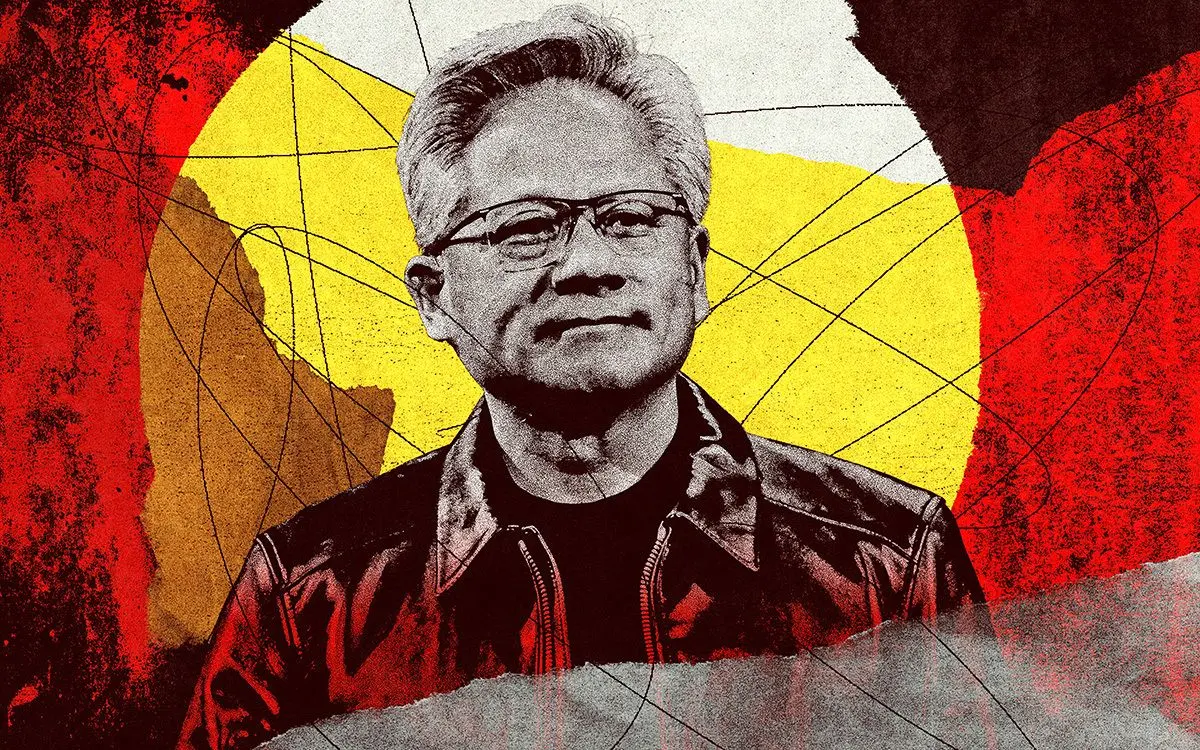
The leadership of Nvidia, the world’s most valuable semiconductor company, has been thrust into a complex intersection of corporate scandal and national security following the admission by CEO Jensen Huang of an extramarital affair with a woman identified by United States intelligence as a Chinese operative. New disclosures indicate that Huang engaged the services of Heller, a prominent crisis communications firm known for managing high-profile public scandals, nearly a year before the relationship became public knowledge. The involvement of the firm, led by renowned "fixer" Risa Heller, suggests a proactive and long-term effort to manage the fallout of a situation that transcends personal misconduct, touching upon federal investigations into export control violations and international espionage.
The Intersection of Personal Conduct and National Security
The controversy centers on Huang’s relationship with a woman known as Alice Huang, a former executive at Megaspeed, a Singapore-based semiconductor distributor. While Nvidia initially characterized their interactions as routine professional engagements with a client representative, Jensen Huang issued a formal apology to his staff and family in late 2025, admitting the relationship was romantic. The admission followed a series of reports detailing Alice Huang’s alleged ties to Chinese intelligence services. According to assessments by US intelligence officials, Alice Huang—who shares a surname with the CEO but has no familial relation—is suspected of working on behalf of the Chinese government.
The timing of the relationship coincides with a period of intense regulatory scrutiny for Nvidia. In 2023, the US government began implementing aggressive restrictions on the export of advanced AI chips to China to prevent the advancement of Chinese military capabilities. Megaspeed, where Alice Huang held a leadership role, emerged from a split with a Chinese gaming and cloud computing firm shortly after these sanctions were announced. Investigations by the US Department of Commerce have since focused on whether Megaspeed served as a conduit for Nvidia hardware to bypass American export controls and reach prohibited entities within mainland China.
The Role of Heller and the "Fixer" Strategy
According to sources familiar with the matter, the New York-based firm Heller has been managing Jensen Huang’s personal and professional communications since at least October 2025. Risa Heller, the firm’s founder, is a veteran of the New York political and corporate landscape, having previously served as a press secretary for Senator Chuck Schumer and a communications director for former Representative Jane Harman. Her firm has earned a reputation for navigating the "impossible" crises of powerful figures, including those embroiled in allegations of sexual misconduct, financial impropriety, and personal scandals.
Initially, Heller’s engagement was presented internally as a move to manage the Huang family’s philanthropic efforts and the public profile of Madison Huang, the CEO’s daughter and an emerging leader within Nvidia’s marketing department. However, as the New York Times and other outlets began investigating Nvidia’s business dealings with Megaspeed, the firm’s role expanded significantly. By late October 2025, Nvidia’s internal communications department was reportedly instructed to route all inquiries regarding the CEO—whether they pertained to corporate strategy or his private life—through Heller’s consultants. This centralization of messaging suggests a defensive posture designed to insulate the CEO as the dual pressures of a federal investigation and a personal scandal converged.
A Chronology of the Nvidia Crisis (2023–2026)
The evolution of this crisis can be traced through a series of regulatory shifts and personal milestones:
- October 2022 – October 2023: The US Department of Commerce’s Bureau of Industry and Security (BIS) introduces sweeping export controls on high-end semiconductors, specifically targeting Nvidia’s A100 and H100 chips.
- Late 2023: Megaspeed is established as a separate entity from its Chinese parent company, positioning itself as a Singaporean buyer. It quickly becomes one of Nvidia’s most significant regional customers.
- Early 2024: Jensen Huang begins appearing in public at various industry events with Alice Huang. At the time, she is identified as an executive at Megaspeed.
- October 2025: A major investigative report details the US Commerce Department’s probe into Megaspeed. The investigation explores allegations that the firm helped Chinese companies evade sanctions.
- Late October 2025: Jensen Huang’s inner circle formalizes the arrangement with Heller. Internal Nvidia staff are told to include the crisis firm on all press matters involving the CEO.
- November 2026: Following a New York Times report identifying Alice Huang as a suspected Chinese intelligence operative, Jensen Huang issues a company-wide email admitting to the affair and apologizing for his infidelity.
- Present: The Nvidia Board of Directors initiates an independent investigation into the CEO’s conduct and the potential for compromised proprietary information.
Supporting Data: Nvidia’s Strategic Importance and the China Market
To understand the gravity of the situation, one must consider Nvidia’s position in the global economy. As of 2025, Nvidia maintains an estimated 80% to 95% share of the market for AI training chips. China has historically accounted for approximately 20% to 25% of Nvidia’s data center revenue. The implementation of export controls in late 2023 was estimated to have put billions of dollars in annual revenue at risk, prompting the company to develop "scaled-down" versions of its chips, such as the H20, to remain compliant with US law while serving Chinese demand.
The investigation into Megaspeed is critical because it suggests that despite these "compliant" products, high-end, restricted chips may have continued to flow into China through third-party intermediaries. If the CEO of the company providing these chips was involved in a romantic relationship with a key executive of the intermediary—who is also a suspected foreign agent—the legal and national security implications are profound.
Official Responses and Corporate Governance
In the wake of the admission, Nvidia’s board has moved to contain the damage. In an official statement, the board emphasized its commitment to the highest ethical standards. "The Board of Directors has initiated an independent review of Mr. Huang’s actions to ensure that all corporate protocols were followed and that no confidential company information or national security data was compromised," the statement read. The board further noted that, at this stage, they have found no evidence of a data breach or intellectual property theft.
However, the internal atmosphere at Nvidia is reportedly tense. The revelation that Madison Huang, a rising star in the company, was working closely with the same crisis firm hired to manage her father’s affair has raised questions about the blurring of lines between family interests and corporate duties. Furthermore, the connection between Nvidia’s head of public policy communications, John Rizzo, and Risa Heller—both former staffers for Senator Chuck Schumer—highlights a tight-knit network of political and PR professionals tasked with protecting one of America’s most vital technological assets.
Fact-Based Analysis of Implications
The fallout from Jensen Huang’s admission carries three primary levels of risk:
1. National Security and Counterintelligence
The primary concern for US federal authorities is the "honey trap" scenario—a classic intelligence tactic where romantic relationships are used to gain leverage or access to sensitive information. As the architect of the hardware powering the global AI revolution, Jensen Huang possesses knowledge that is of existential importance to the Chinese state. Even if no specific documents were handed over, the proximity of a suspected operative to the CEO of Nvidia represents a significant counterintelligence failure.
2. Regulatory and Legal Exposure
Nvidia is already under the microscope of the Department of Commerce and the Department of Justice regarding export control compliance. The discovery of a personal link between the CEO and a major buyer suspected of sanctions evasion could lead to "willful violation" charges. Under the Export Control Reform Act (ECRA), penalties for such violations can include massive fines and the revocation of export licenses, which would be catastrophic for Nvidia’s business in Asia.
3. Fiduciary Responsibility and Leadership
For shareholders, the concern is whether Huang’s personal life has compromised his ability to lead. Nvidia’s stock has seen unprecedented growth driven by the AI boom, but that growth is predicated on stability and government trust. If the US government determines that Huang is a liability, the board may be forced to consider a succession plan—a daunting prospect given that Huang is widely viewed as the visionary driving the company’s success.
Conclusion
The unfolding situation at Nvidia serves as a case study in the complexities of modern corporate leadership in a geopolitical era defined by "tech-rivalry." The involvement of Risa Heller’s firm nearly a year before the public admission suggests that the crisis was managed with surgical precision, yet the gravity of the underlying national security concerns remains unresolved. As the independent investigation proceeds, the tech industry and Washington regulators alike will be watching to see if the world’s leading AI pioneer can survive a scandal that links the boardroom to the world of international espionage. For now, Nvidia remains in a state of high-stakes damage control, balancing its market dominance against a growing list of federal inquiries and a shattered public image of its founding leader.
