

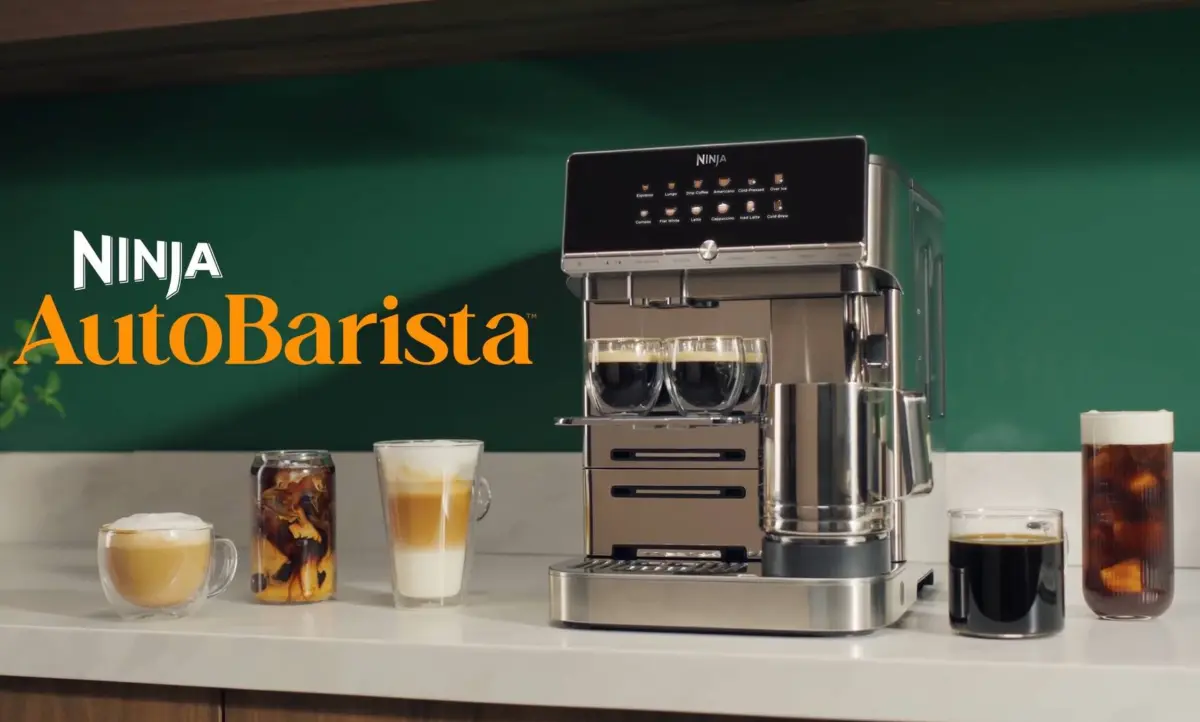
The premium home coffee market has seen a significant shift toward automation as consumers increasingly seek café-quality beverages without the steep learning curve associated with manual espresso machines. SharkNinja, a company historically recognized for its dominance in the blender and air fryer categories, has officially entered this high-stakes arena with the Ninja AutoBarista Pro. Priced at $999.99, this fully automatic machine aims to eliminate the guesswork inherent in traditional espresso preparation, managing complex variables such as grind size, tamping pressure, water temperature, and extraction timing through a centralized, intelligent system.
The AutoBarista Pro is designed to function as a comprehensive "coffee shop in a box," capable of producing 13 different drink varieties at the press of a button. These range from standard drip coffee to more intricate milk-based beverages like cappuccinos and flat whites. The machine’s primary innovation lies in its "Grind iQ" technology, a proprietary system that automates the calibration process based on the specific characteristics of the coffee beans being used.
The Evolution of Automation: Understanding Grind iQ Technology
For decades, the "perfect shot" of espresso has been the domain of skilled baristas who understand the delicate balance between the "dialing in" process and environmental factors. Traditional espresso preparation requires the user to manually adjust the grinder to account for the roast profile, bean freshness, and even humidity. The Ninja AutoBarista Pro seeks to democratize this process.
The Grind iQ system utilizes sensors and algorithms to detect bean size, roast type, and freshness. Upon analysis, the machine auto-calibrates the grind size, weight, and dosage for each specific brew. This technology is particularly relevant for the "set it and forget it" consumer demographic. As users customize their drinks—adjusting the number of shots, the intensity of the flavor, or the temperature—the Grind iQ system recalibrates the extraction parameters in real-time to maintain consistency.
This level of automation positions the AutoBarista Pro as a direct competitor to high-end European manufacturers such as De’Longhi, Jura, and Breville. While those brands often emphasize manual control for the enthusiast, Ninja’s approach is rooted in removing the barrier to entry for the average household, effectively acting as "steer assist" for the brewing process.
Design and Multifunctionality: A Dual-Sided Approach
The architecture of the AutoBarista Pro reflects Ninja’s broader strategy of multi-use kitchen appliances. The machine is divided into two primary functional zones. On the left side, the unit houses the brewing head and the integrated grinder, where it pulls espresso shots or brews standard drip coffee. On the right side, an integrated automatic milk frother works in tandem with a provided stainless steel pitcher.
The frothing system is notably sophisticated, offering settings for both temperature and foam density. Recognizing the rising popularity of alternative milks, Ninja has included a dedicated setting for plant-based milks, which often require different steaming temperatures and aeration techniques than cow’s milk to achieve a micro-foam consistency.
Beyond standard hot beverages, the AutoBarista Pro features a "Cold Pressed Espresso" mode. While traditional cold brew requires 12 to 24 hours of steeping, the Ninja system utilizes a high-pressure extraction method to produce a cold-pressed concentrate in minutes. This feature is aimed at the growing iced coffee market, though it requires the user to provide ice to achieve a truly chilled beverage, as the extraction process itself remains lukewarm.
Maintenance and Operational Realities
Despite the high level of automation in the brewing process, the AutoBarista Pro requires a rigorous maintenance schedule to ensure beverage quality and mechanical longevity. The machine is programmed to perform self-rinsing cycles both before and after every drink preparation. This feature is intended to prevent the buildup of coffee oils and residues, which can turn rancid and affect the flavor profile of subsequent cups.
However, this frequent rinsing leads to a practical challenge: the drip tray capacity. Because the machine dispenses water into the tray during every cycle, it fills rapidly. For households with multiple coffee drinkers, emptying the tray can become a daily necessity. Reports indicate that the tray’s design, while sleek, is prone to overflowing if not monitored closely, potentially leading to spills of coffee-tinted water on kitchen surfaces.

Furthermore, the machine’s "knock box"—the internal container that collects spent espresso pucks—presents its own set of maintenance requirements. Because the spent pucks are moist and stored in a dark, enclosed environment within the machine, they are highly susceptible to mold growth if not emptied and cleaned every 24 to 48 hours. This highlight’s a common paradox in the super-automatic coffee machine market: while the brewing is automated, the sanitation remains a manual and essential task for the user.
Strategic Market Context: SharkNinja’s Rapid Expansion
The launch of the AutoBarista Pro is part of a larger, aggressive expansion strategy by SharkNinja. In recent years, the company has successfully pivoted from being a floor-care specialist (Shark vacuums) to a powerhouse in the small kitchen appliance sector (Ninja). This trajectory has seen the company enter the outdoor grilling market, the carbonated water market, and even the microwave category.
The $999.99 price point of the AutoBarista Pro marks a significant move into the "luxury" or "prosumer" segment. Historically, Ninja products have been positioned as high-value, mid-priced alternatives to premium brands. By pricing a coffee machine at nearly $1,000, SharkNinja is signaling its confidence in its ability to compete on technological merit rather than just price.
Market analysts note that the global espresso machine market is projected to grow significantly through 2030, driven by the "premiumization" of at-home coffee consumption. As consumers become more educated about coffee quality through social media and specialty shops, they are increasingly willing to invest in hardware that replicates the café experience.
Competitive Analysis and Consumer Suitability
When compared to other options on the market, the AutoBarista Pro occupies a unique niche. It is significantly more expensive than pod-based systems like Nespresso, which offer convenience but higher per-cup costs and greater environmental waste. Conversely, it is priced similarly to entry-level semi-automatic machines like the Breville Barista Express, which require the user to learn the art of tamping and manual milk steaming.
The AutoBarista Pro is explicitly not intended for the "coffee purist" or "snob" who finds joy in the ritual of the pour-over or the precision of a manual lever machine. Instead, it targets the high-end consumer who values time and consistency. The integration of five distinct tools—a drip coffee maker, an espresso machine, a milk frother, a grinder, and a food scale (via the dosage sensors)—into one footprint is a compelling proposition for those with limited counter space or those who want a streamlined morning routine.
Broader Implications for the Coffee Industry
The rise of machines like the AutoBarista Pro suggests a shifting landscape for the specialty coffee industry. As automation becomes more capable of producing "good enough" or even "very good" espresso, the role of the traditional coffee shop may shift more toward the social and experiential rather than purely the functional.
However, the high entry price remains a barrier. At $1,000, the machine represents a long-term investment. For a consumer spending $5 a day at a coffee shop, the machine would pay for itself in approximately 200 days, assuming the cost of beans and milk is accounted for. For the occasional coffee drinker or the cold-brew enthusiast who is satisfied with a $60 immersion brewer, the AutoBarista Pro may be an over-engineered solution.
Conclusion
The Ninja AutoBarista Pro stands as a testament to the current state of kitchen technology, where sensors and software are increasingly tasked with replicating human craft. By automating the most difficult aspects of espresso production through its Grind iQ system, SharkNinja has created a machine that offers a high degree of versatility and ease of use.
While maintenance requirements such as the frequent emptying of the drip tray and the cleaning of the knock box serve as a reminder that "fully automatic" does not mean "maintenance-free," the machine’s ability to deliver a wide array of beverages with minimal user intervention is a significant achievement. For the segment of the population that desires café-quality lattes and espressos without the labor of a barista, the AutoBarista Pro offers a sophisticated, if expensive, solution to the morning caffeine ritual. As SharkNinja continues to diversify its portfolio, the success of the AutoBarista Pro will likely determine the company’s future standing in the competitive luxury appliance market.
