

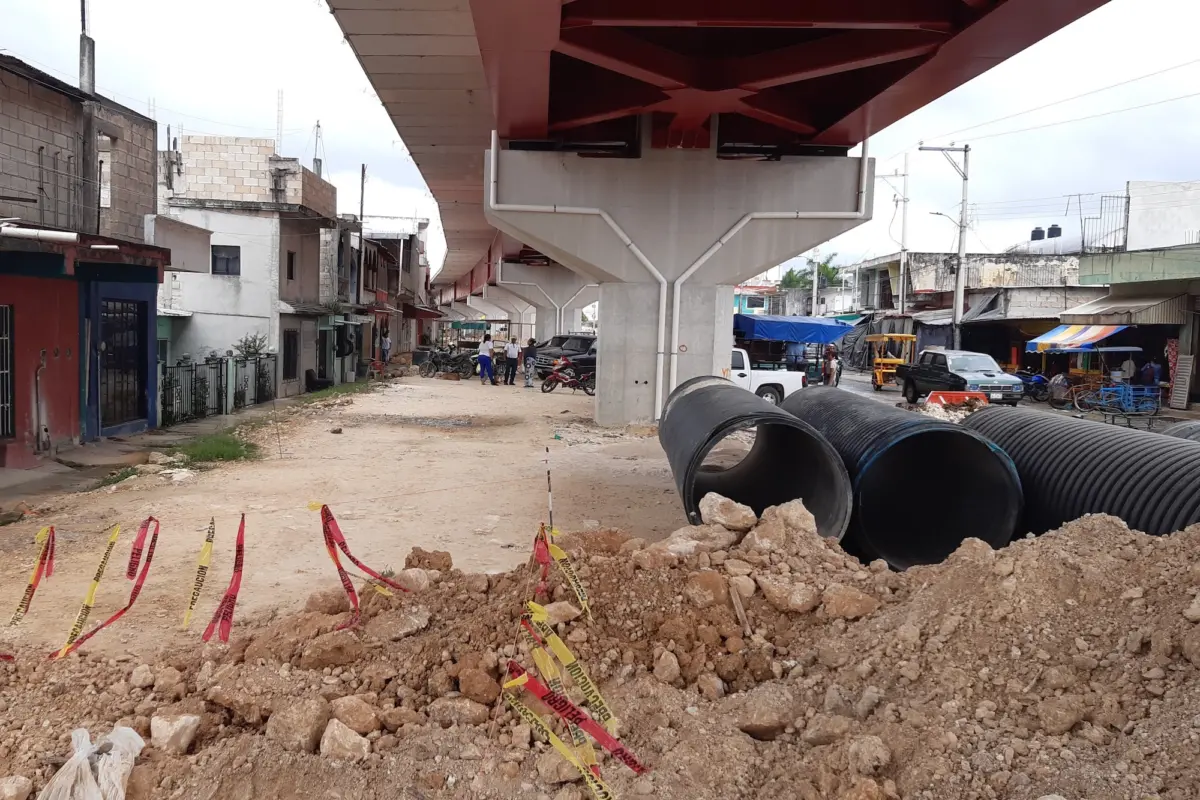
The Yucatán Peninsula, a region defined by its dense tropical jungles, ancient limestone caverns, and the remnants of a majestic civilization, was promised a new era of prosperity with the arrival of the "Tren Maya." Envisioned as a 1,000-mile circuit connecting the world-famous resorts of Cancún and Tulum to the secluded, impoverished heartlands of the Maya people, the project was sold to the Mexican public as a tool for social justice. However, nearly three years after its grand inauguration in December 2024, the reality on the ground has diverged sharply from the government’s initial rhetoric. Far from being an engine of egalitarian growth, the Maya Train has become a symbol of skyrocketing costs, underutilized infrastructure, and a deepening environmental and security crisis that threatens the very communities it was intended to save.
A Vision of Connectivity and the Rush to Completion
The Maya Train was the flagship infrastructure project of former President Andrés Manuel López Obrador, announced almost immediately after his 2018 electoral victory. The ambition was staggering: to build a high-speed rail network through some of the most difficult terrain in North America in record time. At its inauguration, López Obrador hailed the project as a "monumental work" without parallel in the world, emphasizing its role in bringing tourism dollars from the coast to inland archaeological sites like Palenque and Calakmul.

To achieve this, the Mexican government bypassed traditional bureaucratic hurdles, placing the military in charge of construction and management. This decision was intended to ensure speed and prevent corruption, but critics argue it also shielded the project from transparency and rigorous environmental oversight. The timeline was aggressive, with construction moving 600 percent faster than similar international rail projects. This haste, according to engineers and urban planners, led to a "planning-as-you-go" approach that would later haunt the project’s operational efficiency and financial viability.
The Financial Toll: From $8.5 Billion to a $30 Billion Burden
One of the most glaring failures of the Maya Train is its runaway budget. Initially pitched to taxpayers with a price tag of approximately US$8.5 billion, the final cost ballooned to nearly US$30 billion by the time the full circuit was operational. According to data from the Mexican Institute for Competitiveness (IMCO), the budget more than tripled due to constant rerouting, logistical challenges in the jungle, and the high costs of military-led procurement.
The economic impact on the region has been equally volatile. While the construction phase provided a temporary "sugar high" for the local economy—Quintana Roo saw a 13 percent growth in economic activity in 2023—the boom was unsustainable. By 2024, as construction crews departed, the state fell into a recession. In the first half of 2025, economic activity in Quintana Roo plummeted by more than 9 percent. Experts note that much of the construction wealth did not stay in the region; many workers were brought in from other parts of Mexico, sending their wages back to their home states rather than investing in the local Yucatán economy. Furthermore, the influx of high-earning outside workers drove up the cost of food and housing, leaving permanent residents with a higher cost of living and fewer long-term employment prospects.

The Ridership Crisis: Why the Trains Run Empty
A rail system’s success is measured by its utility, and by this metric, the Maya Train is struggling. Initial projections estimated that the train would serve approximately 74,000 passengers daily. However, government data from 2025 revealed an average of only 3,320 daily users—less than 5 percent of the target.
The reasons for this "white elephant" status are rooted in poor urban planning. To avoid local resistance or complex land negotiations, several key stations were moved from city centers to the outskirts. In Mérida and Campeche, stations are located kilometers away from the areas tourists actually visit and where locals live. For a worker in the hotel zone of Cancún, taking the train often requires an expensive and time-consuming taxi or bus ride just to reach the station, making the train less convenient than existing highway transportation.
Price is another significant barrier. A ticket from Mérida to Cancún costs roughly MX$489 (about US$28), which exceeds the daily minimum wage for many workers in the region. For the impoverished Maya communities in the interior, the train is a luxury they can see but cannot afford. Consequently, the carriages often travel through the jungle nearly empty, with critics pointing out that the fuel costs alone for a single trip far exceed the revenue generated from the handful of passengers on board.

Social Displacement and the Rise of Insecurity
Perhaps the most tragic irony of the project is its impact on the safety of the region. The Yucatán Peninsula was historically one of the safest areas in Mexico, a "peaceful oasis" largely insulated from the cartel violence seen in the north. Residents and community leaders now report that the train has acted as a corridor for organized crime.
Pedro Uc, a prominent Mayan community leader, has observed a chilling transformation in his village. He links the new accessibility provided by the train and its associated infrastructure to a surge in extortion, abductions, and violent crime. In the state of Yucatán, crime rates jumped by 50 percent in 2026 compared to the previous year. Uc describes the arrival of the train as bringing "misery and fear" rather than the promised prosperity.
Additionally, the promise of "integrated development"—new schools, hospitals, and improved water and power infrastructure for indigenous villages—has largely gone unfulfilled. While the tracks are polished and the stations are modern, the villages adjacent to them often still struggle with intermittent electricity and a lack of clean running water.

Environmental Devastation: Perforating the Soul of the Yucatán
The environmental cost of the Maya Train is a point of international concern. To clear the path for the tracks, an estimated 7 million trees were felled, fragmenting one of the most important biological corridors in the Americas. This deforestation threatens the habitat of the jaguar and other endangered species.
However, the damage beneath the surface is even more permanent. The Yucatán sits on a karst landscape—a porous limestone plateau honeycombed with the world’s most extensive underground river systems and sacred cenotes (sinkholes). To support the weight of the trains over this unstable ground, engineers drove thousands of giant steel and concrete pylons directly into the subterranean caverns.
Environmentalists, such as industrial engineer Guillermo Christy, have documented the perforation of at least 130 caves. This process has not only contaminated pristine freshwater sources with construction runoff but has also physically destroyed ancient geological formations that took millions of years to grow. Furthermore, these caves are rich in archaeological heritage, containing ice-age animal remains and ancient human artifacts. By rushing the construction, the government has likely destroyed or buried countless undiscovered historical sites.

The Failure of Consultation and Top-Down Planning
The Maya Train project has been criticized by the United Nations and various human rights organizations for failing to adhere to international standards for indigenous consultation. While the government held a "popular vote" on the project, critics argue the process was flawed. The vote was conducted nationally, allowing people in Mexico City or Monterrey to decide the fate of the Yucatán, rather than focusing exclusively on the indigenous communities whose land was being seized.
The UN High Commissioner for Human Rights raised concerns as early as 2022, noting that indigenous groups were not provided with "free, prior, and informed consent." Many communities felt pressured into agreeing to the project with promises of basic services—services that should be a right of citizenship, not a bargaining chip for a railway. Javier Becerril, an economics professor at the Autonomous University of Yucatán, argues that the "top-down" approach of the federal government failed to account for the actual needs of the people. "When designing projects, it is very important to ask ordinary people what their concerns are," Becerril noted. "Doing it in reverse fails to close the gap between the haves and the have-nots."
Broader Implications and Lessons for the Future
As the Maya Train continues its daily runs through the jungle, it serves as a cautionary tale for large-scale infrastructure development. The project demonstrates that speed and political legacy-building are poor substitutes for comprehensive urban planning and environmental stewardship.

The long-term implications are daunting. With low ridership and high operational costs, the train will require massive federal subsidies for the foreseeable future, draining resources that could have been used for the very schools and hospitals the Maya communities were promised. The environmental damage to the aquifer is irreversible, potentially threatening the water security of the peninsula in an era of climate change.
For Mexico, the lesson is one of "expert-led" versus "ego-led" development. As former project engineer Hector Hernández put it: "Let the experts do their job." The Maya Train, while a feat of engineering speed, stands as a reminder that a "monumental work" is only truly great if it serves the people and the land it occupies. Until the government addresses the accessibility, security, and environmental flaws of the system, the Tren Maya will remain a silver streak of modernity through a landscape of broken promises.
