

In a significant legal rebuke to the White House’s immigration enforcement strategies, a federal judge in Massachusetts ruled on Wednesday that the Trump administration acted in direct violation of a standing court order by attempting to deport a group of migrants to South Sudan. District Court Judge Brian Murphy issued the ruling following an emergency hearing, asserting that the Department of Homeland Security (DHS) failed to provide the individuals with a meaningful opportunity to contest their removal or raise concerns regarding potential persecution in a third country. The ruling highlights an intensifying judicial conflict over the administration’s use of "third-country" deportations, a practice where individuals are sent to nations other than their country of origin.
The court’s decision centers on a group of eight migrants who were processed for removal earlier this week. According to Department of Homeland Security records, the group included nationals from Myanmar, Laos, Vietnam, Cuba, Mexico, and South Sudan. While the administration defended the removals by citing the violent criminal histories of several individuals involved—including convictions for murder and sexual assault—Judge Murphy focused his legal scrutiny on the procedural methods used to execute the deportations. He concluded that the administration’s haste and lack of transparency constituted a clear breach of a preliminary injunction issued in March, which was designed to protect the due process rights of non-citizens facing removal to unfamiliar territories.
The Violation of the Judicial Injunction
The legal tension began in March when Judge Murphy issued a broad injunction preventing the federal government from deporting individuals to any country other than their own without first allowing them to consult with legal counsel and present claims of potential torture or persecution. This order was intended to ensure that the U.S. adheres to international non-refoulement obligations, which prohibit the return of individuals to countries where they face a high risk of being subjected to human rights abuses.
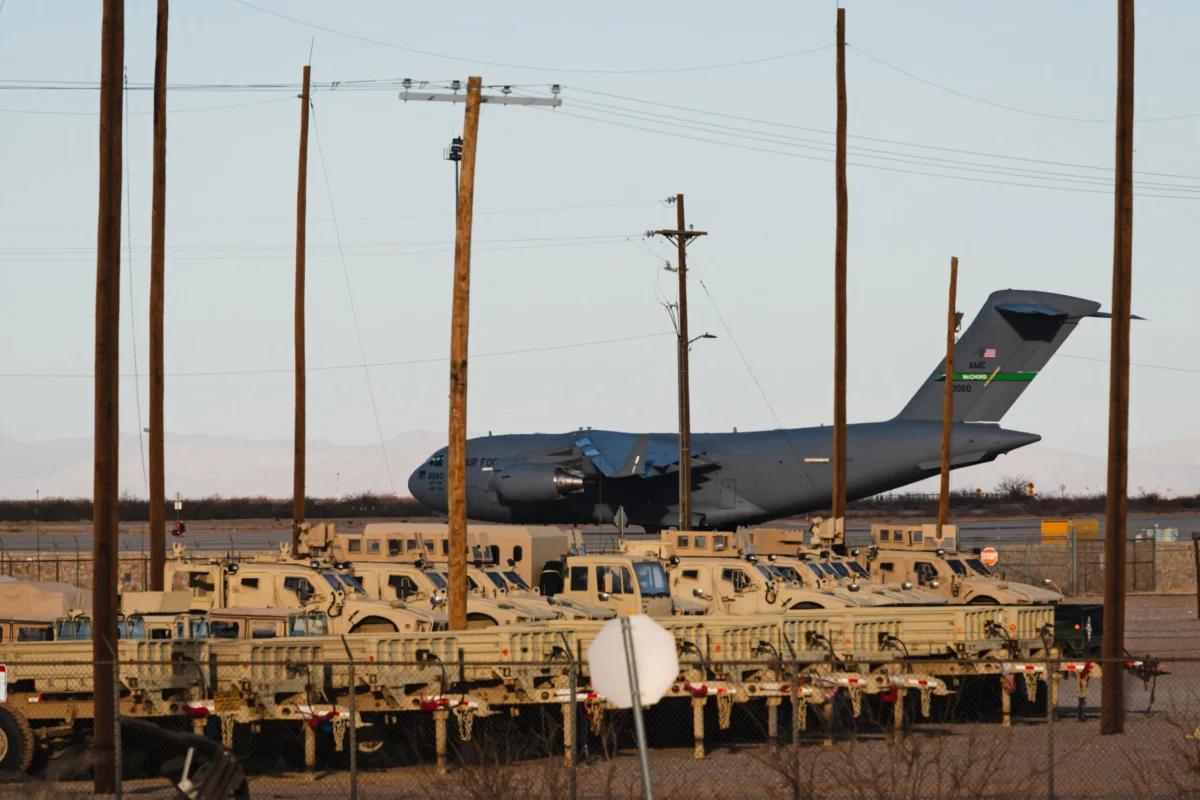
During Wednesday’s hearing, Judge Murphy expressed profound frustration with the government’s actions, stating that the sequence of events leading to the Tuesday morning flight was "unquestionably violative" of the court’s standing order. The judge revealed that the migrants were only notified of their final destination late Monday evening, well outside of standard business hours. By the time legal advocates could have intervened, the migrants were already being transported from an Immigration and Customs Enforcement (ICE) facility to Biggs Army Airfield in Fort Bliss, El Paso.
The timeline provided by the court indicated that the individuals were removed from their holding facilities as early as 9:00 a.m. on Tuesday. Judge Murphy noted that it was "impossible" for the individuals to have had a meaningful opportunity to object to their deportation to a third country under such a compressed timeframe. "The department’s actions," Murphy said, "represent a disregard for the procedural safeguards this court deemed necessary to protect basic human rights."
Chronology of the Deportation Operation
The operation began to unfold publicly on February 13, 2025, when a United States Air Force Boeing C-17, a massive military transport aircraft typically used for heavy logistics, was pictured at Biggs Army Airfield. The use of military-grade aircraft for deportation flights has become a hallmark of the current administration’s "Operation Remigration," reflecting a shift toward high-capacity, rapid-response removal tactics.
On Monday night, the eight migrants—identified by DHS as Enrique Arias-Hierro, Jose Manuel Rodriguez-Quinones, Thongxay Nilakout, Jesus Munoz-Gutierrez, Dian Peter Domach, Kyaw Mya, Tuan Thanh Phan, and Nyo Myint—were reportedly informed they would be sent to South Sudan. This news came as a shock to several of the men, who had no personal or ancestral ties to the East African nation.
By Tuesday morning, the flight departed from Texas. Immigration attorneys, realizing their clients were being moved, filed emergency motions to halt the flight, but the aircraft was already airborne. Throughout Wednesday morning, government attorneys remained tight-lipped about the flight’s progress. While they confirmed the plane had landed, they declined to specify the exact location, citing security concerns. This lack of transparency led to accusations from defense attorneys that their clients had been "disappeared" by the state.
Geopolitical Context: Why South Sudan?
The choice of South Sudan as a destination for migrants from Southeast Asia and the Caribbean has drawn sharp criticism from human rights organizations and legal experts. South Sudan is currently grappling with extreme political instability and a humanitarian crisis. Although a 2018 power-sharing agreement between President Salva Kiir and Vice President Riek Machar officially ended a five-year civil war, the peace remains fragile. Reports from early 2025 suggest that violent clashes between rival factions have surged, leading many international observers to fear the country is on the brink of another full-scale civil conflict.
The U.S. State Department’s own travel advisory for South Sudan is currently at "Level 4: Do Not Travel," the highest warning level. The advisory cites rampant crime, kidnapping, and armed conflict. Furthermore, in March, the State Department ordered the departure of all non-emergency U.S. government employees from the country due to the deteriorating security situation.
Legal advocates argue that sending individuals from countries like Vietnam or Myanmar to South Sudan is not only a violation of due process but also a potential death sentence. "There is no logical or legal basis for sending a Vietnamese national to a conflict zone in Africa," said Jonathan Ryan, a San Antonio-based immigration attorney representing Nyo Myint. "The government is treating human beings as cargo to be dumped in the most convenient or intimidating location possible."
The Legal and Human Rights Implications
The ruling by Judge Murphy touches on a fundamental debate within American jurisprudence: the extent of executive power in matters of national security and immigration versus the constitutional requirement of due process. The Trump administration has consistently argued that the executive branch has broad authority to remove non-citizens, particularly those with criminal records, to ensure public safety.
DHS officials emphasized that the individuals on the South Sudan flight were not "innocent asylum seekers" but "violent offenders." During a Wednesday morning press briefing, a DHS spokesperson stated, "The American people expect their government to prioritize the removal of individuals who have committed heinous crimes, including murder and sexual assault. We are committed to using every tool at our disposal to ensure these individuals are no longer on U.S. soil."
However, civil liberties groups argue that the "criminal" label does not negate the government’s obligation to follow the law. The American Civil Liberties Union (ACLU) and other organizations have pointed out that even individuals with criminal records are protected under the Convention Against Torture. By bypassing the courts, the administration is accused of creating a "shadow system" of justice where executive whim replaces established legal procedures.
"Due process is not a privilege for the popular; it is a right that protects the integrity of our entire legal system," attorney Jonathan Ryan stated. "When the government decides it can ignore a judge’s order because it doesn’t like the people involved, we are no longer a nation of laws."
Previous Judicial Challenges and Patterns
This is not the first time Judge Murphy has blocked the administration’s attempts at third-country removals. Earlier this month, he intervened to stop a planned deportation of individuals from the Philippines, Vietnam, and Laos to Libya. In that case, the judge cited similar concerns regarding the safety of the destination and the lack of procedural transparency.
The recurring nature of these incidents suggests a deliberate strategy by the administration to test the limits of judicial oversight. By conducting flights during non-business hours and using military airfields, the administration often manages to move individuals out of the country before a judge can intervene. This "fait accompli" approach forces the courts to react to events that have already occurred, rather than preventing potential violations of the law.
In the case of Nyo Myint, one of the migrants on the recent flight, his whereabouts remain unconfirmed. While there are some indications he may have been diverted to his home country of Myanmar (Burma) following the legal outcry, his legal team has received no official confirmation. "I have not heard from my client," Ryan said. "We cannot simply take the government’s word for it when they have already proven they are willing to violate a direct court order."
Broader Impact on Immigration Policy
The ruling is expected to have immediate repercussions for ICE’s air operations. With Judge Murphy’s latest finding of a violation, legal advocates are likely to seek more stringent oversight and perhaps even contempt of court charges against high-ranking DHS officials.
Furthermore, this case may embolden other federal judges to issue similar injunctions across the country. If the "third-country" deportation model is successfully challenged in multiple circuits, it could effectively dismantle one of the administration’s primary tools for expedited removal.
From a diplomatic perspective, the practice of sending non-nationals to third countries requires the cooperation of the receiving nation. It remains unclear what agreements, if any, the U.S. has reached with the government of South Sudan to accept these individuals. Critics argue that such "deals" often involve financial incentives or political concessions that are shielded from public view, raising further questions about the ethics and legality of the policy.
Conclusion and Future Outlook
As the legal battle continues, the fate of the eight migrants remains in limbo. While the government attorneys confirmed they are still in ICE custody despite the plane having landed, the lack of a disclosed location continues to fuel concerns about their safety and legal access.
Judge Murphy’s ruling serves as a stark reminder of the judiciary’s role as a check on executive overreach. In his closing remarks on Wednesday, the judge emphasized that the government’s desire for efficiency in immigration enforcement does not grant it the authority to bypass the Constitution. The coming weeks will likely see further litigation as the court determines what sanctions or corrective measures should be taken in response to the administration’s "unquestionable" violation of the law.
For now, the C-17 flights remain a potent symbol of a divided nation, where the push for strict border enforcement frequently collides with the long-standing legal traditions of due process and international human rights. The outcome of this case will likely set a precedent for how—and where—the United States deports those it deems unwelcome.
