

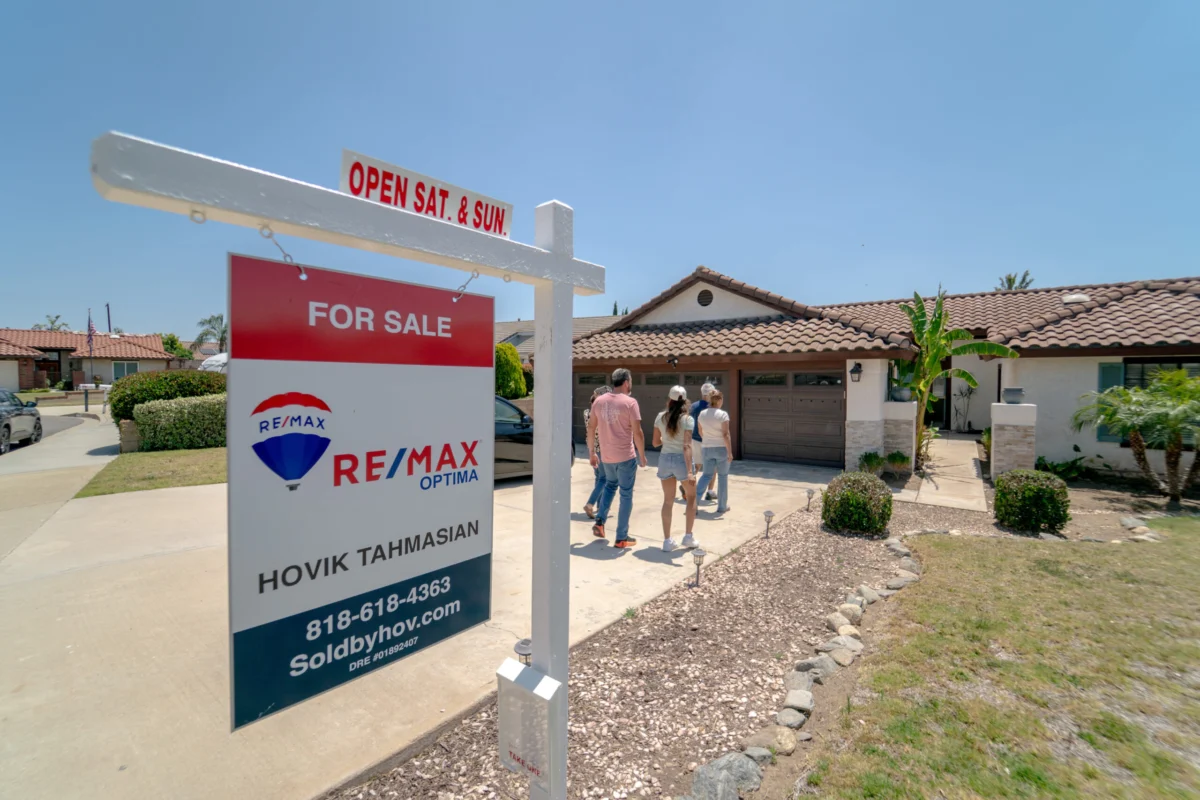
Sales of previously owned homes experienced a significant and unexpected rebound in May, climbing to their highest level since December, as a slight moderation in mortgage rates in April breathed new life into the housing market. This resurgence suggests a delicate rebalancing act underway, where even marginal improvements in affordability metrics can unlock pent-up demand. The National Association of Realtors (NAR) reported that existing home sales in May rose by 3.2% from April, reaching a seasonally adjusted annual rate of 4.17 million units. This figure comfortably surpassed economists’ expectations, who had projected a gain of less than 1%. Furthermore, sales were up 3.2% compared to May of the previous year, underscoring the renewed momentum in the market.
This uptick in sales primarily reflects contracts signed in April, a period when mortgage rates saw a modest decline following a sharp increase earlier in March. The earlier March volatility was influenced by a confluence of factors, including stronger-than-expected inflation data and broader geopolitical uncertainties impacting bond markets, which directly influence mortgage rates. Lawrence Yun, chief economist for the Realtors, highlighted the role of improving affordability in driving this momentum. He noted, "Even with mortgage rates ticking up compared to earlier in the year, they remain lower than a year ago and are essentially at the long-term historical average. Income gains are also outpacing home price growth by a small margin in most parts of the country." This confluence of factors—stable rates relative to the previous year and income growth—is providing a crucial lifeline to prospective homebuyers.
The Economic Backdrop and Mortgage Rate Dynamics
The housing market’s performance is inextricably linked to the broader economic environment, particularly the Federal Reserve’s monetary policy. For much of the past two years, the Fed has been aggressively hiking its benchmark federal funds rate to combat persistent inflation, which soared to multi-decade highs. These rate hikes, while not directly setting mortgage rates, significantly influence the yields on U.S. Treasury bonds, particularly the 10-year Treasury, to which fixed mortgage rates are closely tied. As the Fed tightened monetary policy, mortgage rates surged, reaching over 8% in late 2023, levels not seen in over two decades. This dramatic increase priced many potential buyers out of the market and severely curtailed transaction volumes.
The slight pullback in mortgage rates in April, which set the stage for May’s sales rebound, was a direct consequence of shifting market expectations regarding the Fed’s future actions and evolving inflation data. After a period of aggressive hikes, the Fed signaled a more cautious approach, and some economic indicators suggested that inflationary pressures might be easing, albeit slowly. This led to a temporary dip in bond yields, which translated into slightly lower mortgage rates, providing a narrow window of opportunity for buyers. While rates have since shown some renewed upward pressure, the brief respite was enough to stimulate activity, particularly among buyers who had been sidelined.
Chronology of Market Fluctuations
The journey of the housing market over the past few years provides critical context for May’s rebound. The pandemic era (2020-2021) witnessed an unprecedented boom, fueled by ultra-low mortgage rates, remote work trends, and a desire for more space. This led to record-high home prices and frenzied bidding wars. However, as the Fed began its tightening cycle in early 2022, mortgage rates soared, abruptly cooling the market. Sales volumes plummeted, and while prices didn’t crash nationwide, their growth decelerated significantly.
- Early 2022: Fed begins aggressive rate hikes. 30-year fixed mortgage rates, which had been below 3% for extended periods, start climbing rapidly.
- Late 2022 – Early 2023: Mortgage rates hover in the 6-7% range. Existing home sales drop significantly, as buyers grapple with reduced affordability. Inventory remains historically low due to the "lock-in effect," where homeowners with low-rate mortgages are reluctant to sell and buy a new home at a much higher rate.
- Mid-2023: A brief dip in rates provides some relief, leading to minor upticks in sales, but the market remains constrained.
- Late 2023: Mortgage rates peak above 8%, pushing affordability to its lowest point in decades. Market activity slows to a crawl, with existing home sales hitting multi-year lows.
- Early 2024: Rates begin to moderate slightly as inflation shows signs of cooling and the Fed signals a potential pause or future cuts. This instills a cautious optimism.
- March 2024: Mortgage rates experience a sharp, albeit temporary, increase, influenced by stronger-than-expected inflation reports and global market dynamics, briefly dampening buyer sentiment.
- April 2024: Rates pull back marginally from their March highs, creating the window that led to the surge in May closings. This demonstrated the market’s sensitivity to even small rate movements.
- May 2024: Existing home sales officially report a significant rebound based on April’s contract signings, indicating that a critical mass of buyers re-entered the market as rates eased.
Inventory Challenges and Price Resilience
Despite the surge in sales, the underlying challenge of limited inventory continues to define the housing market. In May, inventory rose by a modest 3.3% month-over-month, reaching 1.55 million units for sale. This figure was up slightly less than 1% from a year ago. At the current sales pace, this represents a 4.5 months’ supply. For context, a balanced market, one that favors neither buyers nor sellers, is typically characterized by a six-month supply of homes. The persistent shortage means that despite high prices and elevated mortgage rates, competition remains a factor in many markets.
The scarcity of homes for sale is a multifaceted issue. A significant contributor is the aforementioned "lock-in effect," where millions of homeowners are reluctant to sell their properties because they hold mortgages with rates significantly lower than current market offerings. Selling would mean giving up a low rate only to buy a new home at a much higher rate, a financially unappealing proposition for many. Furthermore, new home construction, while increasing, has struggled to fully compensate for the long-term underbuilding that characterized the decade following the 2008 financial crisis. Supply chain disruptions, labor shortages, and rising material costs have also hampered builders’ ability to rapidly expand inventory, especially for entry-level homes.

With supply remaining tight, home prices continue their upward trajectory. The median price of an existing home sold in May reached a record high for the month at $429,300, marking an increase of 1.3% from the previous year. This resilience in prices, even in a high-rate environment, underscores the fundamental imbalance between supply and demand. While price appreciation has slowed significantly from the double-digit gains seen during the pandemic boom, the continued increase poses ongoing affordability challenges, especially for first-time buyers and those in lower income brackets.
Nuances of Affordability and Buyer Demographics
Lawrence Yun’s assertion that "improving affordability is helping drive this momentum" needs to be understood within the context of nuanced market dynamics. While mortgage rates remain elevated compared to the pandemic lows, they are indeed lower than the peaks of late 2023 and are, as Yun noted, closer to the long-term historical average. Crucially, income growth in many parts of the country is now slightly outpacing home price appreciation. This subtle shift, combined with some moderation in prices in certain sub-markets and the slight dip in rates, collectively contributes to a perception of "improving affordability" for a segment of buyers.
The May sales data also revealed significant shifts in buyer demographics and market segmentation. First-time buyers, a crucial segment for a healthy housing market, showed a notable return, making up 35% of sales. This is an increase from 33% in April and a more substantial jump from 30% in May of the previous year. This indicates that the slight improvements in affordability, coupled with a more stable job market, are slowly enabling more new entrants to achieve homeownership.
However, the market’s strength continues to be concentrated at the higher end. Sales of homes priced above $1 million were 11% higher than the year before, illustrating the resilience of the luxury market. This segment often comprises buyers who are less sensitive to mortgage rate fluctuations, either due to higher disposable incomes, larger down payments, or the ability to pay cash. Conversely, sales of homes priced between $100,000 and $250,000 were down 5%, highlighting the persistent affordability crisis for lower and middle-income buyers. This disparity suggests a widening gap in access to homeownership, where the more affluent can navigate the high-rate environment more easily.
Cash sales also remained a significant component of the market, accounting for approximately a quarter of all sales. While slightly down from a year ago, this figure remains elevated compared to historical averages and further underscores the presence of financially strong buyers who can bypass the constraints of mortgage financing. The average time homes spent on the market decreased to 29 days in May, down from 32 days in April, but slightly up from 27 days in May 2023. This suggests a still-active market, where desirable properties, particularly those priced correctly, are moving relatively quickly.
Official Responses and Broader Implications
Lawrence Yun also provided an important insight into the financial health of existing homeowners, stating, "Only 1% of all home sales involved a foreclosure or an underwater situation in which the sale price could not cover the outstanding mortgage balance. This shows that homeowners are on solid financial footing." This statistic is a stark contrast to the pre-2008 housing crisis era, where widespread foreclosures and negative equity fueled a market collapse. The current scenario suggests that despite high prices, most homeowners possess significant equity, providing a buffer against economic downturns and preventing a flood of distressed sales that could destabilize prices.
Industry analysts generally agree that May’s robust sales figures, while encouraging, do not necessarily signal a full return to a pre-tightening market. Many economists caution that the housing market remains exceptionally sensitive to interest rate movements. A sustained period of lower rates would be required to truly unlock significant inventory and bring more buyers into the market, particularly in the lower and middle price tiers. The Federal Reserve’s future decisions regarding interest rates, driven by ongoing inflation data and labor market performance, will therefore continue to be the most critical determinant of the housing market’s trajectory.
The broader implications of this market activity are significant. A more active housing market can boost economic activity through related industries such as construction, renovation, real estate services, and home furnishings. It can also influence consumer confidence, as homeownership is a primary source of wealth for many Americans. However, the persistent challenge of affordability, especially for first-time buyers, remains a concern for long-term economic equity and social mobility. The current environment, characterized by strong demand meeting tight supply, points to a sustained sellers’ market in the near term, with gradual improvements in affordability likely to be incremental rather than transformative. The market’s resilience, despite headwinds, underscores the enduring demand for homeownership in the U.S., even as it navigates a complex economic landscape.
