

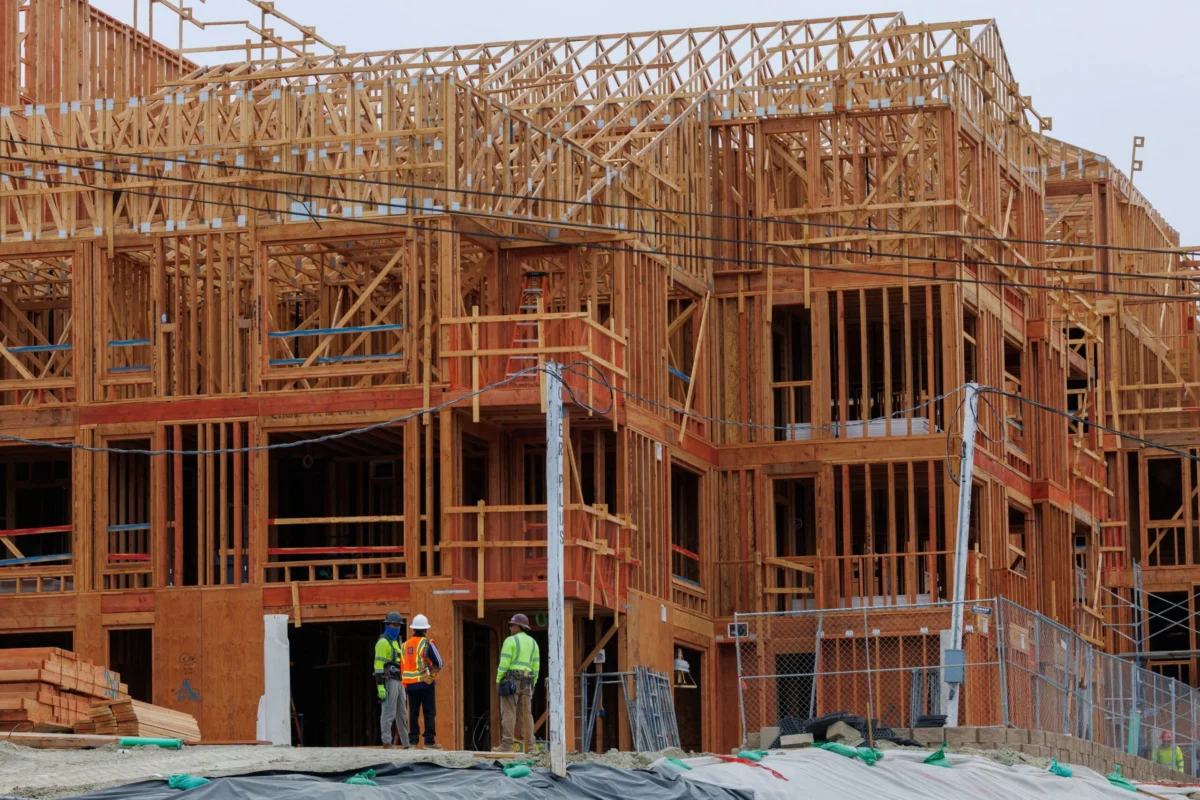
Encinitas, California – America’s housing industry faces a daunting challenge: a severe shortage of homes coupled with a dwindling pool of skilled labor. While the popular imagination might conjure images of humanoid robots replacing construction workers on job sites, the reality on the ground, and in burgeoning off-site factories, points to a more nuanced revolution. Experts contend that the most significant gains from robotics and automation are emerging from targeted applications that prevent errors, streamline coordination, automate repetitive tasks, and move substantial portions of the construction process into controlled factory environments.
The Dual Crisis: Housing Deficit Meets Labor Gap
The United States is currently grappling with a housing deficit estimated at roughly 1.2 million homes, a figure highlighted by the National Association of Home Builders (NAHB) in its 2026 Housing Outlook. This shortage, a critical factor contributing to escalating housing costs and diminishing affordability across the nation, has deep roots. Following the 2008 financial crisis, a significant slowdown in new construction persisted for years, creating a cumulative deficit that has proven difficult to overcome. Exacerbating this supply issue are factors like restrictive zoning laws, rising land costs, and a complex web of regulatory hurdles that often delay or increase the cost of new developments.
Compounding this supply-side pressure is a profound skilled labor crisis within the construction sector. At the close of 2025, nearly 300,000 construction jobs remained unfilled. The NAHB further estimates that the industry needs to attract approximately 740,000 new workers annually to account for projected growth, an aging workforce nearing retirement, and the natural attrition of individuals leaving the field. This persistent labor gap is not merely an inconvenience; it carries substantial economic consequences, costing homebuilders an estimated $11 billion each year through increased operational expenses and lost production opportunities. Furthermore, these shortages add an average of two months to the typical construction timeline, further delaying market entry for much-needed housing units.
A Decades-Old Productivity Paradox
Beyond the immediate crises of supply and labor, the construction industry has long struggled with a fundamental issue of productivity. According to Robert Dietz, chief economist for the NAHB, residential construction productivity has seen a meager 16% increase since 1993. This stands in stark contrast to the more than 50% gains observed across the overall economy during the same period. This "productivity paradox" in construction stems from several factors, including a highly fragmented industry structure, a historical reliance on manual processes, and an inherent resistance to adopting new technologies. Each project, often bespoke in design and execution, presents unique challenges that traditionally hinder the kind of standardization and repetitive efficiency seen in other manufacturing sectors.
Despite the undeniable pressures, Dietz maintains a cautious outlook on the immediate impact of robotics. "It’s too early," he stated when asked if robotics is already meaningfully improving homebuilding productivity. He emphasized that robotics alone cannot be a "single, simple, scalable solution," pointing to a broader constellation of constraints that include labor availability, regulatory costs, land access, supply chain disruptions, and financing challenges. The current reality suggests that while robotics can deliver meaningful gains on individual projects, these improvements remain too narrowly focused and too limited in scale to substantially alleviate the national housing shortage on their own.
The Nuance of Construction Robotics: Beyond the Humanoid Myth
The popular image of construction robotics often diverges sharply from its current practical application. Patrick Murphy, chief investment officer of Florida-based Coastal Construction and managing director of Renco USA, directly addresses this misconception: "The biggest misconception is people imagining humanoid robots walking around job sites hanging drywall and painting. We’re years out before we’re in that world."
Instead, the most impactful advancements are occurring in "narrower applications." These include machines designed to prevent mistakes, optimize coordination among different trades, and automate highly repetitive tasks. A significant shift is also underway with the movement of more construction processes into controlled factory environments, where automation can thrive.
Why Construction Sites Defy Easy Automation
The dynamic and ever-changing nature of a construction site presents a formidable barrier to widespread robotic deployment. Tessa Lau, founder of Dusty Robotics, a company born from her own frustrations during a home remodel, explains this fundamental difference. Factories are relatively straightforward to automate because robots can perform the same task repeatedly within a fixed, predictable environment. Construction, however, is the inverse; the robot’s workspace is literally being transformed around it on a daily basis.
Murphy echoes this sentiment from a builder’s perspective. Every construction project is a unique undertaking, involving different designs, varying soil conditions, distinct architects, a multitude of subcontractors, diverse materials, and specific owner requirements. This inherent lack of uniformity makes the kind of repetitive, large-scale automation seen in traditional manufacturing extremely difficult to implement.
Vineet Kamat, a University of Michigan professor specializing in construction robotics, confirms that the clearest results are currently found in highly repetitive, well-structured tasks. These include precise layout marking, factory automation, and task-specific applications such as drilling, fastening, and material handling. Kamat stresses that the primary benefits are not necessarily full labor replacement but rather improved precision, a significant reduction in errors, and increased throughput. The crucial question, he notes, is not merely whether a robot can perform a task in a pilot program, but "whether it can do so reliably across varied conditions with a positive business case."
Precision and Error Reduction: The Case of Dusty Robotics

Tessa Lau’s personal experience with construction errors—a plumber installing the wrong fixtures, discovered only after tiling—crystallized her vision for Dusty Robotics. She recognized that the core problem was not necessarily poor workmanship but a breakdown in information transfer between digital plans and the individuals executing the work. To bridge this gap, she developed the FieldPrinter.
Dusty’s FieldPrinter directly translates digital building plans onto the physical floor of a construction site. It can accurately mark the precise locations for walls, plumbing, electrical conduits, and mechanical systems. Beyond simple lines, it can print text, images, and QR codes, ensuring that all trades—framers, electricians, plumbers, HVAC technicians—work from the same, universally understood instructions. This coordination drastically reduces the potential for costly "information mistakes."
Dusty Robotics asserts that a single operator utilizing the FieldPrinter can lay out approximately 10,000 to 15,000 square feet per day, a process up to 10 times faster than traditional manual methods. The impact of this precision is substantial. Global construction giant Skanska, after implementing Dusty’s multi-trade layout system, reported a remarkable 75% reduction in rework and a 35% decrease in its overall layout schedule.
Aaron Love, president and CEO of Oh Snap Layout, is leveraging this technology in Southern California homebuilding, integrating robotic layout with other off-site construction methods like prefabricated wall panels and pre-cut materials. Love emphasizes that merely replacing a worker snapping chalk lines with a robot captures only a fraction of the potential benefits. The true gains emerge when the entire ecosystem of trades—framers, electricians, plumbers, and HVAC contractors—operates from a single, coordinated layout. This synchronized approach minimizes duplicated effort and the time-consuming back-and-forth communication that often plagues multi-trade projects.
An illustrative example is RapidShell, a homebuilding system developed by Reliable Wholesale Lumber. This system combines Dusty’s robotic layout with pre-cut material packages, prefabricated wall panels, stairs, and other components prepared off-site. Love reports that this integrated process has dramatically cut shell construction times from approximately 21 days to a mere 11 to 12 days. However, Love also acknowledges that builders are still quantifying the full extent of these efficiencies across the entire construction process. Achieving the maximum benefit requires widespread coordination and buy-in from multiple trades, and the industry is still in a "prove-it phase," gathering comprehensive data to solidify the hard numbers on all potential savings.
The Factory Floor: Japan’s Blueprint for Off-Site Construction
The most significant near-term gains in construction automation, particularly for residential housing, are not happening on bustling job sites but within highly controlled factory environments. Driven by an aging workforce and a critically shrinking labor pool, Japan has emerged as a global vanguard in residential construction robotics. Japanese developers have embraced a model that treats homebuilding much like an advanced automotive assembly line, constructing up to 80% of a home entirely by robots inside specialized factories before final on-site assembly.
Homebuilding giants like Sekisui Heim exemplify this approach, utilizing advanced automation for welding, structural framing, and material handling within their plants. At one of its factories, the deployment of industrial robots increased production from 55 to 65 housing units per day while simultaneously reducing the number of human operators by 20, according to Kawasaki Robotics, a key equipment supplier. Sekisui Heim estimates that its substantial investment in robotics will achieve a full return within approximately three years, underscoring the compelling economic case for this model.
This Japanese model offers a compelling glimpse into where the greatest breakthroughs may emerge in the U.S. "It’s a little bit less sexy," Murphy concedes regarding factory automation, "but we are seeing some nice breakthroughs." He points to the increasing adoption of factory-built wall systems and prefabricated bathroom, kitchen, and laundry pods as promising examples.
Murphy, through his role as managing director of Renco USA, is at the forefront of this shift. Renco USA utilizes a composite structural building system whose components are manufactured at an automated facility in Palm Beach County, Florida. This facility has the capacity to produce enough material for roughly 7,000 homes annually. Murphy highlights that Renco structures can be erected in approximately one-sixth the time required for traditional wood, concrete, or metal framing, leading to overall building schedules being reduced by roughly 30% to 40%.
Beyond the direct speed of assembly, factory-built components unlock further efficiencies. When a room designed to be precisely 10 feet by 10 feet is manufactured to those exact dimensions, subsequent components like windows, doors, cabinets, and tiles can be fabricated in advance with absolute certainty of fit. This precision eliminates on-site adjustments and waste. "Time is money," Murphy emphasizes. "Shorter schedules mean lower financing costs and fewer expenses associated with keeping a job site operating."
However, the advantages of prefabrication are contingent on design stability. Murphy explains that if an owner makes changes to dimensions, fixtures, or finishes, manufacturers may need to redesign and reprogram their automated systems, thereby eroding the efficiencies gained from repetition. Consequently, projects with standardized, repeated designs—such as tract housing developments and multi-unit residential complexes—are likely to be the first to benefit at scale from factory automation and prefabrication.
The Evolving Landscape: Future Outlook and the Enduring Role of Skilled Labor
Looking ahead, Vineet Kamat, professor of construction management and sustainability at the University of Michigan, anticipates that robotics will contribute to increased housing output over the next five to ten years. However, he foresees this growth driven by targeted productivity gains rather than a complete overhaul of the industry. Factory automation, prefabrication, and robotic layout systems are expected to advance most rapidly, while job-site robots will likely spread first in applications involving highly repetitive, physically demanding, or precision-sensitive tasks.
Even as automation advances, the need for skilled construction workers is not expected to disappear. Instead, the nature of these roles will likely evolve. Workers may transition from manual labor to supervising, programming, and maintaining robotic systems. Patrick Murphy remains optimistic about the future of traditional trades. "I think the blue-collar jobs are going to have probably the best decade they’ve ever had," he asserts. "The welders, the electricians, the plumbers – where the rubber meets the road in construction – we’re going to have humans there doing that for some time."
The integration of robotics and automation into the housing industry represents a critical step towards addressing the nation’s severe housing and labor shortages. While the vision of fully automated construction sites remains distant, the current applications of precision robotics and factory-based prefabrication are already delivering tangible benefits in terms of efficiency, error reduction, and accelerated timelines. As the industry continues its "prove-it phase," gathering more data and refining integrated processes, these technological advancements are poised to play an increasingly vital role in building the homes America desperately needs, one standardized, efficiently built component at a time. The shift underscores a broader transformation in how homes are conceived, designed, and constructed, blending traditional craftsmanship with cutting-edge technology to forge a more productive and resilient housing future.
