

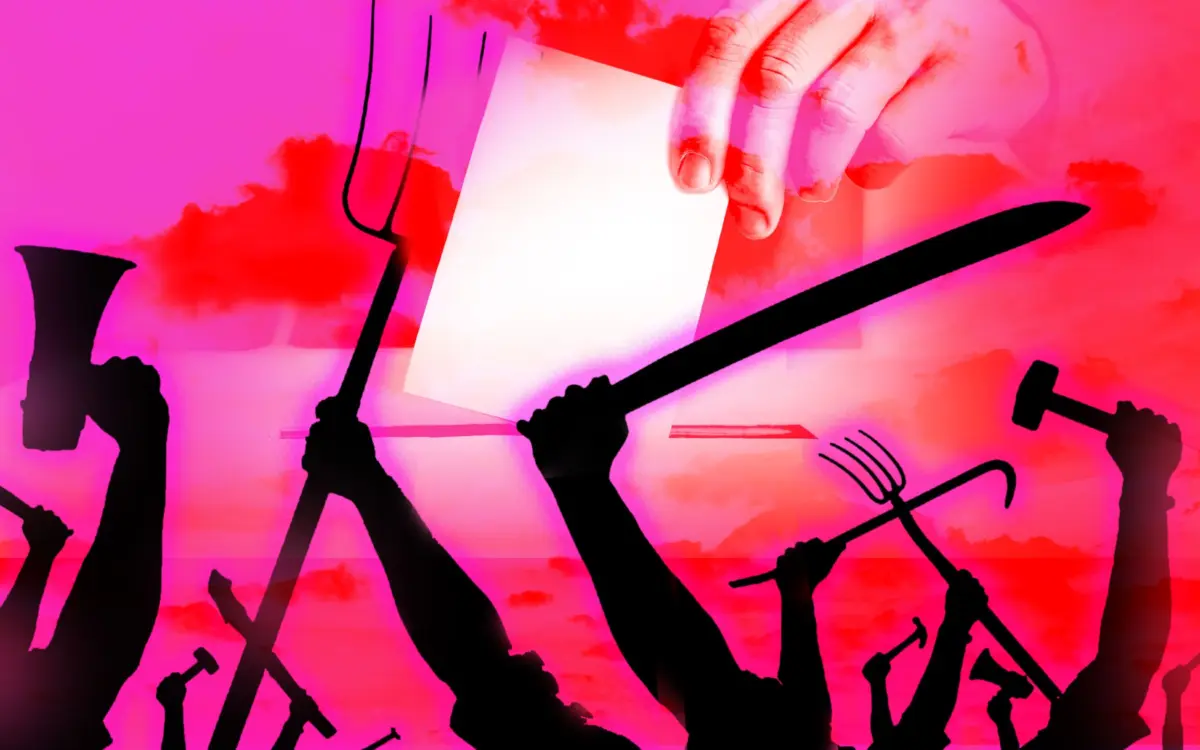
The 2026 midterm elections concluded with a political landscape fundamentally altered, as a historic "blue wave" resulted in Democrats securing decisive control over both the House of Representatives and the United States Senate. While the early hours of Election Day were marked by a familiar chorus of allegations regarding voter fraud and systemic rigging, the rhetoric shifted dramatically as the scale of the Republican defeat became clear. In a stark departure from the contentious aftermath of the 2020 and 2024 cycles, many of the country’s most prominent election deniers—candidates who had built their platforms on questioning the integrity of the American democratic process—conceded their races or remained uncharacteristically silent as the results were finalized.
The outcome appears to represent a broad national rejection of the policies and political style associated with the administration of Donald Trump. For months leading up to the vote, a coordinated network of activists, legal groups, and candidates had warned of a "rigged" outcome, specifically targeting mail-in ballots and alleging that non-citizen voting would tip the scales. However, as the data crystallized on Tuesday night, these claims largely evaporated, replaced by traditional concessions or a total withdrawal from the public eye.
A Decisive Shift in the Political Tide
The 2026 midterms were framed by many analysts as a referendum on the "election integrity" movement that had dominated Republican primaries for six years. Hundreds of candidates on the ballot had previously pledged to overhaul voting procedures or launch investigations into past elections. However, a comprehensive review of pivotal races reveals that the vast majority of these candidates were defeated, often by significant margins that left little room for legal challenges or claims of irregularities.
In Arizona, a state that has been the epicenter of election denialism since 2020, the gubernatorial race saw incumbent Democrat Katie Hobbs defeat Representative Andy Biggs. Biggs, a high-profile member of the House Freedom Caucus who had previously challenged the 2020 certification on January 6, 2021, notably refrained from alleging fraud in his own defeat. Instead, he attributed the loss to a failure of Republican mobilization, stating, “We just didn’t get our turnout quite as full as we wanted to.” This pivot from "stolen elections" to "turnout issues" marked a significant rhetorical shift for one of the movement’s leading figures.
A similar pattern emerged in the Midwest. In Michigan, former Representative Mike Rogers sought a Senate seat against Democrat Abdul El-Sayed. While Rogers had initially been a critic of election denialism, he had increasingly adopted skeptical rhetoric regarding election security during his 2026 campaign. Following a decisive defeat, Rogers has remained silent, offering no public comments or allegations of misconduct. In Wisconsin, Tom Tiffany, who had also objected to the 2020 results, lost his gubernatorial bid to Democrat David Crowley. Despite having supported a baseless FBI probe into Wisconsin’s voting systems just weeks prior, Tiffany conceded on Tuesday night without making any reference to rigging or fraud.
The Collapse of the Election Denial Infrastructure
The silence extended beyond individual candidates to the sophisticated network of activists and organizations that have fueled the election denial movement since 2020. This infrastructure, which includes legal groups and data-mining operations, had spent the months preceding the election flooding social media with warnings of impending "chaos" and "theft."
True the Vote, an organization that gained notoriety for providing the debunked data used in the film 2000 Mules, was active throughout the morning of Election Day. The group’s social media accounts posted dozens of times, amplifying unverified reports of polling place irregularities. However, as the Democratic sweep became apparent in the evening, the group’s output ceased entirely. This pattern was mirrored by Scott Presler, a prominent MAGA activist who spent the day boosting claims of voting issues. After the results were called, Presler shifted his focus toward legislative critiques, suggesting that the failure to pass the "SAVE America Act"—a controversial bill that critics argued would disenfranchise millions of voters—was the primary reason for the Republican losses.
Cleta Mitchell, the founder of the Election Integrity Network and a key figure in attempts to overturn the 2020 election, also went silent following the returns. Other "superstars" of the movement, such as Seth Keshel and Patrick Byrne, either reported the results without questioning their validity or avoided the topic altogether. The most notable reaction came from Donald Trump himself. Late on election night, the former president called into Fox News to congratulate the Democratic Party on their victory, a move that stunned both his supporters and detractors given his history of contesting unfavorable outcomes.
State-Level Defeats for "Election Integrity" Candidates
The rejection of election deniers was particularly pronounced in races for Secretary of State, positions that carry significant authority over the administration of future elections.
- Nevada: Jim Marchant, a Trump-endorsed candidate who had famously promised to "deregister every single Nevadan" to restart the voter rolls, was defeated by incumbent Cisco Aguilar. Marchant, a serial election denier, has not responded to requests for comment or issued a public statement regarding the results.
- Colorado: James Wiley, who campaigned under the moniker "the Red Flame of Liberty," made undermining trust in the electoral system the centerpiece of his bid for Secretary of State. After a resounding defeat by Amanda Gonzalez, Wiley conceded and suggested that the Republican Party needed to "rewind" its strategy, perhaps as far back as the era of Abraham Lincoln.
- Ohio: Billionaire Vivek Ramaswamy, who had previously claimed the 2020 election was stolen by "big tech," lost the governor’s race to Amy Acton. Ramaswamy followed traditional protocol, calling Acton to concede and wishing her well without mentioning fraud.
- Pennsylvania: Representative Scott Perry, a figure heavily scrutinized by the January 6 Committee for his role in attempts to overturn the 2020 results, lost his House seat to Democrat Janelle Stelson. When asked earlier in the day if he would accept the results, Perry had responded, "I sure hope so." Since his defeat, he has made no public statements.
The sole notable exception to this trend was in Florida, where Byron Donalds won the governorship. While Donalds had previously refused to commit to accepting election results during the 2024 cycle, his victory speech on Tuesday night focused on his future administration rather than grievances regarding the electoral process.
Chronology of an Election Day Pivot
The timeline of the 2026 midterms illustrates a rapid transition from high-stakes conspiratorial rhetoric to a quiet acceptance of political reality:
- 07:00 AM – 12:00 PM: Online "election integrity" groups report high volumes of "suspicious activity" at polling sites in Pennsylvania, Arizona, and Georgia. Candidates like Jim Marchant reiterate warnings about mail-in ballot security.
- 12:00 PM – 06:00 PM: Turnout data begins to suggest high engagement in urban centers and among younger demographics. Republican influencers begin to voice concerns about "the math" of the election.
- 08:00 PM – 10:00 PM: Major networks call House seats in Virginia, New York, and Pennsylvania for Democrats. The predicted "red wave" fails to materialize.
- 11:00 PM – 01:00 AM: The scale of the sweep becomes clear. One by one, high-profile election deniers issue standard concessions or go dark on social media.
- 01:30 AM: Donald Trump calls Fox News to acknowledge the Democratic sweep, effectively ending the prospect of a coordinated national challenge to the results.
Analysis of Implications and Future Outlook
The 2026 results suggest a significant realignment in the American electorate. Data indicates that the "Blue Sweep" was driven by a coalition of suburban voters, Gen Z, and Independents who prioritized reproductive rights, economic stability, and the preservation of democratic norms over the grievances of the "election integrity" movement.
The failure of the "SAVE America Act" and the subsequent defeat of its proponents indicate that the strategy of questioning election validity may have reached a point of diminishing returns for the Republican Party. Political analysts suggest that the "silence" of the denial network on election night was likely a pragmatic response to the margins of defeat. In 2020, many races were decided by tens of thousands of votes; in 2026, many were decided by hundreds of thousands, making claims of "ballot stuffing" or "software manipulation" mathematically difficult to sustain even for a sympathetic audience.
Moving toward the 2028 presidential cycle, the Republican Party faces a period of internal reckoning. The defeat of nearly every high-profile election denier on the ballot—with the exception of Byron Donalds—signals that the "Trumpian" focus on past grievances may no longer be a viable path to statewide or national power. For now, the country appears to have moved into a post-denial phase, as the very individuals who claimed the system was broken were forced to use that same system to concede their political careers.
