

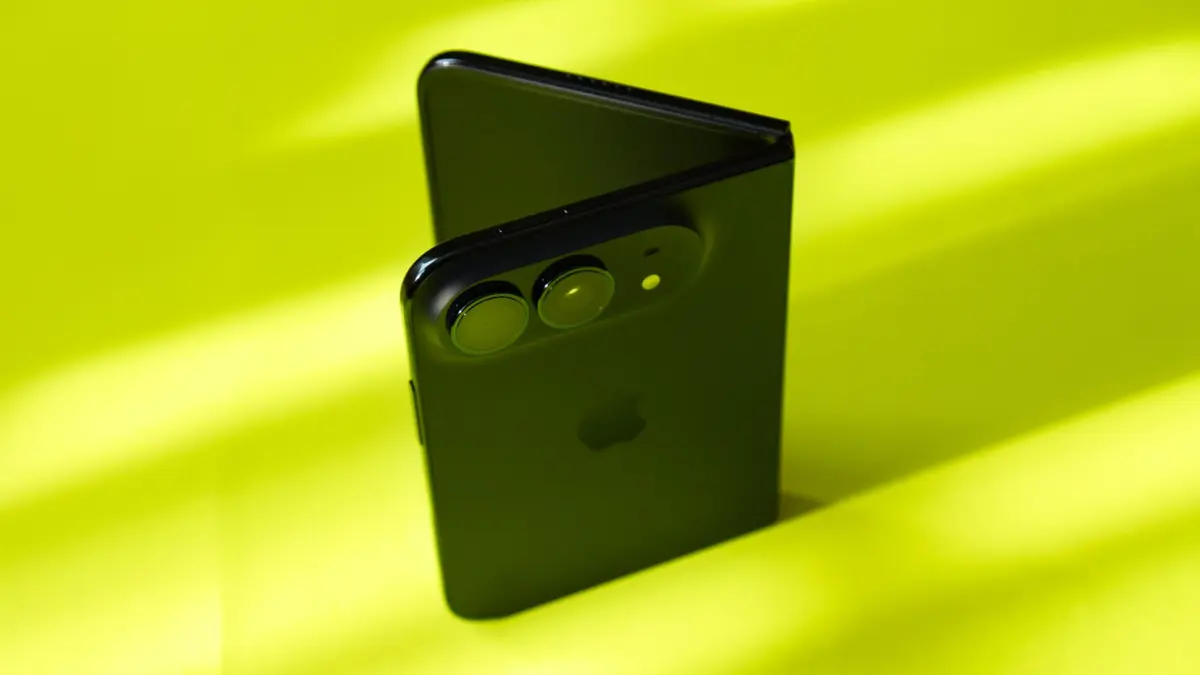
Apple Inc. has officially signaled that it cannot provide a definitive timeline for when the supply of its newly released foldable iPhone Duo will stabilize to meet the overwhelming consumer demand. During a pivotal fourth-quarter earnings call held on Monday, November 2, 2026, Apple’s Chief Operating Officer, Sabih Khan, informed investors and analysts that the company remains in a state of uncertainty regarding the production ramp-up for its most ambitious hardware release to date. This admission comes at a critical juncture for the tech giant, as it enters the lucrative Black Friday and holiday shopping window with its flagship innovation largely unavailable for new customers.
The iPhone Duo, which represents Apple’s long-awaited entry into the foldable smartphone market, has been plagued by availability issues since its official launch on October 23, 2026. Despite being the most expensive smartphone in the company’s history, the device sold out within hours of its debut. The current backlog is so significant that shipping estimates for new orders have slipped well into the first quarter of 2027, effectively removing the device from the gift lists of many holiday shoppers.
The Logistics of a Challenging Launch
The launch of the iPhone Duo was intended to be a landmark moment for Apple, signaling its ability to refine and dominate a category pioneered by competitors like Samsung and Huawei. However, the rollout has been characterized by a series of logistical hurdles. Sabih Khan’s remarks during the earnings call highlighted a "reluctant" necessity to navigate a volatile global supply chain, where the costs of essential components are skyrocketing.
A primary driver of these constraints is the global surge in demand for memory chips, fueled by the rapid expansion of the artificial intelligence (AI) industry. As data centers and enterprise AI applications consume the lion’s share of high-performance memory production, consumer electronics manufacturers are facing both shortages and increased pricing. This trend was already evident in June 2026, when Apple was forced to implement price increases of up to 25% across its MacBook and iPad lines to offset rising hardware costs.
The iPhone Duo, which requires specialized high-capacity memory to handle its multitasking capabilities and foldable-specific software features, is particularly susceptible to these market fluctuations. While Apple has traditionally leveraged its massive scale to secure favorable pricing and priority supply, the sheer scale of the AI-driven demand has created a bottleneck that even the world’s most valuable company cannot entirely circumvent.
Material Scarcity and the Perryman Partnership
Beyond internal electronics, the physical construction of the iPhone Duo has presented its own set of challenges. The device utilizes a sophisticated chassis and hinge mechanism that relies heavily on aerospace-grade titanium. To address production slow-downs related to these materials, Apple CEO John Ternus announced during the call that the company is "deepening" its strategic partnership with Perryman, a leading titanium producer.
The partnership aims to secure a more consistent flow of the specialized titanium alloys required for the Duo’s frame and hinge. The hinge, in particular, is a marvel of engineering that must maintain structural integrity over hundreds of thousands of folds while remaining thin enough to fit within Apple’s design aesthetic. Any slight variation in material quality or availability can halt the entire assembly line, a reality that seems to have contributed to the current inventory vacuum.
"We’ve been thrilled with the early response from reviewers and customers," Ternus stated, attempting to pivot the conversation toward the product’s critical success. "We are working hard to get iPhone Duo into customers’ hands as quickly as we can." Despite these reassurances, the lack of a "catch-up" date suggests that the deepening of supplier partnerships may take months to yield tangible results on retail shelves.
Chronology of the iPhone Duo Rollout
The timeline of the iPhone Duo’s development and subsequent launch provides context for the current crisis:

- June 2026: Apple announces price hikes for MacBooks and iPads, citing a 25% increase in component costs. Analysts begin to speculate on the launch price of the rumored foldable iPhone.
- September 2026: Apple officially unveils the iPhone Duo at its annual fall event, showcasing a "magical" folding interface and a titanium-reinforced hinge.
- October 18, 2026: Pre-orders open. Bloomberg’s Mark Gurman notes that initial shipping dates began slipping within minutes, suggesting Apple may have intentionally limited launch-day stock due to known supply chain weaknesses.
- October 23, 2026: Official retail launch. Lines form at Apple Stores globally, but many walk-in customers are turned away as stock is diverted to fulfill existing pre-orders.
- October 24-30, 2026: Reports emerge of "Crackgate," with a small but vocal group of early adopters reporting screen failures and hinge noises. Carriers like Verizon begin issuing apologies and gift cards to customers facing indefinite delays.
- November 2, 2026: Apple’s Q4 earnings call confirms that supply-demand parity is not expected in the near term.
Competitive Repercussions and the Samsung Factor
Apple’s supply misfortune has proven to be a boon for its primary rival, Samsung. Reports from South Korean market analysts indicate that sales of the Samsung Galaxy Z Fold 8 jumped by 20% in the week following the iPhone Duo’s launch. This suggests that a significant segment of the "prosumer" market, eager to transition to a foldable device, is unwilling to wait until 2027 for an Apple-branded solution.
The Galaxy Z Fold 8, now in its eighth iteration, benefits from a mature supply chain and a more established manufacturing process. While the iPhone Duo was lauded for its "magical touches" and superior software integration, Samsung’s ability to actually put a device in a customer’s hand today is a powerful competitive advantage. For consumers who had planned to upgrade during the 2026 holiday season, the choice often comes down to immediate availability versus brand loyalty.
Furthermore, the emergence of "Crackgate"—reports of display failures in early iPhone Duo units—has introduced a layer of consumer hesitation. While Apple has not officially commented on the frequency of these failures, the combination of a $2,000+ price tag, a long wait time, and potential durability issues is driving some customers toward more established alternatives.
Analysis of Economic and Strategic Implications
The iPhone Duo shortage is more than a mere logistical hiccup; it is a reflection of the broader economic pressures facing the high-tech sector in 2026. The convergence of AI-driven component demand and the increasing complexity of hardware design is testing the limits of just-in-time manufacturing.
For Apple, the Duo was intended to revitalize the iPhone brand and drive an "ultra-premium" upgrade cycle. By positioning the Duo as a luxury item above the Pro and Pro Max models, Apple aimed to increase its Average Selling Price (ASP) and boost margins. However, if the company cannot ship the units, the theoretical revenue remains off the balance sheet.
Financial analysts suggest that if Apple cannot resolve its titanium and memory constraints by early December, it could miss out on billions in potential revenue for the holiday quarter. There is also the risk of brand dilution; if the "Duo" becomes synonymous with "unavailable," the initial hype may sour into frustration.
The decision to increase prices "reluctantly," as Sabih Khan put it, also signals that the era of stable consumer electronics pricing may be over. As long as the AI industry continues to outbid consumer tech for silicon and memory, the cost of innovation will continue to be passed down to the end-user.
Looking Ahead to 2027
As Apple works to "iron out the kinks" in its foldable production line, the tech industry is watching closely to see how the company manages the transition from a niche luxury product to a mass-market staple. The deepening relationship with Perryman suggests that Apple is looking toward a long-term solution rather than a quick fix.
For the average consumer, the message remains clear: unless you were among the first to secure a pre-order, the iPhone Duo will likely remain a rare sight until well into 2027. While Apple remains "thrilled" with the reception of its latest innovation, the reality of the 2026 holiday season is that many "magical" foldable experiences will be delivered by Samsung rather than Apple.
The company’s ability to recover in the first half of 2027 will depend on two factors: the stabilization of the global memory market and the successful scaling of its titanium component manufacturing. Until then, the iPhone Duo stands as a testament to both Apple’s design ambition and the increasingly fragile nature of the global technology supply chain.
