

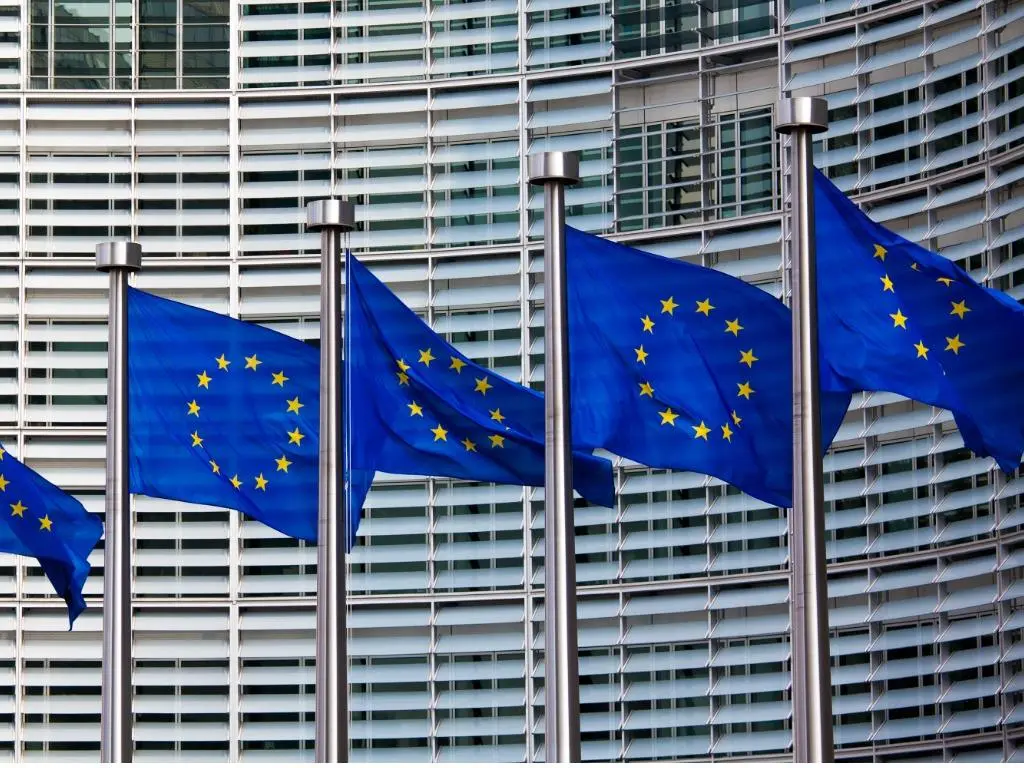
In a significant reversal of its environmental policy agenda, the European Commission has officially announced the withdrawal of the Green Claims Directive. This landmark proposal, which was designed to provide a rigorous framework for substantiating environmental claims and protecting consumers from greenwashing, has been removed from the Commission’s upcoming legislative priorities. The decision was confirmed following the publication of the Commission’s 2027 work programme, marking the end of a multi-year effort to harmonize how companies across the European Union communicate their ecological credentials.
The withdrawal follows a period of intense political friction and legislative deadlock. While the directive was initially hailed as a cornerstone of the European Green Deal’s consumer protection pillar, it eventually fell victim to shifting political priorities within the European Parliament and the European Council. The Commission cited a lack of consensus among member states and concerns regarding the administrative burden the regulation would place on the private sector, particularly small and medium-sized enterprises (SMEs).
The Legislative Journey and Eventual Collapse
The Green Claims Directive was first introduced in March 2023. At its core, the proposal sought to bring order to a marketplace saturated with "eco-friendly," "carbon neutral," and "sustainable" labels that often lacked scientific backing. According to internal Commission studies conducted prior to the proposal, more than 50% of environmental claims made by businesses in the EU were found to be vague, misleading, or unfounded, while 40% were entirely unsubstantiated.
The proposed rules were rigorous. They would have required companies to subject any voluntary environmental claim to independent third-party verification before they could be used in marketing materials. Furthermore, the directive aimed to crack down on the "wild west" of private environmental labels. It proposed that new private labeling schemes would only be permitted if they were developed at the EU level and could demonstrate higher environmental ambition than existing frameworks.
However, the momentum for the directive began to stall in mid-2025. During trilogue negotiations—the three-way discussions between the Commission, the Parliament, and the Council—the European People’s Party (EPP), the largest political bloc in the European Parliament, began to voice strong opposition. In a formal letter to the Commission, the EPP argued that the directive was overly complex and ran counter to the EU’s broader goal of reducing "red tape" and enhancing industrial competitiveness.
By June 2025, the file was effectively paused. While the Commission initially suggested it might save the directive by exempting microenterprises from its scope, the compromise failed to gain sufficient traction in the Council. In its 2027 work programme, the Commission finally admitted defeat, stating that the file had been pending for more than three years without a clear path to adoption. The Council’s failure to agree on a negotiating mandate in 2024 and the lack of support from subsequent presidencies made the withdrawal inevitable.
Understanding the "Greenlash" and Economic Context
The scrapping of the Green Claims Directive is seen by many analysts as a symptom of a broader "greenlash" occurring within European politics. Following the 2024 European elections, the political center of gravity shifted toward a more "industry-first" approach. This shift was fueled by concerns over high energy costs, global competition (particularly from the U.S. and China), and the perceived cumulative burden of the Green Deal’s regulatory requirements.
The EPP’s stance reflected a growing sentiment that while environmental goals remain important, the methods used to achieve them must not stifle economic growth. Critics of the directive argued that the requirement for "pre-approval" of environmental claims would create a massive bottleneck for marketing departments and impose significant costs for scientific testing and third-party auditing. For a small business launching a biodegradable product, the cost of complying with the Green Claims Directive could potentially outweigh the marketing benefits of the claim itself.
Furthermore, the withdrawal aligns with the recommendations of the "Draghi Report" on European competitiveness, which urged the EU to simplify its regulatory environment to allow European firms to compete more effectively on the global stage. By withdrawing the directive, the Commission is signaling a pivot toward "simplification" and "better regulation," even if it means sacrificing some of the more ambitious elements of its environmental agenda.
What Remains: The Consumer Protection Safety Net
Despite the withdrawal of the Green Claims Directive, the European Union is not entirely without safeguards against greenwashing. The Commission has pointed out that other legislative instruments are already in place to address deceptive marketing practices.
The most significant of these is the Directive on Empowering Consumers for the Green Transition (ECGT), which recently entered into force. Unlike the Green Claims Directive, which focused on the substantiation of claims through scientific evidence and pre-approval, the ECGT focuses on prohibiting specific unfair practices. Under the ECGT:
- Generic environmental claims like "environmentally friendly," "natural," or "eco" are banned if they cannot be supported by recognized excellent environmental performance.
- Claims based on carbon offsetting (e.g., "climate neutral" or "carbon positive") are restricted, particularly when they suggest a product has a neutral or positive impact on the environment based solely on offset credits.
- Sustainability labels that are not based on approved certification schemes or established by public authorities are prohibited.
Additionally, the Ecodesign for Sustainable Products Regulation (ESPR) provides a framework for setting mandatory environmental requirements for almost all physical goods placed on the EU market. While these laws provide a baseline level of protection, they lack the specific, granular verification requirements that the Green Claims Directive would have mandated.
Timeline of the Green Claims Directive
To understand the rise and fall of this regulation, it is helpful to look at the chronological milestones:

- March 2023: The European Commission officially proposes the Green Claims Directive to address the high prevalence of misleading environmental claims.
- Early 2024: The European Parliament adopts its initial position, supporting strong verification measures but beginning to debate exemptions for smaller firms.
- June 2024: The European Council fails to reach a common position (negotiating mandate), signaling deep divisions among member states regarding the directive’s impact on industry.
- June 2025: The European People’s Party (EPP) calls for the withdrawal of the directive, citing the need to reduce administrative burdens. The legislative process is effectively frozen.
- Late 2025: The Commission attempts to modify the scope to exclude microenterprises, but the compromise fails to satisfy the Council.
- November 2026: The Commission officially announces the withdrawal of the directive in its 2027 work programme, citing a lack of support in the Council and the age of the file.
Stakeholder Reactions and Market Implications
The decision to scrap the directive has drawn a polarized response. Environmental NGOs and consumer advocacy groups have expressed deep disappointment, arguing that the withdrawal leaves the door open for sophisticated greenwashing.
"By abandoning the Green Claims Directive, the Commission is failing consumers who want to make sustainable choices but are currently drowning in a sea of unreliable claims," said a representative from a prominent European consumer organization. "The existing ECGT rules are a start, but without the rigorous verification framework of the Green Claims Directive, the burden of proof remains too low."
Conversely, business associations and industry lobbies have largely welcomed the move. Many argue that the existing ECGT and general consumer protection laws are sufficient to catch the worst offenders without creating a new layer of bureaucracy. For these groups, the withdrawal is a victory for "pragmatism" and "competitiveness."
From a market perspective, the withdrawal creates a period of regulatory uncertainty. Multinational corporations that had already begun investing in the scientific infrastructure to comply with the proposed directive may find themselves at a disadvantage compared to competitors who took a "wait and see" approach. Furthermore, the lack of a harmonized EU-wide standard for green claims may lead to a fragmentation of the single market, as individual member states might implement their own national laws to combat greenwashing, similar to France’s existing "Loi Climat et Résilience."
Analysis: The Future of Environmental Marketing in Europe
The death of the Green Claims Directive does not mean that greenwashing will go unpunished, but it does change the strategy for enforcement. Instead of a proactive system where claims must be proven before they are made, the EU will rely on a reactive system where national consumer protection authorities and competitors can challenge claims after they appear in the market.
This shift places a greater burden on national regulators and the court system. It also means that the "gold standard" for environmental transparency that the EU hoped to export globally has been significantly diluted. While the EU remains a global leader in sustainability regulation, the withdrawal of this directive suggests that there is a hard limit to how much regulatory pressure the European economy is currently willing to absorb.
Looking forward, the Commission is likely to focus on the implementation of the ECGT and the Ecodesign Regulation. These tools will be used to target the most egregious cases of deception, but the era of mandatory, independent verification for every "eco-friendly" sticker on a supermarket shelf appears to have ended before it truly began. For businesses, the message is clear: while the threat of a massive new regulatory hurdle has been removed, the reputational risks of greenwashing remain high, and the existing consumer protection laws still carry the power of enforcement and significant fines.
