

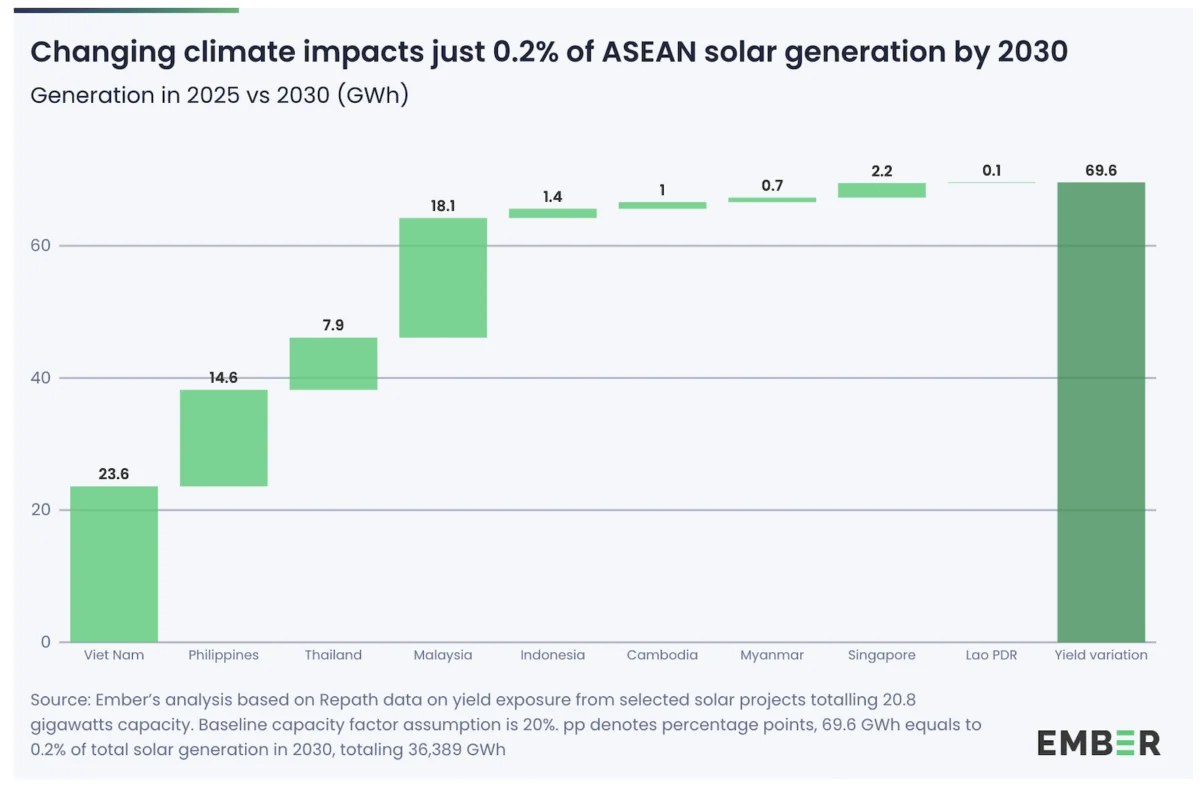
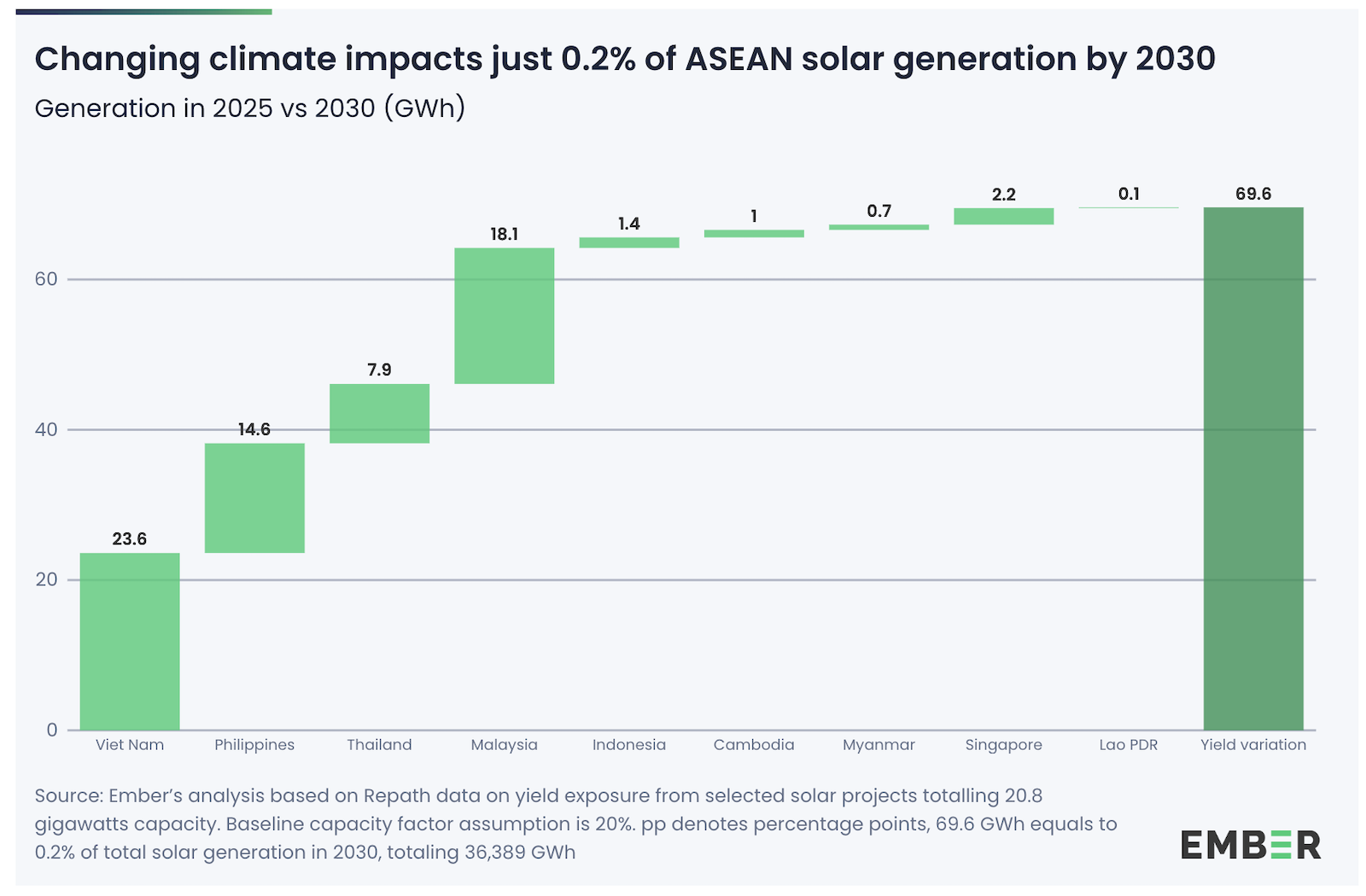
Distributed renewable energy networks are significantly more resilient to climate-driven shocks and natural disasters than the centralized fossil fuel-heavy systems that currently dominate the Southeast Asian energy landscape, according to a comprehensive new report released by the global energy think tank Ember. The analysis, titled Shaping a Resilient Power System in ASEAN, highlights a critical paradigm shift required for the Association of Southeast Asian Nations (ASEAN) as it navigates the dual challenges of rapid economic growth and increasing exposure to extreme weather events. The report argues that solar, wind, and battery storage, when integrated with robust grid interconnections, can isolate damage during disasters and facilitate faster recovery times compared to traditional thermal power plants. Furthermore, these renewable sources demonstrate remarkably stable output even under long-term climate stress, losing far less productivity than their fossil fuel counterparts.
The Current State of ASEAN Energy and Climate Vulnerability
Southeast Asia stands as one of the most disaster-prone regions on the planet, situated within the "Pacific Ring of Fire" and directly in the path of increasingly intense tropical cyclones. Despite this geographic vulnerability, the region remains heavily reliant on legacy energy infrastructure. Ember’s analysis reveals that approximately 64% of ASEAN’s installed power capacity is still derived from fossil fuels, primarily coal and natural gas. This centralization creates a "single point of failure" risk; when a major coal plant or a critical transmission line from a central hub is compromised, entire provinces can be plunged into prolonged darkness.
The region’s energy security is currently caught between two distinct types of climate threats: chronic stress and acute shocks. Chronic stress refers to the gradual degradation of performance caused by rising ambient temperatures and changing hydrological patterns. For instance, thermal power plants (coal, gas, and nuclear) require vast amounts of water for cooling; as water temperatures rise or droughts limit supply, these plants must often curtail their output. Conversely, acute shocks refer to sudden, violent events such as typhoons, floods, and earthquakes that can physically destroy generation facilities and transmission towers. The Ember report suggests that distributed renewable networks—characterized by smaller, localized generation sites—are inherently better suited to manage both threats.
Comparative Performance Under Extreme Scenarios
One of the most striking findings in the report is the projected reliability of variable renewable energy (VRE) toward the end of the decade. Ember’s modeling indicates that even under the most extreme weather scenarios projected for 2030, the generation output of wind and solar assets would vary by less than 1% from their normal expected levels. This level of stability is significantly higher than that of thermal and nuclear plants, which face much steeper performance declines under even mild global warming scenarios due to cooling inefficiencies and fuel supply chain disruptions.

The modularity of solar and wind energy allows for a "fail-safe" rather than a "fail-deadly" approach. In a centralized system, the failure of a 1,000 MW coal plant is a catastrophic event for the grid. In a distributed system, the loss of several solar arrays or wind turbines represents only a fractional loss of total capacity, and because these units are smaller, they can be repaired or replaced much faster than a massive boiler or turbine at a coal facility.
A Chronology of Energy Disruptions in the ASEAN Region
To understand the urgency of the transition, it is necessary to look at the timeline of events that have tested the region’s power resilience over the last decade:
- November 2013: Typhoon Haiyan (Yolanda) struck the Philippines, destroying vast sections of the transmission grid in the Visayas region. Some areas remained without power for months, highlighting the fragility of long-distance transmission lines.
- September 2018: A 7.4-magnitude earthquake and subsequent tsunami hit Central Sulawesi, Indonesia. The Panau coal-fired power plant was severely disabled, and over 1,100 distribution units were knocked offline, causing a total blackout in Palu and surrounding areas.
- 2020: Vietnam experienced a massive surge in solar installations, but the rapid growth outpaced grid infrastructure. This led to the curtailment of approximately 405 gigawatt-hours (GWh) of solar energy, as the rigid grid could not absorb the variable supply, resulting in an estimated economic loss of US$26 million.
- 2023: Record-breaking heatwaves across Southeast Asia, particularly in Vietnam and Thailand, led to a surge in electricity demand for cooling while simultaneously reducing the efficiency of thermal plants and the output of hydroelectric dams due to low water levels. This forced rolling blackouts in northern Vietnam, impacting global manufacturing chains.
Regional Case Studies: Indonesia and the Philippines
The report provides specific data points for local transitions, illustrating how renewables can serve as a direct alternative to risky fossil fuel expansions. In Central Sulawesi, Indonesia—a region still recovering from the 2018 disaster—the current provincial energy plan (RUED) surprisingly calls for an additional 2.25 gigawatts (GW) of coal capacity by 2030. Ember’s modelling provides a counter-proposal: 600 megawatts (MW) of solar power paired with 720 MWh of battery storage could effectively offset 250 MW of that planned coal capacity. This shift would not only reduce carbon emissions but would provide a decentralized energy base that is faster to deploy and easier to rehabilitate following seismic activity.
In the Philippines, the province of Catanduanes serves as a primary example of the "diesel trap." As an island province frequently hit by typhoons, it has historically relied on expensive, imported diesel for power. Following major storms, fuel supply chains are often disrupted, leading to extended outages. The report highlights that a planned 58 megavolt-ampere (MVA) interconnection with the main Luzon grid, combined with local renewables, is projected to supply 22% of the island’s electricity demand by 2030. This hybrid approach—combining local distributed generation with regional interconnection—is the hallmark of a resilient system.
Technical Barriers and the Role of Smart Grids
While the benefits of renewables are clear, the report does not ignore the technical challenges. The 2020 curtailment event in Vietnam serves as a cautionary tale. Without investment in grid flexibility and energy storage, the "green" potential of solar and wind can be wasted. The report emphasizes that upgrading transmission infrastructure to "smart grids" is an essential prerequisite. Smart grids utilize digital communication technology to detect and react to local changes in usage and supply, allowing the system to isolate damaged sections during a disaster while keeping the rest of the network operational.
Battery Energy Storage Systems (BESS) are also identified as a "linchpin" for resilience. By storing excess solar and wind energy, batteries can provide immediate "black-start" capabilities—the ability to restart a grid without relying on an external power source—which is vital during post-disaster recovery.
Official Responses and Policy Recommendations
The findings have garnered support from high-level energy officials and regional analysts. Dr. Dinita Setyawati, Senior Energy Analyst for Asia at Ember, emphasized that the transition is no longer just about carbon footprints. "ASEAN has witnessed a sweeping account of natural disasters. Power system resilience is central to a supportive ecosystem to unlock the potential of the green economy," she stated. She argued that strengthening grids and expanding renewables should be the center of policymaking, rather than "technical afterthoughts."
Felix William B. Fuentebella, Undersecretary and Philippine Senior Official on Energy, echoed these sentiments, noting that the Philippines is already moving toward this model in areas like the Palumbanes Islands. "Scaling investments in renewables, storage, and grid interconnection are not only pathways to decarbonization but essential safeguards against disruption," Fuentebella said. He called for deeper regional cooperation as the Philippines prepares to chair the ASEAN Ministers on Energy Meeting (AMEM) in 2026.
Brian Eyler, Southeast Asia Program Director at the Stimson Center, noted that the report provides a timely roadmap. "As El Niño and broader climate risks intensify across Southeast Asia, the report provides an important roadmap for ASEAN governments to strengthen preparedness, protect energy security, and accelerate a more resilient clean energy future," Eyler remarked.
Broader Impact and the Path Toward 2030
The Ember report suggests that for ASEAN to truly achieve resilience, energy planning must be integrated into regional disaster frameworks, specifically the ASEAN Agreement on Disaster Management and Emergency Response (AADMER). This would mean treating energy infrastructure not just as a utility, but as a core component of emergency management and national security.

The economic implications are equally profound. Power outages in Southeast Asia cost the region billions of dollars annually in lost industrial productivity and spoiled goods. By shifting to a distributed model, ASEAN nations can reduce their exposure to volatile international fossil fuel markets and the high costs of repairing massive, centralized power stations.
As the region moves toward 2030, the "business as usual" approach of building large-scale coal and gas plants appears increasingly untenable. The evidence suggests that the future of ASEAN energy security lies in a decentralized, interconnected, and renewable-heavy grid. This transition offers a rare "triple win": it provides the decarbonization necessary to meet international climate goals, the economic stability required for continued growth, and the physical resilience needed to survive in an era of intensifying climate extremes. The roadmap is clear, but the pace of implementation will determine how well Southeast Asia weathers the storms to come.
