

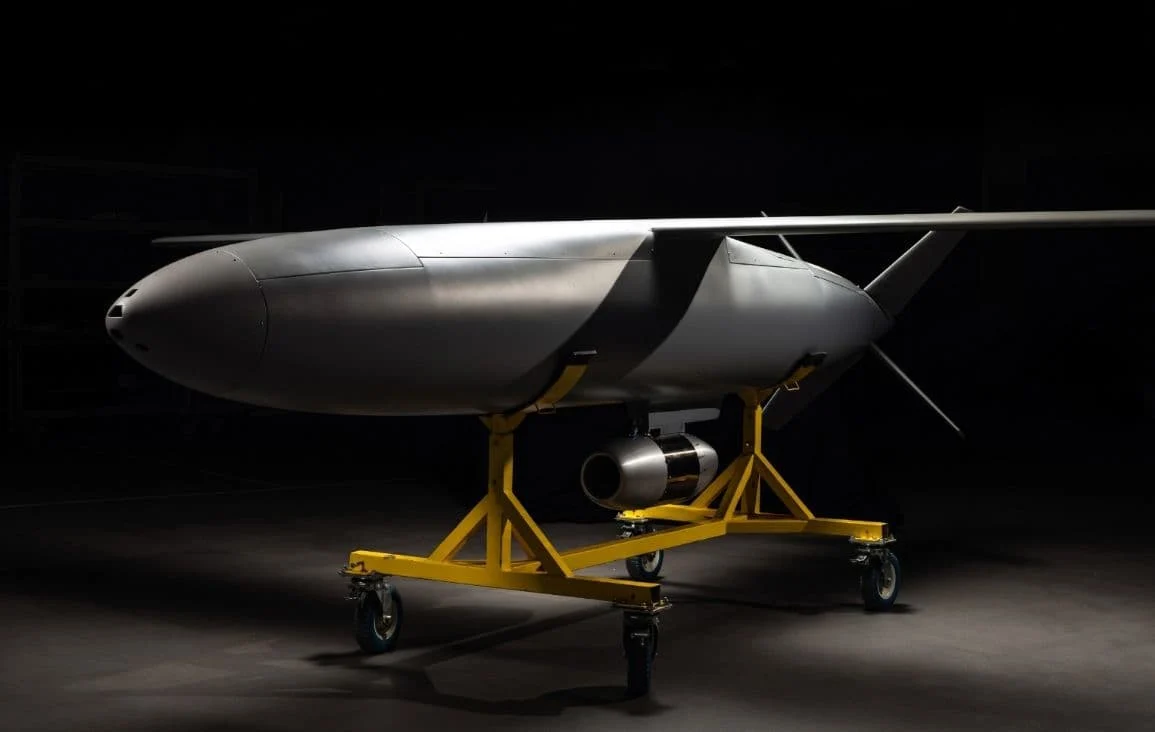
Covenant, a Washington-based defense technology startup, officially emerged from stealth operations on Wednesday, announcing a massive $250 million in venture capital backing and the opening of a 105,000-square-foot manufacturing facility in Dallas, Texas. The company’s primary objective is to disrupt the traditional defense procurement model by producing high-performance, long-range cruise missiles at a significantly lower cost and higher volume than established defense contractors. The announcement comes at a critical juncture for the United States Department of Defense, as ongoing regional conflicts and a rapidly depleting national munitions stockpile have forced a reevaluation of how the nation’s arsenal is replenished and modernized.
The startup’s flagship product, the Anthem cruise missile, is positioned as a direct competitor to legacy systems that have dominated the market for decades. By leveraging modern manufacturing techniques and a streamlined supply chain, Covenant aims to provide the U.S. military with "affordable mass"—a strategic concept that emphasizes the ability to deploy large quantities of sophisticated weapons without the prohibitive price tags associated with traditional "exquisite" systems.
The Anthem Missile: Bridging the Capability Gap
The centerpiece of Covenant’s entry into the market is the Anthem, a long-range, heavy-payload cruise missile designed to fill a specific tactical void. According to Abby Denburg, Covenant’s president and chief growth officer, the current landscape of aerial weaponry is bifurcated between two extremes: low-cost, short-range tactical drones and extremely expensive, strategic-range missiles produced by "defense primes" like RTX (formerly Raytheon) and Lockheed Martin.
"What we are seeing is a significant gap in the middle of the market," Denburg told CNBC. "On one end, you have drones that have proven effective in the Russia-Ukraine conflict but lack the range and payload for strategic deterrence. On the other end, you have systems like the Tomahawk, which are incredibly capable but cost millions of dollars per unit. Anthem is designed to fill that gap, offering strategic range and heavy payloads at a fraction of the cost of legacy systems."
The Anthem missile is engineered for versatility, capable of being launched from various platforms. While technical specifications remain partially classified, the company has confirmed that the missile is designed for high-subsonic speeds and features advanced guidance systems capable of navigating contested environments where GPS may be jammed or unavailable. By prioritizing "software-defined" hardware, Covenant claims it can iterate on the missile’s capabilities much faster than traditional contractors, whose development cycles often span decades.
Dallas Manufacturing Hub and Production Targets
To achieve the scale necessary to influence modern warfare, Covenant has established a major industrial footprint in Dallas. The new 105,000-square-foot factory is not merely an assembly plant but a highly automated production center designed for "serial production"—a manufacturing philosophy more common in the automotive and consumer electronics industries than in missile defense.
Covenant’s production roadmap is ambitious:
- Q1 2027: Commencement of full serial production.
- Year One Goal: Delivery of 1,000 Anthem missiles to the U.S. military.
- Long-term Goal: Scaling production to 5,000 units annually.
This level of output would represent a seismic shift in the defense industry. For comparison, the production of legacy cruise missiles often numbers in the low hundreds per year due to their complexity and the artisanal nature of their assembly. By focusing on "manufacturability" from the design phase, Covenant believes it can bypass the bottlenecks that have historically plagued the defense industrial base.
The choice of Dallas for the factory is strategic. North Texas has long been a hub for aerospace and defense, providing Covenant with access to a deep pool of specialized engineering talent and an established network of sub-tier suppliers. This local ecosystem is expected to reduce logistics costs and shorten the feedback loop between design and production.
Financial Backing and the "American Dynamism" Movement
Covenant’s $250 million in funding was raised over three rounds, reflecting intense investor interest in the intersection of Silicon Valley innovation and national security. The startup is backed by a "who’s who" of venture capital, including Andreessen Horowitz (a16z), Peter Thiel’s Founders Fund, Lux Capital, 8VC, Aleph, and Lightspeed Venture Partners.
The involvement of these firms underscores a broader trend often referred to as "American Dynamism." For years, venture capital largely avoided the defense sector due to long procurement cycles, heavy regulation, and the dominance of the "Big Five" primes (Lockheed Martin, Boeing, RTX, Northrop Grumman, and General Dynamics). However, the success of companies like SpaceX in aerospace and Palantir in data analytics has proven that agile startups can successfully compete for—and win—massive government contracts.
Marc Andreessen, co-founder of Andreessen Horowitz, has been a vocal proponent of this shift. Earlier this year, his firm announced a multibillion-dollar fund dedicated exclusively to U.S. aerospace and defense. This influx of private capital is intended to provide startups with the "runway" needed to survive the "Valley of Death"—the period between developing a prototype and securing a formal program of record with the Department of Defense.

Geopolitical Context: The 2026 Stockpile Crisis
The urgency behind Covenant’s mission is driven by a sobering reality on the global stage. As of August 2026, the United States finds itself deeply entangled in supporting allies and managing its own readiness during a prolonged conflict in Iran that has stretched into its seventh month. This conflict, combined with the continued support of Ukraine and tensions in the Indo-Pacific, has placed an unprecedented strain on the U.S. weapons stockpile.
Reports from the Pentagon and independent think tanks indicate that the U.S. has used virtually all of its long-range precision missiles in recent operations. The "burn rate" of munitions in modern high-intensity conflict has far outpaced the replacement rate of the existing defense industrial base.
"We no longer have the luxury of slow, expensive procurement," said a former senior defense official. "In a peer or near-peer conflict, quantity has a quality of its own. We need thousands of reliable, long-range systems, not dozens of perfect ones. Covenant’s model of high-volume, lower-cost manufacturing is exactly what the current doctrine of ‘Replicator’ and massed effects requires."
Department of Defense Partnerships
Covenant did not emerge from stealth empty-handed. On Wednesday, the company announced two significant deals with the Department of Defense (DoD) that signal the military’s willingness to integrate startup technology into its core architecture:
- U.S. Army Partnership: A contract focused on accelerating a comprehensive test and qualification program for the Anthem missile. This program is designed to move the weapon through the rigorous safety and performance standards required for battlefield deployment in record time.
- U.S. Navy Partnership: A deal to adapt the Anthem missile for maritime use. This involves modifying the missile for launch from surface ships and potentially submarines, providing the Navy with a high-volume "magazine" of long-range strike options to complement the more expensive Tomahawk Block V.
These contracts are viewed as "pathfinder" agreements, allowing the DoD to test the viability of Covenant’s manufacturing claims before committing to multi-year, multi-billion-dollar acquisition programs.
Political Influence and Procurement Reform
The rise of Covenant also highlights the shifting political landscape in Washington D.C. The startup’s backers have significant ties to the current administration and the broader defense policy establishment. Peter Thiel, a co-founder of Founders Fund, has seen his influence grow substantially, particularly with the rise of President Donald Trump and Vice President JD Vance. Vance, who previously worked at the Thiel-co-founded venture firm Mithril Capital, has been a vocal advocate for domestic manufacturing and modernizing the defense industrial base.
Furthermore, Marc Andreessen and Blake Masters (of Thiel Capital) were recently named to the Pentagon’s Defense Policy Board. This board plays a crucial role in advising the Secretary of Defense on long-term strategies and the adoption of new technologies. The presence of these venture capitalists in the inner circles of defense policy suggests a concerted effort to break the monopoly of traditional primes and open the door for "Silicon Valley-style" disruption in weapons development.
Global Operations and Workforce
While the Dallas factory is the centerpiece of its U.S. operations, Covenant maintains a global footprint. The company currently operates production and research facilities in Germany and Northern Israel—two regions with significant expertise in missile defense and autonomous systems. This international presence allows Covenant to tap into global supply chains and collaborate with allied nations that are facing similar munitions shortages.
The company currently employs over 200 people worldwide, a number that is expected to double as the Dallas facility ramps up to full capacity. The workforce is a blend of veteran aerospace engineers from traditional primes and software developers from the tech sector, a combination the company believes is essential for building "smart" hardware.
Implications for the Defense Industry
The emergence of Covenant and the Anthem missile represents a direct challenge to the business models of established defense giants. For decades, the "Big Five" have relied on "cost-plus" contracts, where the government covers all development costs plus a guaranteed profit margin. This system, while ensuring the production of high-quality weapons, has been criticized for incentivizing delays and cost overruns.
Covenant, by contrast, operates on a "firm-fixed-price" mindset, common in the commercial sector. By taking on the development risk themselves using venture capital, they can offer the government a finished product at a set price, forcing traditional contractors to either lower their costs or risk losing market share in the "affordable mass" segment.
As the U.S. military pivots toward the concept of "Distributed Maritime Operations" and "Multi-Domain Task Forces," the demand for large quantities of long-range, attritable (cost-effective enough to be lost in combat) weapons will only grow. Covenant’s success or failure in Dallas will likely serve as a bellwether for the future of the American defense industry, determining whether a new generation of "defense tech unicorns" can truly provide the arsenal of democracy for the 21st century.
