

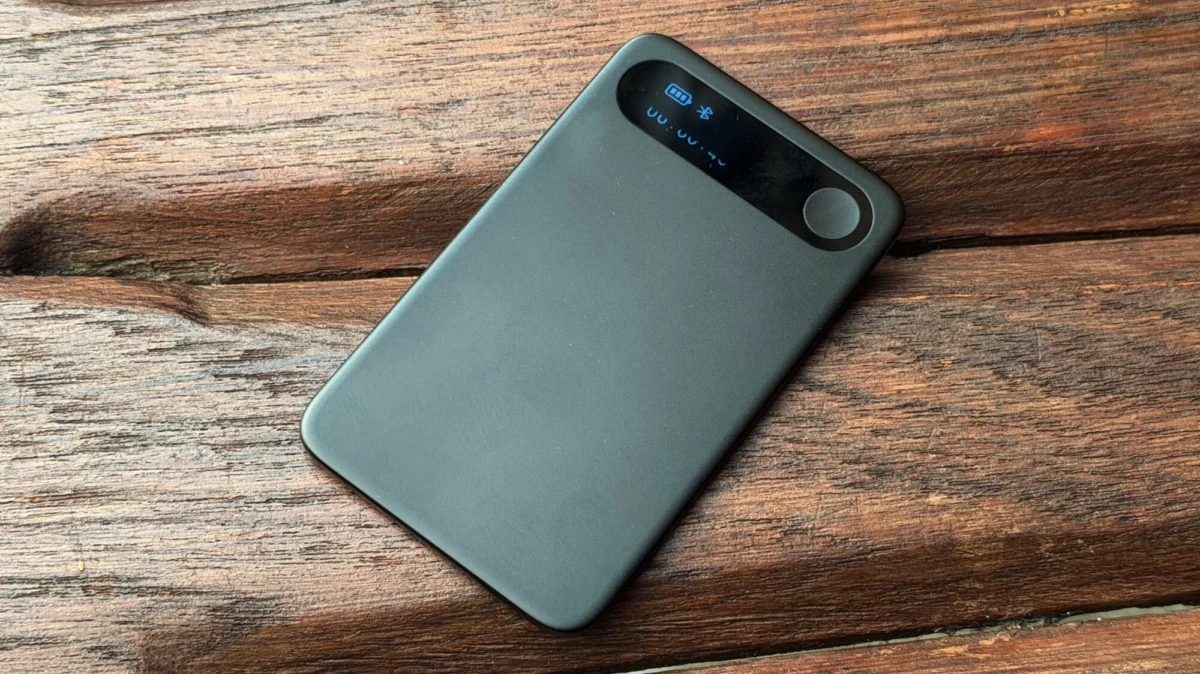
The emergence of artificial intelligence in the consumer electronics sector has fundamentally altered the landscape of productivity tools, particularly in the realm of audio documentation and transcription. The Comulytic Note Pro AI voice recorder represents a significant step in this evolution, transitioning from traditional digital recording to a sophisticated, cloud-integrated AI ecosystem. Designed to cater to professionals, students, and journalists, the device seeks to bridge the gap between physical note-taking and digital data management. As the demand for automated meeting summaries and high-accuracy speech-to-text grows, hardware manufacturers are increasingly moving toward ultra-portable, specialized devices that leverage the power of Large Language Models (LLMs) to provide more than just audio playback.
The Technological Shift in Audio Documentation
To understand the position of the Comulytic Note Pro AI in the current market, it is essential to examine the historical trajectory of transcription technology. For decades, professionals relied on manual methods such as Pitman or Gregg shorthand, which required years of training and were prone to human error or the physical limitations of the writer. The mid-20th century saw the introduction of magnetic tape recorders, followed by digital voice recorders in the 1990s. While these devices made it easier to capture audio, the process of transcription remained a labor-intensive task, often requiring three to four hours of manual typing for every hour of recorded audio.
The current era, defined by the "AI Revolution," has shifted the burden of transcription from the human ear to neural networks. Modern AI voice recorders do not merely store audio files; they process them through cloud-based engines to identify speakers, filter background noise, and generate structured summaries. The Comulytic Note Pro enters a competitive field alongside devices like the Plaud Note and software services such as Otter.ai, promising a seamless integration of hardware portability and software intelligence.
Hardware Specifications and Physical Design
The Comulytic Note Pro AI is distinguished by its form factor, which mirrors the dimensions of a credit card. Measuring approximately 3.37 x 2.04 x 0.12 inches and weighing only one ounce, the device is designed for extreme portability. This "card-style" design allows users to carry the recorder in a wallet or attach it to the back of a smartphone via a magnetic slipcase, ensuring it is readily available for spontaneous meetings or interviews.
Despite its diminutive size, the hardware houses a robust technical array:
- Microphone System: The device features a triple-microphone array equipped with AI-driven noise reduction. This configuration is designed to capture clear audio within an effective range of up to 15 feet, filtering out ambient sounds that typically degrade transcription accuracy.
- Storage: With 64GB of internal storage, the recorder can hold hundreds of hours of high-quality audio files before requiring a sync or data offload.
- Display and Interface: A minimalist 128 x 80-pixel OLED display provides essential status updates, such as battery life and recording time. The user interface is streamlined into a single-button operation: one press initiates a recording session, and a subsequent press concludes it.
- Battery Performance: The internal battery supports up to 45 hours of continuous recording. Perhaps more impressively, it offers a standby duration of 107 days, addressing a common pain point for professionals who may not use the device daily but require it to be functional at a moment’s notice.
- Charging: The device utilizes a proprietary magnetic charging cable. While this ensures a slim profile without the need for a bulky USB port, it does necessitate that users carry a specific cable, a point of contention for those seeking a universal charging standard like USB-C.
The AI Ecosystem: Transcription and Summarization
The true utility of the Comulytic Note Pro lies not in its hardware alone, but in its accompanying mobile application, available for both iOS and Android. Once a recording is completed, the file is synced to the app via Bluetooth or Wi-Fi, where it is uploaded to the cloud for processing.
Comulytic offers a tiered service model. The "Starter Plan" provides users with unlimited free transcription and basic AI summaries. However, the more advanced capabilities—such as "Advanced Summary," "Instant Abstract," and the "Ask Comulytic Assistant" feature—require a monthly subscription starting at approximately $10 to $15. This subscription-based model is becoming standard in the AI hardware industry, as the ongoing costs of processing data through high-end LLMs (such as OpenAI’s GPT-4 or similar models) are substantial.
In field testing, the transcription accuracy has been reported to exceed 98% for clear, single-speaker recordings. This level of precision is comparable to the dictation features found in premium operating systems like Apple’s macOS or Microsoft’s Windows. However, the device’s ability to perform speaker diarization—the process of identifying and separating different voices in a multi-person conversation—has shown variable results. While effective in quiet environments, the AI can occasionally struggle to distinguish between speakers with similar vocal profiles or in settings with significant overlapping dialogue.

Data Privacy and Regulatory Compliance
As AI voice recorders become more prevalent in sensitive environments—such as medical consultations, legal depositions, and corporate boardrooms—data security has become a primary concern for both manufacturers and users. Comulytic has addressed these concerns by stating that their system adheres to several international security and privacy standards.
The company claims compliance with:
- SOC 2 Type 2: An auditing procedure that ensures service providers securely manage data to protect the interests of the organization and the privacy of its clients.
- HIPAA: The Health Insurance Portability and Accountability Act, which is critical for healthcare professionals using the device to record patient notes.
- ISO 27001: An international standard on how to manage information security.
- GDPR and CCPA: Data protection regulations for the European Union and California, respectively, which govern how personal data is collected and processed.
Despite these certifications, the use of third-party AI services for processing means that audio data is, by necessity, transmitted to the cloud. For users in high-security sectors, the trade-off between the convenience of AI summarization and the absolute privacy of local-only storage remains a significant consideration.
Chronology of Development and Market Context
The development of the Comulytic Note Pro AI reflects a broader trend that began around 2022 with the mass adoption of generative AI.
- Phase 1 (2022-2023): Software-based transcription services (Otter.ai, Descript) proved the demand for AI-driven summaries. However, users found that using a smartphone for long recordings was battery-draining and often interrupted by notifications.
- Phase 2 (Late 2023): The first wave of dedicated AI hardware arrived. These devices were designed to be "always ready" and physically optimized for audio capture.
- Phase 3 (2024-Present): Refinement of the form factor. The Comulytic Note Pro represents this third phase, where the hardware has been shrunk to a "wallet-ready" size while improving battery life and microphone sensitivity.
Industry analysts suggest that the market for dedicated AI recorders will continue to grow as "meeting fatigue" increases. According to recent workplace productivity studies, the average professional spends over 21 hours per week in meetings. The ability for a device like the Note Pro to condense a 60-minute meeting into a five-minute actionable abstract represents a massive potential gain in human capital efficiency.
Broader Implications and Ethical Considerations
The proliferation of discrete, high-quality recording devices brings several ethical and legal challenges to the forefront. In the United States, "wiretapping" laws vary by state. Some jurisdictions are "one-party consent" states, meaning only one person in a conversation needs to know it is being recorded. Others are "two-party" (or all-party) consent states, where recording without the explicit permission of everyone involved can lead to criminal charges or civil litigation.
Furthermore, there is the growing issue of "AI Watermarking." As AI-generated content becomes more common, there is a global push to ensure that any text or audio "touched" by AI is digitally fingerprinted. While this is intended to prevent the spread of misinformation, it also means that professional notes generated by devices like the Comulytic Note Pro may eventually carry a permanent metadata tag identifying them as AI-assisted, which could impact their admissibility in certain legal or academic contexts.
Analysis of Future Outlook
The Comulytic Note Pro AI voice recorder is a testament to the "de-specialization" of the smartphone. While modern phones can record audio, the existence of a dedicated, credit-card-sized device suggests that there is still a premium placed on tools that do "one thing well." For individuals with physical limitations—such as neuropathy or cramping that makes typing difficult—this technology is more than a convenience; it is an essential accessibility tool.
However, the reliance on proprietary charging cables and the "busy" nature of subscription-heavy apps remain hurdles for universal adoption. As the technology matures, it is likely that future iterations will incorporate Qi wireless charging and perhaps local, on-device AI processing to alleviate privacy concerns. For now, the Comulytic Note Pro stands as a high-performance option for the "prosumer" market, offering a glimpse into a future where the act of manual note-taking may finally become a relic of the past.
