

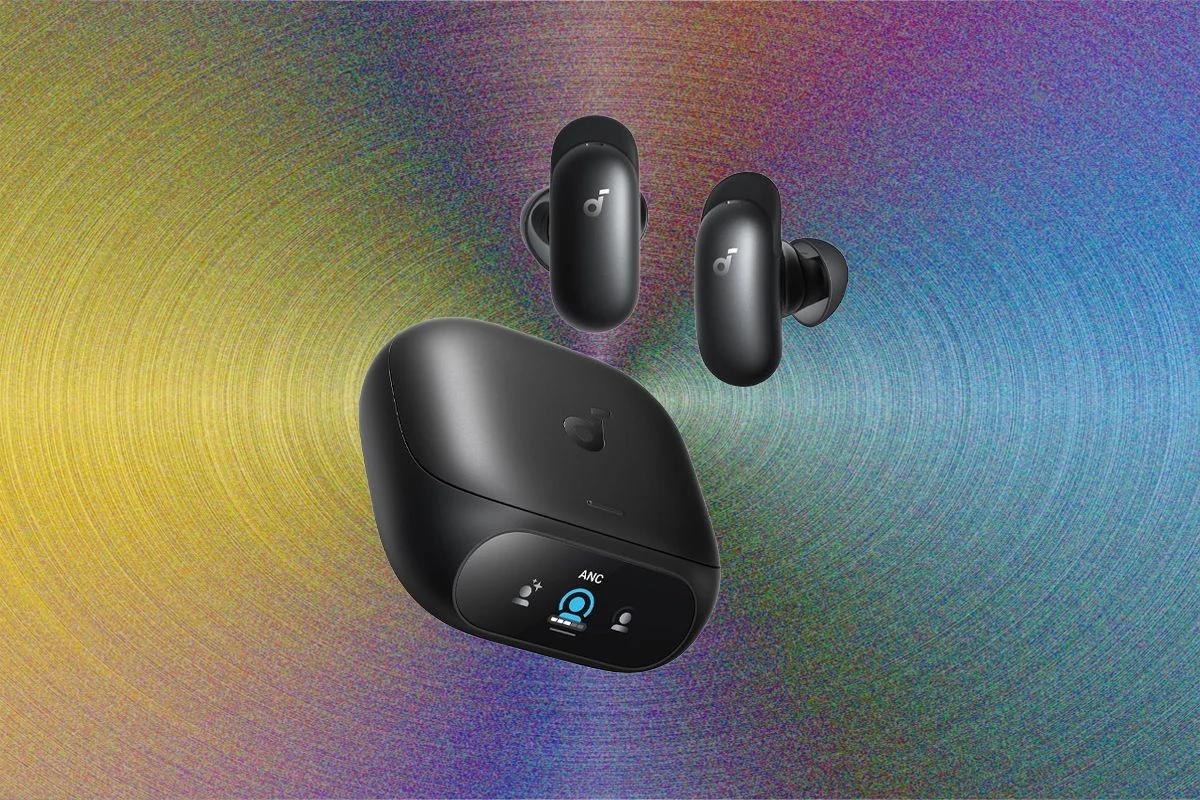
The release of the Soundcore Liberty 5 Pro marks a significant pivot point in the true wireless stereo (TWS) market, challenging the long-standing dominance of premium legacy brands through a combination of aggressive pricing and high-end technical specifications. As the consumer electronics landscape of 2026 becomes increasingly crowded with iterative updates, Soundcore, a subsidiary of Anker Innovations, has positioned its latest flagship as a "value disruptor" that bridges the gap between mid-tier affordability and enthusiast-grade performance. The device arrives at a time when consumer expectations for active noise cancellation (ANC) and microphone clarity have reached an all-time high, driven by the persistence of remote work and the necessity of high-quality audio in noisy urban environments.
Technical Specifications and Noise Cancellation Architecture
The Soundcore Liberty 5 Pro features an advanced noise-canceling suite that rivals the industry’s most expensive offerings. The system utilizes a multi-microphone array designed to sample ambient noise at a rate of several thousand times per second, processing the data through a dedicated chipset to generate anti-noise waves. Users are provided with a granular level of control rarely seen in this price bracket, including standard noise cancellation, transparency, and adaptive modes. The adaptive mode, in particular, utilizes artificial intelligence to identify the specific frequency profile of the environment—whether it be the low-end rumble of a jet engine or the high-pitched chatter of a crowded cafe—and adjusts the attenuation accordingly.
A standout feature of the Liberty 5 Pro is the ability to fine-tune ANC strength on a scale from one to five. This adjustment can be managed directly through the Soundcore mobile application or via the integrated controls on the charging case. In comparative laboratory testing and real-world trials, the Liberty 5 Pro demonstrated an ability to suppress up to 98.5% of ambient noise. While independent benchmarks indicate that the Bose QuietComfort Ultra Earbuds (2nd Gen) and the Sony WF-1000XM6 maintain a slight edge in total decibel reduction, the Liberty 5 Pro occupies a definitive third place, outperforming contemporary models from Apple and Samsung in sheer isolation capability.
Audio Engineering and Customization Profiles
Out of the box, the Liberty 5 Pro utilizes the "Soundcore Signature" profile, a tuning philosophy that emphasizes low-end frequencies. This bass-heavy approach is designed to appeal to a broad demographic of listeners who prioritize "energy" and "thump" in modern pop, hip-hop, and electronic dance music. Data suggests that the average consumer perceives a slight bass boost as a sign of "higher quality" audio, though audiophiles often find such tuning to be overwhelming or "muddy" in the mid-range.
To address the diverse needs of its user base, Soundcore has integrated an extensive suite of software tools for audio personalization. These include:
- Soundcore Balance: A more neutral preset that reduces the sub-bass hump and brings vocals and acoustic instruments to the forefront.
- Eight-Band Custom Equalizer: For users who demand total control, the app provides a manual EQ, allowing for precise adjustments across the frequency spectrum.
- HearID Technology: This proprietary system conducts a three-minute audio quiz, testing the user’s hearing sensitivity at various frequencies. Based on the results, the software creates a bespoke sound profile that compensates for any hearing deficiencies or personal preferences.
While the Liberty 5 Pro may not achieve the clinical detail of the AirPods Pro 3 or the expansive soundstage of the Bose QuietComfort Ultra, its proximity in performance—coupled with its lower price point—makes it a formidable competitor for all but the most demanding high-fidelity enthusiasts.
A Chronology of the Liberty Series Development
The trajectory of the Soundcore Liberty series reflects the rapid maturation of the TWS industry. Understanding the Liberty 5 Pro requires a look at the developmental milestones that led to its 2026 debut:
- 2019–2020 (The Foundation): Soundcore released the Liberty 2 Pro, which introduced the Astria Coaxial Acoustic Architecture (ACAA). This design placed a balanced armature driver directly in front of a dynamic driver to minimize distortion and maximize clarity.
- 2021–2022 (Refinement and ANC): The Liberty 3 Pro focused on shrinking the form factor while enhancing the HearID system. It was one of the first mid-range buds to offer LDAC support, providing near-lossless audio over Bluetooth.
- 2023–2024 (Sensor Integration): The Liberty 4 introduced health-tracking sensors, such as heart rate monitors, experimenting with the idea of earbuds as wearable wellness devices.
- 2025–2026 (The Professional Pivot): With the Liberty 5 Pro, Soundcore pivoted back to core audio fundamentals: superior microphone quality, elite ANC, and daily durability. The company moved away from "gimmick" sensors to focus on the "Pro" experience—namely, communication and isolation.
Communication Performance in Urban Environments
Perhaps the most significant achievement of the Liberty 5 Pro is its call quality. In an era where "muffled" or "robotic" voices are common complaints for Bluetooth headset users, Soundcore has implemented a sophisticated beamforming algorithm. This technology uses six internal and external microphones to isolate the user’s voice from background interference.
In testing conducted within high-interference zones, such as the streets of New York City, the Liberty 5 Pro maintained vocal clarity even against the backdrop of sirens, construction, and wind. This performance is a result of Soundcore’s "Voice-First" processing, which identifies the specific timbre of human speech and prioritizes those frequencies while suppressing non-linear environmental noise. For professionals who rely on their earbuds for mobile meetings, this feature alone justifies the transition from more expensive, less capable competitors.

Durability, Design, and Ergonomics
The physical design of the Liberty 5 Pro balances aesthetics with functional resilience. The earbuds carry an IP55 rating, certifying them against dust ingress and low-pressure water jets. This makes them suitable for high-intensity workouts and outdoor use in light rain, though they are not designed for full submersion.
The ergonomic profile of the buds is slightly larger than the ultra-compact designs of the Google Pixel Buds or the AirPods Pro. However, this size allows for a larger battery and more robust drivers. The "secure-fit" design ensures that the buds remain seated during vigorous movement, a critical factor for the fitness-conscious consumer.
Market Analysis and Economic Impact
The pricing strategy for the Liberty 5 Pro is a direct challenge to the "premium tax" often associated with Apple, Sony, and Bose. By pricing the Liberty 5 Pro nearly $100 lower than the flagship offerings of its competitors, Soundcore is targeting a "sweet spot" in the market: consumers who want top-tier features but are unwilling to pay the $250–$300 MSRP typical of the high-end segment.
Industry analysts suggest that this move could force a market correction. If Soundcore can provide 90% of the performance of a Sony WF-1000XM6 at 60% of the cost, the value proposition becomes difficult for consumers to ignore. This trend is particularly relevant in 2026, as global economic conditions have made consumers more discerning and less brand-loyal, prioritizing tangible specs over logo prestige.
Official Responses and Industry Reception
While Soundcore executives have remained focused on their "audio for the masses" mantra, competitors have taken note. In a recent industry panel, audio engineers from rival firms acknowledged that the gap between "mid-range" and "premium" is narrowing faster than anticipated.
"Our goal with the Liberty 5 Pro was never to just be the ‘cheaper’ option," a Soundcore product manager stated during the launch event. "Our goal was to solve the fundamental problems of the modern earbud user: noise, call clarity, and comfort. We believe that high-quality audio should not be a luxury restricted to those with a $300 budget."
Tech reviewers have largely echoed this sentiment, noting that while the Liberty 5 Pro may lack the "ecosystem magic" of Apple’s seamless device switching or the absolute silence of Bose’s proprietary ANC algorithms, it provides a more versatile and customizable experience for the average user who switches between iOS and Android platforms.
Broader Implications for the Future of Wearable Audio
The success of the Liberty 5 Pro signals a shift toward "utilitarian excellence." As the TWS market matures, the novelty of wireless audio has worn off, replaced by a demand for reliable tools. The inclusion of high-quality microphones and adjustable ANC suggests that the future of earbuds lies in their ability to act as a "personal sound bubble," allowing users to curate their auditory environment regardless of their physical location.
Furthermore, the Liberty 5 Pro’s success highlights the importance of software-driven hardware. The ability to update the ANC algorithms and EQ profiles via the cloud means that the earbuds a consumer buys today may actually perform better a year from now. This "evergreen" approach to hardware is becoming a standard expectation in the mid-2020s.
In conclusion, the Soundcore Liberty 5 Pro represents the pinnacle of current value-engineered audio. By focusing on the features that matter most to daily users—noise cancellation, call quality, and long-term comfort—Soundcore has created a product that not only competes with the giants of the industry but, in several key areas, sets the pace for them to follow. As we move deeper into 2026, the Liberty 5 Pro stands as a testament to the fact that "best in class" no longer has to mean "most expensive."
