

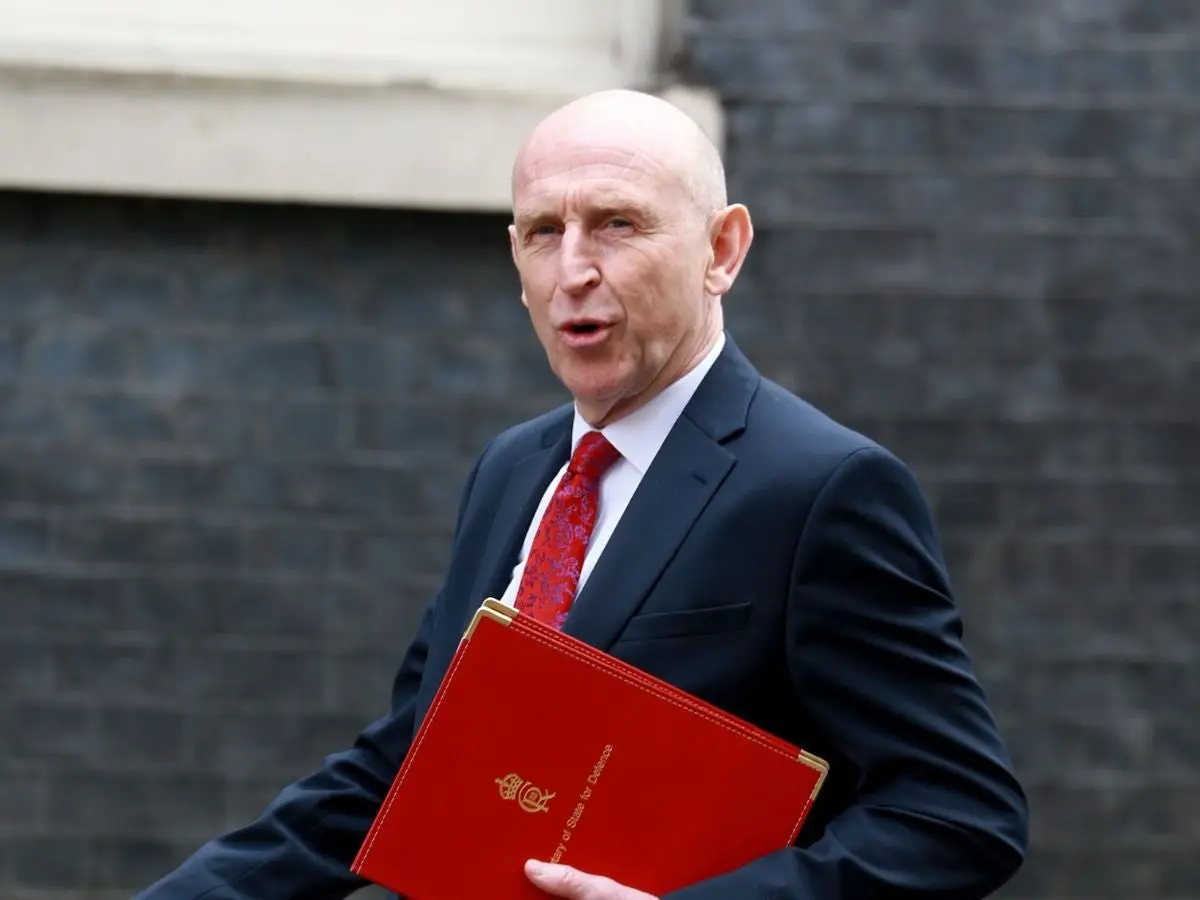
Chancellor John Healey’s inaugural budget presented a landscape of fiscal adjustments and incentives, defying initial expectations of a muted announcement. While ostensibly designed to address immediate economic pressures, the budget introduced several significant measures impacting entrepreneurs, property and savings income, and the banking sector, sparking diverse reactions from financial experts and industry leaders. The overarching sentiment suggests a budget that, while avoiding the most feared tax increases, also missed opportunities to significantly bolster the UK’s economic competitiveness.
The budget’s unveiling on [Insert Date of Budget Here, e.g., October 23, 2026] came after a period of considerable economic flux. Global inflation remained a persistent concern, and the government sought to balance the need for fiscal prudence with targeted support for households and businesses. Expectations were for a largely revenue-neutral statement, focusing on incremental adjustments rather than sweeping reforms. However, Chancellor Healey’s address to Parliament revealed a more dynamic set of proposals than anticipated.
Key Announcements and Initial Reactions
A central surprise was the introduction of a new "founder’s relief," a 10 per cent capital gains tax rate on lifetime gains up to £10 million for entrepreneurs. This initiative, aimed at fostering a more dynamic startup ecosystem, was met with cautious optimism. Phineas Hirsch, a private client partner at Payne Hicks Beach, described it as "a very positive move to support entrepreneurs," but stressed the need for clarity on the qualifying criteria. He noted that this could be overshadowed by the halving of the threshold for Business Asset Disposal Relief (BADR) to £500,000, a move that might render it less impactful for many.

Dawn Register, head of specialist tax services at BDO, expressed particular enthusiasm for the founder’s relief, stating that it aligned with suggestions from BDO and other advisors. She characterized the budget as "limited and focused on entrepreneurs," a sentiment echoed by many in the advisory community who had advocated for such measures to stimulate innovation and investment.
Conversely, Lucian Cook, head of residential research at Savills, offered a more measured assessment. He acknowledged the government’s desire to attract wealth to the UK but pointed out that the founder’s relief might be counterbalanced by other fiscal changes. The reduction in the BADR threshold, he argued, could dilute the positive impact for a significant number of business owners.
The Property and Savings Income Surcharge: A Point of Contention
One of the most widely discussed measures was the additional two per cent tax on income derived from property and savings, effective from April 2027. This increase, which effectively doubles a similar two per cent increase introduced in the previous year’s budget, was a point of concern for many financial advisors and investors.
Robert Brodrick of Payne Hicks Beach highlighted the cumulative effect, noting, "It’s an additional two per cent on top of a two per cent that I think we all forgot about." He described the overall budget for high earners and High Net Worth Individuals (HNWIs) as "relatively neutral" but cautioned that this specific measure could test the resolve of asset holders.

Cook elaborated on the impact, stating, "It effectively means you have a 4 per cent surcharge in tax on any rental income for assets held in personal income." He warned that this could lead some individuals to reconsider their property investments. Becky Fatemi, executive partner of Sotheby’s International Realty, echoed this sentiment, describing the tax rise as "nothing particularly damaging… but there was nothing to get excited about either." She expressed a broader concern about the budget’s failure to provide greater certainty, stating, "The worst state we can be in is an uncertain one, and that’s still where we are after this budget."
Banks Face a Modest Increase in Surcharge
The banking sector, which had braced for a more significant increase in its profit surcharge, found itself facing a less severe adjustment than initially feared. The surcharge was raised from 3 per cent to 6 per cent, a move that still fell short of the 8 per cent level prior to its reduction in 2023. This relatively light touch was attributed in part to market speculation, with bank shares showing gains prior to the Chancellor’s announcement following reports of a temporary and smaller-than-expected increase.
Chancellor Healey explained the rationale behind this measure: "Amid the global economic storms, I am looking to our banks to help fund breathing space for British families, and so banks will pay an extra 3 per cent on the bank surcharge. This will be time limited to pay for immediate support on energy bills, starting in January, ending 15 months later." This indicates a strategic use of the surcharge to fund specific, short-term relief measures, rather than a long-term increase in the tax burden on financial institutions.
Relief and Disappointment for High Earners and UHNWIs
For many HNWIs and Ultra High Net Worth Individuals (UHNWIs), the budget brought a sense of relief that certain feared tax hikes did not materialize. Brodrick observed, "None of the things people were most worried about have come to pass: no exit tax, no wealth taxes, and no meaningful changes to inheritance tax, so up to a point, people can take comfort from what has been announced."

However, this relief was tempered by a sense of missed opportunity. Winston Taylor’s private client head, Damian Bloom, expressed his primary reaction as "not alarm, but disappointment at an opportunity missed." He added, "The decision not to increase the main capital gains tax rates is also welcome. But avoiding a further deterioration in competitiveness is not the same as making the UK more competitive on the unstable global stage."
Miles Dean, who leads the international tax practice at Andersen, concurred, stating that the budget was "notable less for what it contains and more for what it fails to address – the absence of meaningful measures to encourage investment and entrepreneurship is disappointing."
Broader Fiscal Landscape and HMRC Modernisation
Beyond the headline announcements, the budget included measures aimed at modernising HMRC and enhancing its compliance powers. Chancellor Healey outlined plans to improve funding for HMRC, granting it "stronger powers to collect overdue tax from those who can clearly afford to pay but ignore repeated contact." This move signals a commitment to improving tax collection efficiency and ensuring greater fiscal fairness.
Further administrative changes include plans to modernise the tax treatment of investment by foreign sovereigns and a measure to address VAT for larger taxed companies, ensuring consistent application of tax rules regardless of a company’s location.

A Significant Unannounced Change: LLC Tax Treatment
One of the most impactful changes, though not explicitly detailed by the Chancellor during his speech, was revealed in the accompanying budget literature. Brodrick highlighted a response to a consultation concerning US investors in Limited Liability Companies (LLCs). "Buried deep in the notes is a response to a consultation of US investors in LLCs," he explained. "Broadly speaking, individual members who are UK residents will be able to claim credit in the UK for foreign tax payable by investors in relation to the profits of the entity in question, and will be able to get credit in the UK where previously credit has not been available." This is particularly welcome news for US citizens residing in the UK, offering a potential simplification and improvement in their tax position.
High Value Council Tax Surcharge and Property Market Implications
The budget confirmed legislation to establish a High Value Council Tax Surcharge, an additional charge on residential properties valued at £2 million or more, set to take effect from April 2028. This measure, previously announced, aims to generate revenue from the most expensive properties. Cook noted that the absence of further bands being added to this surcharge would likely be a relief to some UHNWIs.
Analysis and Future Outlook
Chancellor Healey’s first budget navigates a complex economic terrain, balancing immediate fiscal needs with longer-term objectives. The introduction of founder’s relief signals a strategic intent to nurture entrepreneurship, a vital component of economic growth. However, the simultaneous reduction in BADR threshold raises questions about the net benefit for a broad spectrum of business owners.
The increased surcharge on property and savings income, while perhaps intended to bolster government revenue, risks disincentivizing investment in these crucial sectors and could exacerbate the UK’s wealth exodus concerns. The measured approach to bank surcharges suggests a pragmatic understanding of the financial sector’s role in economic stability, particularly in challenging global conditions.

Ultimately, the budget is characterized by a series of targeted interventions rather than sweeping reforms. While it avoids the most severe tax increases that many had feared, it also falls short of delivering the transformative measures some had hoped for to significantly enhance the UK’s global economic standing. The coming years will reveal the true impact of these fiscal adjustments on different segments of the UK economy and its investor base. The ongoing dialogue between the government and financial advisors will be crucial in refining these policies and ensuring the UK remains an attractive destination for investment and entrepreneurship.
