

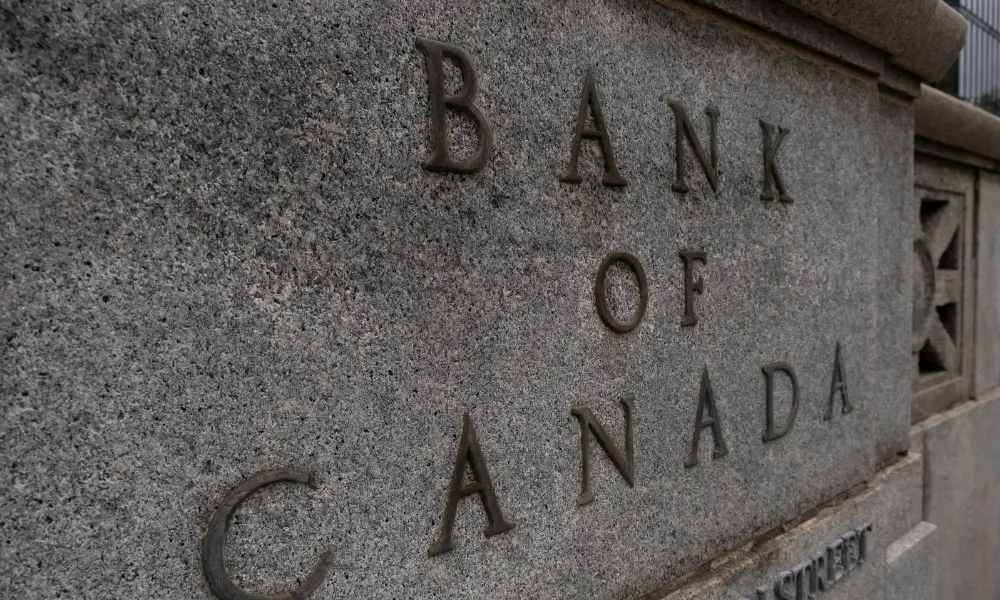
The Bank of Canada (BoC) has enacted a significant policy shift, raising its benchmark overnight interest rate by 25 basis points to 2.5 percent. This decision, the first rate hike since October 2025, signals a departure from the central bank’s previously accommodative stance, driven primarily by persistent inflationary pressures that have surpassed the BoC’s two percent target. The move has been anticipated by a majority of economists, underscoring the growing concern over the trajectory of Canadian inflation.
Inflationary Headwinds Drive Policy Adjustment
The immediate catalyst for the BoC’s rate hike is the recent Consumer Price Index (CPI) data, which revealed an annualized inflation rate of 3.1 percent in September. This figure significantly outpaces the central bank’s desired inflation target, prompting a proactive response to anchor inflation expectations and prevent a broader escalation of price increases across the economy. While energy supply shocks have been identified as a primary driver of this recent inflation surge, Governor Tiff Macklem has articulated a clear commitment to mitigating the risk of these price increases seeping into other sectors.
The BoC’s accompanying press release detailed the nuanced inflationary landscape: "Given persistently high oil prices, CPI inflation has been around 3% since April and is expected to rise to about 3½% by the end of the year. Excluding gasoline, inflation was 2.2% in September and measures of core inflation remain close to 2%. But cost pressures are building, with high fuel prices raising the costs of production and transportation. Imported industrial and electronics input prices have also increased. While businesses have mostly absorbed higher input costs so far, Bank surveys suggest cost pass-through will increase over the next year."
This statement highlights a critical concern for the central bank: the potential for embedded inflation. The current inflation rate, while partly fueled by volatile energy prices, is showing signs of broadening. Increased costs in production and transportation, directly linked to higher fuel prices, are beginning to impact businesses. Furthermore, rising prices for imported industrial and electronics inputs suggest a more pervasive inflationary environment. The BoC’s survey data, indicating a projected increase in cost pass-through by businesses over the coming year, underscores the urgency of their action to curb these developing inflationary trends before they become entrenched.
A Look Back: The Period of Accommodation
For the past twelve months, the Bank of Canada had maintained a "modestly accommodative" policy stance. This period was characterized by a stable overnight rate, which stood at 2.25 percent prior to today’s announcement. The decision to cut rates by 25 basis points in October 2025 marked a strategic move to support economic growth during a period of perceived uncertainty. At that time, inflation was running closer to the BoC’s target, and concerns about global economic headwinds may have outweighed immediate inflationary worries. This previous policy, while intended to foster economic expansion, now appears to have contributed to an environment where inflation has become a more pressing concern.
Navigating Geopolitical and Trade Uncertainties
The BoC’s decision to tighten monetary policy occurs against a backdrop of significant external risks, particularly concerning Canada’s trade relationship with the United States. Recent pronouncements from leaders in both nations have offered glimmers of hope for a resolution to ongoing trade disputes. However, a substantial portion of Canada’s export-oriented industries continue to face the threat of U.S. tariffs. These tariffs, implemented at various times over the past few years, have created an unpredictable operating environment for Canadian businesses heavily reliant on cross-border trade.
Despite these trade-related uncertainties, the Bank of Canada has prioritized its core mandate of controlling inflation. The statement accompanying the rate hike explicitly acknowledges this prioritization: "In the outlook, inflation is higher and more persistent than in the July Report. Growth has picked up this year and is expected to recover further. Against this backdrop, Governing Council decided to increase the policy rate to reduce the risk that continuing high energy prices spread broadly to the prices of other goods and services." This suggests that while the central bank remains cognizant of external economic pressures, the immediate imperative is to bring inflation back within its target range.
Future Outlook and Commitment to Price Stability
The Bank of Canada’s communiqué also provided insights into its forward-looking perspective and its commitment to price stability. The central bank acknowledges the possibility of further interest rate increases, but with a degree of caution. "There could be a need to increase the policy rate further, but given uncertainties, Governing Council agreed to proceed carefully. The Bank remains committed to maintaining Canadians’ confidence in price stability." This measured approach reflects the inherent complexities of the current economic environment. While the need for further tightening may arise, the BoC is mindful of the potential impacts of rapid rate hikes on economic growth, especially in light of ongoing trade tensions and global economic uncertainties.
The commitment to "maintaining Canadians’ confidence in price stability" is a crucial element of central banking. When inflation is perceived as being under control, it fosters a more stable economic environment for consumers and businesses alike. Eroding confidence in price stability can lead to behaviors that further exacerbate inflation, such as demands for higher wages or businesses preemptively raising prices. The BoC’s clear articulation of its commitment aims to preempt such a spiral.
Supporting Data and Economic Context
To fully appreciate the BoC’s decision, it is helpful to examine relevant economic data points.
- September CPI: As stated, the annualized CPI stood at 3.1 percent. This represents a notable increase from previous months, indicating a persistent upward trend in general price levels.
- Core Inflation: Measures of core inflation, which exclude volatile items like energy and food, remained closer to the 2 percent target at 2.2 percent in September. This suggests that the current inflation surge is not entirely broad-based but is heavily influenced by specific sectors. However, the BoC’s concern lies in the potential for this to change.
- Economic Growth: The BoC’s statement noted that "Growth has picked up this year and is expected to recover further." This indicates a resilient economy that can potentially absorb a modest increase in interest rates without significant negative repercussions on employment or overall output. For instance, recent GDP figures have shown consistent, albeit moderate, expansion, suggesting that businesses are operating with a degree of confidence.
- Labour Market: The Canadian labour market has demonstrated strength, with low unemployment rates and steady job creation. This robustness provides a buffer against potential slowdowns that could result from higher interest rates. As of the latest reports, the unemployment rate has hovered around 5.5 percent, a level generally considered to be near full employment.
Chronology of Recent Monetary Policy Decisions
Understanding the context of today’s rate hike requires a brief look at the recent history of the Bank of Canada’s monetary policy:
- October 2025: The Bank of Canada implements a 25 basis point cut to the overnight rate, bringing it to 2.25 percent. This decision was made in response to global economic slowdown fears and a desire to support domestic growth.
- November 2025 – September 2026: The overnight rate remains at 2.25 percent, reflecting the BoC’s accommodative monetary policy stance. During this period, inflation remained relatively subdued, hovering around the 2 percent target.
- October 2026 (Present): The Bank of Canada raises the overnight rate by 25 basis points to 2.5 percent, driven by rising inflation concerns.
Reactions from Key Stakeholders and Analysts
While the article does not directly quote other parties, we can infer logical reactions and anticipate expert commentary.
Economists: As indicated by the Reuters poll, a significant portion of economists had predicted this rate hike. Their analysis likely centers on the BoC’s commitment to its inflation target. Many will view the move as a necessary, albeit potentially difficult, step to maintain long-term economic stability. Some may express concern about the timing, given the ongoing trade tensions, while others will emphasize the paramount importance of inflation control.
Businesses: Businesses, particularly those with significant debt or operating on thin margins, will likely be concerned about the increased cost of borrowing. Sectors heavily reliant on consumer spending, such as retail and housing, may experience a slowdown. Exporters, already grappling with trade uncertainties, will face an additional challenge with a potentially stronger Canadian dollar that could result from higher interest rates, making their goods more expensive abroad.
Consumers: Consumers will feel the impact of the rate hike through higher borrowing costs for mortgages, car loans, and other forms of credit. This could lead to a dampening of consumer spending, which is a significant driver of the Canadian economy. However, savers may see a modest increase in returns on their deposits.
Financial Markets: Financial markets have likely priced in a portion of this expected rate hike. The immediate reaction might be muted, but future market movements will be heavily influenced by the BoC’s forward guidance and incoming economic data. The Canadian dollar could see some appreciation following the announcement.
Broader Implications and Analysis
The Bank of Canada’s decision to raise interest rates is a pivotal moment for the Canadian economy. It signals a shift in policy priorities, moving from stimulating growth to taming inflation. This transition is fraught with challenges, as the central bank must balance the need for price stability with the risk of stifling economic momentum, particularly in the face of external trade headwinds.
The success of this policy adjustment will depend on several factors. Firstly, the extent to which inflation proves to be persistent. If the current inflationary pressures are temporary and largely driven by supply-side shocks that abate, the BoC may not need to raise rates aggressively. However, if inflation becomes more embedded, further rate hikes could be necessary, with a greater potential to impact economic growth.
Secondly, the resolution of trade disputes with the United States will play a crucial role. A positive resolution could bolster business confidence and support economic activity, providing more room for the BoC to manage monetary policy. Conversely, continued trade friction could amplify economic uncertainties and complicate the BoC’s efforts.
Finally, consumer and business behavior will be a key determinant. If Canadians and businesses adjust their expectations and spending habits in line with the BoC’s inflation control efforts, it could lead to a smoother disinflationary process. Conversely, persistent demands for higher wages and price increases could necessitate a more forceful monetary policy response.
In conclusion, the Bank of Canada’s decision to increase its overnight interest rate is a clear signal of its commitment to controlling inflation. While the move is supported by economic data and a majority of expert opinion, it introduces new complexities and risks for the Canadian economy, particularly in the context of ongoing trade uncertainties. The central bank’s careful approach and ongoing commitment to price stability will be closely watched as the economic landscape continues to evolve.
