

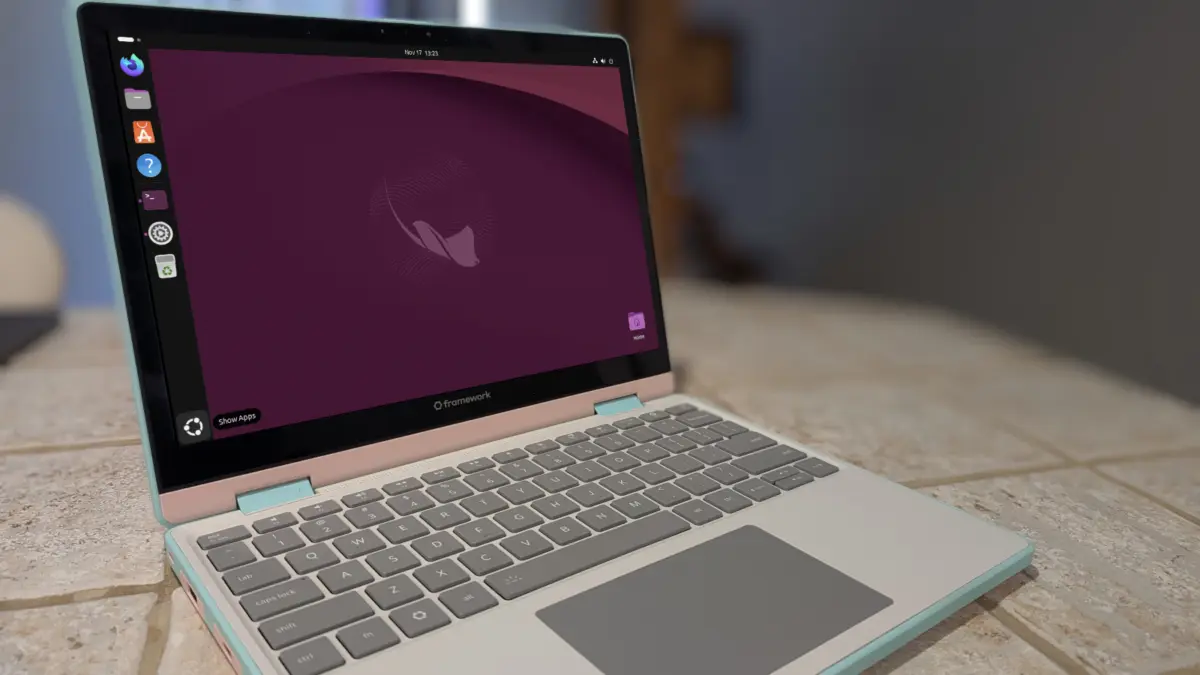
Canonical Ltd. has officially confirmed the development roadmap for its next interim operating system release, Ubuntu 27.04, codenamed Tenacious T-Rex. Scheduled for a global rollout on April 22, 2027, this version represents a significant step in the evolution of the world’s most popular Linux distribution. As an interim release, Ubuntu 27.04 serves as a critical bridge between the previous short-term versions and the upcoming Long-Term Support (LTS) release, Ubuntu 28.04, which is expected in 2028. While the 27.04 iteration follows the standard nine-month support window—set to expire in January 2028—it introduces a suite of technological advancements in desktop environments, kernel architecture, and hardware compatibility that are intended to refine the user experience for developers and early adopters alike.
The Strategic Role of Interim Releases in the Ubuntu Lifecycle
Ubuntu operates on a predictable six-month release cycle, with new versions debuting every April and October. This cadence is divided into two categories: Long-Term Support (LTS) releases, which occur every two years and receive five to ten years of security updates, and interim releases, which arrive in between. Tenacious T-Rex belongs to the latter category. For the enterprise and stability-focused user, interim releases may seem fleeting, but for the broader Linux community, they are essential testing grounds for cutting-edge software.
The transition from Ubuntu 26.10 (released in late 2026) to 27.04 allows Canonical to implement and stabilize features that will eventually become the bedrock of the 28.04 LTS. Users who install 27.04 will be provided a seamless upgrade path to 27.10 in October 2027, eventually landing on the stable 28.04 LTS platform. This continuous upgrade cycle ensures that enthusiasts can maintain the latest software packages without performing fresh installations, provided they adhere to the upgrade windows before the nine-month support period concludes.
GNOME 52: Redefining the Linux Desktop Experience
The most visible change in Ubuntu 27.04 is the inclusion of GNOME 52, the latest version of the desktop environment. While GNOME has historically favored a minimalist aesthetic, version 52 introduces a high degree of functional modularity. One of the most anticipated features is the implementation of editable quick settings. This allows users to customize the system tray menu by adding, removing, or rearranging toggles for Wi-Fi, Bluetooth, Power Modes, and Night Light, tailoring the interface to specific workflow requirements.
Furthermore, the desktop’s window management capabilities have undergone a comprehensive overhaul. GNOME 52 introduces a "mosaic" or tiling system, which provides native auto-resizing and organization of windows. This feature is designed to compete with advanced window management tools found in other operating systems, allowing users to snap windows into logical grids without third-party extensions. Complementing this is a "spatial overview" and a refined full-screen Alt+Tab application switcher. The new switcher intelligently groups older, less-active windows by application while highlighting newer windows individually, facilitating faster task switching in multi-window environments.
The calendar popover has also been redesigned for 27.04. Moving away from a cluttered view, the new interface prioritizes active events, time zones, and weather data, providing a more streamlined "at-a-glance" utility. Additionally, the desktop search functionality has been enhanced with a redesigned popover and an improved results overlay. Users can now preview files directly from the search bar, apply search filters, and execute multiple actions—such as "open containing folder" or "email file"—without launching a separate file manager.
Hardware Enablement and Kernel 7.6 Integration
Underpinning the visual updates is Linux Kernel 7.6, which provides the necessary drivers and system-level optimizations for the next generation of hardware. A primary focus of Kernel 7.6 is improved Video RAM (VRAM) management. This is particularly significant for the growing Linux gaming community and professional creators using GPU-accelerated software. By optimizing how the kernel handles memory allocation on the graphics card, Ubuntu 27.04 is expected to deliver smoother frame rates and more stable performance in high-demand environments.
Kernel 7.6 also expands Ubuntu’s reach into the latest silicon architectures. This includes early enablement for AMD’s Zen 6 architecture, ensuring that users of future Ryzen processors will have day-one compatibility. For Intel users, the release provides stable support for the Intel Xe3P graphics platform. Notably, Ubuntu 27.04 makes significant strides in ARM-based computing, offering mainline boot capabilities for Apple’s M3 Pro, Max, and Ultra chips. This allows the OS to run more natively on Apple’s high-end hardware, a feat that previously required extensive community-driven workarounds.

Furthermore, the kernel introduces initial support for the 2026 iteration of the Steam Controller and provides performance gains for both Btrfs and Ext4 file systems. These file system improvements result in faster read/write speeds and better data integrity, contributing to the overall "snappiness" reported in early internal testing of the Tenacious T-Rex builds.
The State of AI on Ubuntu: Myna and Local Processing
As artificial intelligence becomes increasingly integrated into modern operating systems, Canonical has been developing "Myna," an AI-driven dictation and productivity tool. Surprisingly, for the 27.04 release, Myna remains an optional component rather than a default installation. While the tool is fully compatible with Tenacious T-Rex, users must manually add the Canonical desktop team’s Personal Package Archive (PPA) to access it.
The decision to keep Myna as an optional install likely stems from a desire to maintain a lightweight base ISO and to allow the AI models to mature before they are thrust upon the entire user base. Once installed via the command line (sudo apt install myna-config), Myna provides system-wide speech-to-text capabilities, leveraging local processing to ensure user privacy—a key differentiator from cloud-based AI solutions offered by competitors.
Chronology of the Ubuntu 27.04 Release Cycle
The development of Tenacious T-Rex follows a strict timeline established by the Ubuntu Release Team. This schedule ensures that developers have sufficient time to integrate new features while leaving a window for rigorous bug hunting.
- October 2026: Development begins following the release of Ubuntu 26.10.
- February 25, 2027: Feature Freeze. No new major features are added after this date; the focus shifts to polishing and stability.
- March 18, 2027: User Interface Freeze. The visual elements of the OS are locked in.
- April 1, 2027: Beta Release. The public is invited to test the OS and report bugs.
- April 15, 2027: Final Kernel Freeze and Release Candidate.
- April 22, 2027: Official General Availability.
- January 2028: End of Life (EOL). Support concludes, and users are expected to have migrated to Ubuntu 27.10.
Technical Analysis: Implications for the Linux Ecosystem
The release of Ubuntu 27.04 arrives at a time when the Linux desktop is gaining unprecedented momentum. The refinement of GNOME 52 and the inclusion of Kernel 7.6 suggest that Canonical is prioritizing performance and modern hardware support over radical interface changes. This conservative but effective approach has allowed Ubuntu to maintain its position as the "standard" Linux distribution for developers, cloud engineers, and general users.
The "Tenacious T-Rex" moniker reflects a release that is robust and persistent. By focusing on window management, desktop search, and file system speed, Canonical is addressing the "quality of life" issues that often affect long-term productivity. The inclusion of Apple M3 support also signals a strategic intent to capture a segment of the developer market that prefers Mac hardware but requires a Linux software environment.
Community and Official Responses
While Canonical executives have remained focused on the technical milestones, the community response to the early 27.04 manifestos has been largely positive. Developers have praised the decision to integrate the latest GNOME tiling features, noting that it reduces the dependency on third-party extensions which often break during system updates.
Official documentation from the Ubuntu Wiki emphasizes that while 27.04 is an interim release, it should not be viewed as a "beta" product. It is a fully functional, production-ready operating system designed for those who want the latest features without waiting for the two-year LTS cycle. Canonical’s engineering teams have noted that the speed improvements in 27.04 are among the most significant in recent years, largely due to the synergy between the new kernel and the optimized GNOME shell.
Conclusion
Ubuntu 27.04 Tenacious T-Rex is shaping up to be a polished, high-performance release that bridges the gap between the current generation of Linux and the future 28.04 LTS. With its focus on GNOME 52’s usability enhancements, Kernel 7.6’s broad hardware support, and significant file system optimizations, it offers a compelling package for users who demand the latest technology. While the nine-month support window requires a proactive upgrade strategy, the path toward the 2028 LTS ensures that Tenacious T-Rex is a vital link in the Ubuntu evolutionary chain. As the April 22, 2027 release date approaches, the Linux community remains watchful of how these refinements will set the stage for the next decade of open-source computing.
