

Microsoft CEO Satya Nadella took the stage at the company’s annual Ignite conference on Tuesday to unveil a significant evolution in the company’s artificial intelligence strategy, shifting the focus from reactive chat interfaces to proactive, autonomous "agentic" workflows. Central to the announcement was the introduction of Copilot Workspaces and Autopilot, two new features designed to transform how enterprises utilize generative AI in a collaborative environment. As the technology industry continues to navigate the complexities of AI adoption and return on investment (ROI), Microsoft’s latest offerings aim to provide a more structured, multiplayer experience for AI-driven productivity.
The Ignite conference, traditionally Microsoft’s flagship event for IT professionals and developers, served as the backdrop for what Nadella described as the next phase of the "Copilot era." This phase is characterized by AI agents that do not merely respond to user prompts but instead operate autonomously within established security and compliance frameworks to manage complex projects, monitor communication channels, and execute recurring tasks.
The Advent of Copilot Workspaces and Multiplayer AI
One of the most significant updates revealed during the keynote was Copilot Workspaces. This new feature provides a collaborative, "multiplayer" surface where human employees and AI agents can work together on shared projects in real-time. Unlike the traditional linear chat interface, Workspaces allows for a more dynamic interaction with AI, where the agent can contribute to a shared canvas, draft documents, and organize project components alongside human team members.
The product, currently available in Microsoft’s "Frontier" preview program, represents a direct response to similar innovations from competitors. It bears a striking resemblance to OpenAI’s ChatGPT Space and recent updates from Anthropic, such as Whiteboard and Sheets. By merging familiar productivity tools with an agentic framework, Microsoft is attempting to reduce the friction between "thinking" about work and "doing" work. In this new environment, the AI is no longer a separate tool to be consulted; it is a persistent participant in the workspace.
Autopilot: The Shift Toward Proactive Intelligence
While Copilot has largely functioned as an assistant that responds to direct queries, Microsoft introduced "Autopilot" as its more independent counterpart. Autopilot is designed to function as a personal agent that monitors Microsoft Teams channels, follows up on email threads, and manages project timelines without requiring a specific prompt for every action.
Microsoft described Autopilot as an agent that employees can tag "like a colleague." In demonstration videos, the agent was shown identifying overdue tasks and reaching out to stakeholders for updates automatically. This functionality aligns with OpenAI’s "Dots" concept—a persistent AI presence that learns user preferences and work patterns to anticipate needs. Microsoft’s version, however, is strictly tailored for the enterprise, with capabilities focused on administrative and project-based labor.
The company claims that Autopilot can autonomously handle meetings and follow-ups, a bold assertion that suggests a high level of trust in the AI’s ability to interpret context and tone. To mitigate concerns regarding "hallucinations" or unauthorized actions, Microsoft emphasized that Autopilot is built on the same identity, security, and compliance foundations that IT departments already utilize. Each Autopilot agent is assigned a unique Microsoft Entra Agent ID and a designated human manager, ensuring that security teams have a clear audit trail of every action the agent takes.

Governance, Security, and the Work IQ Framework
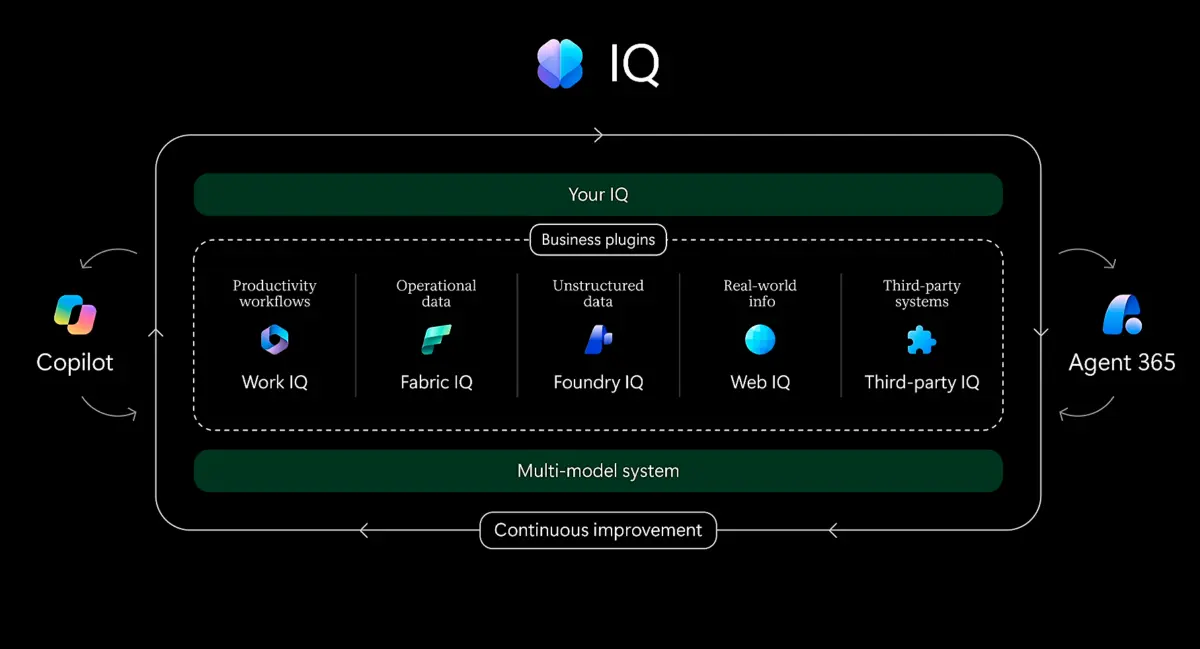
The introduction of autonomous agents in the workplace brings significant security and governance challenges. Microsoft addressed these concerns by highlighting "Work IQ," a new intelligence layer that allows agents to understand an organization’s internal structure, permissions, and workflows. Because Autopilot operates within the existing Microsoft Entra (formerly Azure AD) framework, IT administrators retain full control over the agents’ permissions.
Security teams can block specific agents as needed, and all sign-ins and actions are logged under the agent’s specific ID. This transparency is intended to solve the "black box" problem often associated with AI automation, providing a level of accountability that is necessary for large-scale enterprise deployment. Microsoft also noted that employees would soon be able to bring their personal Autopilot configurations into shared Workspaces, further blurring the line between individual productivity and team collaboration.
Streamlining the User Experience: Today and Home
Beyond autonomous agents, Microsoft announced several UI updates aimed at simplifying the increasingly cluttered AI landscape. The "Today" command center is a new feature spanning Outlook and Teams that serves as a personalized briefing feed. It integrates emails, calendars, meetings, and tasks into a single view that updates throughout the day based on priorities.
"The draft is written and ready for you to edit; the schedule change is already proposed; and the forgotten follow-up is waiting for you to send it," Microsoft stated during the presentation. This feature is currently in private preview and represents an effort to centralize the "agentic" output into a digestible daily summary for the user.
Additionally, Microsoft announced that "Home" is now generally available. This feature unifies Chat and Cowork into a single starting point, mirroring a recent consolidation strategy by Anthropic. The trend toward simplification suggests that tech giants are realizing that users are becoming overwhelmed by the sheer number of separate AI tools and interfaces, leading to a push for more integrated, "all-in-one" AI hubs.
Tracking the ROI: Agent 365 Business Analytics
As AI spending continues to climb, corporate leadership is increasingly demanding evidence of tangible returns. Agents, while powerful, can be expensive to run, particularly when they operate autonomously and consume high volumes of tokens. To address this, Microsoft unveiled Agent 365 Business Analytics and Agent 365 Cost Management.
Agent 365, which originally debuted last year as an observability platform, has been expanded to provide granular insights into AI spending. Available in Frontier Public today, the Business Analytics tool allows administrators to see exactly where AI costs are spiking and which human employees are associated with those costs.
Crucially, Microsoft is attempting to change the metric of AI success from "tokens consumed" to "work completed." The platform analyzes tasks, estimates how long a human would take to perform that same task, and calculates the value of the work performed by the AI. By providing a "dollar value" for AI-supported hours, Microsoft is giving CFOs and IT leaders the data they need to justify continued investment in the technology.

The Cost Management tool further allows leaders to set spending policies, limits, and proactive alerts. It provides visibility down to the specific model level, allowing organizations to restrict the use of more expensive models like GPT-4o for tasks that could be handled by smaller, more efficient models.
Chronology of Microsoft’s AI Integration (2023–2026)
The announcements at Ignite represent the latest chapter in a rapid-fire timeline of AI integration at Microsoft:
- February 2023: Microsoft launches the AI-powered Bing search engine, marking its first major consumer-facing generative AI product.
- November 2023: Microsoft 365 Copilot becomes generally available for enterprise customers, integrating AI directly into Word, Excel, and PowerPoint.
- May 2024: The company introduces Copilot+ PCs, integrating AI hardware directly into the Windows operating system.
- September 2024: "Copilot Pages" and the first wave of agentic capabilities are announced, moving beyond simple chat.
- November 2026 (Current): The launch of Copilot Workspaces and Autopilot marks the transition to proactive, multiplayer AI agents with integrated ROI tracking.
Market Implications and Industry Reaction
The shift toward agentic AI is not unique to Microsoft. Industry analysts note that Salesforce, Google, and Amazon are all racing to deploy similar "agents" that can execute workflows rather than just answer questions. However, Microsoft’s deep integration with the Windows ecosystem and the Office suite gives it a significant advantage in terms of distribution.
Early reactions from industry experts suggest that while the "proactive" nature of Autopilot is promising, the true test will be its reliability in complex, high-stakes environments. There is also the question of "AI fatigue" among workers. Recent studies indicate that while nearly 70% of workers use AI regularly, many feel they are not given adequate time to upskill or adapt to these new tools. Microsoft’s focus on "Workspaces" and "Today" appears to be an attempt to mitigate this by embedding the AI more naturally into the existing flow of work.
The focus on ROI and cost management is also a savvy move for the enterprise sector. As the "hype cycle" for generative AI matures, companies are moving away from experimentation and toward rigorous financial scrutiny. By providing built-in tools to measure the value of "work completed," Microsoft is positioning itself as the most "business-ready" AI provider in a crowded market.
Conclusion: The Future of the Agentic Workplace
Microsoft’s Ignite announcements signal a clear direction for the future of productivity: a workplace where AI agents are not just tools, but active, autonomous participants in every project. The transition from Copilot (an assistant) to Autopilot (a collaborator) represents a fundamental change in the relationship between humans and software.
As these tools move from the Frontier preview into general availability, the success of Microsoft’s strategy will depend on two factors: the accuracy and reliability of the agents in real-world scenarios, and the ability of organizations to manage the cultural shift required to work alongside autonomous digital entities. For now, Microsoft has provided the infrastructure; it is now up to the enterprises to decide how much "autopilot" they are willing to accept in their daily operations.
